1-855-QUOTEMR

Table of Contents [hide]
Who This Is For
This technical guide is tailored for owners of designated historic homes or properties situated within architectural preservation zones. If you are trying to navigate strict municipal design guidelines, evaluate true artisan labor premiums, and understand why standard installation networks refuse repair-only tickets, this resource is for you.
Key Takeaways
- The 1.7% Market Reality: True historic restoration is an incredibly rare project scope, representing a tiny 1.7% fraction of national window service inquiries.
- Contractor Rejection Rates: Standard replacement window networks have a 0% closed sales rate for repair tickets because general crews lack specialized carpentry training.
- Extended Timelines: Property owners face a slower 36.6-day average readiness cycle due to complex historic board reviews and specialized custom material sourcing.
- Climatic Rot Driving Force: High-volume regions are heavily dictated by extreme local weather, with coastal humidity and high-altitude freeze-thaw cycles accelerating structural wood failure.
- The Structural Compromise: While artisan repair satisfies strict preservation boards, widespread structural wood rot often triggers the financial necessity of complete full-frame duplication.
Are you trying to preserve the original architectural charm of a century-old home? While pristine antique joinery offers irreplaceable character, maintaining these vintage exterior features introduces intense logistical and material challenges.
According to federal preservation guidelines from the National Park Service Preservation Brief 9, maintaining original wood window elements is the preferred method for protecting architectural heritage. Preserving old-growth timber components maintains historical value while reducing landfill waste.
However, finding specialized craftsmen who possess the mechanical training to execute these delicate repairs is becoming increasingly difficult. At Mr. Remodel, our industry analytics show a massive structural gap between standard commercial installation models and artisan field realities.
See Related: Window Replacement Options | 2026 Costs, Methods & ROI Guide
The 1.7% Niche Market and the Reality of Contractor Rejection
The primary mistake property owners make is treating historical carpentry like a standard cosmetic update. Homeowners assume they can call any general contractor from a local directory to repair split stiles or degraded sills.
Our proprietary project databases show that historic repair or restoration requests make up just 433 leads out of 25,437 total inquiries. This tiny 1.7% market share turns historic window maintenance into a highly specialized niche.
Because general home improvement crews are optimized for rapid, factory-assembled product installations, they are completely unequipped for custom millwork. Standard replacement networks register a 0% closed sales rate for historic repair-only tickets.
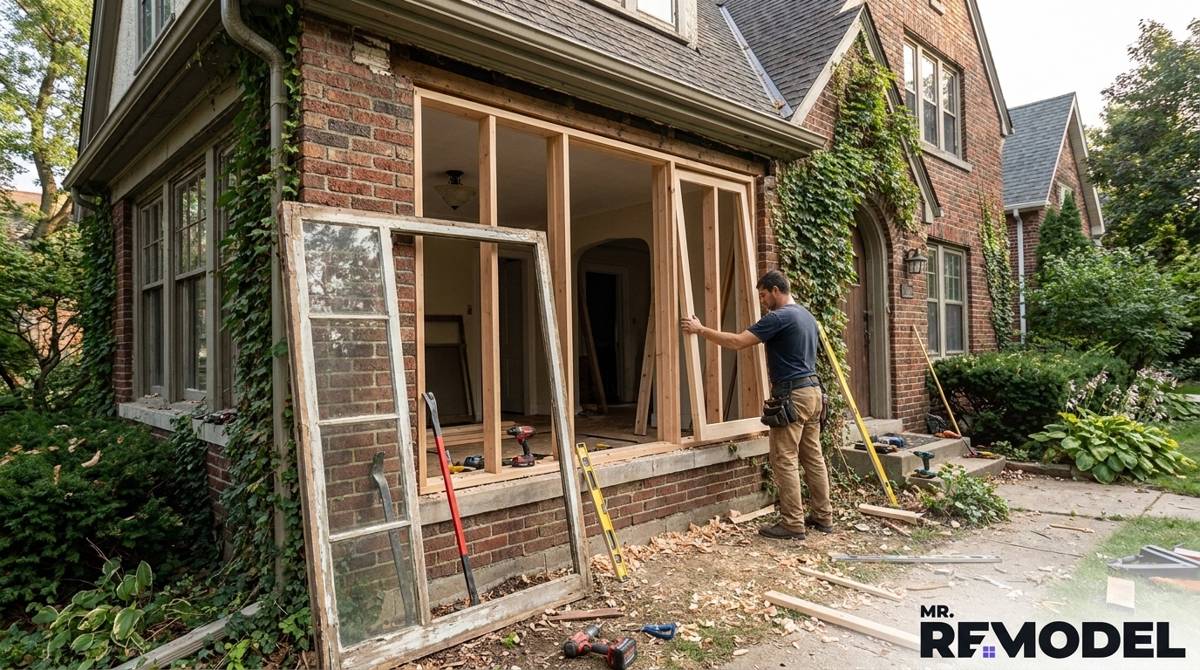
When standard crews encounter deteriorated window frames, they lack the tools for advanced epoxy consolidation or custom profile cutting. Consequently, they walk away from the project or insist on tearing out the entire assembly.
Navigating Extended Project Timelines and Historic Board Approvals
Standard residential window upgrades benefit from exceptionally fast turnaround times. The vast majority of standard consumers are fully prepared to launch their field installations within 24 to 30 days of receiving an initial estimate.
Historical restorations follow a significantly slower trajectory, showing a 36.6-day average readiness timeline. Property owners find themselves trapped in extended research phases due to mandatory bureaucratic and structural hurdles.
Preservation Board Reviews and Compliance
If your property sits inside a designated historic district, municipal regulations prohibit any modifications to your home's exterior envelope. You cannot install standard vinyl window options without facing severe city code fines.
Homeowners must submit exhaustive material samples and cross-sectional drawings to local landmark commissions before any work starts. Securing these formal design approvals requires careful planning and patience.
Lead Paint Safety Hazards
The vast majority of vintage residential structures contain multiple layers of historical lead-based coatings. Distributing this hazardous material during sanding or dismantling poses severe health risks to your household.
The Environmental Protection Agency Lead Paint Guidelines strictly enforce the Lead Renovation, Repair, and Painting Program. Contractors must possess specialized federal certifications to handle historic wood sash restoration safely.
Regional Climate Stressors and Artisan Repair Economics
Wood windows are highly sensitive to shifting environmental conditions. Because old timber breathes and reacts to ambient moisture, local weather patterns serve as the primary catalyst for structural window failure.
Our internal geographic data highlights exactly where historic structures face the most intense environmental degradation:
- Coastal Humidity Zones: Florida leads the country with 90 active historic leads, driven by relentless maritime humidity, salt air crystallization, and severe coastal rot.
- High-Altitude Freeze-Thaw Environments: Colorado logs 28 specialized inquiries, where intense high-altitude solar radiation bakes exterior paint before winter moisture freezes inside open grain splits.
- Arid Dry Rot Belts: Nevada and Arizona aggregate 46 distinct requests, where extreme desert heat strips natural oils from wood fibers, causing catastrophic frame cracking.
Evaluating these regional factors is essential before deciding whether to repair or replace your frames. For an exact breakdown of bulk project scaling, review our replacing 5 windows cost guide.
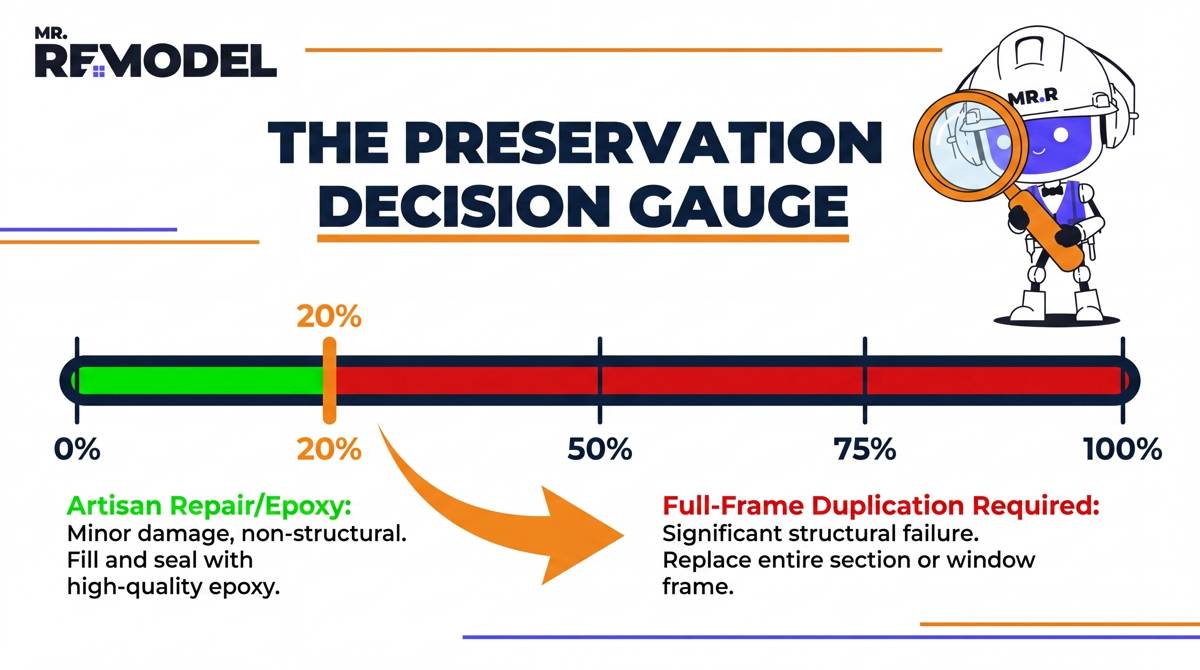
Calculating the Repair-to-Replacement Threshold
Artisan restoration labor demands a massive premium because craftsmen must hand-build replacement components from scratch. Scraping sashes, replacing broken sash cords, and glazing antique panes costs hundreds of dollars per hour.
If structural wood rot consumes more than 20% of your window's core frame, structural consolidation becomes unviable. At this threshold, a complete full-frame duplication is required to preserve the structural integrity of your wall assembly.
See Related: When Window Repairs Are Not Worth It | 2026 Cost & ROI Data
Offsetting Artisan Labor Costs with Historic Tax Credits
While the upfront capital required for specialized heritage restoration can be intimidating, homeowners have unique financial tools to offset these expenses. Landmark preservation programs offer lucrative tax incentives to offset artisan premiums.
According to financial briefs from the National Trust for Historic Preservation, property owners can leverage state and federal tax credits to recover a significant percentage of their preservation costs. These programs help make custom artisan work competitive with modern replacements.
The Thermal Performance Compromise
A common complaint regarding historic windows is poor thermal insulation. Single-pane historic glass easily allows winter cold and summer heat to penetrate your living spaces.
Property owners often feel forced to choose between historical compliance and modern utility. To see how modern materials compare against old-growth wood, consult our comprehensive guide to long-term energy performance.
See Related: How Much Do New Windows Save on Cooling Bills | $16k Cost vs. ROI
Integrating Secondary Acoustic and Glazing Upgrades
If your preservation board completely prohibits replacing your historic sashes, you can drastically boost performance by installing interior storm panels. This approach leaves your original exterior glass completely untouched.
Adding low-emissivity interior secondary panels blocks drafts and dampens incoming street noise. This layer protects your valuable historic materials from interior condensation and daily wear.
See Related: Window Problems and Solutions: Why 98% of Repairs End in Replacement.
Finding Certified Preservation Professionals
Attempting a complex historic renovation using an uncertified team can permanently ruin irreplaceable architectural features. Poorly handled framing changes can crack old sashes and warp vintage openings.
Homeowners evaluating tight maintenance budgets often look at the DIY window restoration vs hiring a professional contractor to see what tasks they can handle safely. While homeowners can handle basic stripping, complex structural stabilization requires expert mechanical execution.
Bypassing standard high-volume installation teams prevents your property from being outfitted with mismatched options. Forcing generic components into historical openings destroys your home's historic character and diminishes its appraisal value.
See Related: Pocket vs. Full-Frame Window Replacement | 2026 Cost Comparison
Frequently Asked Questions
Why do most standard contractors refuse to repair historic wood windows?
Standard networks are built for rapid, pre-fabricated replacements. They refuse historic repair tickets because they lack the manual shop tools and specialized training required to execute custom millwork and lead-safe epoxy stabilization.
How does regional weather impact historic wood window decay?
Coastal zones like Florida suffer from structural rot due to high ambient humidity. Cold markets like Colorado experience extreme wood splitting from freeze-thaw cycles, while desert states suffer from intense dry rot.
Can I install standard vinyl replacement windows in a historic district?
No. Local landmark preservation boards strictly prohibit using modern vinyl profiles in designated historical areas. Property owners must preserve original sashes or invest in exact full-frame wood duplications.
Are there federal tax credits available for historic residential restoration?
Yes. Homeowners can often leverage state and federal historical tax credits to offset the premium labor costs of specialized artisan restoration, helping preserve historic home infrastructure.
How long can a historic old-growth wood window last if properly restored?
Unlike modern materials that must be replaced every few decades, old-growth wood windows are infinitely repairable. With proper sealing and painting, historic wood windows can easily perform for another century.
Protect Your Historical Assets and Property Equity
Navigating historic wood window restoration requires balancing strict preservation board mandates against real material expenses. Preparing for extended 36-day project timelines and certified lead-safe artisan labor baseline premiums prevents unexpected financial surprises during your renovation.
By focusing on verified tax credit opportunities and localized environmental defense, you transform an expensive historical requirement into a reliable property asset. Preserving old-growth carpentry protects your home's unique character and long-term equity.
Ready to secure a transparent, code-compliant plan for your historic home? Get your free, no-obligation quote from Mr. Remodel or historic replication services, and launch your restoration project with complete peace of mind.