1-855-QUOTEMR

Table of Contents [hide]
Who This Is For
Homeowners comparing window replacement quotes, dealing with frame damage, replacing older windows, renovating older homes, or deciding whether full-frame replacement is worth the higher cost compared to insert or pocket replacement.
Key Takeaways:
- Higher Cost: Full-frame replacement costs more than insert replacement.
- Complete Removal: The entire existing window unit and frame are removed.
- Better Access: Contractors can inspect framing, leaks, rot, and hidden damage.
- More Work: Flashing, trim, waterproofing, and siding work may be involved.
- Long-Term Value: The higher upfront cost can improve performance and protection.
A window quote can look confusing when one contractor recommends a simple insert replacement, and another recommends removing the entire frame. Full-frame window replacement cost is higher because the project involves more labor, more materials, and more access to the wall opening.
For many homeowners, that added cost is worth it when old frames are damaged, water has leaked behind the window, or the existing opening needs a better long-term solution. The key is understanding when full-frame replacement is necessary and when a lower-cost insert replacement may be enough.
What Is a Full-Frame Window Replacement?
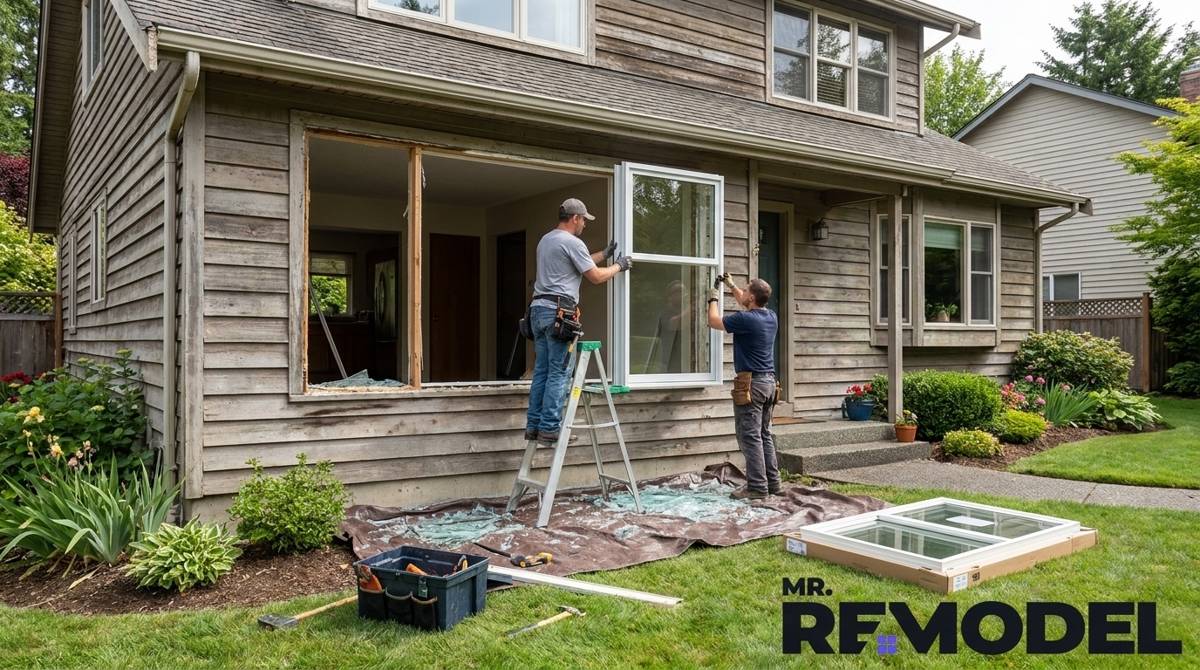
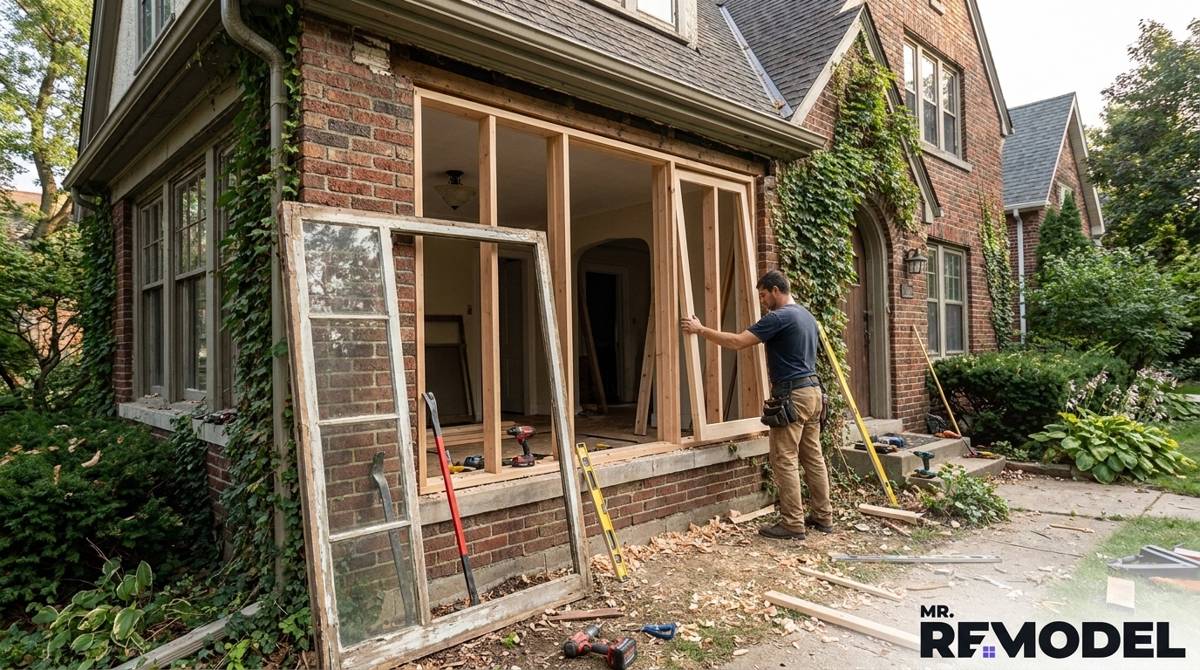
Full-frame window replacement removes the entire existing window unit, including the sash, frame, trim, and related components. This exposes the rough opening, which is the framed space inside the wall where the window sits.
Once the opening is exposed, the contractor can inspect for rot, water damage, poor flashing, insulation gaps, and structural issues. The new window is then installed with updated flashing, sealing, trim, and finish work.
This is different from insert or pocket replacement, where the new window fits inside the existing frame. Insert replacement can cost less, but it does not give the contractor the same access to hidden damage.
The United States Department of Energy’s Windows, Doors, and Skylights guidance explains that windows are part of the home’s energy and comfort system. That is why both product choice and installation method matter.
Average Full-Frame Window Replacement Cost
Full-frame window replacement usually costs more than insert replacement because the contractor removes the existing frame and works directly with the rough opening.
Industry-standard planning estimates include:
|
| ||
|---|---|---|
| Whole-home full-frame projects can vary widely. | |
Costs depend on window size, frame material, glass package, exterior siding work, interior trim work, rot repairs, flashing replacement, house wrap, and local labor rates.
ENERGY STAR’s Windows, Doors, and Skylights resources can also help homeowners understand energy-efficient window performance before choosing products.
Why Full-Frame Replacement Costs More
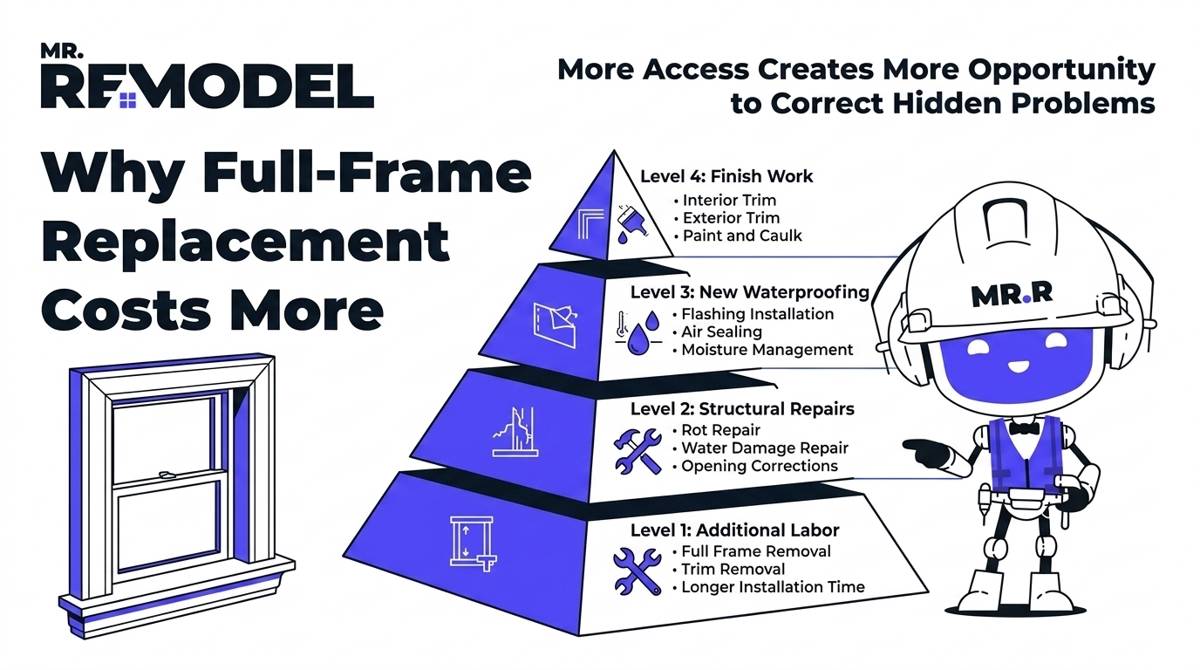
Full-frame replacement costs more because the contractor is doing more than swapping out the visible window. The project may involve opening up surrounding materials and rebuilding parts of the window area.
Additional Labor
Removing the full frame takes more time than placing an insert window inside the old frame. The contractor may need to remove interior trim, exterior trim, old flashing, insulation, and damaged materials.
That added labor increases the final cost.
Structural Repairs
If the old frame has rot, movement, water damage, or hidden deterioration, repairs may be needed before the new window can be installed.
These repairs protect the new window from being installed into a weak or damaged opening.
New Flashing and Waterproofing
Full-frame replacement allows the contractor to install new flashing and water-management details. This can be important when old windows leaked or were poorly installed.
The National Institute of Standards and Technology (NIST) supports research and standards related to building performance, materials, and measurement. For homeowners, the practical takeaway is simple: moisture control and proper installation details matter.
Interior and Exterior Finish Work
Full-frame replacement may require new interior trim, exterior trim, siding adjustments, paint, caulk, or finish carpentry. These details can make the project more expensive, but they also help the final installation look complete.
Disposal costs may also apply because more material is removed.
Full-Frame vs Insert Replacement Cost Comparison
Insert replacement can work well when the existing frame is square, dry, solid, and in good condition. Full-frame replacement is usually better when there are leaks, rot, poor flashing, old trim problems, or major performance concerns.
See Related: Pocket vs Full-Frame Window Replacement
Need help comparing full-frame replacement estimates? Get a free quote from fully vetted local contractors and compare pricing options in your area.
When Is Full-Frame Replacement Necessary?
Full-frame replacement is not always required, but some situations make it the better choice.
Rotting window frames are one of the biggest reasons to choose full-frame replacement. If wood around the window is soft, stained, cracked, or deteriorating, simply placing a new insert window inside the old frame may not solve the problem.
Water damage is another common reason. If water has entered behind the trim, siding, or wall, the contractor may need to expose the full opening to repair the issue.
Full-frame replacement may also be necessary when the old flashing failed, the frame is out of square, the opening has shifted, or the homeowner wants a major energy-efficiency upgrade.
The International Code Council (ICC) develops model building codes used in many areas. Local code requirements vary, so homeowners should ask contractors whether permits or inspections are needed for their project.
See Related: When Full Frame Is Required
How Home Size Impacts Full-Frame Replacement Costs
Home size affects cost because more windows usually mean more labor, materials, and finish work. A small home with 10 windows may cost much less than a large home with 20 or more windows.
Multi-story homes can also cost more because access is more difficult. Contractors may need ladders, staging, extra labor, or more time to work safely.
There can be some bulk pricing benefits when replacing many windows at once, but full-frame work still involves detailed labor at each opening.
See Related: Window Replacement Cost by Home Size
Full-Frame Replacement ROI and Long-Term Value
Full-frame replacement can provide long-term value when it solves problems that an insert replacement cannot. These may include leaks, damaged frames, poor flashing, drafty openings, and worn exterior details.
The Efficient Windows Collaborative offers homeowner education on window technologies, energy performance, and product comparisons. This can help homeowners understand why the full window system matters, not just the glass.
Full-frame replacement can also improve comfort when paired with the right window product and proper air sealing. It may help reduce drafts, improve operation, and protect surrounding materials from future moisture problems.
Return on investment (ROI) can vary by home, market, window type, installation quality, and buyer priorities.
See Related: Window Replacement ROI Explained
Questions to Ask Before Approving a Full-Frame Quote
Before approving a full-frame estimate, make sure the quote explains what is included.
Ask these questions:
- Is the removal of the full frame included?
- Is rot repair included or priced separately?
- Is new flashing included?
- Is insulation included?
- Is interior trim included?
- Is exterior trim included?
- Is siding repair included?
- Are permits required?
- Who handles cleanup and disposal?
- What product warranty applies?
- What labor warranty applies?
- What could change the final cost?
A clear quote should explain materials, labor, repairs, finish work, and warranty coverage.
See Related: Questions to Ask Window Installers
How to Compare Full-Frame Replacement Contractors
Full-frame window replacement requires more installation skill than a basic insert project. Look for contractors with experience handling framing, flashing, trim, siding transitions, and moisture protection.
Ask whether the contractor is licensed where required and insured. Ask for examples of similar projects, especially if your home is older or has known water damage.
See Related: How to Choose a Window Replacement Contractor
Frequently Asked Questions
How much does a full-frame window replacement cost?
Full-frame window replacement typically costs about $800 to $2,500+ per window, while large custom units may cost $2,500 to $5,000+ per window. The final cost depends on window size, frame material, glass package, repairs, trim work, siding work, and local labor rates.
Is a full-frame replacement worth the extra cost?
Full-frame replacement can be worth the extra cost when old frames are rotted, leaking, out of square, poorly flashed, or causing drafts. It costs more upfront, but it gives contractors access to hidden damage and can provide better long-term protection.
When is a full-frame replacement required?
Full-frame replacement may be required when the existing frame is damaged, rotted, leaking, structurally weak, or not suitable for an insert window. It may also be the better choice during major renovations or when the homeowner wants a full performance upgrade.
How much more expensive is a full-frame replacement than an insert replacement?
Full-frame replacement often costs significantly more than insert replacement because it includes more labor, removal, waterproofing, trim work, and possible repairs. Insert replacement may cost around $400 to $1,200 per window, while full-frame replacement often ranges from $800 to $2,500+.
Can full-frame replacement improve energy efficiency?
Yes, full-frame replacement can improve energy efficiency when it allows the contractor to address air leaks, poor insulation, damaged frames, and failed flashing around the opening. The final performance also depends on the window product, glass package, and installation quality.
Full-Frame Window Replacement Cost: Final Takeaway
Full-frame window replacement costs more than insert replacement because it removes the entire old window unit and gives the contractor access to the rough opening. That added access can be valuable when there is rot, water damage, poor flashing, structural movement, or major performance concerns.
The best choice depends on your home’s condition, your budget, and your long-term goals. To compare options, connect with fully vetted local window contractors.