1-855-QUOTEMR

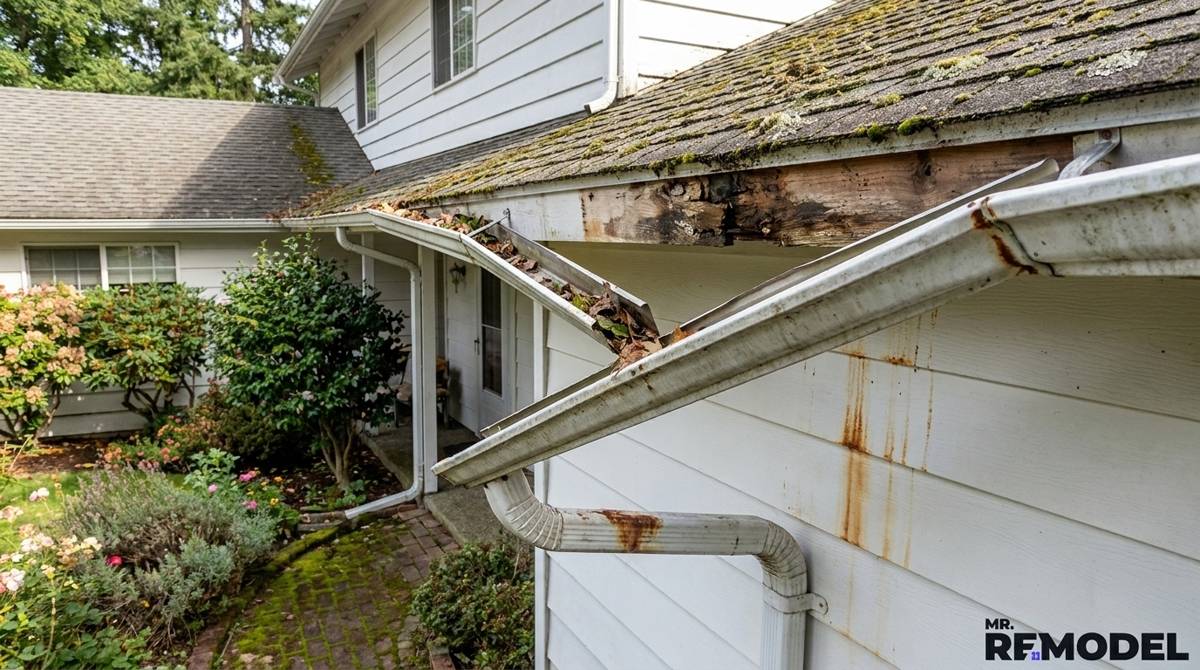
Table of Contents [hide]
Who This Is For
This guide is for homeowners troubleshooting gutter issues and deciding whether maintenance, repairs, or replacement is needed. It will help you understand what causes common gutter problems, which issues may be repairable, and when replacement may be the better long-term choice.
Key Takeaways
- Problem Solving: Most gutter issues stem from clogs, leaks, slope issues, or loose parts.
- Quick Fixes: Cleaning, sealing, reattaching, and adjusting drainage can solve many isolated issues.
- Replacement Signs: Widespread rust, sagging, and recurring leaks may mean replacement is the smarter choice.
- Water Control: Fixing gutter problems helps protect the roofline, foundation, siding, and landscaping.
- Cost Planning: Repair is often cheaper upfront, but repeated repairs can add up.
A dripping seam or overflowing corner might look minor until the next storm sends water toward your foundation. This guide to common gutter problems and solutions explains what causes each issue, what may fix it, and when replacement is the better long-term choice.
Gutters are meant to move roof runoff away from the home. When one part fails, water can spill over, back up, or drain too close to the house, creating problems for the roofline, siding, soil, and foundation.
Why Gutter Problems Shouldn't Be Ignored
Gutter problems often begin as simple maintenance issues. A clogged downspout, loose hanger, or small leak may be easy to fix when caught early.
Mr. Remodel data shows that gutter repair generated 1,924 inquiries. Gutter replacement generated 6,273 inquiries, and new gutter installation generated 2,847 inquiries.
Repair-related inquiries account for about 17% of all gutter inquiries. Replacement demand is more than 3 times repair demand, indicating that many gutter issues eventually require more than simple fixes.
See Related: Complete Homeowner's Guide to Gutters
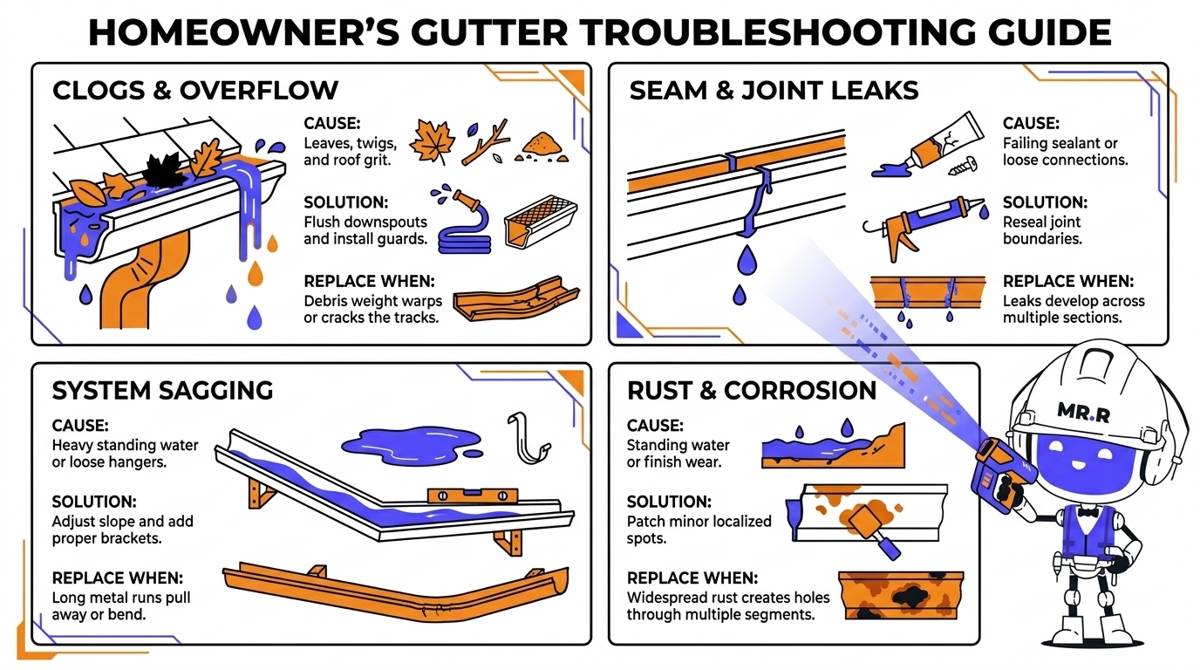
The Most Common Gutter Problems and Solutions
The right fix depends on the cause. Some gutter problems need cleaning or a small repair. Others point to a system that is too old, damaged, or poorly installed.
The National Institute of Building Sciences (NIBS) Whole Building Design Guide explains that water management is important to long-term building performance.
Clogged Gutters
Clogged gutters happen when leaves, roof grit, twigs, nests, or dirt block the gutter channel. Water may spill over the edge instead of flowing to the downspout.
Solution: Clean the gutter trough and flush the downspouts. If clogs recur often, trim nearby branches, inspect for roof debris buildup, or consider installing gutter guards.
When to replace: Replacement may be needed if clogs continue to cause sagging, separation, rust, or overflow even after cleaning.
Leaking Gutters
Leaking gutters often happen at seams, corners, end caps, or cracked sections. Small leaks may show up as drips, stains, or wet soil below the gutter.
Solution: Reseal leaking seams, tighten loose connections, or replace a damaged section. A contractor can check whether the slope is causing water to flow into the weak spot.
When to replace: Replacement may be better if leaks appear in several areas or return soon after repairs.
Sagging Gutters
Sagging gutters often come from standing water, heavy debris, loose hangers, or weakened fascia. A sagging section cannot move water correctly.
Solution: Remove debris, resecure loose hangers, replace damaged brackets, and check the gutter slope. If the fascia is soft or damaged, it may need repair, too.
When to replace: Replacement may be needed if long sections sag, the gutter is bent, or the system keeps pulling away.
Overflowing Gutters
Overflowing gutters may be caused by clogs, poor slope, undersized gutters, too few downspouts, or heavy rainfall that overwhelms the system.
Solution: Clean the gutters, flush the downspouts, and check whether water moves toward the outlets. A contractor may recommend adjusting the slope or adding downspouts.
When to replace: Replacement may be better if the gutters are too small, badly sloped, or damaged throughout the system.
Gutters Pulling Away From the House
Gutters can pull away when fasteners loosen, fascia weakens, or the gutter carries too much weight from debris or standing water.
Solution: Replace loose fasteners, add proper hangers, and inspect the fascia board. If the fascia is damaged, it should be repaired before the gutter is reattached.
When to replace: Replacement may be needed if the gutter is warped, the attachment points are failing, or multiple sections are separating.
Rust and Corrosion
Rust and corrosion can weaken metal gutters and create holes. Small rust spots may not seem urgent, but they can spread over time.
Solution: A small affected area may be cleaned, sealed, or patched. The contractor should also check whether standing water is causing the corrosion.
When to replace: Replacement is often warranted when rust appears in multiple sections or holes begin to form throughout the system.
Poor Drainage
Poor drainage happens when water does not move away from the home. The issue may be a clogged downspout, a short extension, a poor slope, or a drainage path that directs water toward the foundation.
Solution: Clear the downspout, add extensions, redirect discharge points, and check grading near the home. The Environmental Protection Agency (EPA) explains, through its Soak Up the Rain program, that homeowners can help manage stormwater runoff by redirecting downspouts, using rain barrels, planting rain gardens, and improving drainage around the property.
When to replace: Replacement may be needed if the system cannot be adjusted to direct water properly or if poor drainage is due to widespread gutter failure.
Standing Water
Standing water inside gutters usually means the slope is wrong, the gutter is sagging, or the outlet is blocked. Water should not sit in the trough after rain.
Solution: Clear the outlet, adjust the slope, resecure low spots, and inspect hangers. A small pitch correction may solve the issue.
When to replace: Replacement may be better if the gutter is bent, sagging in several places, or too damaged to hold the correct slope.
When a Repair Is Enough
Repairs make sense when the problem is isolated, and the rest of the system works well. One leak, one loose hanger, or one clogged downspout usually does not require full replacement.
Repair and replacement cost guide:
- Gutter cleaning: $100 to $400
- Minor gutter repair: $200 to $600
- Major gutter repair: $600 to $1,200
- Section replacement: $300 to $1,500
- Full gutter replacement: $1,200 to $5,200
Minor Damage
Minor damage includes one loose bracket, one leaking seam, one clogged outlet, or one damaged section.
A focused repair may be the most practical option if the gutter system remains secure and draining properly.
Localized Issues
Localized problems affect one part of the system. These are often easier to fix because the rest of the gutters still perform well.
If the same area keeps failing, the contractor should check slope, roof runoff volume, fascia condition, and downspout placement.
Ready to diagnose a gutter problem? Mr. Remodel connects homeowners with fully vetted local contractors. You can use Mr. Remodel to find local gutter contractors and request a free, no-obligation quote.
When Replacement May Be the Better Option
Replacement may be the better option when problems are widespread or keep returning. At that point, repairs may only delay the same issue.
The National Association of Home Builders (NAHB) provides general lifespan guidance for gutter systems and related exterior components in its Study of Life Expectancy of Home Components. Actual lifespan depends on material, installation quality, maintenance, weather exposure, and drainage performance.
Recurring Repairs
If gutters need repairs every season, the system may be near the end of its useful life. Repeated service calls can become more expensive than planning a replacement.
Recurring leaks, clogs, and sagging are signs that the issue may not be isolated.
Widespread Damage
Widespread damage includes several leaks, long sagging runs, rust across multiple sections, or gutters pulling away in more than one area.
These problems often signal a full-system failure rather than a simple repair issue.
Aging Systems
Older gutters may still work if they were installed well and maintained. But age, combined with poor drainage, corrosion, sagging, or repeated leaks, is a stronger signal for replacement.
See Related: How Often Should Gutters Be Replaced?
How Gutter Problems Can Affect the Rest of Your Home
Gutter problems can create issues beyond the gutter system. Overflow and poor drainage can send water toward areas that need protection.
The Federal Emergency Management Agency (FEMA) discusses water intrusion, drainage, and moisture-related risks in its Homeowner’s Guide to Retrofitting. Repeated water problems around a home should be taken seriously.
Foundation and Drainage Concerns
When gutters overflow or downspouts drain too close to the home, water can collect near the foundation. Over time, that can contribute to erosion and moisture concerns.
See Related: How Gutters Protect Your Foundation
Roofline and Exterior Concerns
Leaking or overflowing gutters can also affect fascia, soffits, siding, trim, walkways, and landscaping.
Fixing gutter problems early helps reduce the chance that a simple maintenance issue becomes a larger exterior repair.
Frequently Asked Questions
What is the most common gutter problem?
Clogs are one of the most common gutter problems homeowners notice. Leaves, roof grit, and debris can block water flow and cause overflow. Regular cleaning and downspout checks can help reduce this issue.
Can sagging gutters be repaired?
Sometimes. Sagging gutters may be repairable if the material is still in good condition and the issue is limited to loose hangers or poor support. If several sections sag, replacement may be better.
How much do gutter repairs cost?
Approved-brief estimates place minor gutter repair around $200 to $600 and major gutter repair around $600 to $1,200. Full gutter replacement often ranges from $1,200 to $5,200.
When should gutters be replaced instead of repaired?
Replacement may make sense when leaks, sagging, rust, overflow, or separation happen across several areas. Recurring repairs are also a sign that replacement may be more cost-effective.
Fixing Gutter Problems Before They Get Worse
Understanding common gutter problems and solutions helps homeowners act with confidence. Clogs, leaks, sagging, overflow, corrosion, and poor drainage can often be fixed when caught early.
When problems spread across the system or keep returning, replacement may be the better long-term option. To move forward, compare local gutter contractors through Mr. Remodel and request a free, no-obligation quote.