1-855-QUOTEMR

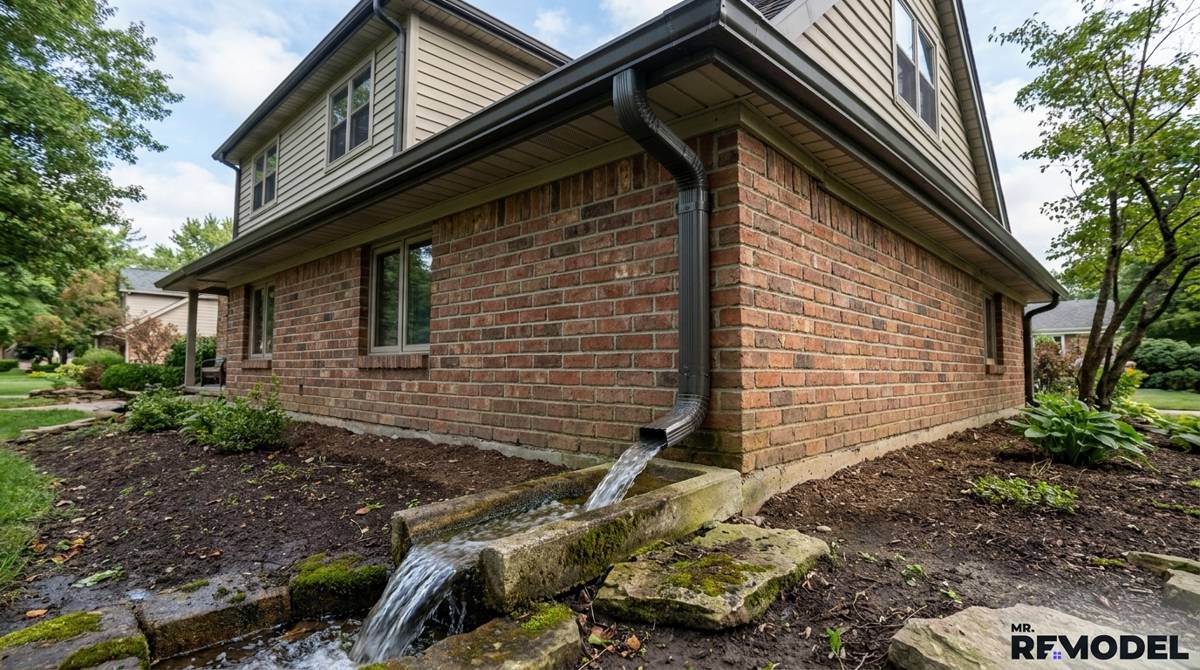
Table of Contents [hide]
Who This Is For
This guide is for homeowners who want to understand how gutters help prevent foundation problems and water-related property damage. It will help you understand how gutters manage roof runoff, why downspout placement matters, and when gutter repair or replacement may help reduce water-related risks around your home.
Key Takeaways
- Water Control: Gutters help direct roof runoff away from the foundation.
- Soil Protection: Poor drainage can contribute to erosion and moisture issues.
- System Function: Functional gutters are part of a home’s water management system.
- Maintenance Value: Gutter maintenance can help reduce long-term structural risks.
- Repair Prevention: Replacing failing gutters may help prevent more expensive repairs later.
Water that falls too close to your home does not just disappear into the ground. This guide explains how gutters protect your foundation by moving roof runoff away from the house before it can collect near vulnerable areas.
Your foundation depends on stable soil and good drainage. When gutters clog, overflow, or drain too close to the home, water can pool along the perimeter, erode soil, and increase moisture pressure near the foundation.
Why Water Is a Threat to Foundations
Foundations are built to support the home, but the soil around them matters too. When that soil becomes too wet, too dry, or unevenly washed out, it can create stress around the home’s base.
The Environmental Protection Agency (EPA) explains that homeowners can help manage stormwater runoff by redirecting downspouts, using rain barrels, planting rain gardens, and improving drainage around the property through its Soak Up the Rain guidance.
How Rainwater Affects Soil
Rainwater from a roof can fall in large amounts along the same narrow strip around the home. Without gutters, that water lands directly beside the foundation.
Over time, repeated runoff can soften soil, wash out mulch, create low spots, and cause water to collect where it should not.
How Drainage Problems Develop
Drainage problems often start with small issues. A clogged downspout, a loose gutter section, or a short extension can direct water toward the foundation instead of away from it.
The Federal Emergency Management Agency (FEMA) discusses water intrusion, drainage, and moisture-related risks in its Homeowner’s Guide to Retrofitting. This is why homeowners should take repeated drainage problems seriously.
How Gutters Protect Your Foundation
A working gutter system catches water at the roof edge, moves it through downspouts, and directs it away from the home. That process reduces the amount of water landing beside the foundation.
The National Institute of Building Sciences (NIBS) Whole Building Design Guide provides resources on building performance that emphasize the importance of moisture and water management in durable building design.
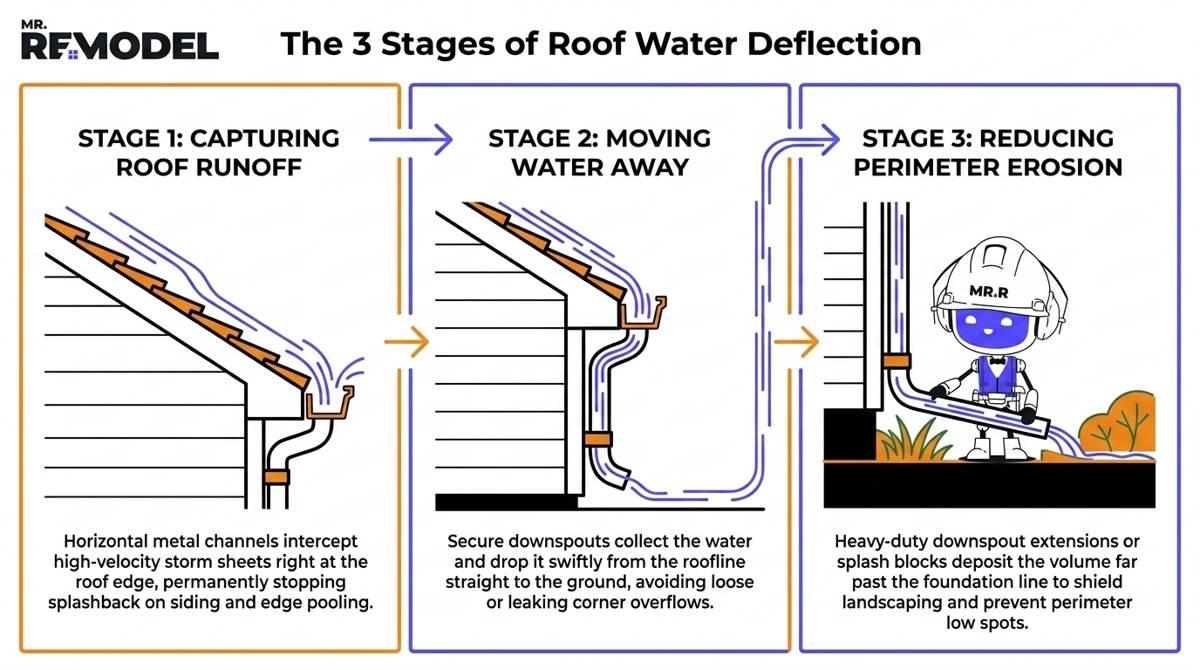
Capturing Roof Runoff
The roof collects a large amount of rainwater during storms. Gutters catch that water before it falls directly beside the home.
This helps reduce splashback on siding, pooling near the foundation, and erosion around the perimeter.
Moving Water Away From the Home
Downspouts are just as important as gutters. They carry water from the roofline to the ground, but it still needs to exit at the right place.
Short or disconnected downspouts can cause water to pool near the foundation. Extensions help move water farther away from the house.
Reducing Erosion
Erosion happens when moving water carries soil away. Around a home, this can create low spots where more water collects.
Proper gutter drainage helps reduce concentrated runoff near the foundation. It can also help protect landscaping, walkways, and mulch beds.
See Related: Complete Homeowner's Guide to Gutters
What Happens When Gutters Fail?
When gutters fail, the problem is not always obvious right away. Many homeowners first notice overflowing water during storms or damp soil near the home after rain.
Moisture exposure can also affect building materials over time. The United States Department of Agriculture Forest Service (USDA Forest Service) summarizes how moisture conditions affect wood and wood-based materials in its Wood Handbook.
Overflowing Gutters
Overflowing gutters may happen when leaves, roof grit, or debris block water flow. Water then spills over the edge instead of moving toward the downspout.
If overflow repeatedly occurs in the same corner, that area may become more vulnerable to soil erosion and water buildup.
Clogged Downspouts
A gutter can look clean and still fail if the downspout is clogged. When water cannot exit, it backs up and spills over.
Homeowners should check downspouts during rain when possible. Water should flow freely and drain away from the home.
Improper Drainage
Improper drainage can happen when downspouts end too close to the foundation. It can also happen when grading slopes toward the home.
See Related: Common Gutter Problems and Solutions
Signs Your Gutters May Be Putting Your Foundation at Risk
Some warning signs are easy to see from the ground. Others show up after heavy rain.
Watch for:
- Water spilling over gutter edges
- Soil erosion near the foundation
- Mulch washing away
- Downspouts draining too close to the home
- Water stains on siding
- Sagging or loose gutter sections
- Standing water near the foundation
- Repeated basement or crawl space moisture
One issue may be repairable. Several warning signs at once may point to a failing gutter system.
See Related: Signs You Need New Gutters
Gutters Protect More Than Just Foundations
Foundation protection is a major reason gutters matter, but it is not the only one. Gutters also help protect the roofline, fascia, siding, landscaping, and exterior surfaces.
When gutters clog or overflow, water can back up near the roofline or spill onto trim and siding. That can create stains, rot risks, and maintenance problems.
See Related: How Gutters Prevent Roof Damage
Why Homeowners Replace Gutters Before Bigger Problems Develop
The Mr. Remodel dataset shows strong demand for gutter services that support water management.
Gutter replacement generated 6,273 inquiries. New gutter installation generated 2,847 inquiries, and gutter repair generated 1,924 inquiries. Total gutter-related demand equals 11,044 inquiries.
Installation and replacement account for about 83% of all gutter inquiries. That suggests many homeowners are focused on full-system solutions rather than small repairs alone.
Cost Context for Prevention
Approved-brief estimates show why prevention matters:
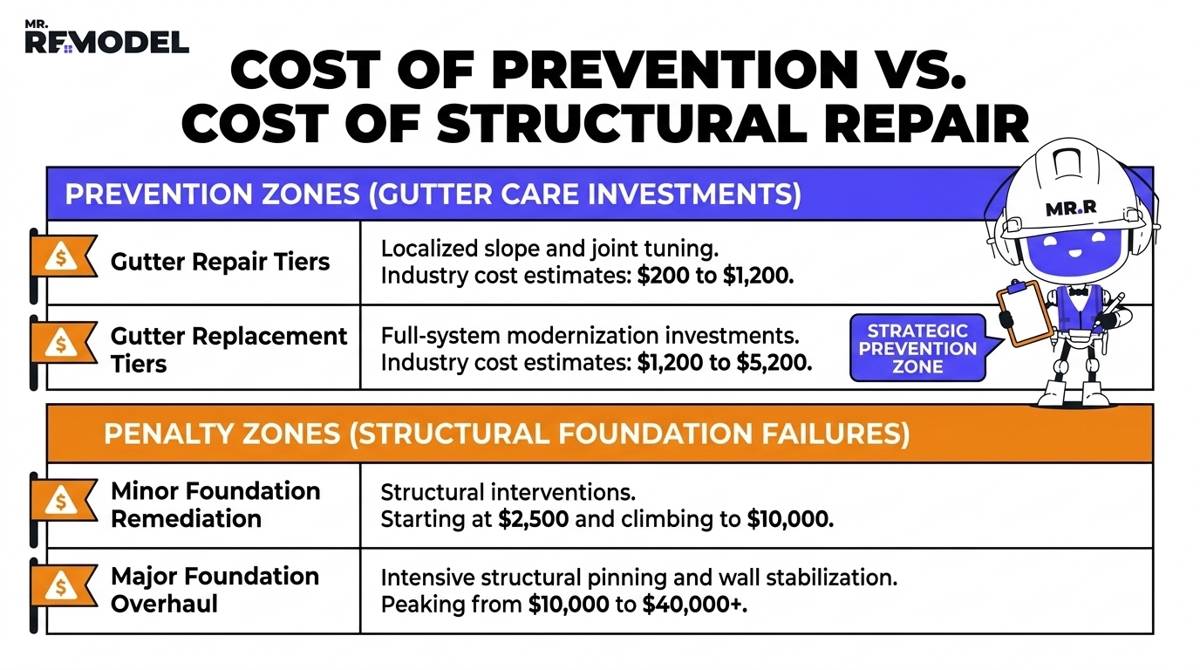
Gutter work is not the same as foundation repair, and this comparison does not mean gutters prevent every foundation issue. It does show why homeowners should take drainage seriously.
Ready to check your gutter system? Mr. Remodel connects homeowners with fully vetted local contractors. You can use Mr. Remodel to find local gutter contractors and request a free, no-obligation quote.
Frequently Asked Questions
Can bad gutters cause foundation problems?
Poorly maintained gutters can increase the risk to the foundation when they allow water to collect near the home. Overflowing gutters, clogged downspouts, and poor drainage can increase moisture around the foundation.
They are not the only possible cause of foundation problems, but they are an important water management issue.
How far should downspouts extend from a foundation?
Downspouts should move water away from the foundation, not release it directly beside the home. The exact distance depends on grading, soil, landscaping, and drainage layout. A contractor can inspect the property and recommend a safe discharge point.
Can clogged gutters cause water damage?
Yes. Clogged gutters can overflow and send water down siding, near the roof edge, or around the foundation. This can contribute to staining, erosion, moisture issues, and exterior damage over time.
Do all homes need gutters?
Most homes benefit from gutters, especially where roof runoff falls near the foundation, walkways, siding, or landscaping.
Some homes may have special drainage designs, but most homeowners should treat gutters as an important part of water control.
Protecting Your Foundation Starts With Proper Drainage
Understanding how gutters protect your foundation can help you prevent bigger water problems before they start. Gutters capture roof runoff, direct it through downspouts, and help move water away from the home’s most vulnerable areas.
If your gutters overflow, sag, clog often, or drain too close to the foundation, it may be time to compare repair or replacement options. Connect with local gutter contractors through Mr. Remodel and request a free, no-obligation quote.