1-855-QUOTEMR

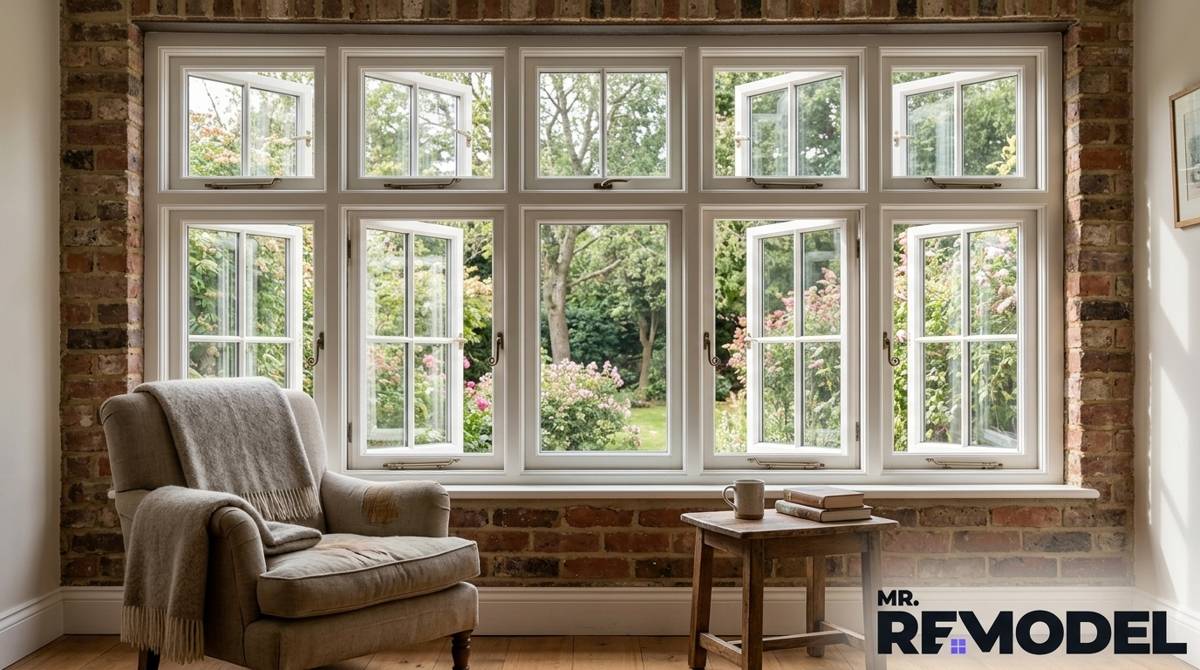
Table of Contents [hide]
Who This Is For
Homeowners considering casement windows for replacement or new installation and looking for qualified contractors to complete the project.
Key Takeaways:
- Strong Ventilation: Casement windows open outward to catch more airflow.
- Energy Performance: A tight seal can help improve comfort when windows are installed correctly.
- Installer Skill Matters: Poor flashing, sealing, or fit can reduce performance.
- Costs Vary: Size, material, glass package, and labor all affect pricing.
- Ask Questions: A clear contractor checklist can help avoid hiring mistakes.
Casement windows can make a room feel brighter, fresher, and easier to ventilate. For homeowners comparing casement window installation services, the right contractor matters just as much as the window style itself.
A casement window must open smoothly, seal tightly, and protect the wall opening from air and water. That is why homeowners should compare installers carefully before choosing a contractor.
What Are Casement Windows?
Casement windows are hinged on one side and usually open outward with a crank, handle, or push-out mechanism. Unlike double-hung windows that slide up and down, casement windows swing open like a door.
This design can create a wide opening for airflow and a clean view through the glass.
How Casement Windows Work
Most casement windows use side hinges and a locking mechanism that pulls the sash tightly against the frame. When closed correctly, the sash presses into the weatherstripping.
That tight closure is one reason many homeowners consider casement windows for energy-efficient window replacement.
Common Benefits of Casement Windows
Casement windows are often chosen for ventilation, visibility, and simple operation. Since the full sash can open outward, they can bring in more air than some sliding or single-hung styles.
They can also work well in areas where reaching a window may be difficult, such as over a kitchen sink.
Where Casement Windows Work Best
Casement windows often work well in kitchens, bedrooms, living rooms, bathrooms, and hard-to-reach wall openings. They are also useful where homeowners want airflow and a wider view.
However, they may not be ideal where an outward-opening sash could interfere with walkways, patios, shrubs, or exterior features.
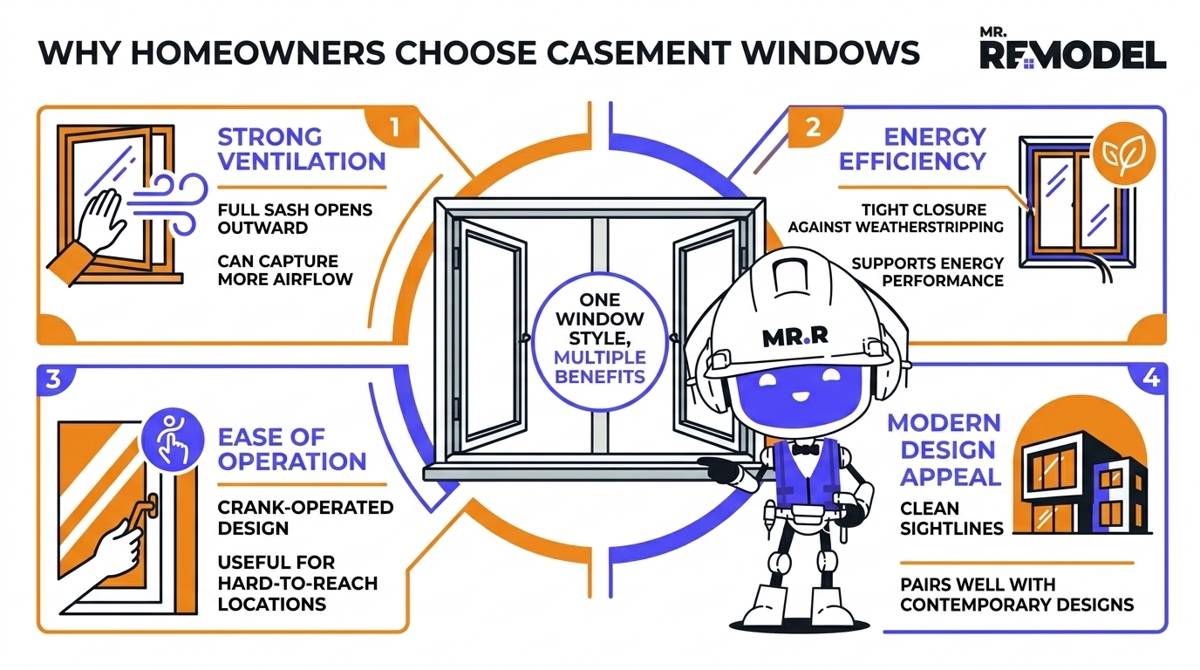
Why Homeowners Choose Casement Windows
Homeowners often choose casement windows for comfort, airflow, appearance, and energy performance. The United States Department of Energy (DOE) explains in its window guidance that windows are an important part of a home’s envelope and can affect comfort, heating, cooling, and lighting costs.
Choosing the right product is important, but installation quality is just as important. A casement window needs the right fit, flashing, sealing, and adjustment to perform well.
Ventilation Benefits
Because casement windows open outward, they can help direct outdoor air into the home. This can be useful in rooms that feel stuffy or need better cross-ventilation.
The actual airflow depends on window placement, wind direction, room layout, and screen design.
Energy Efficiency
Casement windows can support energy efficiency when the right product is paired with proper installation. ENERGY STAR’s Windows, Doors, and Skylights resources help homeowners compare energy-efficient window options.
Product selection still matters. Glass package, frame material, climate zone, and performance ratings should all be considered before making a choice.
See Related: Energy Efficient Windows | 2026 Ratings, Costs & Savings Guide
Ease of Operation
Many casement windows use a crank, which can be easier to operate than lifting a heavy sash. This can be helpful for older homeowners or for windows placed over counters.
Homeowners should test the hardware before buying to make sure the crank or handle feels sturdy and easy to use.
Modern Design Appeal
Casement windows often have a clean, simple look. They pair well with modern homes, transitional designs, and rooms where homeowners want more glass and fewer visual interruptions.
They can also be grouped with fixed windows for larger openings.
How Much Do Casement Window Installation Services Cost?
Casement window costs vary by size, material, glass type, frame condition, labor, and whether the project is a simple replacement or a full-frame installation.
Industry-standard planning estimates include:
These ranges are planning guidance, not guaranteed pricing. Larger windows, custom sizes, structural repairs, upgraded glass, interior trim, and exterior finish work can increase the final cost.
See Related: Window Costs and Value | Real Project Data & ROI Guide
How to Choose a Casement Window Installation Contractor
The best contractor should understand both the window product and the wall opening. Casement windows need proper fit, sealing, flashing, operation, and adjustment.
Licensing and Insurance
Ask whether the contractor is licensed where required. Also, ask for proof of insurance before work begins.
Window installation involves glass, ladders, openings in the exterior wall, trim, and sometimes siding or framing work. Insurance helps reduce homeowner risk.
Installation Experience
Ask how often the contractor installs casement windows. Casement windows have hinges, cranks, locking points, and sash alignment requirements that differ from those of some other window types.
A contractor should understand how to keep the window square, level, sealed, and easy to operate.
Warranty Coverage
Ask what warranty covers the window product and what warranty covers labor. These may be separate.
Also, ask whether poor installation could affect the manufacturer's warranty.
References and Past Projects
Request photos or examples of similar casement window projects. Look for clean trim, neat caulking, smooth operation, and good exterior finish details.
A contractor with strong past work should be able to explain how they handle both appearance and performance.
See Related: Choosing A Window Replacement Contractor | Vetting Guide
Questions to Ask Before Hiring a Window Contractor
Before signing a contract, ask questions that help clarify the full scope of work.
Use this checklist:
- Are you licensed where required?
- Can you provide proof of insurance?
- How many casement window projects have you completed?
- Do you recommend an insert or a full-frame replacement?
- What frame material do you recommend?
- What glass package is included?
- How will you handle flashing and air sealing?
- Is interior trim included?
- Is exterior trim or siding repair included?
- What happens if hidden rot is found?
- What warranty covers labor?
- What warranty covers the window?
- Are cleanup and disposal included?
A good contractor should answer these clearly and provide a written estimate.
Need help comparing contractors? Mr. Remodel is a contractor-matching platform that helps homeowners connect with fully vetted local window contractors.
Common Casement Window Installation Challenges
Casement windows can perform well, but installation details matter. The DOE’s air sealing guidance explains that air leaks can affect comfort and energy use.
Proper Flashing
Flashing helps direct water away from the window opening. If flashing is missing or installed poorly, water can reach the wall cavity.
This is especially important in areas with heavy rain, humidity, or wind-driven storms.
Air Sealing
Air sealing helps reduce drafts around the frame. A poorly sealed window can feel uncomfortable even if the product itself is efficient.
Contractors should follow the manufacturer's instructions for sealing the opening.
Water Intrusion Prevention
Water intrusion can damage trim, framing, insulation, and surrounding finishes. Proper sill details, flashing, caulking, and exterior finishing all matter.
Homeowners should ask how the contractor prevents water from getting behind the window.
Hardware and Operation Adjustments
Casement windows must open, close, lock, and crank smoothly. If the window is out of square, the sash may bind or fail to seal correctly.
A professional installer should test each window before finishing the job.
Frequently Asked Questions
How much do casement windows cost to install?
Casement windows often cost about $400 to $1,000 per window for basic vinyl options, $800 to $1,800 for mid-range options, and $1,500 to $3,500+ for premium wood or fiberglass options, with labor often adding $150 to $800+ per window depending on project complexity.
Are casement windows more energy efficient?
Casement windows can be energy efficient because the sash often closes tightly against the frame, but performance depends on the product, glass package, climate fit, National Fenestration Rating Council (NFRC) ratings, and installation quality.
How long does casement window installation take?
Many single-window replacements can be completed quickly, but the total timeline depends on the number of windows, home age, trim work, weather, access, material availability, and whether hidden damage is found during removal.
Do casement windows increase home value?
Casement windows may support home value when they improve comfort, curb appeal, function, and energy performance, but the exact resale impact depends on the home, market, window quality, installation quality, and buyer preferences.
Can I replace a double-hung window with a casement window?
Yes, a double-hung window can often be replaced with a casement window if the opening, framing, exterior clearance, and design goals allow it, but a contractor should inspect the opening before confirming the best replacement method.
Choosing the Right Contractor for Long-Term Performance
Casement window installation services can improve ventilation, comfort, appearance, and energy performance when the windows are selected and installed correctly. The key is choosing a contractor who understands fit, flashing, sealing, operation, and long-term protection.
Before hiring, compare product options, ask about installation methods, review warranties, and make sure the quote explains what is included. To start your project, use Mr. Remodel to connect with fully vetted local window contractors.