1-855-QUOTEMR

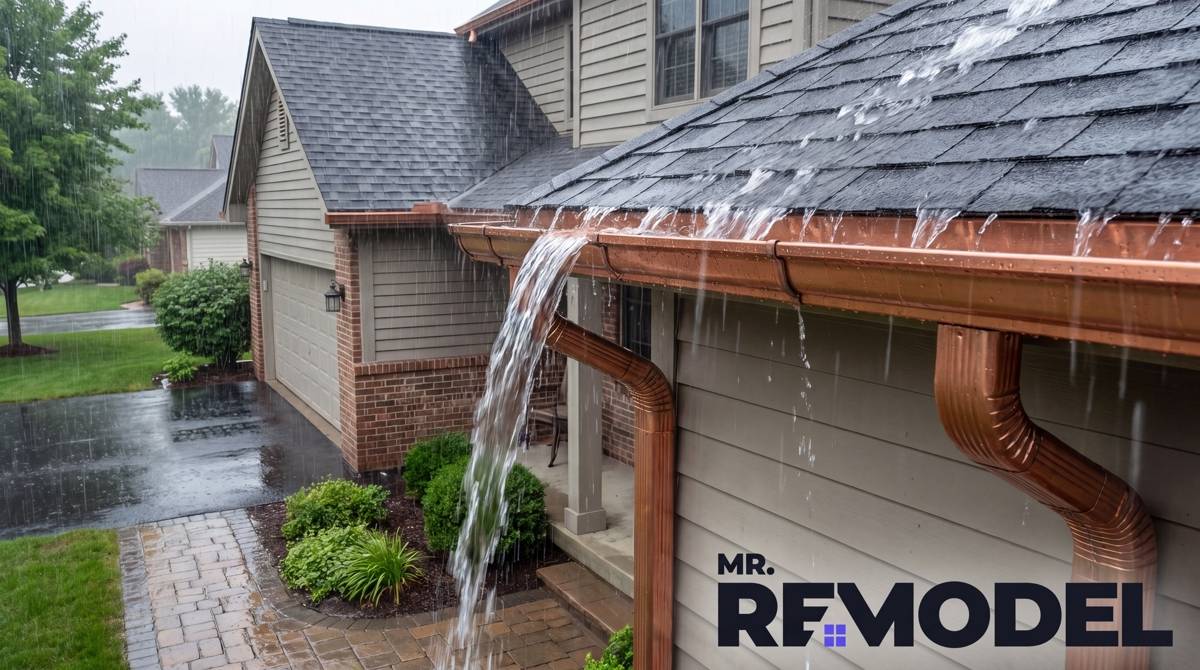
Table of Contents [hide]
Who This Is For:
This comprehensive guide is designed for homeowners living in regions prone to severe weather, heavy rainfall, or frequent storms. If you are experiencing drainage failures, overflowing channels, or foundation pooling, this data-driven resource will help you make the best structural defense decisions for your property.
Key Takeaways
- Capacity is Critical: Upgrading to 6-inch K-Style systems is a structural necessity in heavy rain zones.
- Material Strength Matters: Standard 0.027-inch aluminum will fail under storm stress. Heavy-gauge 0.032-inch aluminum is the minimum requirement.
- Financial Protection: A $2,200 to $5,000 installation protects against an average $11,605 water damage claim.
- Downspout Upgrades: Standard 2x3-inch downspouts must be replaced with oversized 3x4-inch models to handle high-volume displacement.
- Hardware Spacing: Severe weather regions require hidden hangers spaced every 16 inches for maximum wind and load resistance.
- Regional Specifics: Climate dictates material choices, from Pacific Northwest micro-mesh to Tornado Alley galvanized steel.
- Massive ROI: Biannual maintenance costing $200 yields an investment return of over 1,000% by preventing major foundation damage.
Water damage is the silent destroyer of American homes. Every year, inadequate drainage systems lead to catastrophic foundation failures and flooded basements. Homeowners often treat roof runoff as a minor nuisance rather than a severe structural threat. This oversight leads to staggering financial consequences.
According to data compiled by the Insurance Information Institute, the average homeowner claim for water damage and freezing reaches an alarming $11,605. This financial disaster is largely preventable with proper exterior water management.
Compare that massive repair bill to a standard home protection upgrade. Mr. Remodel data shows the national average for a full high-capacity drainage installation runs between $2,200 and $5,000. Upgrading your exterior defense is a financial necessity that pays for itself.
The Financial Reality of Drainage Failure
Understanding the true cost of inaction is the first step in protecting your property. Many property owners view exterior drainage as a cosmetic feature. In reality, these channels are the primary defense mechanism against structural decay.
When undersized or weakened channels fail during a torrential downpour, the resulting water volume dumps directly at the base of your home. This concentrated moisture saturation compromises the surrounding soil stability instantly.
The Federal Emergency Management Agency reports that even minor water pooling near a structure can cause massive problems. Just one inch of water inside a home can result in up to $25,000 in foundation and property damage.
Foundation repairs resulting from poor drainage typically range between $8,000 and $25,000. These costs do not include the secondary expenses of mold remediation, drywall replacement, or damaged landscaping.
See Related: Storm Damage: Repair or Replace Decision Guide
Gutter Sizing Rules for Heavy Rain Zones
The most common point of failure in residential water management is inadequate capacity. Most builder-grade homes are equipped with standard 5-inch channels. These are insufficient for modern extreme weather events.
The Limits of 5-Inch Systems
Standard 5-inch K-Style profiles are designed for moderate climates with predictable precipitation. Mr. Remodel data confirms these standard systems max out at approximately 5,500 square feet of roof drainage capacity.
When a severe thunderstorm hits, the volume of water sheeting off your roof easily overwhelms a 5-inch profile. This leads to immediate overflow. The water cascading over the front edge completely defeats the purpose of having a drainage system installed.
The 6-Inch Mandate for Storm Areas
Homeowners in storm-prone regions must upgrade to 6-inch K-Style systems. This simple one-inch increase provides a massive boost in water management capability. These larger profiles safely manage runoff for roofs ranging from 5,500 to over 8,000 square feet.
A 6-inch channel holds nearly double the water volume of its smaller counterpart. This extra capacity acts as a crucial buffer during torrential downpours. It ensures water remains controlled and directed away from your fragile foundation.
Table 1: Capacity and Pricing Comparison
Top Gutter Materials for Severe Weather
Selecting the correct material is just as important as choosing the right size. Standard hardware store materials simply cannot withstand the abuse of severe weather events. You need industrial-grade resilience.
Heavy-Gauge Aluminum
Aluminum is the industry standard for seamless installations because it resists rust and corrosion. However, standard 0.027-inch gauge aluminum is too thin for storm zones. It will dent from hail and twist under heavy wind loads.
Experts strictly recommend 0.032-inch heavy-gauge aluminum for vulnerable regions. This thicker material provides excellent structural rigidity. It averages $10 to $20 per square foot installed, making it a highly cost-effective and durable solution.
Galvanized Steel
For areas experiencing high-velocity hail or extreme winter conditions, galvanized steel is the premier choice. This material offers unmatched strength against physical impacts. It will not easily bend or warp under the weight of severe ice dams.
Galvanized steel systems average between $10 and $35 per linear foot. While heavier and slightly more expensive to install, they offer a lifespan of 20 to 50 years. They are the ultimate defensive barrier for intense weather corridors.
Ready to secure your home's foundation with the right materials? Let our experts guide you through the process. Get a free estimate for high-capacity gutter replacement costs.
Table 2: Material Cost, Thickness, and Storm Rating
Downspouts and Fasteners: The Unsung Heroes
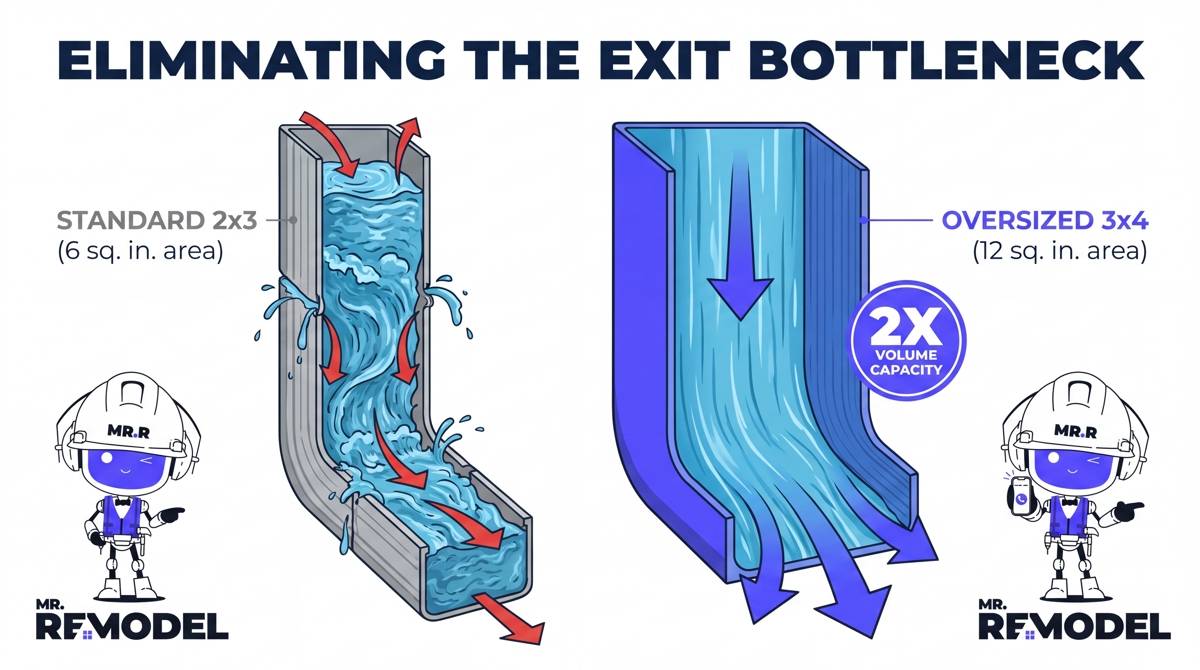
Even the largest channels are useless if the water cannot exit the system quickly. Downspouts are the critical exit pathways that dictate overall flow rate. Bottlenecks here cause immediate systemic failure.
Standard residential installations use 2x3-inch downspouts. These are entirely inadequate for 6-inch channels. You must upgrade to oversized 3x4-inch downspouts. These larger exit pathways cost between $5 and $18 per linear foot and prevent dangerous water backups.
The hardware securing your system to the fascia board is equally vital. Traditional spike and ferrule fasteners pull loose over time. Professionals insist on using heavy-duty hidden hangers for all storm-zone installations.
Furthermore, standard hanger spacing is every 24 inches. In regions facing hurricane-force winds or heavy snow, hangers must be spaced every 16 inches. This tight configuration provides maximum load-bearing strength and prevents dangerous sagging.
See Related: Roof Replacement Cost (2026): Materials, Labor, Regional Pricing & ROI
Regional Specifications for Maximum Protection
The definition of severe weather changes drastically depending on your geographic location. A one-size-fits-all approach to exterior drainage always results in compromised performance. Local climate data must dictate your structural decisions.
The Gulf Coast
Homes along the Gulf Coast face constant threats from tropical storms and hurricanes. The primary enemy here is extreme wind velocity combined with rapid water accumulation. Your system must remain attached during hurricane-force gusts.
For the Gulf Coast, experts specify 6-inch seamless aluminum fabricated at the 0.032-inch gauge. We mandate heavy-duty hidden hangers spaced exactly at 16 inches. This specific configuration combats extreme winds and handles sudden torrential downpours flawlessly.
The Pacific Northwest
The Pacific Northwest experiences relentless, prolonged rainfall. According to the National Weather Service, this region receives exceptional annual precipitation. The surrounding heavy foliage creates an additional hazard for exterior drainage systems.
Pine needles and organic debris quickly cause catastrophic clogs. We mandate 6-inch K-Style systems paired with premium micro-mesh guards. These guards cost $8 to $15 per linear foot but are essential to maintain water flow in heavily wooded areas.
Tornado Alley and the Midwest
The Midwest and Tornado Alley face a unique combination of threats. Homes here endure high-velocity hail in the spring and crushing ice dams in the winter. Standard aluminum systems are often pulverized by these weather extremes.
Galvanized Steel systems are recommended for these specific regions. Steel resists catastrophic hail dents effectively. It also possesses the rigid tensile strength required to prevent tearing away from the home under the immense weight of winter ice.
See Related: Best Gutters for Hot Climates (California, Arizona, Nevada)
Gutter Guards in Storm-Prone Areas
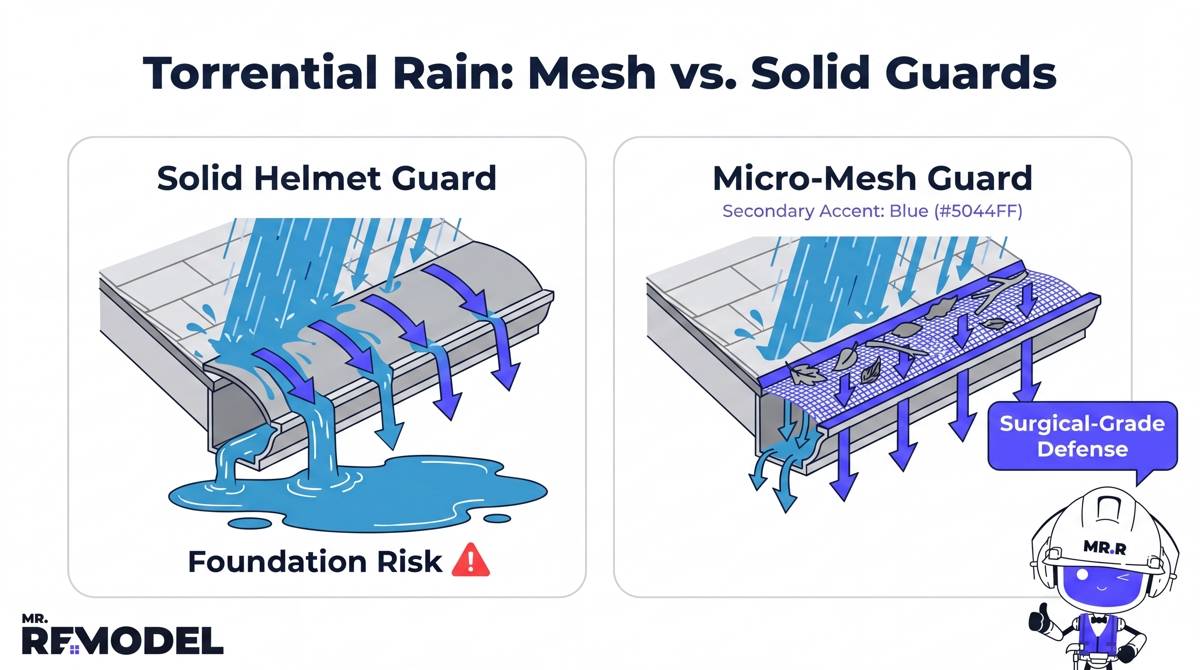
A common misconception is that all leaf protection systems are created equal. In heavy rain zones, installing the wrong type of protection actually accelerates water damage. Solid surface helmets often cause water to overshoot the channel entirely.
For high-volume water management, micro-mesh systems are the only viable option. These guards utilize a surgical-grade stainless steel mesh. They filter out microscopic shingle grit while allowing massive amounts of water to easily pass through into the channel.
While micro-mesh systems add initial upfront cost, they guarantee your oversized channels perform flawlessly during a crisis. They eliminate the risk of unseen blockages forming inside the downspouts during the middle of a severe thunderstorm.
The ROI of Proactive Maintenance
Investing in premium, high-capacity materials is only the first part of the equation. Even the best systems require ongoing attention to function correctly. Routine maintenance is the cheapest form of home insurance available.
Mr. Remodel data shows that professional bi-annual cleaning typically costs between $200 and $400. Frame this small expense against the $11,605 average water damage claim. This routine maintenance yields an exceptional return on investment exceeding 1,000 percent.
Neglected channels fill with heavy, wet debris. This added weight causes the system to pull away from the fascia board. This structural separation allows rainwater to rot the wood behind your roofline entirely.
Table 3: The Cost of Inaction
See Related: Roof Leak Repair vs Full Replacement Cost
Professional Installation vs. DIY in Storm Zones
Many property owners attempt to save money by installing sectional pieces purchased from big-box stores. In storm-prone environments, DIY installations are a guaranteed recipe for structural failure.
Sectional systems contain dozens of seams. Every single seam is a weak point that will eventually leak under the pressure of heavy rain. Professional contractors formulate seamless channels on-site using specialized extrusion machines.
Furthermore, correct pitch calculation is an exact science. A system must drop perfectly towards the downspout to ensure rapid water evacuation. Incorrect pitching causes standing water, which leads to rust, mosquito breeding, and ultimate hardware failure.
Professional installers also ensure the crucial flashing behind the channel is integrated perfectly with your all-weather roofing materials. This unseen layer of protection stops wind-driven rain from penetrating your attic space during a severe squall.
Research Methodology
This 2026 guide is based on a comprehensive analysis of 4,614 consumer inquiries from our proprietary dataset. We have combined these behavioral markers with 2026 industry-standard pricing models for residential homes. Our cost estimates are based on a standard 200-linear-foot home to provide an accurate financial anchor for your project.
FAQs
What is the minimum gutter size required for heavy rain areas?
Experts strictly advise upgrading to a 6-inch K-Style profile. These larger systems are an absolute requirement for heavy rain zones because they hold nearly double the water volume of standard 5-inch builder-grade profiles.
How much does a high-capacity system typically cost?
Based on Mr. Remodel data, the average national full installation runs between $2,200 and $5,000. The final price depends heavily on the linear footage of your home and the specific materials chosen.
Why is standard aluminum not recommended for storm zones?
Standard 0.027-inch gauge aluminum is too thin to withstand extreme weather. It will warp under heavy wind and dent easily during hailstorms. You must use 0.032-inch heavy-gauge aluminum for proper structural defense.
Can I use my existing downspouts with a new 6-inch system?
No. Upgrading your channels is useless without upgrading the exit pathways. Standard 2x3-inch downspouts will cause immediate bottlenecks. You must upgrade to oversized 3x4-inch downspouts to handle the increased water volume effectively.
How far apart should hidden hangers be placed?
Standard installations place hangers every 24 inches. However, in hurricane or heavy snow zones, Mr. Remodel mandates that hidden hangers be spaced at 16 inches to provide maximum load-bearing strength.
Do gutter guards work in torrential downpours?
Yes, but only specific types. Solid helmet styles often cause water to shoot over the edge during heavy rain. Premium micro-mesh guards are the best solution, allowing massive water flow while blocking tiny debris.
How much does water damage cost if my drainage fails?
It is financially devastating. The average homeowner insurance claim for water damage reaches $11,605. Foundation repairs caused by poor drainage can easily escalate to between $8,000 and $25,000.
Protect Your Home With Professionally-Installed Gutters
Protecting your home from the destructive force of severe weather requires a proactive, data-driven approach. Relying on builder-grade exterior drainage is a major financial risk. Upgrading to high-capacity materials is the only proven method to safeguard your foundation.
Remember the essential rules of storm-zone defense. You must utilize 6-inch K-Style profiles. You must insist on 0.032-inch heavy-gauge aluminum or galvanized steel. Finally, you must upgrade your downspouts to oversized 3x4-inch models.
Ignoring these structural requirements leaves your property vulnerable to tens of thousands of dollars in water damage. Do not wait for the next severe weather event to test the limits of your aging exterior defenses.
Take control of your home's safety today. Mr. Remodel provides free, no-obligation quotes and connects you directly with top-tier local professionals.