1-855-QUOTEMR

Table of Contents [hide]
Who This Is For
This guide is a specialized resource for homeowners planning a bathroom renovation in 2026. It provides data-driven insights into labor costs, regional return on investment, and professional vetting strategies to help you navigate the current skilled labor shortage and avoid overpaying.
Key Takeaways
- Market Baseline: Standard bathroom remodels in 2026 average between $16,500 and $18,500, representing a significant hike due to skilled labor scarcity.
- Labor Intensity: Professional labor now accounts for 40% to 65% of the total project budget, far exceeding material costs in many regions.
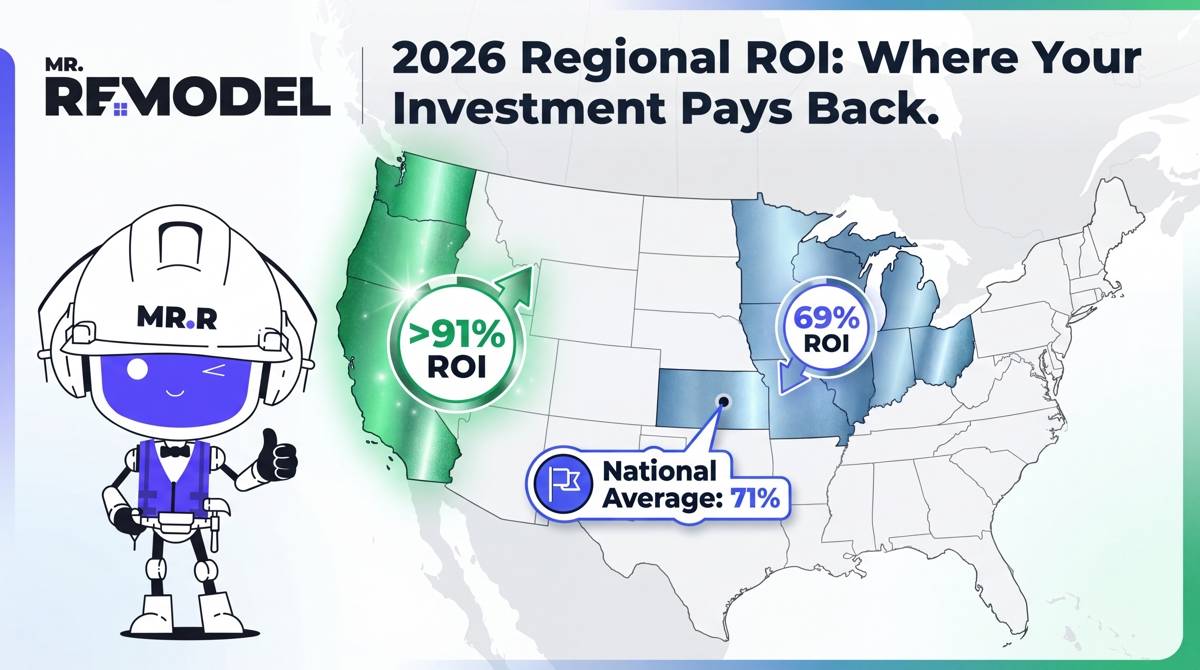
- Regional ROI Variance: Homeowners in the Pacific region see up to a 91% return on investment, while Midwest projects typically yield closer to 69%.
- Plumbing Flat-Costs: Reworking a bathroom floor plan adds a baseline average of $5,000 due to specialized trade requirements.
The cost of home improvement is shifting rapidly. In 2026, homeowners are finding that the price of a renovation is no longer dictated solely by the quality of tile or cabinetry. According to the National Association of Home Builders, the ongoing skilled labor shortage is driving a significant increase in contractor fees across the country.
Understanding these economic drivers is essential for any homeowner looking to hire the best bathroom remodel companies. When labor weight accounts for over half of your bill, your priority must shift from material selection to contractor vetting and financial planning.
Understanding 2026 Bathroom Remodel Market Baselines
In the current market, a standard bathroom renovation typically ranges from $180 to $280 per square foot. While luxury projects can easily exceed these numbers, most mid-range updates cluster between $16,500 and $18,500. This increase is largely attributed to a 4% to 6% hike in trade labor costs over the last year.
Budget refreshes remain an option for those focusing on aesthetics rather than structural changes. These projects usually land between $5,000 and $10,000. At Mr. Remodel, we track these national and local benchmarks to help you set a realistic starting point for your project.
Strategic Planning for Small Budgets
Not every project requires a full gut renovation. For homeowners focusing on minor cosmetic updates, a $500 bathroom remodel can address paint, hardware, and lighting. These small investments often yield a high aesthetic return without the need for professional permits.
If your goals include replacing a vanity or updating flooring, a $3,000 bathroom remodel is a more appropriate target. This budget allows for higher-quality materials while still avoiding the high costs of moving plumbing or electrical lines.
See Related: Full Bathroom Remodel vs Partial Remodel: The 2026 Smart Money Guide
The Hidden Truth About Labor Economics in 2026
The single largest driver of your remodeling bill is the labor required to execute the design. Data from the American Society of Civil Engineers confirms that the scarcity of plumbers and carpenters has fundamentally changed project pricing. Professional labor now represents 40% to 65% of the total budget.
This labor weight is non-negotiable for high-quality results. Skilled trades command higher premiums because they ensure the structural integrity and safety of your home. When you hire a professional, you are paying for their ability to navigate complex building codes and moisture-prone environments.
The Financial Impact of Layout Changes
Homeowners often underestimate the cost of moving a toilet, shower, or sink. Reworking a floor plan typically adds an average of $5,000 to the plumbing line item. This is due to the necessity of opening slabs or subfloors to reroute drain and supply lines.
Current market data from the University of South Alabama indicates that licensed plumbers now command between $45 and $200 per hour. When you factor in the 15% to 20% management fee charged by a general contractor, layout changes become a major financial decision.
See Related: Shower Only Remodel vs Full Bathroom Remodel: The 2026 Strategy
Regional ROI: Why Where You Live Matters
Your geographic location significantly influences the financial return on your investment. The Pacific region, including states like California and Washington, currently enjoys a massive 91% return on bathroom renovations. High property values in these areas allow for higher cost recovery during resale.
In contrast, the Midwest sees a lower average return of approximately 69%. This discrepancy is vital for homeowners to understand. If you live in a lower-yield market, you should be cautious about over-capitalizing on a project.
Avoiding Over-Capitalization
Academic data from the UCF College of Business warns that over-improving a home can lead to a poor return on investment. If a master suite renovation costs $50,000 in a neighborhood where homes sell for $250,000, you are unlikely to recoup that cost.
Strategic renovations should be proportional to the value of the home. Focusing on energy-efficient upgrades is often a safer bet for maximizing equity without exceeding local market caps.
See Related: Energy Efficient Bathroom Remodel Ideas: 2026 Guide to Water and Cost Savings
Avoiding Hidden Costs: Subfloors and Plumbing
One of the most frequent causes of budget blowouts is the discovery of hidden damage during demolition. Bathrooms are high-moisture environments where leaks often go unnoticed for years. When a contractor removes old tile, they may find rotting subfloors or mold.
Professional repair for subfloor rot typically adds $3.75 to $7.00 per square foot to the preparation phase. While this is an additional expense, it is a critical step. Installing new, expensive tile over a compromised subfloor will lead to cracking and structural failure within months.
The Value of Professional Risk Mitigation
Experienced bathroom remodelers act as risk mitigators. They identify these issues early and provide solutions that protect your long-term investment. This expertise is a primary reason why we recommend finding the right bathroom remodel contractor rather than attempting a complex DIY.
Hiring bathtub replacement companies for a tub-to-shower conversion is another way to ensure waterproofing is handled correctly. These specialists focus on a single aspect of the room, often providing faster timelines and specialized warranties.
How to Vet the Best Bathroom Remodel Companies
Selecting a contractor in a labor-starved market requires diligence. You must look beyond the initial quote to understand how the company operates. Reputable firms use W2 employees who are factory-trained and covered by the company's insurance policies.
Be cautious of contractors who rely exclusively on 1099 subcontractors. This practice often leads to a lack of accountability and inconsistent quality. A professional team should provide clear communication, a detailed contract, and proof of all necessary licenses.
Identifying Red Flags in Quotes
If a quote is significantly lower than the market baseline, it is usually because the contractor is cutting corners. They may be skipping permits, using unlicensed labor, or omitting critical waterproofing steps. These shortcuts often lead to 5 common mistakes to avoid in bathroom remodeling that eventually cost more to fix.
Before signing any agreement, you should always free quote from multiple vetted providers. Comparing line-item costs for labor and materials will help you identify which companies are being transparent about their pricing.
Frequently Asked Questions
What is the average labor cost for a bathroom remodel?
In 2026, labor typically accounts for 40% to 65% of the total project budget. This percentage is higher for projects involving layout changes or custom tile work due to the specialized trades required.
Why are plumbing changes so expensive?
Moving a toilet or shower usually costs an average of $5,000. This covers the labor to open the floor, reroute the main drain lines, and ensure the new configuration meets local venting codes.
Which region has the best ROI for bathroom remodels?
The Pacific region currently has the highest return on investment at 91%. The Midwest has a lower average ROI of 69%, making it important for homeowners in that area to budget conservatively.
How much should I budget for hidden water damage?
Homeowners should set aside an additional 10% to 15% of their budget for unforeseen repairs. Subfloor rot repair generally costs between $3.75 and $7.00 per square foot.
How does Mr. Remodel select its recommended contractors?
Mr. Remodel matches homeowners with vetted professionals who have proven track records in their local markets. We prioritize companies that offer transparent pricing and employ skilled, insured tradespeople.
Secure Your Home Equity with Expert Planning
A successful bathroom renovation is the result of careful financial planning and expert execution. By understanding the current labor economics and regional ROI data, you can make informed decisions that protect your home's equity.
Do not let the complexities of the 2026 market deter you from your home improvement goals. With the right data and a vetted professional partner, you can transform your space while staying within a realistic budget.
With Mr. Remodel, you can get a free, no-obligation quote and connect with the best bathroom remodel companies in your area. Our experts are ready to help you navigate the remodeling process with confidence and transparency.