1-855-QUOTEMR

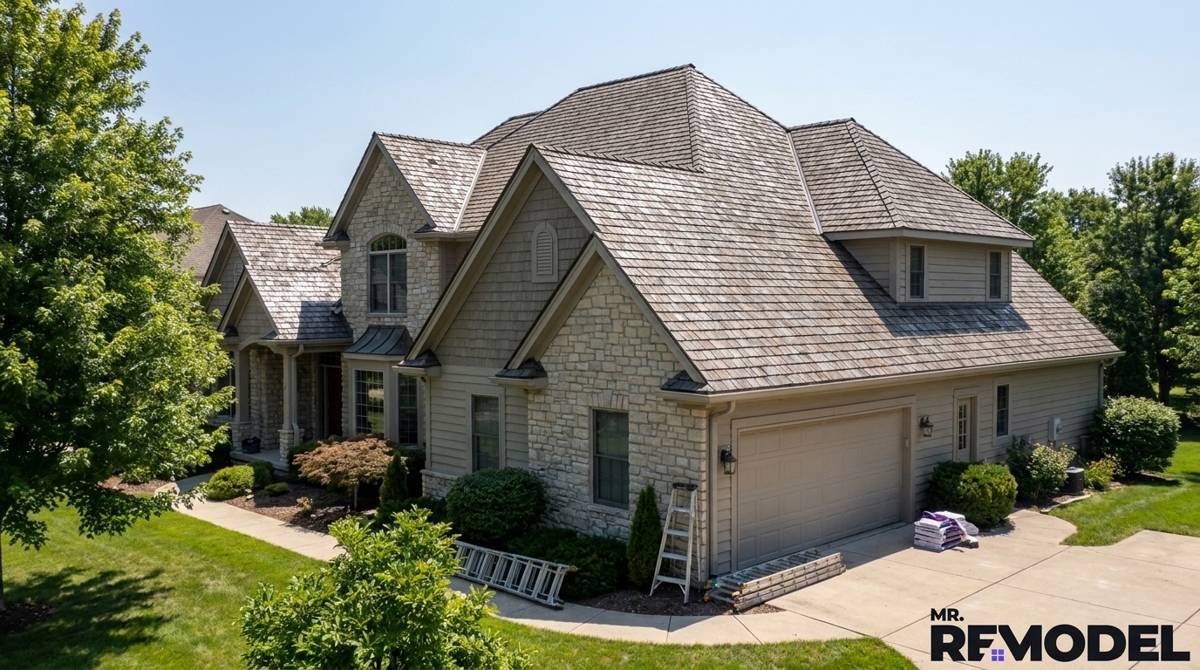
Table of Contents [hide]
Who This Is For:
Homeowners replacing an asphalt-shingle roof who want architectural shingles and need to know whether a roofing company is proposing a complete roof-system replacement instead of simply selling new shingles.
Key Takeaways:
- Architectural Shingles Are Only the Top Layer: A quality replacement should also address the roof deck, underlayment, flashing, ventilation, starter courses, and ridge details.
- Deck Inspection Matters: Contractors should explain how they inspect decking after tear-off and how damaged sheathing is priced.
- Installation Instructions Affect Warranties: Manufacturer requirements and local code can affect fastening, flashing, underlayment, and warranty coverage.
- Warranties Are Not All the Same: Product warranties and roofing-company workmanship warranties protect different things.
- A Detailed Estimate Protects You: The proposal should identify the full roofing system, not just a shingle brand and total price.
Architectural shingles can make a roof look thicker, more dimensional, and more finished than basic three-tab shingles. But the shingle you see from the street is only one part of the roof.
A good architectural shingle replacement company should evaluate the entire roof system. That includes what comes off, what is underneath, how water is managed, how the roof is ventilated, and how the new shingles are installed.
Mr. Remodel roofing data shows that shingles account for about 67.5% of roofing inquiries in the supplied dataset. Among classified shingle inquiries, about 99% fall under installation or replacement rather than repair, which shows strong homeowner demand for larger shingle-roof projects.
Architectural Shingles Are Only One Part of the Roof
Architectural shingles are laminated asphalt shingles designed to create a thicker, dimensional appearance compared with traditional three-tab shingles. Manufacturers such as GAF group architectural shingles separately within residential asphalt-shingle product lines.
That product choice matters, but it is not the whole project.
A Complete Roof System Includes More
A full roof replacement may involve:
- Roof deck
- Underlayment
- Drip edge
- Ice and water protection where appropriate
- Valleys
- Flashing
- Starter shingles
- Field shingles
- Hip and ridge shingles
- Attic ventilation
- Cleanup and disposal
- Product and workmanship warranties
If an estimate focuses only on the shingle brand, it is missing the bigger picture.
See Related: Asphalt Shingle Roofing: Cost, Types and Benefits
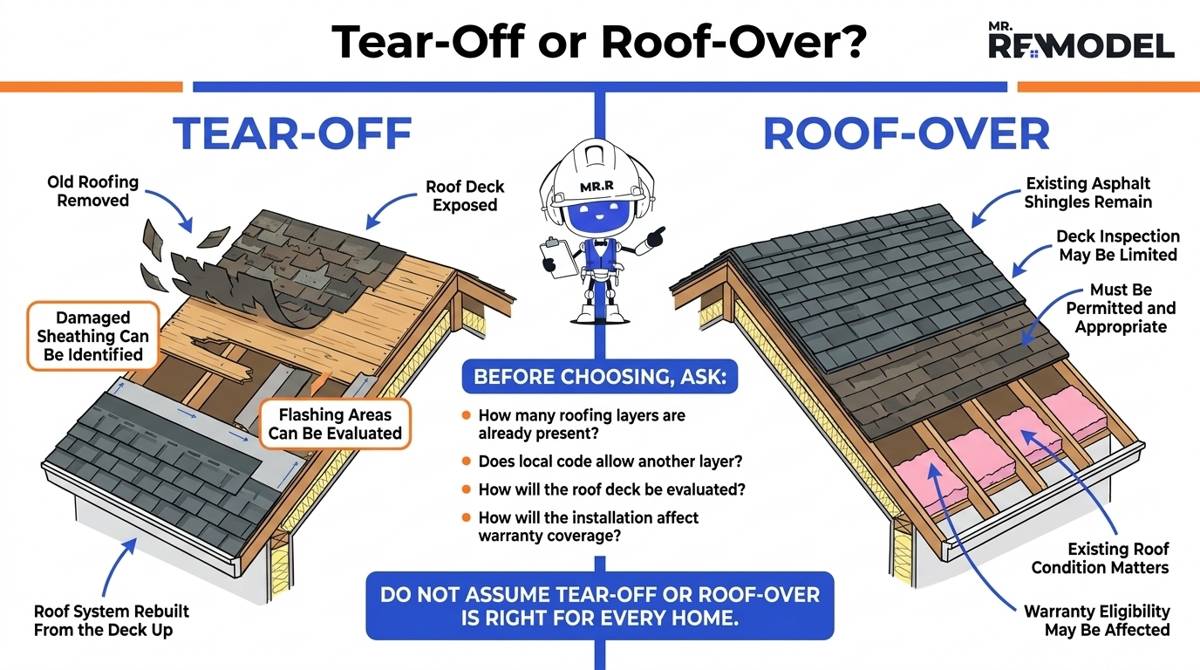
Ask Whether the Old Roof Will Be Removed
Before comparing shingle colors or warranty names, ask what happens to the existing roof. This affects the contractor’s ability to inspect the deck and follow manufacturer requirements.
Tear-Off Replacement
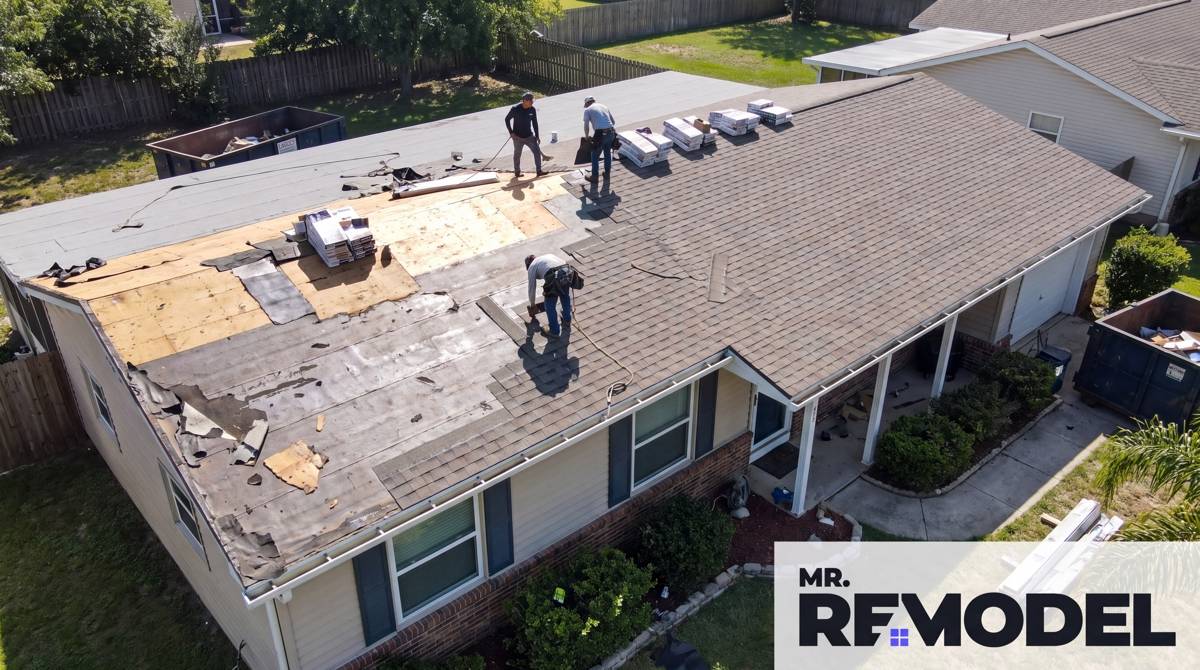
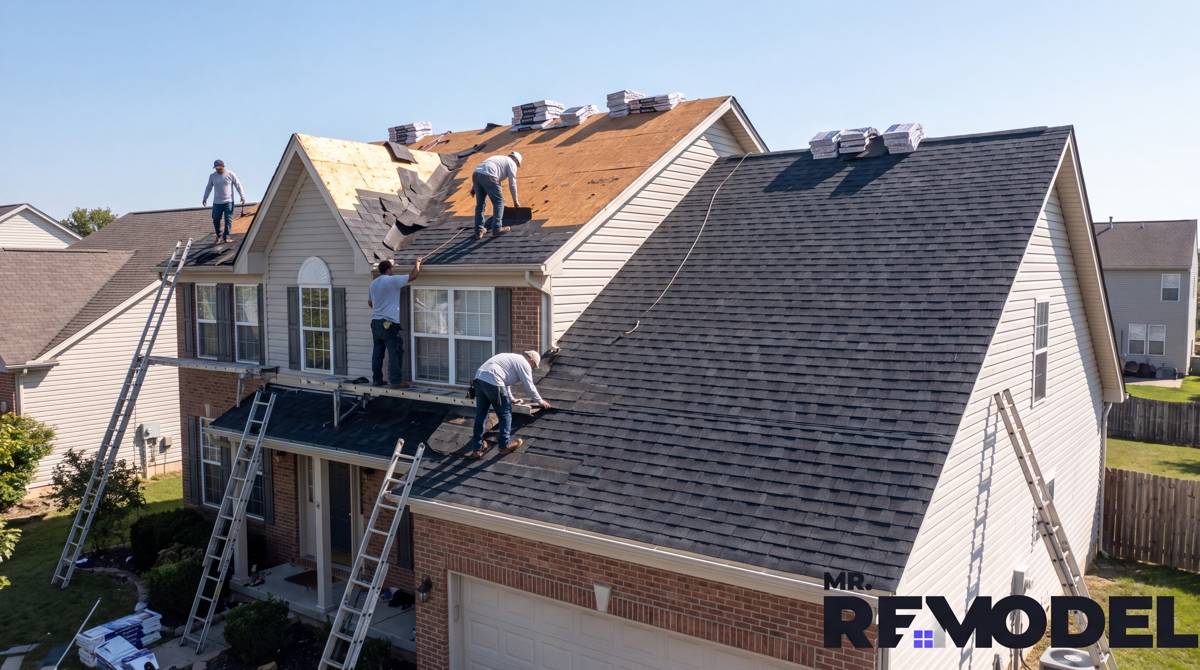
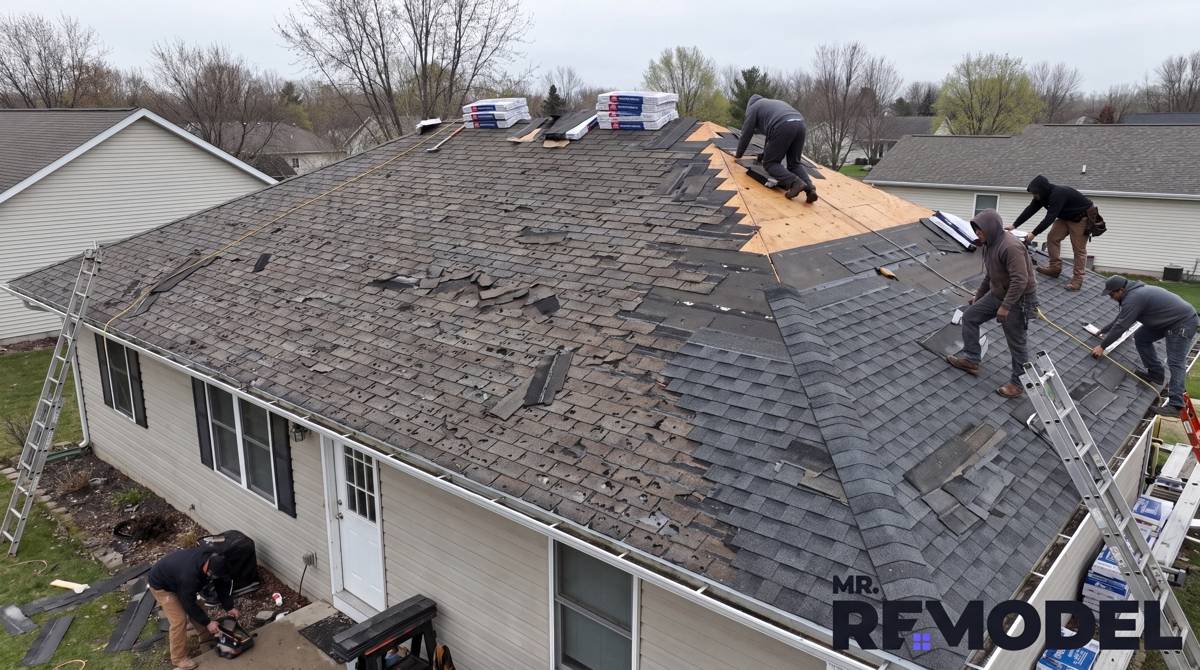
A tear-off means the existing roof covering is removed. This lets the contractor inspect the roof deck, identify damaged sheathing, check flashing areas, and rebuild the roof system from the deck up.
For many homeowners, this gives a clearer picture of what the roof actually needs.
Roof-Over
A roof-over means new shingles are installed over an existing asphalt-shingle roof where permitted and appropriate. This may be allowed in some situations, but it can limit the contractor’s ability to inspect the deck.
It may also affect warranty eligibility. Owens Corning states that installation over an existing asphalt shingle roof is not eligible for several enhanced roofing-system warranties.
What to Ask
Ask the roofing company:
- Are you removing the existing roof?
- How many roofing layers are present?
- Does local code allow another layer?
- How will the deck be inspected if shingles remain?
- How does this affect warranty coverage?
Do not assume tear-off is legally required everywhere. Ask the contractor to explain the option they recommend and why.
The Roof Deck Should Be Inspected
The roof deck is the surface the shingles and underlayment attach to. If it is soft, rotted, loose, or damaged, new shingles may not perform the way they should.
After tear-off, the contractor should inspect the deck before installing new materials.
Deck Problems to Watch For
The roofing company should look for:
- Soft decking
- Rot
- Damaged plywood or boards
- Loose sheathing
- Inadequate fastening
- Holes or deterioration
- Water-stained areas
The estimate should also explain how decking repairs are priced. Some companies charge per sheet of plywood or by linear foot for certain repairs. Others may include an allowance.
For high-wind roof resilience, the Insurance Institute for Business & Home Safety (IBHS) FORTIFIED program publishes technical documents with roof-deck attachment and sealed roof-deck details, showing why the deck is part of the roof system and not an afterthought.
Underlayment and Water Protection Matter
Underlayment is the layer installed beneath shingles. It acts as a secondary water-control layer if wind-driven rain or damaged shingles allow water underneath the roof covering.
The Federal Emergency Management Agency (FEMA) roofing guidance for asphalt-shingle roofs discusses underlayment, attachment, laps, edge flashing, and enhanced secondary water-barrier options in exposed environments.
Ask What System Is Being Installed
Ask the contractor:
- What underlayment are you using?
- Where will self-adhered membrane or ice-and-water protection be installed?
- How will valleys be treated?
- How will roof edges be protected?
- How does the system meet local requirements?
Do not assume the same underlayment plan is right for every roof. Climate, slope, exposure, and local code can all affect the best approach.
A complete roof replacement involves much more than selecting a shingle color. Mr. Remodel helps homeowners connect with fully vetted local roofing contractors so they can compare replacement options and project scope.
Flashing Should Be Part of the Estimate
Flashing helps direct water away from the areas where the roof meets walls, penetrations, valleys, and other vulnerable points. Even high-quality shingles cannot make up for poor flashing.
Common Flashing Areas
Ask about flashing around:
- Chimneys
- Plumbing vents
- Skylights
- Roof-to-wall intersections
- Dormers
- Valleys
FEMA guidance for sloped roofs emphasizes proper flashing around roof penetrations and integration with shingles and underlayment to help reduce water intrusion.
The contractor should say whether flashing will be reused, repaired, or replaced. Not every piece of existing flashing automatically needs replacement, but the roofer should explain its condition and proposed treatment.
Ask How the Shingles Will Be Fastened
Fastening is one of the most important installation details. Poor nail placement, incorrect fasteners, or missed high-wind requirements can affect performance and warranty coverage.
Owens Corning’s Duration-series architectural-shingle instructions direct installers to check local building-code requirements and install shingles over a properly supported roof deck with adequate nail-holding capacity.
What Homeowners Should Ask
Ask the contractor to explain:
- Nail type
- Nail placement
- Fastening pattern
- High-wind requirements where applicable
- Starter shingles
- Hip and ridge installation
- Manufacturer installation instructions
You do not need a do-it-yourself fastening lesson. You need confidence that the roofer follows the manufacturer’s instructions and local requirements.
Ventilation Should Not Be an Afterthought
Attic ventilation is easy to overlook because it is not as visible as the shingles. Still, it can affect roof temperature, attic moisture, condensation, and shingle-system performance.
A roofing company should evaluate ventilation before installing the new roof.
Questions to Ask
Ask:
- Is the existing intake ventilation adequate?
- Is ridge or exhaust ventilation adequate?
- Will ventilation be changed?
- Is ventilation included in the estimate?
- Could the new roof system block or alter existing airflow?
Do not rely on a universal vent rule without considering the attic design and locally adopted code. The contractor should evaluate the actual home.
See Related: Find a Roofing Company: A Step-by-Step Guide
Understand Manufacturer and Workmanship Warranties
Architectural shingles often come with warranty language that sounds impressive, but homeowners should understand what is actually covered.
Manufacturer Warranty
A manufacturer warranty covers qualifying roofing products according to the manufacturer’s terms. It may have limits, exclusions, registration rules, and installation requirements.
Manufacturer contractor programs can also affect enhanced warranty options. Owens Corning states that its Preferred and Platinum contractors are the roofing professionals authorized to provide certain extended warranty options. GAF also explains that some roofing-system warranty coverage depends on qualifying shingles and accessory components.
Workmanship Warranty
A workmanship warranty comes from the roofing company. It applies to installation work, not the shingle product itself.
Ask what the workmanship warranty covers, how long it lasts, who responds to service calls, and what could void coverage.
See Related: A Homeowner's Guide to Roofing Costs and Services
What Should the Roofing Estimate Include?
A useful estimate should identify the complete roofing scope, not just the shingle name.
The Federal Trade Commission (FTC) recommends multiple written estimates and says estimates should describe the work, materials, completion timing, and price. It also advises homeowners not to automatically choose the lowest bid.
Do Not Let a Fast Start Replace Proper Vetting
Roof problems can feel urgent, especially after storms or visible damage. But a quick start should not replace basic contractor review.
Among Mr. Remodel shingle installation or replacement inquiries, 5,249 wanted to start within 7 days, and 11,390 wanted to start within 30 days. These are desired start dates, not actual roofing schedules.
Before hiring, verify applicable licensing, insurance, written scope, material specifications, warranty terms, and payment schedule. The FTC also warns that unlicensed contractors and scams often appear after severe weather.
See Related: How to Choose a Top-Rated Roofing Contractor
Questions to Ask Before Hiring
Use the estimate given during the appointment to understand the full roof system.
Ask:
- Which architectural shingle product are you proposing?
- Will the existing shingles be completely removed?
- How will damaged roof decking be priced?
- Which underlayment system will you install?
- Where will ice-and-water protection be used?
- Will existing flashing be reused or replaced?
- How will attic ventilation be evaluated?
- Which manufacturer's installation instructions will you follow?
- What product and workmanship warranties are included?
- Who handles permits, cleanup, and final inspection?
A good roofing company should be able to answer these clearly before work begins.
Frequently Asked Questions
What are architectural roofing shingles?
Architectural shingles are laminated asphalt shingles designed to create a thicker, dimensional appearance compared with traditional three-tab asphalt shingles. Product construction, appearance, wind rating, and warranty terms vary by manufacturer.
Should old shingles be removed before architectural shingles are installed?
Tear-off allows the contractor to inspect the roof deck, while some roof-over installations may be permitted over existing asphalt shingles depending on local code, roof condition, and manufacturer requirements. Homeowners should also ask how roof-over installation affects warranty eligibility.
Does the roofer need to replace the underlayment?
A roof replacement should include an appropriate underlayment system installed according to the roofing product, local requirements, and project conditions. FEMA provides enhanced asphalt-shingle underlayment guidance for exposed coastal environments.
Does architectural shingle installation affect the warranty?
Yes. Manufacturer warranties have specific terms and may depend on proper installation, approved roofing components, or qualified contractor programs for enhanced coverage. Homeowners should read the actual warranty for the selected product.
How do I compare architectural shingle roofing companies?
Compare the complete roof scope, including tear-off, decking, underlayment, flashing, ventilation, exact shingle product, warranty, insurance, applicable licensing, cleanup, and total written price rather than comparing shingle brands alone.
Architectural Shingle Replacement Company: Final Takeaway
Choosing an architectural shingle replacement company should involve evaluating the complete roofing system, not simply choosing a shingle brand. Deck condition, underlayment, flashing, fastening, ventilation, installation instructions, and warranties all affect the finished project.
Before signing, compare the full scope in writing. To review qualified options, get a free quote, and connect with fully vetted local roofing contractors through Mr. Remodel.