1-855-QUOTEMR

Table of Contents [hide]
Who This Is For
This is for homeowners currently comparing the immediate installation costs and long-term value of asphalt shingles against modern metal roofing systems to determine the best financial fit for their property.
Key Takeaways
- Price Parity: Premium asphalt now often costs more than standard metal.
- Market Shift: Over 21% of homeowners now choose metal over shingles.
- Extreme Longevity: Metal offers a 50-year lifespan for lifetime protection.
- Efficiency Gains: Reflective metal surfaces can reduce cooling costs by 15%.
- Replacement Trends: Both materials show a 99% full-replacement request rate.
Stop believing the outdated myth that metal roofing is a budget-breaking luxury for your home. Data from thousands of recent installations shows a massive shift in the market, as premium architectural shingles have climbed in price while metal has become a mainstream, cost-competitive alternative.
If you are weighing these two options, you are not alone in your curiosity. At Mr. Remodel, we act as a specialized referral service that connects you with pre-screened, local contractors who understand these shifting market dynamics. Our goal is to ensure you have the data needed to make an informed choice.
Shattering the Price Gap Myth
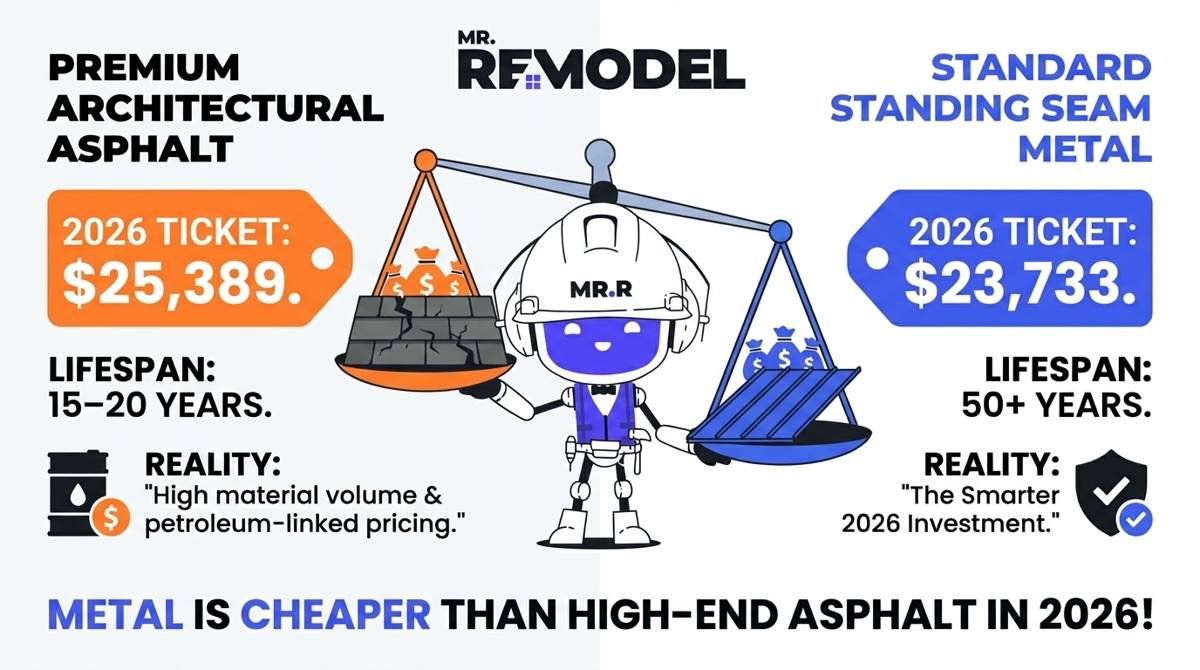
Recent market data from 2025 reveals a shocking reality for homeowners researching roofing costs and services. While asphalt was once the undisputed budget king, the rise of high-end architectural shingles has changed the math. The median ticket price for an asphalt shingle replacement has reached $26,576.
Surprisingly, the average cost of a metal roof installation during the same period was $23,733. This means many homeowners are paying more for a short-term asphalt solution than they would for a durable metal system. This price convergence is a primary reason why metal roofing has captured nearly 21% of the head-to-head market share.
See related: Best Roofing Materials (2026): Cost, Durability & Climate Fit.
Factors Driving Asphalt Price Increases
To understand why the price of traditional shingles has risen so sharply, one must look at the supply chain and labor market. The following list identifies the key drivers that have pushed the average asphalt installation to $25,389:
- Petroleum Volatility: Asphalt is a petroleum-based product, making it highly sensitive to global oil price fluctuations.
- Architectural Demand: Homeowners now prefer heavy, multi-layered shingles that require more raw material and labor to install.
- Disposal Expenses: Rising landfill fees for heavy asphalt waste have significantly increased the total project cost for consumers.
The Standardized Cost of Metal
Metal roofing has benefited from more stable manufacturing processes and a shift toward standardized panel designs. Because the material is lighter and easier to transport, some of the traditional logistical hurdles have vanished. This allows specialized contractors to offer competitive rates that were previously impossible.
Before choosing a material based on outdated prices, get a side-by-side quote from Mr. Remodel to see the actual price difference for your home.
Lifespan and the Replacement Cycle
One of the most telling statistics in our database is the replacement rate for both materials. For both asphalt and metal, over 99% of consumer inquiries are for full replacements rather than minor repairs. This suggests that when a roof fails, it usually fails, requiring a total tear-off.
Asphalt shingles typically enter this failure zone every 15 to 20 years due to weather-related wear. Choosing a metal system is often viewed as a lifetime roofing insurance policy. While asphalt degrades, metal remains durable for 50 years or more, preventing you from entering the replacement cycle again.
The Benefit of Durability
The financial benefits of choosing a more durable material are realized over several decades of homeownership. The list below explains how the longevity of metal translates into real-world savings for a typical household:
- Zero Re-roofing Costs: Most homeowners will never have to pay for a second roof replacement when they choose metal roofing.
- Enhanced Resale Value: Homes with metal roofs often command a higher market price due to the perceived need for less future maintenance.
- Insurance Discounts: Many providers offer lower premiums for homes with fire-resistant and impact-resistant metal systems.
See related: Metal Roofing: Cost, Energy Efficiency & Durability
Understanding the 99% Replacement Request Rate
When a homeowner contacts a professional, they are rarely looking for a small patch job. Our data confirms that 99.03% of asphalt inquiries and 99.15% of metal ones are for full installations. This highlights the importance of getting a side-by-side quote early, as the decision you make today is one you will live with for decades.
Energy Efficiency and Climate Resilience
The financial benefits of metal extend far beyond the initial installation price. According to the U.S. Department of Energy, reflective metal roofs can reduce cooling energy costs by up to 15% during peak summer months. Asphalt shingles tend to absorb and hold heat, which can increase the load on your HVAC system.
Performance in Extreme Weather
When comparing the physical resilience of these materials, federal data highlights significant differences in how they handle extreme weather. The following points summarize the structural advantages found in federal safety guidelines:
- Wind Resistance: FEMA notes that metal panels offer superior wind-uplift resistance compared to shingles.
- Impact Protection: Metal is less likely to suffer catastrophic failure during heavy hail or falling debris.
- Environmental Responsibility: The EPA highlights that metal is 100% recyclable, whereas asphalt contributes to landfill waste.
Sustainable Material Management
The environmental impact of your roof is also a financial consideration. Because metal is a sustainable construction material, it avoids the high disposal fees associated with petroleum-based shingles. Over 50 years, a metal roof produces zero waste, while an asphalt roof might be replaced three times.
Maximizing Your Roofing Investment
To get the most value from your renovation, you must look beyond the sticker price and focus on the total cost of ownership. Metal roofing has a higher recycled content and a lower carbon footprint, which appeals to a growing number of modern buyers. This shift in consumer preference is why metal now holds 20.99% of the market share.
Regional Considerations for 2026
Your geographic location will play a role in which material performs best. In sun-drenched regions, the energy-saving properties of metal are much more pronounced. In areas with high hail frequency, the impact resistance of metal can prevent a total-loss scenario that would require full asphalt replacement.
Professional Installation Matters
Regardless of the material you choose, the quality of the installation is the most important factor in its lifespan. Improperly installed metal can leak at the seams, while poorly nailed shingles will blow off in the first storm. This is why we focus on connecting you with pre-screened professionals who have a proven track record.
Frequently Asked Questions
Is a metal roof much louder than an asphalt roof during rain?
When installed with modern solid sheathing and proper insulation, metal roofs are not significantly louder than asphalt. The attic space and insulation act as a sound barrier, effectively dampening the noise of rain or hail for the occupants.
Can I install a metal roof over my existing asphalt shingles?
In many jurisdictions, this is possible and can save on tear-off costs and disposal fees. However, a full inspection is required to ensure the underlying structure is sound and complies with all local building codes for load and ventilation.
Does a metal roof increase the risk of a lightning strike?
No, metal does not attract lightning any more than other materials do. Because it is a non-combustible material, it can actually be safer than asphalt if the home is struck, as the metal will not catch fire or spread flames.
Secure Your Side-by-Side Roofing Quote
The 2026 roofing market has proven that you no longer have to settle for a temporary roof just to save money. With asphalt prices rising and metal becoming more accessible, the best way to protect your home is to compare your options directly.
Mr. Remodel is here to simplify your search by connecting you with top-tier local professionals. Do not assume shingles are the cheaper path. Request a side-by-side quote today and discover how a high-performance roof can fit your budget.