1-855-QUOTEMR

Table of Contents [hide]
Who This Is For
This guide is for homeowners evaluating HVAC replacement options who want to understand how new energy efficiency standards impact their utility bills. If you are comparing equipment quotes and need to know why SEER2 ratings matter for your 2026 ROI and federal tax credit eligibility, this analysis provides the clarity you need.
Key Takeaways
- The Efficiency Shift: SEER2 ratings use stricter testing protocols than previous standards to provide a more accurate representation of how an HVAC system performs in real-world conditions.
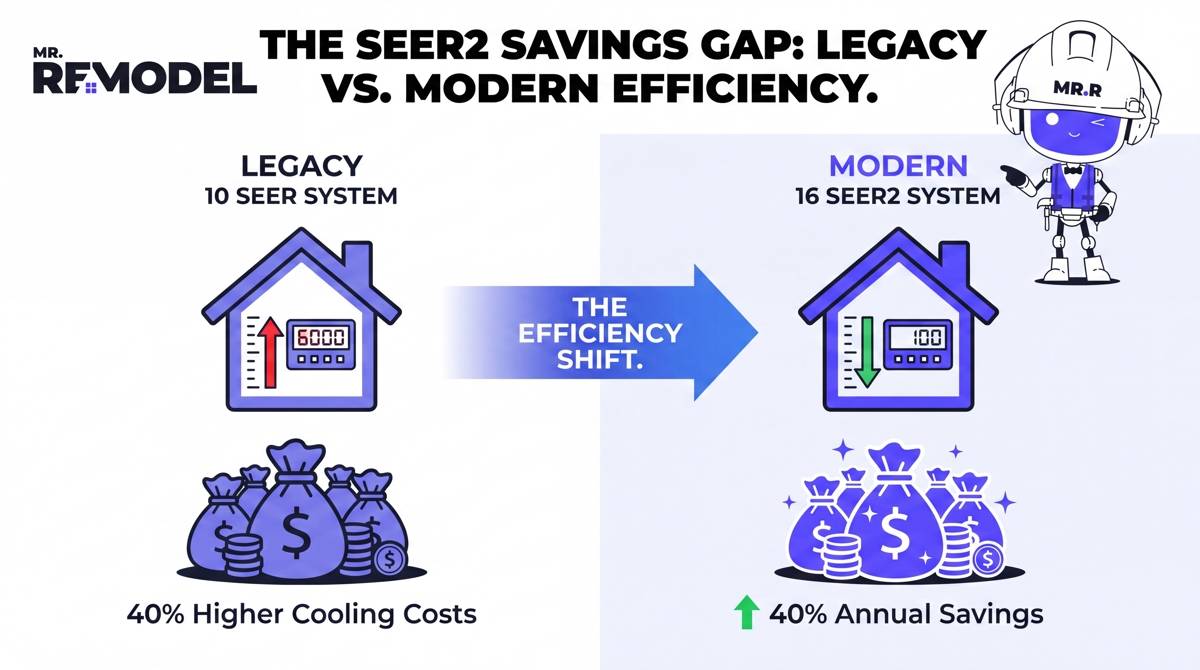
- Significant Savings: Upgrading from an older 10 SEER unit to a modern 16 SEER2 system can cut your seasonal cooling costs by nearly 40%.
- Direct ROI: Every 1-point increase in your system's SEER2 rating yields a 7% to 10% reduction in seasonal cooling expenses.
- Tax Credit Thresholds: To qualify for 2026 Section 25C federal tax credits, most split-system air conditioners and heat pumps must achieve a minimum rating of 16.0 SEER2.
- Proactive Planning: Replacing an aging system with high-efficiency equipment allows you to capture utility savings immediately while taking advantage of government incentives.
When shopping for a new air conditioner or heat pump, you will encounter the term SEER2. It stands for Seasonal Energy Efficiency Ratio 2. While it might sound like technical jargon, it is actually your primary indicator of how much your new system will cost to operate.
In 2023, the Department of Energy mandated a transition from the original SEER standard to SEER2. This change was implemented to provide a more realistic measure of efficiency. Testing now accounts for higher external static pressure, which reflects the actual airflow resistance found in modern homes.
At Mr. Remodel, we track how these efficiency ratings translate into real-world dollars for our clients. Understanding SEER2 is essential for ensuring your HVAC investment pays for itself over the coming decade.
Why SEER2 Is More Accurate
The original SEER testing standard used conditions that were often too ideal. It did not fully account for the resistance your system faces when pushing air through your home's ductwork.
The SEER2 protocol increases the required testing pressure significantly. This means that a SEER2 rating is a more honest reflection of how your unit will perform under the conditions inside your own walls.
Systems that struggle with airflow resistance are now properly penalized in the testing phase. For you as a homeowner, this means that a system with a high SEER2 rating is genuinely better at handling the specific demands of your home's unique duct infrastructure.
The Economics of Efficiency
The financial impact of SEER2 is measurable. Data shows that for every 1-point increase in your system's SEER2 rating, you can expect a 7% to 10% reduction in seasonal cooling costs.
Performance Comparison
- 10 SEER (Legacy Unit): A standard 15-year-old system.
- 16 SEER2 (Modern Standard): The entry point for federal tax credit eligibility.
- 18+ SEER2 (High Efficiency): Advanced variable-speed systems designed for maximum comfort.
Replacing a 15-year-old 10 SEER unit with a modern 16 SEER2 system can slash your summer cooling expenses by nearly 40%. While a high-efficiency unit typically carries a premium of $1,500 to $3,000, the cumulative utility savings often bridge this price gap much faster than most homeowners realize.
See Related: Why Is My Energy Bill So High?
Federal Tax Credits and ROI
In 2026, the federal government continues to incentivize high-efficiency upgrades through Section 25C of the tax code. To qualify for these credits, which can range from $600 to $2,000, your new equipment must generally meet a minimum efficiency threshold of 16.0 SEER2.
These credits are designed to make high-efficiency technology accessible. When you factor in these incentives alongside the monthly utility savings, the financial argument for choosing a higher-rated system becomes very compelling.
See Related: Energy-Efficient HVAC Systems 2026 Homeowner ROI & Rebate Guide
If you are currently reviewing equipment quotes, always confirm with your contractor that the specific model number qualifies for the 2026 tax credit tier.
Making the Right Choice
Upgrading your HVAC system is a complex decision that involves more than just a model number. Your home's ductwork health, regional climate zone, and long-term energy goals all play a role in which SEER2 rating will provide the best ROI.
Services like Mr. Remodel help by matching you with vetted contractors who perform proper load calculations. These professionals ensure that you aren't just buying a high SEER2 rating, but that you are getting a system properly sized to deliver that efficiency in your specific home.
Planning for the Future
Don't wait for a mid-summer equipment failure to start researching your options. Emergency replacements often limit your ability to shop for the best efficiency ratings. Planning your upgrade ahead of time gives you the freedom to compare models and maximize your eligibility for current financial incentives.
See Related: Ways to Lower HVAC Energy Costs
Frequently Asked Questions
What is the difference between SEER and SEER2?
SEER2 is the updated energy efficiency standard mandated in 2023. It uses stricter testing procedures, specifically higher static pressure, to better mimic real-world airflow resistance. It provides a more accurate performance metric than the original SEER standard.
Does a higher SEER2 rating always save money?
Yes, higher SEER2 ratings indicate better energy efficiency, which translates into lower electricity usage. However, you should compare the expected annual savings against the higher upfront purchase price of the unit to calculate your specific break-even point.
What SEER2 rating qualifies for the federal tax credit?
In 2026, most split-system air conditioners and heat pumps must achieve at least a 16.0 SEER2 rating to qualify for the Section 25C federal tax credit. Always verify the specific efficiency rating with your HVAC contractor before purchasing.
How does Mr. Remodel assist with SEER2 selection?
Services like Mr. Remodel help by matching you with vetted local contractors. These experts can perform a detailed load calculation to ensure your new high-efficiency system is perfectly matched to your home's insulation and ductwork.
Is it worth paying for 18+ SEER2 systems?
For homeowners in regions with long, hot cooling seasons, the electricity savings and comfort levels offered by 18+ SEER2 variable-speed systems often provide the best long-term ROI. In milder climates, a 16.0 SEER2 unit may be sufficient to reach your savings goals.
Invest in Long-Term Comfort
Understanding SEER2 is your first step toward mastering your home’s energy efficiency. While the rating system may seem like a complex regulatory requirement, it is actually a powerful tool that helps you minimize waste and maximize your monthly savings.
Choosing the right SEER2 rating is an investment in both your property's value and your future comfort. By selecting high-efficiency equipment, you shield your household from rising utility rates and benefit from government incentives designed to reward sustainable upgrades.
Ready to find the ideal HVAC system for your home? Mr. Remodel makes the process simple by connecting you with vetted local professionals who prioritize quality and transparency. Get a free, no-obligation quote and start your home's energy-efficient upgrade.