1-855-QUOTEMR

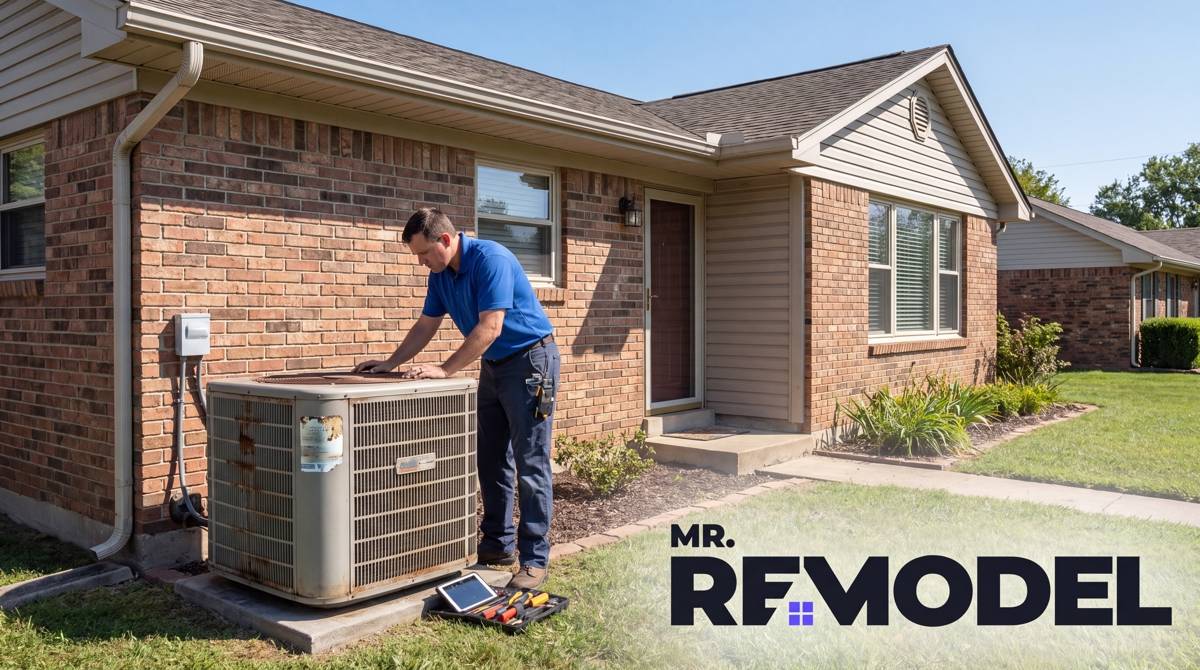
Table of Contents [hide]
Who This Is For
This longevity assessment is designed for single-family homeowners who are planning for future capital expenditures, evaluating the health of their current mechanical equipment, or deciding whether to repair a failing unit. If you want objective, data-backed insights on equipment lifespans and the regional stressors that shorten them, this resource is for you.
Key Takeaways
- The 15–20 Year Benchmark: Most standard central split systems are engineered for a 15-to-20-year lifespan, provided they undergo biannual preventative care.
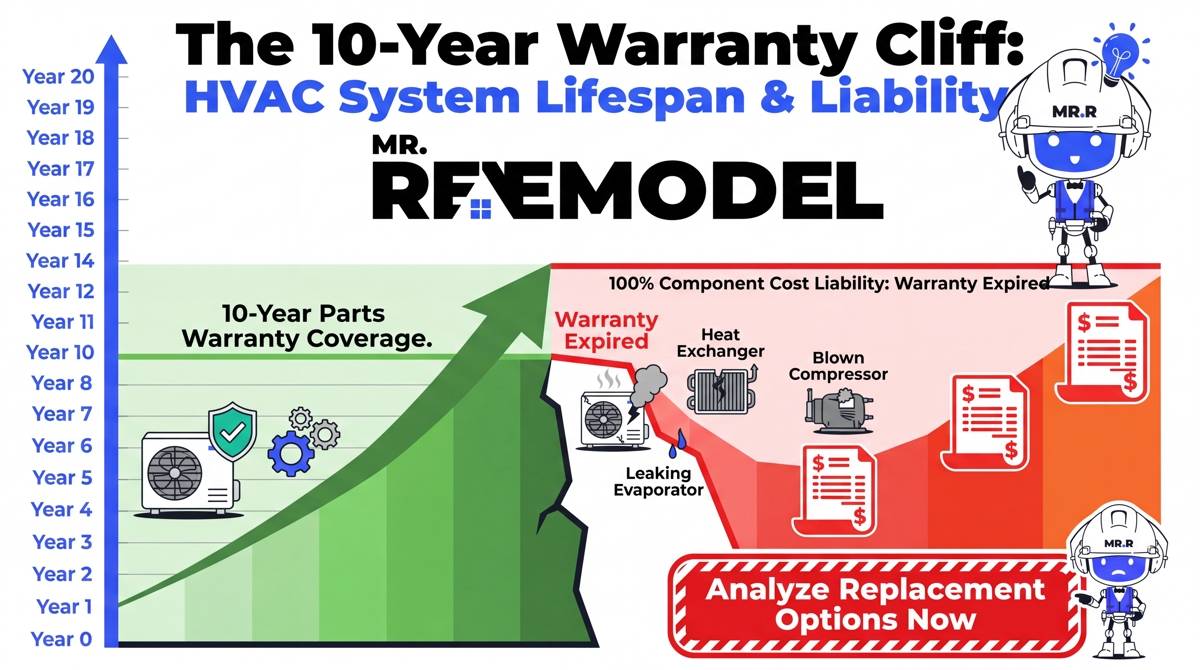
- The Warranty Cliff: The 10-year mark serves as the "Warranty Cliff," where manufacturer coverage expires, leaving 100% of major component repair costs to the property owner.
- Climate Degradation: Regional usage patterns (e.g., coastal salt exposure or extended Sunbelt cooling cycles) can slash operational lifespans by up to 40%.
- Maintenance ROI: Consistent filter replacement and seasonal tune-ups boost total system longevity by 25% while maintaining peak efficiency.
- Catastrophic Failure Rates: Data shows 68% of homeowners wait until a terminal failure occurs, forcing an emergency, high-stress replacement process rather than a planned upgrade.
If your home climate system is approaching a decade of service, you are likely wondering: "How much longer can I expect this unit to run?" Understanding the difference between a system that is aging gracefully and one that is in a mechanical death spiral is essential for proactive home management.
According to longevity data from the U.S. Department of Energy’s AC Maintenance Guidelines, how long your system lasts is less a matter of "luck" and more a direct result of sizing, climate exposure, and the rigor of your seasonal maintenance cycle.
Using hard field data, we provide a clear picture of when to stop repairing and when to start planning for a total system reset.
See Related: HVAC Repair vs Replacement
Lifespan Benchmarks by Equipment Class
Not every component in your home’s climate network ages at the same rate. Factors like system complexity, environmental exposure, and usage frequency create a varied lifespan across different equipment types.
Equipment Lifecycle Matrix
- Central Split Systems: 15 – 20 years. These workhorses rely on steady airflow and properly cleaned coils to maintain thermal balance.
- High-Efficiency Heat Pumps: 12 – 15 years. Because these units provide both heating and cooling year-round, they experience significantly higher "runtime hours" than traditional AC units, leading to a faster mechanical decline.
- Gas Furnaces: 15 – 20+ years. Protected indoors, furnaces typically last longer than their exterior condenser counterparts, provided the heat exchanger maintains its structural integrity.
The 10-Year Warranty Cliff
Most modern equipment carries a 10-year parts warranty. Once this period passes, any major component failure—such as a blown compressor, a cracked heat exchanger, or a failed control board—often costs as much as 40–50% of a brand-new unit. This makes the 10-to-12-year window the critical point where you should begin analyzing.
See Related: HVAC Replacement Guide
Regional Degradation Factors
Your HVAC system lives and dies by its environment. Our pipeline data reveals that localized climate stressors often negate standard lifecycle estimates:
- The Coastal Factor: Properties located within 5 miles of saltwater experience an aggressive corrosion rate. Salt-saturated air attacks condenser coils and electrical components, reducing the average unit lifespan by -30% to -40%.
- The Sunbelt Penalty: Systems in high-demand regions operate on 8-to-10-month cooling cycles. This extended load reduces the total component lifespan by approximately -15% compared to temperate, seasonal markets.
The Proactive Maintenance Advantage
Data proves that 45% of users fail to rotate their filters within the manufacturer-recommended 90-day window. This simple neglect is the #1 cause of premature blower motor burnout.
Neglected systems work harder, heat up faster, and run longer to achieve the same set point as a well-maintained unit.
A biannual preventative tune-up does more than just clean the coils; it restores proper airflow dynamics, allowing your system to operate at the peak efficiency it was designed for. Consistent care provides a verified +25% boost in total mechanical longevity.
See Related: Signs You Need a New HVAC System
When to Plan for Replacement
If 68% of homeowners wait until a terminal failure to consider an upgrade, that means those same homeowners are losing the ability to shop strategically. They are often forced to take whichever unit is in stock and pay a premium for emergency "after-hours" installation.
By planning your replacement when you see early warning signs—rising bills, uneven temperatures, or frequent repairs—you regain control. You can utilize federal tax incentives, compare high-efficiency SEER2 models, and choose a time that doesn't involve suffering through a record-breaking heatwave.
Don't be caught in an emergency when your system finally crosses the "warranty cliff." Let Mr. Remodel connect you with fully vetted, licensed installation specialists today. Request a free quote and get your custom replacement plan from Mr. Remodel.
Frequently Asked Questions
What happens if I keep repairing an old unit?
Eventually, you will reach a point where repair costs exceed the value of the unit itself. Moreover, older units often use outdated refrigerants that are becoming increasingly difficult and expensive to source, turning simple maintenance into an ongoing financial drain.
How much does a replacement cost?
For a standard 2,000 sq. ft. to 2,500 sq. ft. single-family home, a full replacement of the AC and furnace averages between $11,590 and $14,100, depending on the chosen efficiency rating and installation complexity.
Does a new HVAC unit really lower monthly energy bills?
Yes, if you are upgrading from an older, low-efficiency model to a modern high-SEER2 compliant system. These savings accumulate rapidly, often paying for the cost difference between a base model and a high-efficiency model within five to seven years.
How can I make my HVAC system last longer?
The two most effective ways to extend system life are changing your air filters every 60–90 days and scheduling professional, biannual preventative maintenance to clean coils and check refrigerant pressures.
How does Mr. Remodel help me with a planned HVAC replacement?
Mr. Remodel eliminates the anxiety of shopping for a high-ticket mechanical upgrade. We connect you with local, pre-vetted contractors who prioritize Manual J Load Calculations and professional installation protocols, ensuring you get the performance and efficiency you're paying for.
Fortify Your Home Climate and Secure Asset Value
HVAC system maintenance is a strategic pillar of your home’s long-term financial health. By understanding your equipment's lifecycle benchmarks and monitoring for terminal fatigue, you gain the ability to transition from reactive, emergency repairs to a proactive, cost-efficient upgrade strategy.
Investing in a high-efficiency system is a high-ROI decision that preserves your property's value, improves your daily comfort, and shields your home from the rising costs of energy.
Ready to secure a clear, high-performance plan for your property? Mr. Remodel takes the stress out of home mechanical renovations by matching you directly with vetted local specialists. Get your free, no-obligation quote to analyze your home’s unique mechanical needs and launch your upcoming upgrade with absolute confidence.