1-855-QUOTEMR

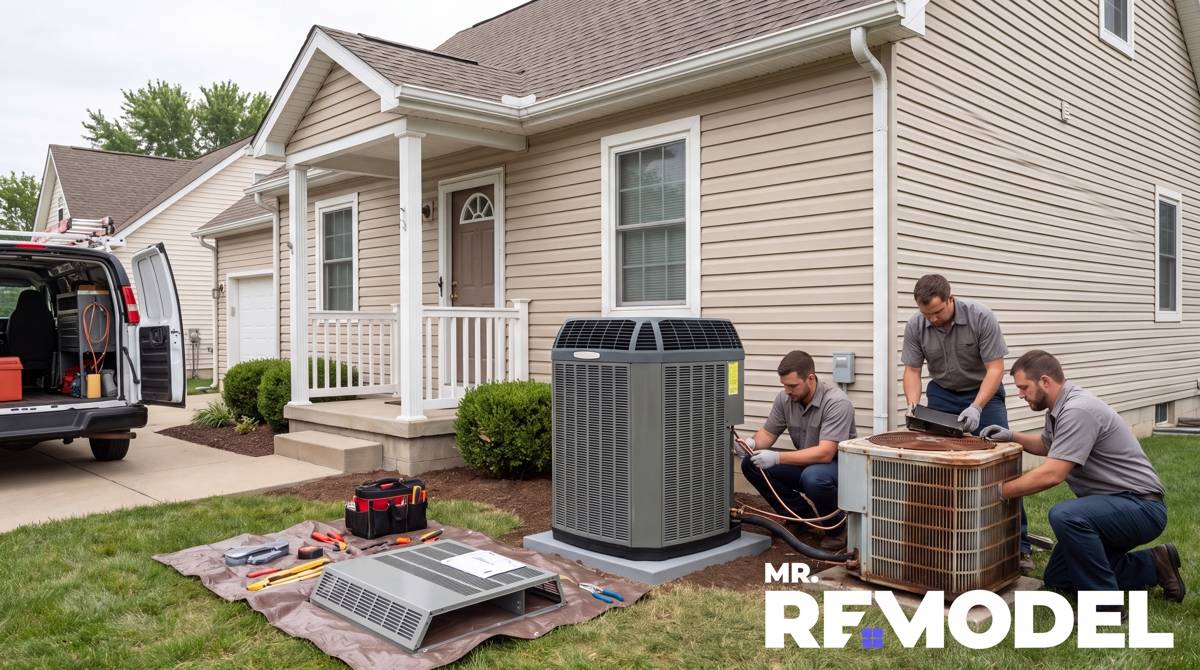
Table of Contents [hide]
Who This Is For
This guide is designed for homeowners currently facing an aging HVAC system, experiencing frequent repairs, or planning a proactive system upgrade. It provides data-backed financial benchmarks, technical guidance on high-efficiency equipment, and clear actionable steps to ensure a high-quality, professional installation.
Key Takeaways
- Replacement vs. Repair: If your system is over 12 years old and requires a repair costing more than 30% of a new unit’s price, replacement is the more sound long-term investment.
- SEER2 Standards Matter: Modern efficiency mandates (SEER2) impact both energy consumption and total system footprint, making professional load calculation critical.
- Regional Climate Impact: Localized weather patterns dictate the specific HVAC technology, such as air-source heat pumps versus traditional gas furnace/AC splits, best suited for your geography.
- Financial Planning: A standard 2,000-square-foot home installation typically ranges from $7,000 to $20,000, depending on efficiency and system type.
- Professional Installation is Key: The best unit on the market will underperform if the ductwork is leaky or the sizing is incorrect, emphasizing the need for professional HVAC services.
- Energy Tax Credits: Federal incentives for high-efficiency heat pumps and HVAC equipment can offset significant upfront installation costs.
The American residential HVAC landscape is undergoing its most significant transition in decades. New federal mandates governing energy efficiency and the phase-out of traditional refrigerants have fundamentally altered how systems are sized, priced, and installed in 2026.
According to research from the Lawrence Berkeley National Laboratory, undersized or improperly installed units can lose up to 30% of their operational efficiency due to duct leakage and poor load balancing. For the average homeowner, this translates to massive, avoidable energy waste.
Upgrading your system is not just about keeping your home comfortable; it is about future-proofing your utility bills and ensuring your property meets the latest safety and efficiency codes.
Understanding HVAC System Types
Choosing the right equipment depends on your home size, local climate, and existing infrastructure. There is no one-size-fits-all solution in 2026.
Central Air Conditioning and Gas Furnace
This remains the most common "split system" configuration. It pairs a central air conditioning unit with a gas-fired furnace for heating. It is ideal for regions with distinct seasons requiring powerful heat.
Air-Source Heat Pumps
Heat pumps are rapidly gaining market share. They provide both heating and cooling by moving heat rather than generating it. Modern units are highly efficient even in cold climates, and many qualify for significant federal tax credits.
See Related: Signs You Need a New HVAC System
Ductless Mini-Splits
Perfect for additions, historic homes without ductwork, or zone-specific heating and cooling, mini-splits offer high efficiency and quiet operation. They remove the energy losses associated with long, leaky duct runs.
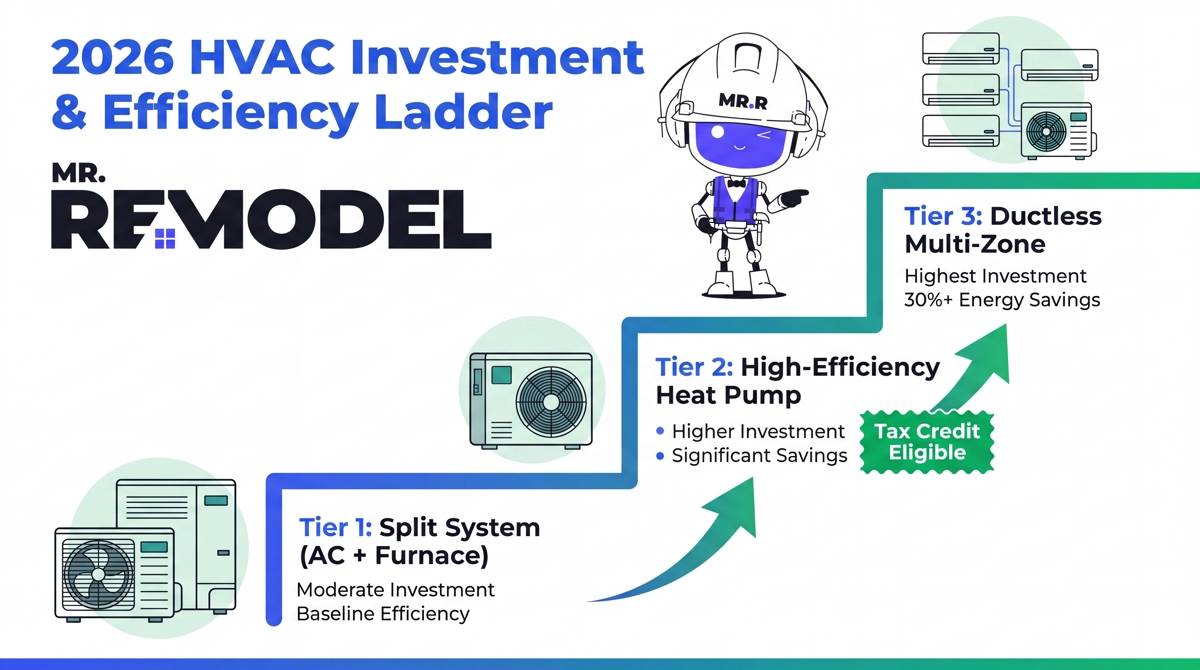
2026 Cost Benchmarks: What to Expect
Budgeting for an HVAC replacement requires looking beyond the sticker price of the equipment. Labor and site-specific modifications often account for a significant portion of the total investment.
Table 1: HVAC Replacement Cost Estimates by System Type
Note: Prices represent total installed costs. Complex ductwork retrofits or electrical upgrades can increase these figures.
The Critical Importance of Sizing and Load Calculations
One of the most frequent mistakes in the industry is the "rule of thumb" sizing method. Professionals should never size an HVAC unit solely based on your home's square footage.
A rigorous load calculation, often called a Manual J calculation, is required to determine your home’s true heating and cooling needs. This calculation accounts for:
- Window orientation and solar gain.
- Insulation levels (R-values) in walls and attic.
- Local design temperatures (extreme highs and lows).
- Number of occupants and typical heat-generating appliances.
See Related: What Size HVAC System Do I Need?
If your system is too large, it will "short cycle," turning on and off rapidly. This wastes energy, creates uncomfortable humidity swings, and drastically reduces the lifespan of the equipment.
Efficiency Ratings: SEER2 and AFUE
When comparing quotes, you will encounter efficiency ratings that dictate how much electricity or fuel your system consumes.
- SEER2 (Seasonal Energy Efficiency Ratio 2): This measures the cooling efficiency of your air conditioner or heat pump. Higher SEER2 ratings indicate lower energy usage.
- AFUE (Annual Fuel Utilization Efficiency): This measures how well a gas furnace converts fuel into heat. A 95% AFUE furnace converts 95% of the fuel into usable heat, with only 5% lost through the vent.
See Related: HVAC Repair vs Replacement
Table 2: Comparing Efficiency Tiers
Regional Infrastructure Vulnerabilities
Your location dictates your primary risks and technology requirements. Understanding these regional factors helps you better evaluate contractor recommendations.
California and the West
Aging slab foundations often house ductwork that is prone to moisture intrusion. Replacing systems here frequently involves comprehensive duct sealing or rerouting to avoid long-term structural issues.
The Northeast and Midwest
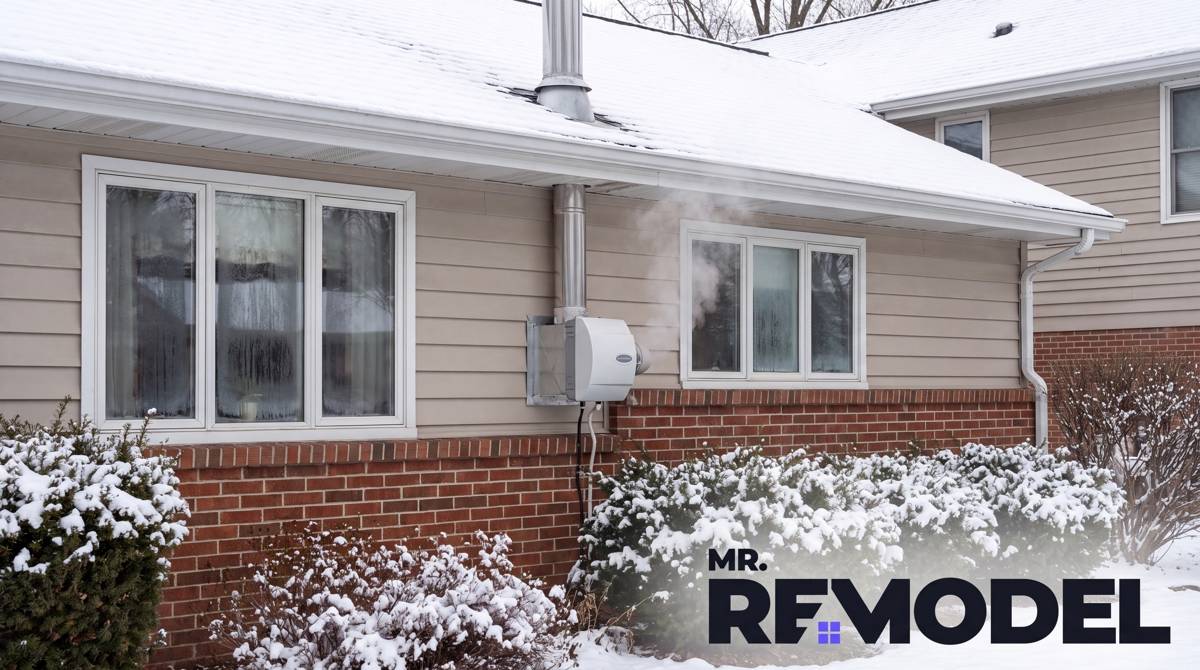
Extreme freeze-and-thaw cycles place massive stress on outdoor units. Heat pump users in these regions must look for "cold climate" rated equipment to ensure consistent performance during sub-zero events.
Florida and the South
High salt-air concentration and extreme humidity require robust, corrosion-resistant outdoor units and high-capacity dehumidification management within the system design.
See Related: How Long Do HVAC Systems Last?
Frequently Asked Questions
1. How often should I replace my HVAC system?
Most systems last between 12 and 15 years. If your system is over a decade old and requires a major component repair, such as a compressor or heat exchanger, replacement is often more cost-effective than a repair.
2. Is a higher SEER2 rating always better?
A higher SEER2 rating offers better energy efficiency, but it comes with a higher upfront cost. We recommend calculating the "payback period" based on your local utility rates to see if the energy savings justify the initial price gap.
3. Does Mr. Remodel handle ductwork modification?
Yes, Mr. Remodel ensures that every HVAC replacement includes a thorough assessment of existing ductwork to confirm it can support the airflow requirements of your new, modern system.
4. What are the federal tax credits for HVAC in 2026?
The Inflation Reduction Act provides tax credits of up to 30% for qualified heat pumps and high-efficiency central air conditioners, capped at specific annual limits.
5. Can I install my own HVAC system?
No. HVAC installation involves high-voltage electricity, pressurized refrigerants, and complex gas piping. Improper installation is dangerous and will void your manufacturer's warranty.
6. How does Mr. Remodel ensure my HVAC sizing is correct?
Our network partners perform comprehensive load calculations that account for your home’s insulation, orientation, and regional climate to ensure your unit is sized perfectly for your specific needs.
7. What is the difference between a furnace and a heat pump?
A furnace burns fuel to generate heat, while a heat pump uses electricity to move heat from the outside into your home. Heat pumps are typically more efficient but may require backup heat in extreme northern climates.
Take Action for Your Home Comfort
HVAC replacement is a significant home investment that impacts your long-term comfort, energy bills, and property value. By choosing high-efficiency equipment and ensuring proper installation, you are making a decision that will pay dividends for years to come.
Do not wait for a complete system failure during the peak of summer or winter. If your current unit is struggling, now is the time to gather quotes and plan your upgrade. Contact Mr. Remodel to get a free, no-obligation quote and connect with top-rated local contractors who will ensure your system is sized and installed perfectly.