1-855-QUOTEMR

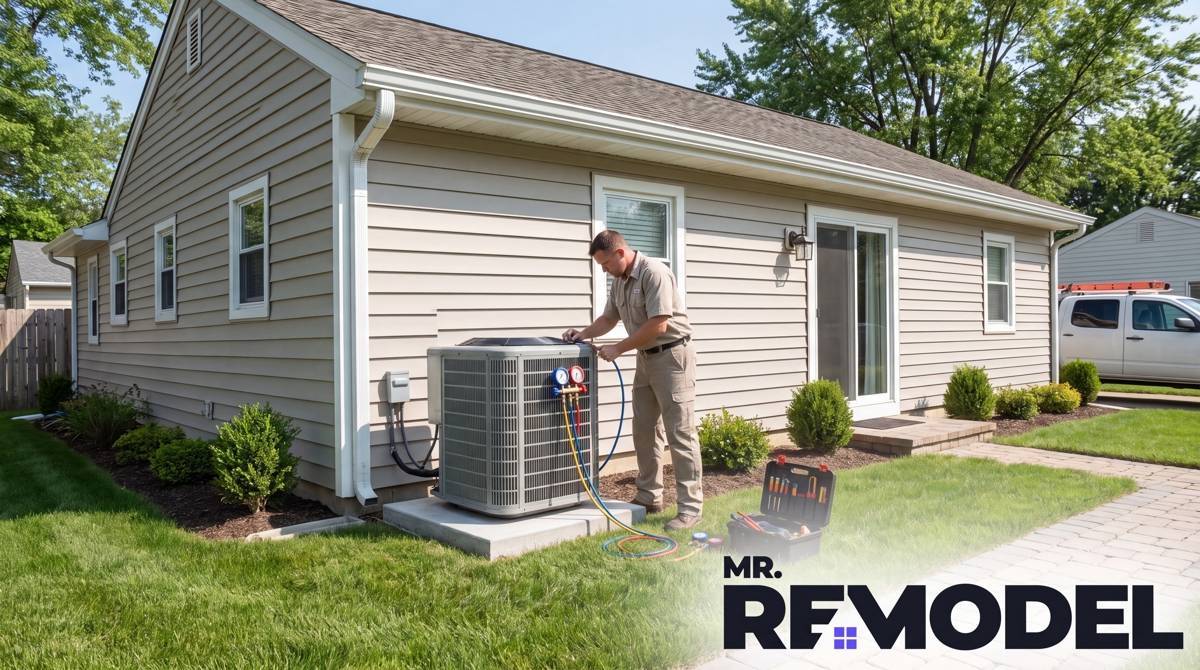
Table of Contents [hide]
Who This Is For
This guide is designed for homeowners committed to protecting their HVAC investment. Whether you are a first-time homeowner looking to understand the basics of filter management or a long-time property owner seeking to avoid the high cost of emergency repairs, this manual provides the technical expertise and financial data needed to keep your system running optimally.
Key Takeaways
- Maintenance ROI: Documented biannual maintenance extends the lifecycle of your heating and cooling equipment by 25% to 30%.
- Energy Consumption: Neglected systems with dirty coils suffer a 30% spike in energy consumption, as the compressor must work harder to achieve the same temperature.
- Financial Impact: An emergency after-hours repair costs $200 to $400 in dispatch fees alone, not including parts and labor, highlighting the necessity of preventative care.
- Filter Management: Replacing air filters consistently is the single most effective DIY action a homeowner can take to protect internal system components.
- Professional Standards: Annual professional tune-ups ($100 to $250) are essential for deep coil cleaning and refrigerant level verification.
- Safety First: Regular inspections identify hazards such as cracked heat exchangers or electrical shorts before they pose a fire or carbon monoxide risk.
Your HVAC system is the most complex appliance in your home, often responsible for nearly half of your annual utility consumption. Despite its importance, most homeowners wait until the system fails before paying attention to its condition. This reactive approach is a financial liability.
According to internal performance data from Mr. Remodel, systems that undergo documented biannual maintenance regularly outlast neglected units by up to 30%. When a system fails during a holiday or extreme weather event, the costs escalate rapidly due to high-demand emergency dispatch fees.
Preventative care is not just a suggestion; it is the most effective method for controlling the high cost of residential climate control. By understanding how your system functions and identifying common warning signs, you can shift from a cycle of constant repair to one of efficient, reliable comfort.
Seasonal Maintenance: The Quarterly Checklist
HVAC systems are subjected to different physical stresses depending on the season. A proactive schedule prevents the "Dirty Coil Penalty," where caked debris on heat transfer surfaces forces your compressor to consume 30% more energy than necessary.
Spring: Preparing for Cooling Season
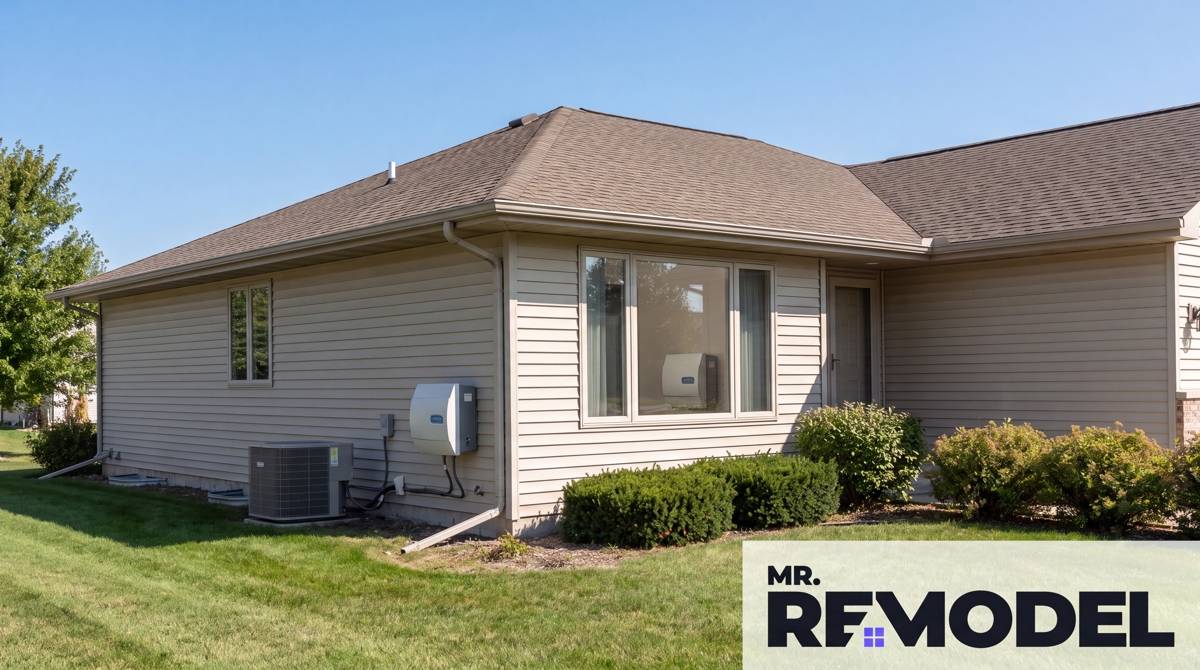
The goal of spring maintenance is to prepare your AC system for high-heat duty cycles. You must ensure the outdoor condenser unit is free of debris.
- Clear Debris: Remove leaves, grass clippings, and branches from around the outdoor unit.
- Clean Coils: Dust or wash the condenser coils with a gentle water spray to ensure efficient heat rejection.
- Inspect Ductwork: Look for visible disconnects or holes in accessible duct runs that may leak cooled air into non-conditioned spaces.
- Test the Thermostat: Verify that the system engages properly and reaches the set temperature within a reasonable timeframe.
Fall: Preparing for Heating Season
Fall maintenance focuses on fire safety and ignition efficiency. A neglected furnace can pose serious health risks, particularly regarding carbon monoxide buildup.
- Test Heating Elements: Ensure the burners ignite smoothly and the flames appear blue, which indicates proper combustion.
- Carbon Monoxide Detectors: Test all CO alarms in the home. This is non-negotiable for gas-based systems.
- Exhaust Flue Check: Ensure the flue pipe is securely connected and free of obstructions or signs of corrosion.
- Professional Tune-Up: Schedule your professional inspection ($100 to $250) to verify heat exchanger integrity.
While homeowners can handle minor tasks, deep technical maintenance requires a certified technician. Attempting to manipulate internal refrigerant lines or electrical control boards without the proper license is dangerous and violates most manufacturer warranties.
See Related: HVAC Maintenance Tips by Season
The DIY Component
- Filter Replacement: Perform this every 30 to 90 days depending on your home environment and pet density.
- Visual Inspection: Monitor for unusual noises, such as rattling or grinding, which often indicate loose internal components.
- External Cleaning: Keeping the outdoor unit clear of vegetation ensures proper airflow.
The Professional Component
- Refrigerant Checks: Technicians must verify proper pressure levels. Too little refrigerant reduces cooling, while too much risks compressor damage.
- Electrical Safety: Experts inspect terminals, tighten electrical connections, and measure the amperage of the fan and compressor motors.
- Deep Coil Cleaning: Professionals use specialized solvents to remove stubborn grime that standard water sprays cannot dissolve.
See Related: How Often Should You Replace HVAC Filters?
Financial ROI of a Maintained System
Maintenance is frequently viewed as an expense, but in reality, it is a high-return investment. The cost of a standard professional tune-up is quickly recovered through energy efficiency gains and the prevention of catastrophic system failure.
Financial Benchmarks for HVAC Maintenance
Data Note: Costs reflect national averages and proprietary performance metrics tracked by Mr. Remodel.
Common HVAC Warning Signs
Your system will almost always communicate a failure before it actually stops working. Recognizing these signals allows you to schedule a service visit on your terms, rather than dealing with a breakdown during a heatwave.
See Related: Common HVAC Problems
1. Inconsistent Temperatures
If some rooms are significantly warmer or cooler than others, the issue is often related to damper imbalances or leaky ducts. This indicates the system is working, but it cannot deliver the air effectively to the living space.
2. Rising Energy Bills
When utility costs spike without a corresponding increase in usage, the system is likely compensating for mechanical inefficiency. Dirty coils or low refrigerant levels are the primary culprits in these scenarios.
3. Unusual Sounds
Squealing, grinding, or banging noises are immediate indicators of mechanical failure. Squealing often points to a loose or failing fan belt, while grinding can signal an impending motor bearing failure.
4. Excessive Humidity
An air conditioner is responsible for both cooling and dehumidifying. If your home feels muggy despite the AC running, the system may be oversized, or it may have low airflow. This is a common precursor to mold growth in ductwork.
The Role of Air Filtration
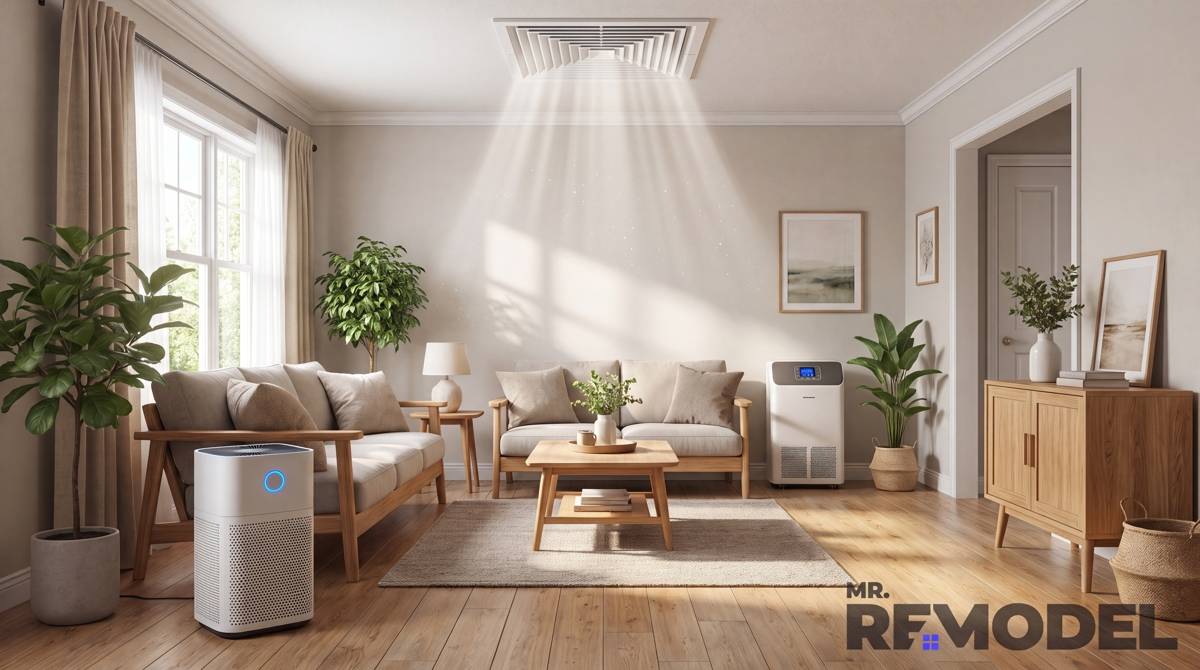
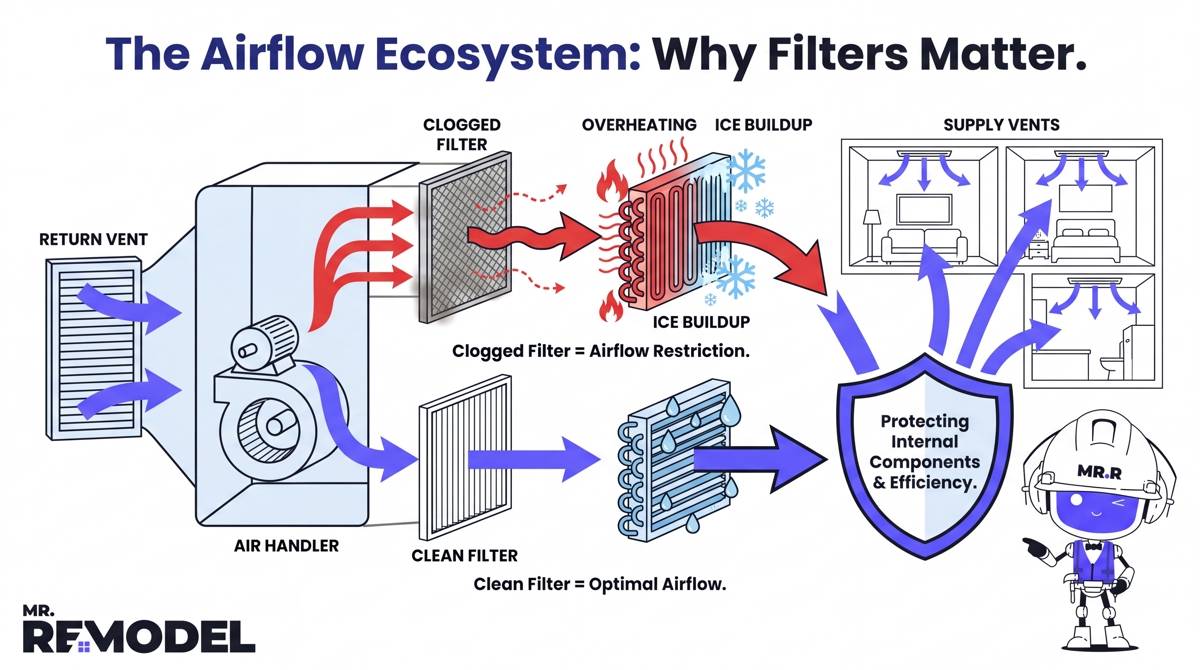
The air filter is the "first line of defense" for your entire HVAC system. A clogged filter restricts airflow, which is the root cause of many mechanical failures. When the system cannot pull enough air through the return vent, the internal components struggle to function, leading to overheating and ice accumulation on cooling coils.
Types of Filters and Their Efficacy
- Fiberglass Filters: These are inexpensive and meant only to protect the HVAC equipment, not to improve air quality.
- Pleated Filters: These offer a balance between filtration and airflow. They capture dust, pollen, and pet dander more effectively than fiberglass.
- HEPA Filters: While powerful, these can be too restrictive for standard residential HVAC systems. Always check your manufacturer’s static pressure recommendations before upgrading.
See Related: HVAC Maintenance Checklist
Advanced Efficiency: The 2026 HVAC Landscape
Modern HVAC systems are evolving rapidly. In 2026, the shift toward higher SEER2 (Seasonal Energy Efficiency Ratio 2) standards means that newer equipment is significantly more sensitive to airflow and cleanliness than legacy systems.
Load Calculation Accuracy
Proper maintenance now includes ensuring that ductwork remains sealed. With high-efficiency units, even small leaks in the duct system can result in significant efficiency drops. Homeowners should consider duct testing if they notice high energy bills despite a newer system.
Thermostat Optimization
Modern smart thermostats are no longer optional accessories. By automating temperature setbacks during periods of low activity, they reduce the operational load on your HVAC system, directly contributing to extended equipment life.
Frequently Asked Questions
1. Does maintenance really affect my manufacturer's warranty?
Yes. Most manufacturer warranties explicitly state that the warranty may be voided if evidence of regular maintenance is not provided. Always keep a log of all professional tune-ups.
2. How often should I have a professional inspect my HVAC system?
We recommend two inspections per year: one in the spring for the cooling season and one in the fall for the heating season. This dual-check approach ensures you identify issues before peak usage months.
3. Can I clean my own condenser coils?
You can safely remove debris, but leave the deep coil cleaning to professionals. Using the wrong chemicals or too much water pressure can bend the delicate aluminum fins, which would then require expensive repair.
4. Why does my system keep tripping the circuit breaker?
This is a serious safety concern indicating a short circuit or an overloaded motor. Turn the unit off immediately and contact a professional—do not attempt to reset the breaker repeatedly.
5. What are the signs of a failing heat exchanger?
Signs include blue-orange flame variations, soot buildup around the furnace interior, and persistent rust. This is a high-risk failure that can cause carbon monoxide poisoning.
6. How does Mr. Remodel support my ongoing maintenance?
Mr. Remodel connects you with certified local contractors who offer comprehensive maintenance plans designed to keep your system performing according to factory specifications, documented for your warranty.
7. Is an annual tune-up worth the cost?
Absolutely. The small investment in a $100 to $250 tune-up prevents the need for an emergency $400 after-hours dispatch fee and significantly reduces your monthly energy overhead.
8. How do I know if I need a professional HVAC service versus a DIY fix?
If the issue involves electricity, refrigerant, gas lines, or deep internal mechanical components, you need a professional. DIY is strictly for maintenance-level tasks like filter changes and exterior debris removal.
Take Control of Your Home Comfort
Regular maintenance is the smartest investment you can make in your home. By staying ahead of minor repairs, you preserve the efficiency of your equipment, ensure your family’s safety, and protect your home’s value.
Don't wait for your system to fail on a freezing winter night or a scorching summer day. Proactive care ensures that your HVAC system remains a source of comfort rather than an unpredictable source of stress. Contact Mr. Remodel to get a free, no-obligation quote and connect with specialists to cater to your HVAC needs.