1-855-QUOTEMR

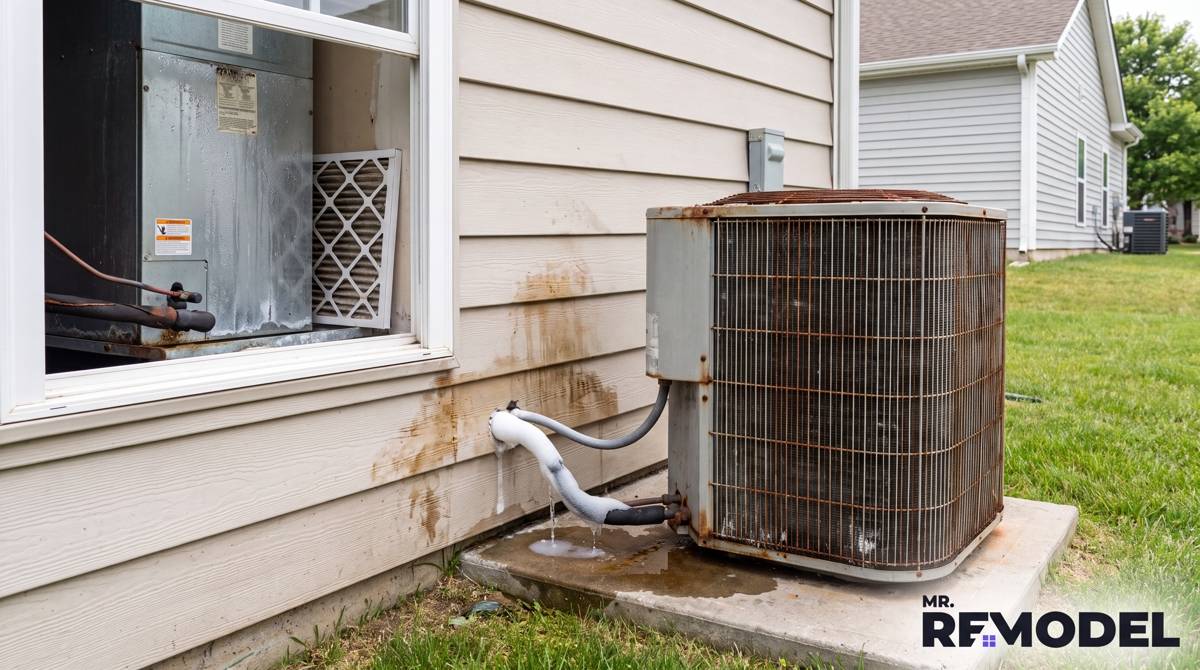
Table of Contents [hide]
Who This Is For
This guide is created for homeowners who are experiencing unexpected heating or cooling issues, sudden spikes in energy bills, or unusual system noises, and need clear diagnostic steps along with real-world 2026 repair cost estimates.
Key Takeaways
- Filter Cost Impact: A dirty air filter increases energy consumption by up to 15% and can cause blower motor failure, costing $400 to $800 to replace.
- Capacitor Vulnerability: Blown capacitors are the leading cause of summer system shutdowns, costing between $150 and $300 for professional replacement.
- Refrigerant Cost Spike: Under 2026 environmental regulations, R-410A refrigerant recharges now cost $100 to $200+ per pound due to production cutbacks.
- Geographic Stress: Coastal environments increase condenser coil corrosion rates, contributing to 30% of early unit failures within five miles of saltwater.
HVAC problems rarely happen at a convenient time. Most heating and cooling failures occur during severe heatwaves or freezing winter storms when systems run continuously at peak capacity.
Diagnosing an issue early is essential to keeping repair costs manageable. Data tracked by Mr. Remodel reveals that over 68% of emergency service calls stem from preventable issues that begin as simple, ignored symptoms. Understanding these common failure points helps you protect your home comfort and your budget.
Airflow Restrictions & The Dirty Filter Penalty
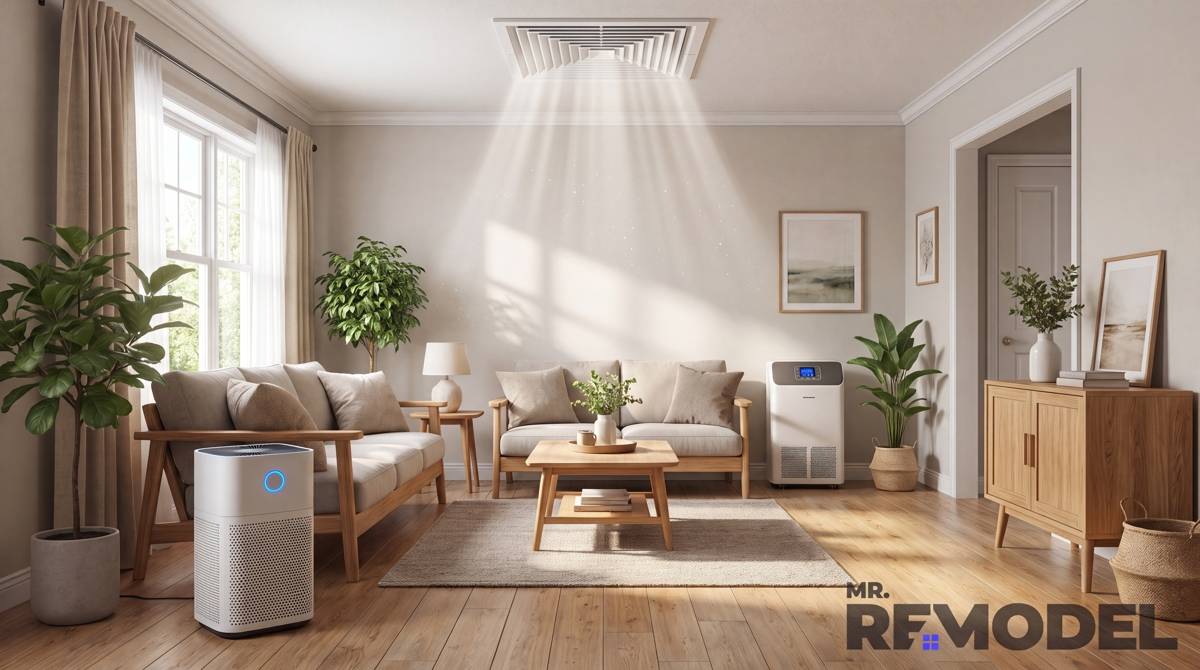
Restricted airflow is the single most frequent root cause of residential HVAC performance issues. When air cannot circulate freely through your ductwork, your system must operate longer to adjust home temperatures.
Industry studies from the U.S. ENERGY STAR Program confirm that changing a dirty air filter can improve system efficiency by 5% to 15%. Despite this simple fix, nearly 45% of homeowners fail to replace standard filters within the recommended 90-day window.
Financial Penalties of Restricted Airflow
Running an air handler with a blocked filter forces the motor to draw extra amperage. This leads directly to two major financial consequences:
- Utility Surcharges: Operating with restricted airflow adds up to a 15% waste penalty on your monthly utility statement.
- Blower Motor Burnout: Extended strain causes blower motors to overheat. Replacing a burnt-out blower motor costs between $400 and $800 in parts and labor.
See Related: How Often Should You Replace HVAC Filters? (2026 Schedule)
Electrical Failures & Capacitor Burnouts
Electrical issues account for a large portion of sudden equipment shutdowns. Inside your outdoor condenser cabinet, electrical components experience extreme heat and high voltage cycles.
Common HVAC Electrical Repair Cost
See Related: HVAC Repair vs Replacement
The Heatwave Effect on Capacitors
Run capacitors act as temporary batteries, supplying the torque needed to start compressors and fan motors. Capacitors represent the most frequent point of failure during extreme weather.
In fact, 74% of emergency repair requests happen during the season's first major thermal spike. In Sunbelt states where systems run up to 10 months a year, units experience a 40% higher capacitor failure rate due to continuous thermal stress.
Replacing a failed run or start capacitor typically costs $150 to $300 when performed by a certified technician.
See Related: HVAC Maintenance Checklist: 2026 Guide & Costs
Frozen Evaporator Coils & Refrigerant Micro-Leaks
If your air conditioner is running constantly but blowing warm air, you may be dealing with a frozen evaporator coil or low refrigerant charge.
Refrigerant Leak Diagnostic Guide
- Symptom 1:
- Supply vents blowing lukewarm or ambient air.
- Symptom 2:
- Visible ice accumulation on copper lines or air handler.
- Symptom 3:
- Hissing or bubbling noises near indoor evaporator coil.
- Action:
- Turn off cooling immediately to prevent compressor damage.
2026 Refrigerant Cost Realities
Refrigerant operates inside a closed loop; it is never consumed or used up during normal operation. If refrigerant levels are low, a leak is present.
Under current U.S. EPA HFC Phasedown Regulations, production of older refrigerants like R-410A has been scaled back significantly. As a result, recharging a system with R-410A now costs $100 to $200+ per pound.
Because standard central systems require 6 to 12 pounds of refrigerant, fixing a major leak and topping off the system can easily cost over $1,000. For aging units, this high cost often makes full equipment replacement the smarter financial choice.
See Related: 2026 HVAC Replacement Cost Guide
Environmental & Structural Failure Drivers
HVAC performance is heavily influenced by your surrounding environment and home infrastructure.
Coastal Salt Corrosion
Salt-laden air creates a harsh environment for exterior condenser units. Within five miles of saltwater coastlines, salt spray causes rapid oxidation on aluminum coil fins and copper tubing, accounting for 30% of premature condenser failures in coastal regions.
Aging Ductwork in Historic Homes
In homes built before 2000, airflow problems are frequently caused by ductwork rather than the HVAC unit itself. Unsealed or degraded ducts can lose up to 30% of conditioned air into attics or crawlspaces. In fact, 65% of cooling complaints in older homes stem from duct leakage rather than mechanical equipment failure.
Diagnostic testing requires specialized tools and certified expertise. Services like Mr. Remodel make it easy by connecting you with vetted local contractors who offer accurate diagnostics and reliable repairs. You can request a free quote today to get your system checked.
DIY Troubleshooting vs. Professional Repair Limits
While basic steps can be safely handled at home, technical repairs require professional training.
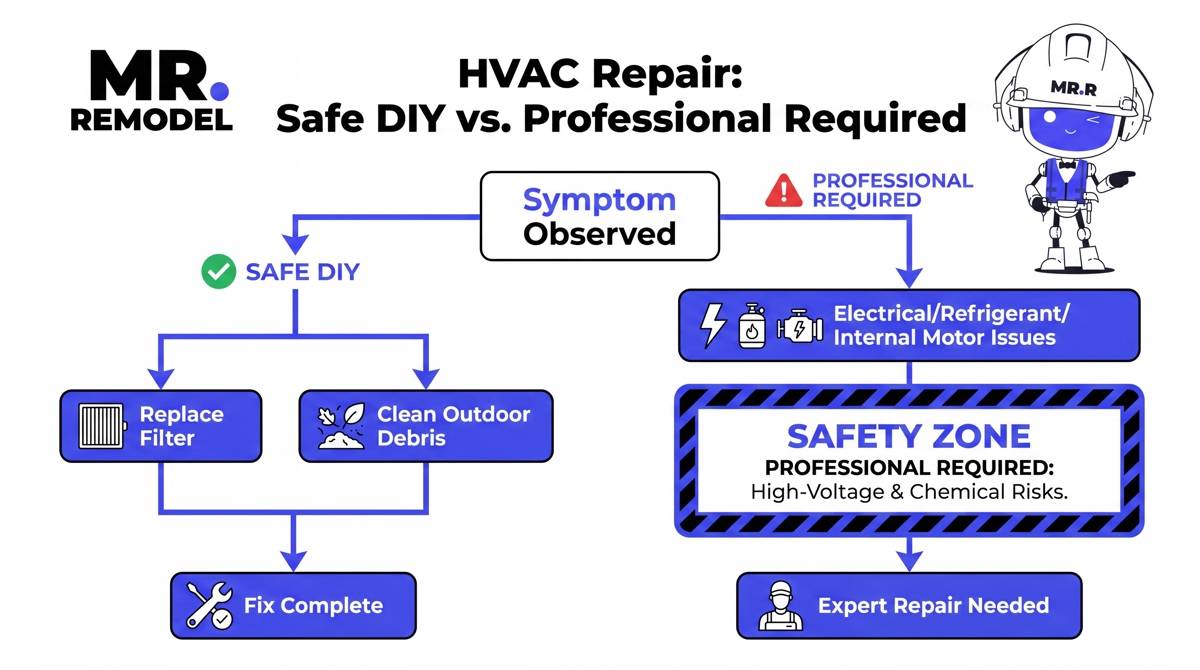
DIY vs. Professional Repair Limits
Safe for DIY:
- Replacing 1-inch to 5-inch air filters
- Resetting tripped circuit breakers (once)
- Cleaning debris within 2 feet of the outdoor condenser
- Clearing condensate lines with white vinegar
Professional Required:
- Testing or replacing electrical capacitors and contactors
- Locating refrigerant micro-leaks and adding refrigerant
- Repairing or replacing blower motors and control boards
- Inspecting gas furnace heat exchangers for carbon monoxide leaks
Reviewing realistic HVAC costs and services helps you plan your home maintenance budget while avoiding the safety risks of DIY high-voltage or chemical repairs.
See Related: HVAC Maintenance Guide: Essential Tips to Maximize Efficiency & Lifespan
Seasonal Prevention & Long-Term Care
Proactive care remains the best defense against unexpected heating and cooling failures.
- Spring Inspection: Clean outdoor coils, check drain pans, and test cooling performance before summer heat arrives.
- Fall Inspection: Inspect gas burner assemblies, check flue pipes, and test heating controls before winter.
- Year-Round Maintenance: Inspect filters monthly and keep outdoor units free from leaves and garden debris.
See Related: HVAC Maintenance Tips by Season
Frequently Asked Questions
Why is my HVAC system running continuously but not cooling my home?
Continuous running without adequate cooling is usually caused by a dirty air filter, blocked return vents, low refrigerant from a leak, or dirty condenser coils that cannot release heat properly.
How much does it cost to diagnose an HVAC problem?
Standard diagnostic service calls typically range from $75 to $150. Most contractors apply this diagnostic fee toward the total cost of the repair if you proceed with their service.
How do services like Mr. Remodel assist homeowners with HVAC repairs?
Services like Mr. Remodel help by matching you with vetted local contractors who provide accurate diagnostics and transparent pricing. This saves you time and ensures your home repairs are handled by qualified professionals.
Can I replace a blown HVAC capacitor myself?
Replacing a capacitor is not recommended for DIYers. Capacitors store dangerous electrical charges even when the main power is turned off. A trained technician uses specialized tools to discharge and replace these components safely.
How do I know if my system has a refrigerant leak?
Key indicators include supply vents blowing warm air, hissed or bubbled noises near the indoor coil, or visible ice forming along the refrigerant lines and air handler.
Why is my furnace making a loud banging noise when it turns on?
A loud banging noise during furnace startup is often caused by delayed ignition. Gas builds up in the burner chamber before lighting, creating a small expansion pop. This issue requires immediate professional attention to ensure safe operation.
Restore Your Home Comfort
Ignoring minor HVAC issues can turn simple fixes into expensive emergency repairs. Staying proactive with routine filter changes and seasonal inspections protects your equipment and keeps your energy bills under control.
Ready to resolve your heating or cooling issue? Get a free, no-obligation quote from trusted local contractors through Mr. Remodel and ensure your system operates efficiently all year long.