1-855-QUOTEMR

Table of Contents [hide]
Who This Is For
This diagnostic manual is crafted for single-family homeowners experiencing inconsistent room temperatures, unexplained spikes in energy costs, or frequent, costly mechanical breakdowns. If you are struggling to decide between another repair ticket and the capital investment of a full system upgrade, this data-backed guide is for you.
Key Takeaways
- The 15-Year Baseline: Systems exceeding 15 years of operational life typically face a 40% reduction in efficiency, making them prime candidates for replacement.
- Repair-vs-Replace Threshold: If cumulative repair costs exceed 50% of the value of a new system, it is financially prudent to pivot toward a full install.
- Energy Efficiency Shift: Modern SEER2/HSPF2 standards offer significant utility savings that frequently offset the upfront capital expenditure of a new unit within 5 to 7 years.
- Climate Adaptation: Regional weather volatility (e.g., extreme humidity or sub-zero winters) drastically impacts system lifespan; localized engineering is non-negotiable.
- Diagnostic Strategy: Professional HVAC systems are complex; ignoring symptomatic failures (strange noises, short-cycling, or dust accumulation) can lead to secondary mold issues in your ductwork.
Is your home climate control system failing to maintain a steady temperature, or are you hearing grinding noises every time the unit engages? For single-family property owners, the HVAC unit is the single most important mechanical asset inside the home.
When it begins to falter, it is easy to assume that another technician visit will solve the problem. However, at a certain point, repeated repairs are just delaying the inevitable. According to purchasing guidelines from the U.S. Department of Energy’s Energy Star HVAC Replacement Metrics, upgrading to a modern, high-efficiency system provides long-term utility savings and improves overall indoor air quality.
Understanding these indicators allows you to plan your upgrade proactively rather than waiting for a mid-summer or mid-winter crisis.
8 Critical Signs Your System is Failing
Before you call for another emergency repair, check for these eight systemic warning signs that signal a need for a total HVAC replacement.
- Rising Energy Bills: If your utility costs are climbing despite consistent usage patterns, your unit is likely struggling to reach set temperatures, signaling terminal efficiency loss.
- Frequent Breakdowns: If you have paid for three or more major repairs in 24 months, you are likely in a "maintenance death spiral."
- Uneven Temperatures: Rooms that remain too hot or too cold indicate that the blower motor is failing or the ductwork is structurally compromised.
- Short-Cycling: If your unit turns on and off every few minutes, the compressor is likely failing, or the system is significantly oversized for your home footprint.
- Unusual Noises: Grinding, squealing, or rattling sounds signify internal mechanical components, such as bearings or fan motors, are near total collapse.
- Excessive Humidity: A properly functioning system should manage your home's indoor humidity. If you feel "sticky" inside even while the unit runs, the evaporator coil may be failing.
- Excessive Dust: High dust levels despite regular filter changes often indicate leaks in your return ductwork, forcing the system to pull in unfiltered attic or crawlspace air.
- System Age: Most central air systems are engineered for a 15–20 year life cycle. Systems beyond 15 years of service are statistically prone to catastrophic failures.
See Related: HVAC Replacement Guide
The Financial "Repair-vs-Replace" Rule
Homeowners often feel pressured to "fix it one last time." To move beyond emotional decision-making, we apply the 50% Rule: If the cost of your current repair multiplied by the age of the unit exceeds 50% of the replacement cost, you should replace the unit.
If your unit is 12 years old and the repair is $1,500, your "cost factor" is $18,000. If a new system costs $10,000, that repair is effectively a waste of capital.
See Related: HVAC Repair vs Replacement
Energy Efficiency and Future ROI
Modern heating and cooling systems utilize updated SEER2/HSPF2 standards that are far more efficient than units built even a decade ago. A new unit doesn't just provide comfort; it reduces the monthly financial burden of maintaining your home.
Data from the U.S. Energy Information Administration’s Utility Price Trends shows that household energy consumption costs are steadily rising. Investing in a high-efficiency unit is a proactive hedge against future utility volatility.
See Related: How Long Do HVAC Systems Last?
Technical Sizing and Climate Engineering
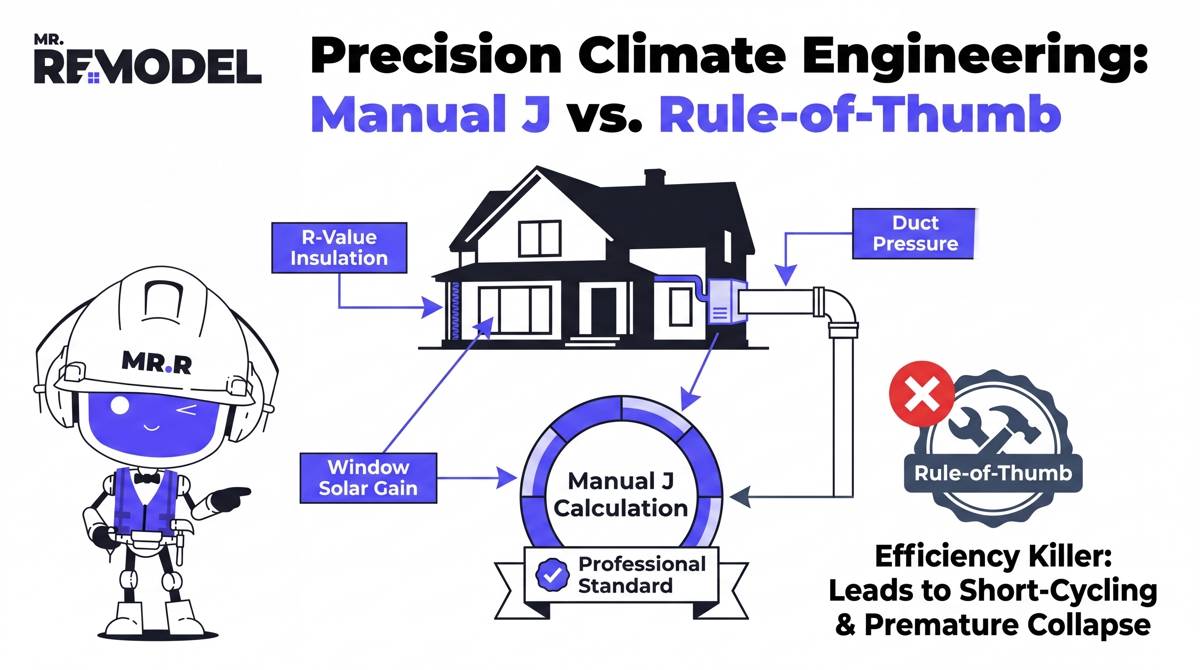
A common cause of premature HVAC failure is "improper sizing." If a unit is too large, it short-cycles and fails to remove humidity properly. If it is too small, it runs constantly and never reaches your target temperature.
Always demand a Manual J Load Calculation from your contractor. This scientific assessment considers your home's orientation, insulation R-values, window efficiency, and local climate patterns to determine the exact BTU capacity your home requires.
See Related: What Size HVAC System Do I Need?
Vetting Certified HVAC Specialists
Because your system is a complex integration of electrical, plumbing, and airflow components, you must ensure your contractor follows strict installation protocols.
- Manufacturer Certification: Ensure the crew is factory-authorized for your specific brand.
- Ductwork Assessment: A new unit is useless if your existing ductwork is leaking. Ensure your quote includes a duct-pressure test.
- Permitting and Code Compliance: High-efficiency units often require modifications to existing electrical panels or gas lines. Verify that the quote includes all necessary city permits and inspections.
Stop wasting money on expensive, temporary mechanical patches. Let Mr. Remodel connect you with fully licensed, high-efficiency installation experts today. Click here for professional HVAC services and get your custom quote from Mr. Remodel.
Frequently Asked Questions
Can I just fix the compressor instead of replacing the whole unit?
While technically possible, replacing a compressor on a 15-year-old system is rarely cost-effective. The compressor is the "heart" of the system; once it fails, the other major components (coils, motor, and seals) are typically at a similar stage of mechanical fatigue.
What is the typical lifespan of a central air system?
Under consistent maintenance, most systems last between 15 and 20 years. However, in regions with severe temperatures or high humidity, this lifespan can be reduced by 3–5 years without aggressive seasonal care.
How does an HVAC upgrade add to my home's resale value?
Modern buyers look for efficiency. An HVAC system with a high-efficiency rating (SEER2) and a documented maintenance history is a major selling point. It signals that the home has been meticulously cared for and will not be an immediate cost burden for the buyer.
Why do my energy bills spike in the summer months?
Aside from rising utility rates, spikes are usually caused by dirty condenser coils, low refrigerant levels, or failing blower motors. When these components fail, the system runs longer to maintain a temperature, significantly increasing your energy draw.
How does Mr. Remodel ensure my HVAC replacement is sized correctly?
Mr. Remodel connects you with pre-vetted, licensed contractors who perform a professional Manual J Load Calculation. We ensure your system is matched to your specific home insulation and layout, guaranteeing maximum efficiency from day one.
Fortify Your Home Climate and Secure Active ROI
Investing in a new HVAC system is not just about home comfort—it is a strategic decision that protects your property value and lowers your lifetime ownership costs. Preparing for your system’s inevitable decline and choosing a high-efficiency replacement prevents the high costs of emergency, mid-crisis installations.
By partnering with certified installation teams, you ensure your home climate is managed by a code-compliant, perfectly sized system. Protecting your interior ductwork, maintaining consistent airflow, and upgrading to modern efficiency standards shield your framing from moisture damage, lower your monthly overhead, and preserve your foundational equity.
Ready to secure a clear, high-performance plan for your property? Get your free, no-obligation quote from Mr. Remodel to analyze your local structural needs and launch your upcoming upgrade with absolute confidence.