1-855-QUOTEMR

Table of Contents [hide]
Who This Is For
This guide assists homeowners nationwide who are in the planning phase of a window project. It is designed for those trying to decide between a full home renovation and a phased approach. It also helps readers understand how the new Energy Star Version 7.0 specifications impact project costs and tax credit eligibility in 2026.
Key Takeaways
- Real Costs: The national average for a completed window project is $16,511 due to inflation and stricter energy codes.
- New Standards: Energy Star Version 7.0 requires significantly better insulation (U-Factor of 0.22 or lower in the North) to qualify for tax credits.
- Strategic Phasing: In high cost states like California, homeowners often replace fewer than 5 windows at a time to manage budgets and maximize annual tax incentives.
- Volume Pricing: In markets like Indiana and Washington, data shows homeowners typically replace over 6 windows at once to lock in bulk labor rates.
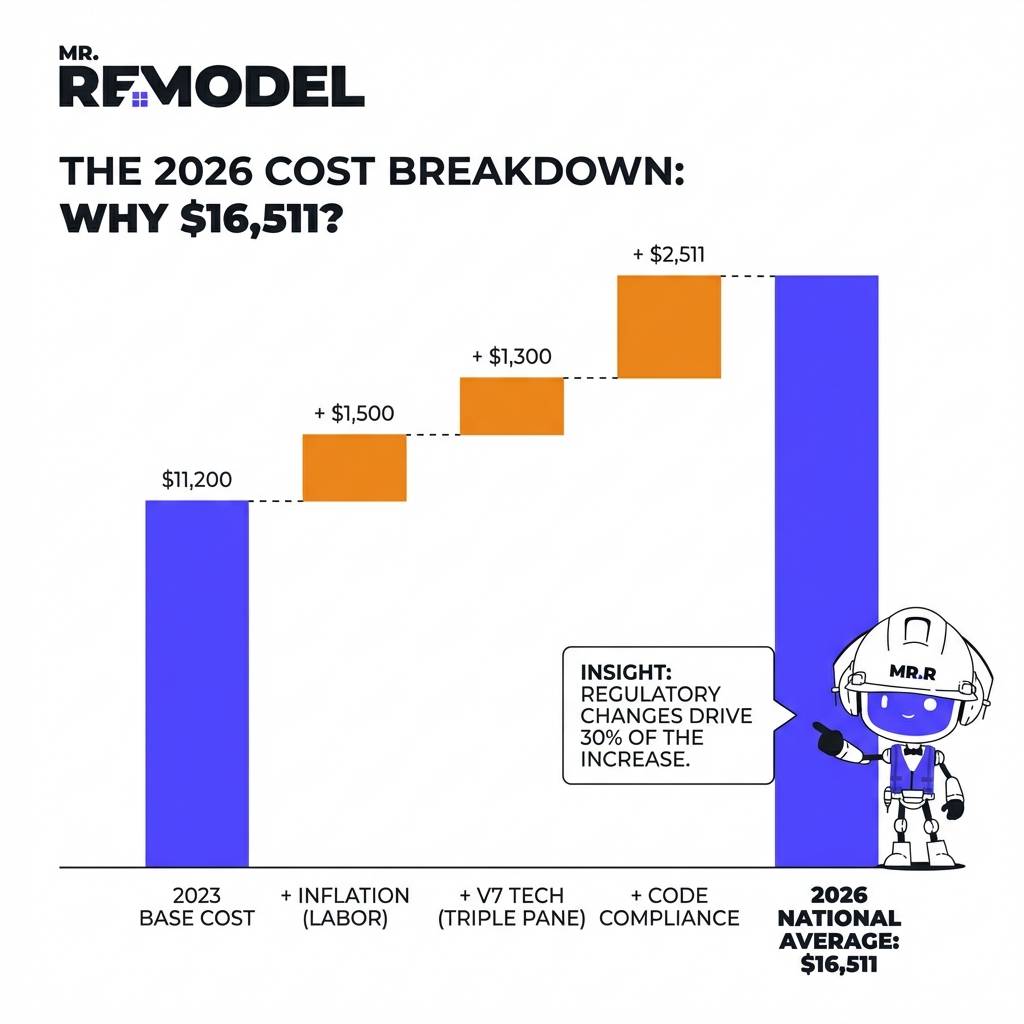
Selecting the right window replacement contractors is often the most expensive maintenance decision a homeowner makes all decade. With the national average for a completed project hitting $16,511, you are not just buying glass. You are investing in a complex construction project that involves building codes, energy modeling, and supply chain logistics.
The market is flooded with directories and top ten lists that treat every home the same. They fail to explain why a project in Houston looks completely different from one in Indianapolis.
Mr. Remodel internal data of over 27,000 projects reveals that the best strategy depends entirely on your geography and your goals. You need a partner who understands the new 2026 energy rules and can help you design a project that fits your financial timeline.
The Energy Star Version 7 Reality
The primary driver of rising window costs in 2026 is the shift in technology required by the federal government. The Environmental Protection Agency recently implemented Energy Star Version 7.0. This is a massive leap forward in efficiency standards.
Why Costs Are Up
To meet these new requirements, specifically in the Northern Climate Zone, windows must now achieve a U-Factor of 0.22 or lower. Older double pane windows often sat around 0.27 or 0.30. To hit 0.22 manufacturers often have to use:
- Triple Pane Glass: Adding a third layer of glass adds weight and material cost.
- Advanced Low-E Coatings: New fourth surface coatings are needed to reflect heat back into the room.
When you see a quote that is higher than you expected, it is likely because the contractor is specifying high performance glass that meets these new laws. Cheap quotes often use outdated technology that will disqualify you from tax credits.
Whole Home vs. Phased Replacement
Your location likely dictates your strategy. Our data shows a clear split in how homeowners across the country approach this investment.
The Volume Buyers: Indiana and Washington
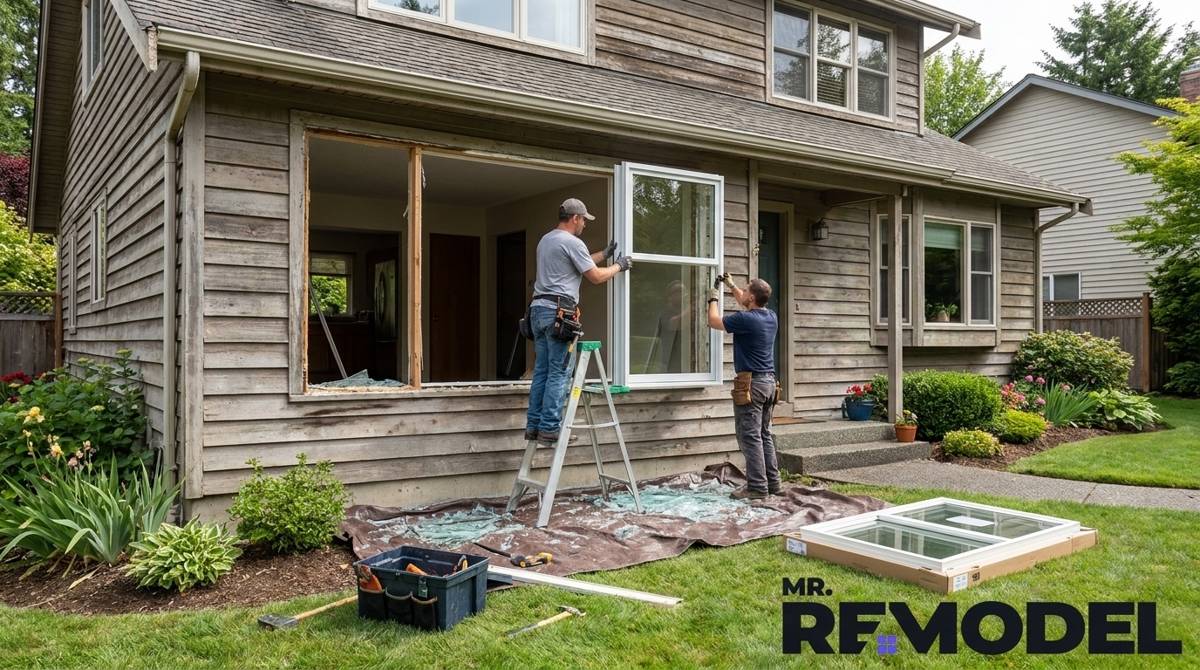
In states like Indiana, Washington, Nevada, and Florida, Mr. Remodel data shows the average project size is consistently over 6.5 windows. In these regions, homeowners are choosing a Whole Home Strategy.
The logic here is volume pricing. By replacing 7 or more windows at once, you dilute the setup cost of the installation crew. You pay for the dumpster, the permit, and the travel time once. If you are in these markets, you should ask contractors for bulk incentives.
The Phased Upgraders: California and Texas
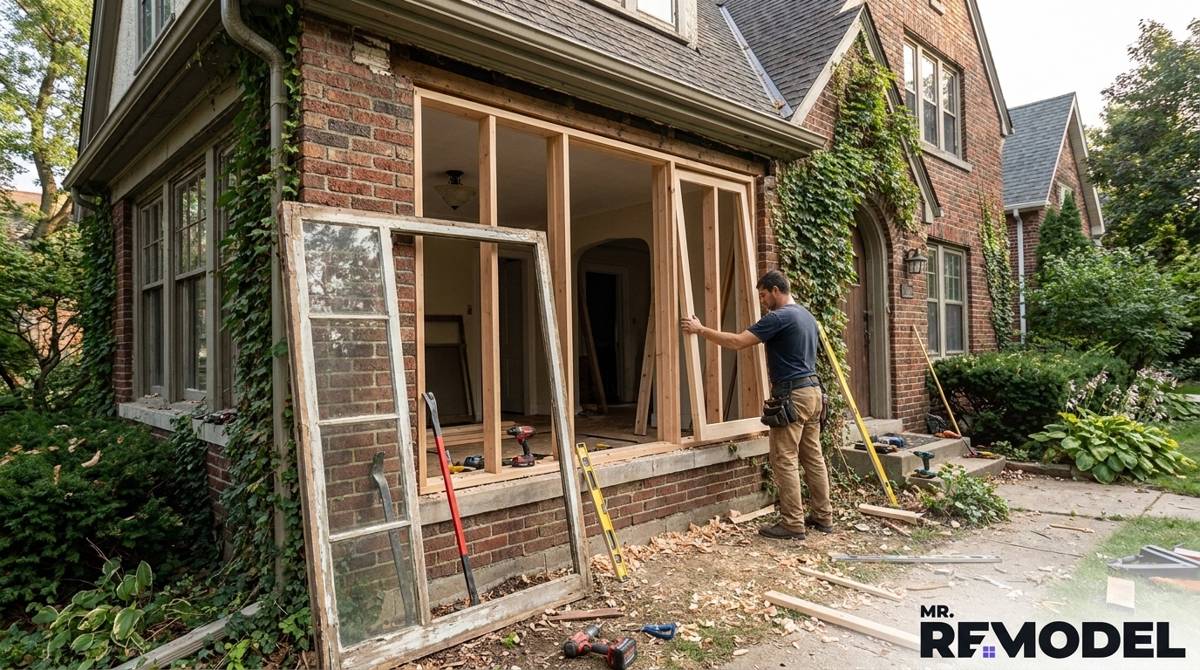
In contrast, homeowners in California, Texas, and Tennessee average fewer than 5 windows per project. This points to a Phased Replacement Strategy.
In high cost areas like the Bay Area or Los Angeles, spending $30,000 upfront is difficult. Instead, savvy homeowners are replacing windows room by room.
- Phase 1: Replace the front facade windows to boost curb appeal immediately.
- Phase 2: Replace the master bedroom windows for noise reduction and comfort.
This approach keeps the initial invoice manageable while still moving the home toward full efficiency over time.
Financial Strategy: Maximizing the 25C Tax Credit
The federal government offers financial tools to help offset the cost of these upgrades. However, the structure of these credits supports the phased strategy mentioned above.
The Annual Cap
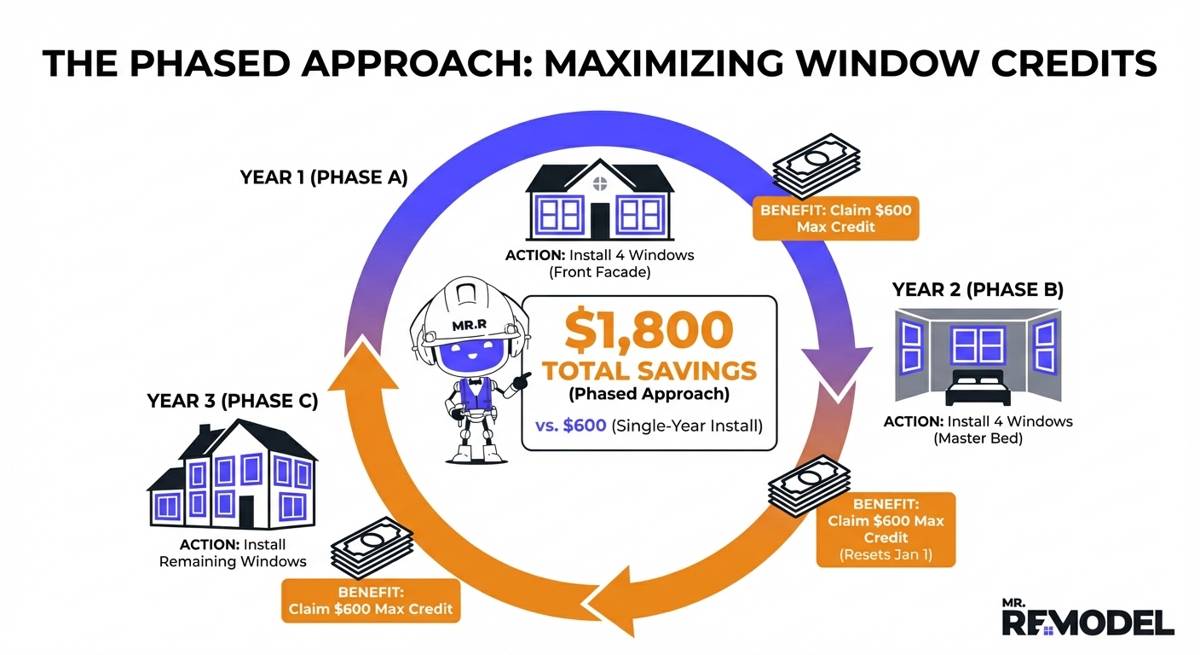
According to the IRS Instructions for Form 5695, the Energy Efficient Home Improvement Credit (25C) allows you to claim 30% of your project cost. However, there is an annual cap of $600 for exterior windows.
Since this cap resets every year, the phased approach is financially smart.
- Year 1: Replace 4 windows. Claim the $600 credit.
- Year 2: Replace 4 more windows. Claim another $600 credit.
By spreading your project out, you can double or triple your tax savings compared to doing it all in one calendar year.
State Specific Rebates
Beyond federal taxes, you should always check for local utility incentives. The Database of State Incentives for Renewables & Efficiency (DSIRE) is the gold standard for finding these offers. In many states, local power companies offer cash rebates that can stack on top of federal credits.
Case Study: The Las Vegas Heat Defense
Mr. Remodel data shows that Las Vegas is the volume leader for window replacements with over 400 recent projects. The average size is 7 windows. This is a perfect example of a market driven by extreme climate needs.
Homeowners in Las Vegas are not replacing windows for style. They are doing it for survival against the heat. They are prioritizing the Solar Heat Gain Coefficient (SHGC) above all else. They buy large packages of windows to seal the entire building envelope at once because a single drafty window in a 110 degree summer can ruin the efficiency of the whole house.
If you live in a climate with extreme weather swings, follow the lead of our Las Vegas customers. Prioritize a larger scope to ensure your insulation barrier is complete.
Frequently Asked Questions
Why is the average window project cost over $16,000?
The national average of $16,511 reflects inflation in labor and materials, but largely it is driven by new energy codes. To meet Energy Star Version 7.0 standards, manufacturers must use expensive technologies like triple pane glass and advanced gas fills. This higher quality product comes with a higher price tag.
Can I replace my windows in stages?
Yes. In fact, data from California and Texas suggests this is a very popular strategy. Replacing windows in phases allows you to manage cash flow. It also allows you to maximize the federal tax credit which has an annual cap of $600 for windows.
What is the Energy Star Version 7 requirement?
For the Northern Climate Zone, the new requirement is a U-Factor of 0.22 or lower. For the Southern Zone, it focuses heavily on a low Solar Heat Gain Coefficient (SHGC) of 0.23 or lower. These are strict standards that disqualify many basic builder grade vinyl windows.
How do I find local rebates?
We recommend using the DSIRE database to find incentives specific to your zip code. Many utility companies offer rebates for switching to high efficiency windows, but these programs change frequently and often require pre-approval.
Start Your Window Replacement Project with Mr. Remodel
You do not have to navigate this market blindly. Whether you are planning a massive renovation in Washington or a strategic phased update in California, the data points to a clear path. You must prioritize windows that meet the new Energy Star Version 7 specs to ensure your investment lasts. You should also consider the timing of your project to maximize your tax benefits.
Ready to plan your 2026 project? Mr. Remodel will help you review your local options and build a plan that fits your budget and your climate.