1-855-QUOTEMR

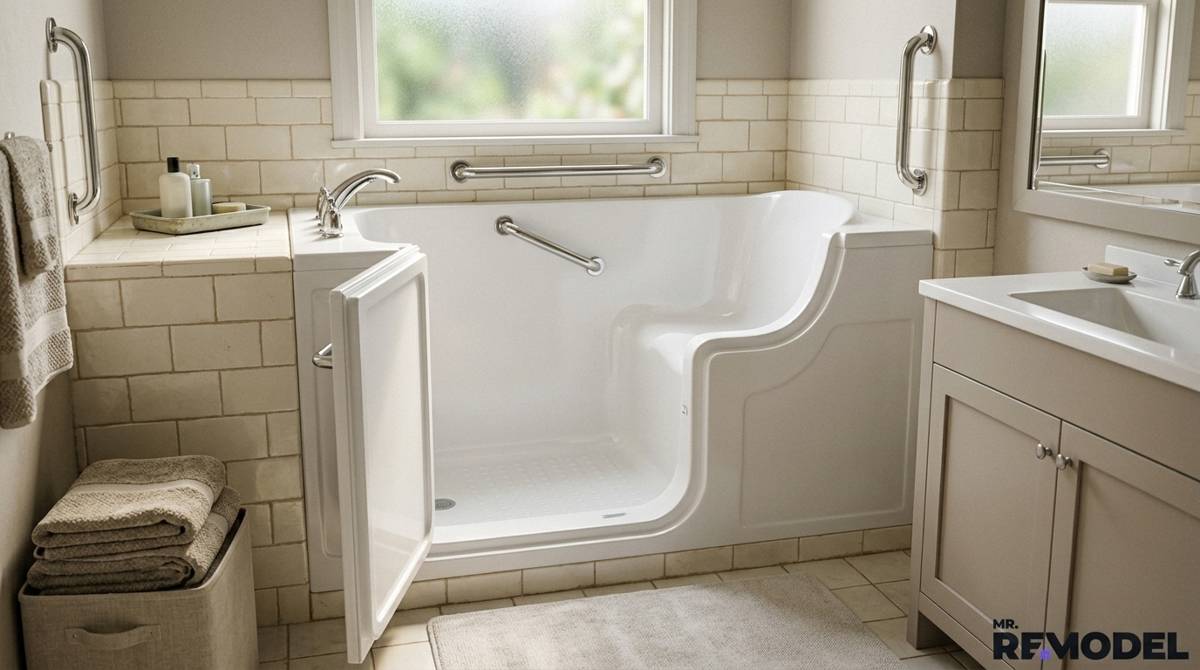
Table of Contents [hide]
Who This Is For
This guide is built specifically for family caregivers and homeowners coordinating an aging-in-place safety upgrade. If you need upfront pricing data and timeline strategies to manage a household mobility transition smoothly, this analysis is for you.
Key Takeaways
- The Investment Median: A therapeutic hydrotherapy walk-in tub installation averages between $8,000 and $12,000.
- The Entry Tier: Basic soaking models focused entirely on the essential fall prevention range from $5,000 to $7,500.
- The Crisis Timeline: Over 50% of families require a rapid safety deployment within seven days or fewer.
- The Structural Needs: Installations require technical plumbing checks, electrical audits, and doorway modifications.
- The Financial Protection: A one-time safety upgrade costs significantly less over time than recurring assisted-living facilities.
Sifting through aggressive television commercials makes planning a bathroom safety upgrade feel incredibly overwhelming. If you are researching a walk-in tub installation for seniors to protect a loved one, a standard therapeutic model typically has a fully burdened cost of $8,000 to $12,000.
Accessing verified marketplace metrics helps your family bypass high-pressure sales pitches entirely. Utilizing a trusted resource like Mr. Remodel ensures you instantly connect with certified local safety professionals. These experts evaluate your layout to deliver a precise, code-compliant installation.
Breaking Down the 2026 Senior Accessibility Cost Matrix
Standard bathroom layouts require targeted renovations to support safe independent living. Reviewing contractor quotes becomes much simpler when you anchor your expectations to real-world database metrics. The total financial layout depends on the specific level of safety measures your family needs.
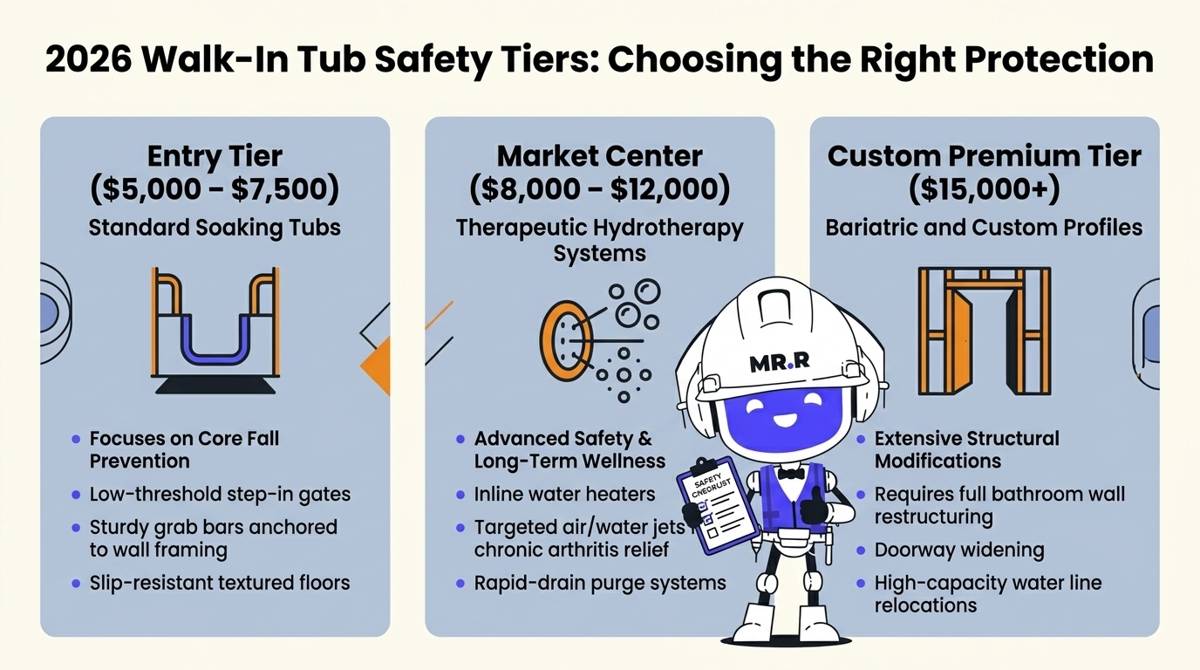
Standard Soaking Tubs
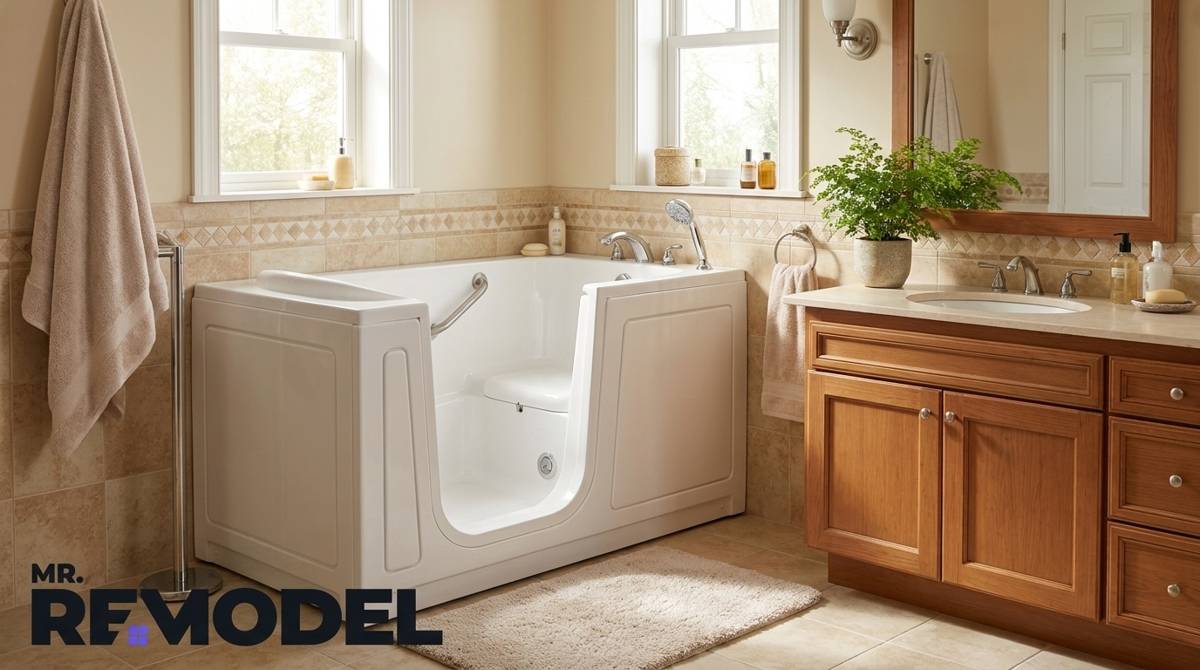
Base-tier soaking units range from $5,000 to $7,500 for a fully-burdened setup. This entry option focuses purely on the core essentials of fall prevention.
Advantages of Standard Soaking Tubs
- Low-threshold step-in gates to eliminate entry slips.
- Sturdy safety grab bars anchored to the wall framing.
- Slip-resistant textured floors for secure balance.
Therapeutic Hydrotherapy Systems
Moving into the true market center means investing in advanced therapeutic features. These comprehensive systems typically range from $8,000 to $12,000 once professional labor is included.
Advantages of Therapeutic Hydrotherapy Systems
- Specialized internal inline water heaters to sustain temperatures.
- Targeted air and water jets for chronic arthritis relief.
- Rapid-drain purge systems to eliminate cold exit wait times.
Bariatric and Custom Profiles
Premium retrofits start at $15,000 and go up based on customization needs. These projects demand extensive wall restructuring, doorway widening, and high-capacity water line relocations.
Opting for these vital safety changes provides exceptional financial protection over time. Data from the National Council on Aging demonstrates that a one-time structural modification eliminates the immediate, compounding monthly expenses associated with assisted-living facilities.
See Related: Bathroom Remodeling Costs and Value: The Definitive Guide to Maximizing ROI
Navigating an Immediate Family Mobility Crisis
Homeowners tend to split into two distinct planning pathways depending on immediate physical needs. Proactive planners utilize a stable 30-day runway to map out long-term aging-in-place blueprints. This structured approach allows families to systematically audit local labor rates before an incident occurs.
However, more than half of the market operates in a high-stress, fast-track window. Specifically, 35.55% of families need execution within seven days, and 15.15% require immediate 1-to-3-day intervention. This urgent segment is usually triggered by a sudden fall or a pending hospital discharge.
Fast-track projects cannot ignore technical building codes or safety guidelines. Clinical research from the National Institute on Aging confirms that bathrooms are the highest-risk zone for residential slips, making low-threshold entries and grab bars essential to prevent severe injuries.
Furthermore, independent living guidelines from the U.S. Department of Veterans Affairs confirm that walk-in configurations require meticulous engineering audits. Local installers must verify that your current water heater can fill the tub and that the floor framing can support the heavy load.
Planning helps you secure a safe environment without unnecessary stress. Get your free, no-obligation quote from Mr. Remodel now to coordinate with trusted local teams.
See Related: Slip-Resistant Flooring for Bathrooms: Safety Standards And Real Remodel Costs
High-Density Retirement Corridors and Regional Drivers
Pricing and installation timelines shift based on regional housing styles and local demographics. Different climates and neighborhood trends dictate the exact structural updates necessary to secure a home.
Pacific Northwest Historic Layouts
Oregon and Portland represent high-volume centers for accessibility requests. Dense concentrations of historic housing stock require meticulous framing adjustments and specialized doorway modifications to fit modern safety tubs into older bathroom footprints.
Sun Belt Suburban Communities
Georgia and Florida retirement corridors drive massive installation volumes. Families in these regions actively adapt existing suburban housing blocks, allowing seniors to remain in their homes permanently and comfortably.
Desert Mountain Care
Metro areas like Tucson, Arizona, see concentrated demand for high-end therapeutic hydrotherapy. Seniors prioritize targeted water jet systems to manage climate-related joint inflammation and chronic arthritis pain.
See Related: Choosing a Bathroom Remodeling Contractor: A Definitive Vetting Guide
Frequently Asked Questions
How long does a safety walk-in tub installation take?
While proactive planning takes about a month, emergency installations can be executed within 1 to 3 days by specialized crews who prioritize urgent hospital discharges or active fall-risk situations.
Will my current home water heater work with a walk-in tub?
These units hold double the volume of a standard bath. Your contractor will audit your plumbing capacity and may recommend upgrading to a fast-recovery system or an inline heater to maintain warmth.
What is the main difference between a soaking tub and a therapeutic tub?
Standard soaking models focus strictly on basic fall prevention with low-entry thresholds and grab bars. Therapeutic models add advanced hydrotherapy water jets, internal inline heaters, and rapid-drain purge systems.
Match Safely with Certified Local Specialists
Protecting your family from aggressive sales tactics is a priority during an unexpected mobility transition. Mr. Remodel acts as an independent technical matchmaking network and data resource to streamline your search.
Our intelligent data portal evaluates your local market constraints to connect your family smoothly with independent, vetted providers of expert bathroom remodeling services right in your ZIP code. Get your free, no-obligation quote now to find licensed professionals certified to complete a fast, code-compliant safety overhaul.