1-855-QUOTEMR

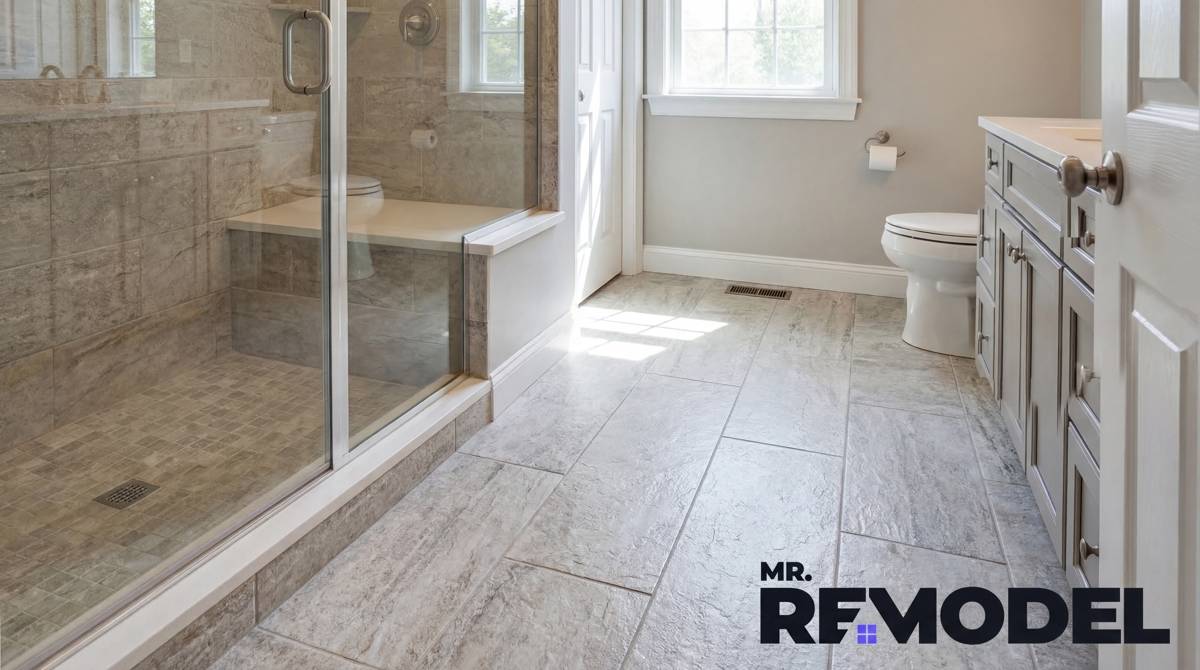
Table of Contents [hide]
Who This Is For
This guide is for homeowners, caregivers, and seniors planning a bathroom renovation. It is specifically designed to help those prioritizing safety, "aging-in-place" functionality, and informed financial budgeting.
Key Takeaways
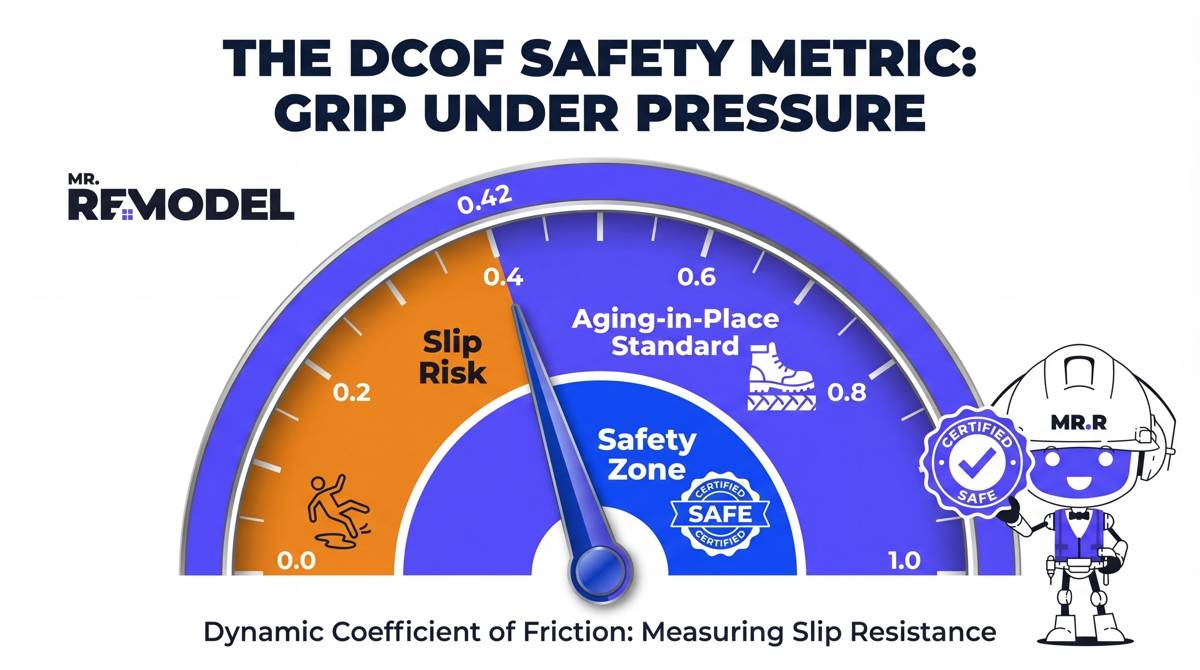
- Safety Standard: Look for a Dynamic Coefficient of Friction (DCOF) rating of 0.42 or higher for wet environments.
- Top Materials: Textured porcelain tile and luxury vinyl plank (LVP) offer the best balance of slip resistance and durability.
- Project Costs: Targeted shower upgrades with safety flooring average approximately $15,794 based on recent project data.
- Professional Insight: Transitioning from a bathtub to a walk-in shower is the most effective way to eliminate high-risk trip hazards.
Every year, thousands of emergency room visits are caused by falls in the bathroom, a room that accounts for nearly 80% of all home falls. This high risk is primarily due to the combination of slick surfaces and moisture.
Choosing the right flooring is the single most important decision you can make to prevent these accidents. Modern slip-resistant technology allows you to create a beautiful, spa-like environment without sacrificing your physical safety or home equity.
The Science of Bathroom Safety: Understanding DCOF
When selecting flooring, you cannot rely on how a tile feels in your hand. Professionals use a specific metric called the Dynamic Coefficient of Friction (DCOF). This measures the slip resistance of a surface when it is wet and in motion.
According to the U.S. Department of Veterans Affairs, bathroom flooring must maintain a wet DCOF of 0.42 or greater. This standard is designed to prevent water ponding and unintended hydroplaning. Anything lower than this rating is considered a significant hazard in a wet zone.
Why Friction Matters for Aging-in-Place
Our reaction times naturally slow down. Research from Arizona State University indicates that a high-friction surface provides the extra milliseconds needed for a person to regain their balance during a stumble.
Without adequate grip, the foot slides too quickly for the brain to compensate. This is why textured surfaces are a foundational element of universal design. They provide the mechanical "bite" necessary to keep your feet planted firmly.
Top Materials for Slip-Resistant Bathroom Floors
Not all waterproof materials are created equal. You need a surface that handles humidity while providing a tactile grip. Here are the most effective options for a safe remodel:
- Textured Porcelain Tile: This is the gold standard for durability. Many manufacturers now produce "high-grip" porcelain specifically for showers that exceeds the 0.42 DCOF requirement.
- Luxury Vinyl Plank (LVP): High-quality LVP often features an embossed texture that mimics natural wood grain. This texture provides excellent slip resistance even when wet.
- Small Format Mosaic Tile: Using smaller tiles (2-inch or less) increases the number of grout lines. These lines act as a "tread" for your feet, significantly improving traction.
- Natural Stone (Honed): While beautiful, stone must be "honed" or "tumbled" rather than polished. Polished stone becomes a skating rink when a single drop of water hits it.
Real-World Costs of Safety Upgrades
Upgrading to slip-resistant flooring is often part of a larger safety renovation. Understanding the financial investment helps you plan effectively for your home’s future.
Based on internal data from Mr. Remodel, homeowners are increasingly investing in targeted safety zones. Below is a breakdown of the average costs for these specific projects:
These figures reflect the high demand for wet-area safety. While a complete remodel is an option, many homeowners choose to focus their budget on the shower and bathtub areas where the risk of injury is highest.
|
Pro Tip: If you are on a tighter budget, focusing your investment on a Bathtub-to-Shower conversion provides the highest safety ROI for every dollar spent. |
Integrating Safety with Style
You do not have to settle for a hospital look to be safe. Modern design allows for a seamless transition between your wet zones and the rest of the bathroom.
The Parkinson’s Foundation recommends pairing slip-resistant flooring with zero-entry or curbless showers. This creates a continuous floor level from the bedroom into the shower. It eliminates the trip hazard of a shower curb while looking incredibly high-end.
Platforms like Mr. Remodel help by matching you with contractors who specialize in these barrier-free designs. Using the same textured tile across the entire floor creates a cohesive, expansive look that also happens to be ADA-compliant.
Addressing the High-Risk Fall Zones
The most dangerous moment in a bathroom is the transition from a wet environment to a dry one. The National Safety Council notes that these "transition zones" are where most slips occur because the foot's expectation of grip suddenly changes.
By extending your slip-resistant flooring throughout the entire bathroom, not just the shower, you maintain a consistent level of friction. This consistency is vital for maintaining balance while your feet or the floor are still damp.
Frequently Asked Questions
What is the best flooring for the elderly in a bathroom?
Textured porcelain tile with a DCOF rating of 0.42 or higher is widely considered the best choice. It offers the highest slip resistance and is easy to clean for those with limited mobility.
Can I make my current bathroom floor slip-resistant?
There are anti-slip coatings available, but they are often temporary. For a long-term, reliable solution, replacing the floor with naturally textured materials is the safest and most durable option.
What is a DCOF rating for shower floors?
The Dynamic Coefficient of Friction (DCOF) should be at least 0.42 for any surface that will be wet. This is the industry standard for preventing slips in commercial and residential bathrooms.
How much does a bathtub-to-shower conversion cost?
According to Mr. Remodel project data, the average cost for a bathtub-to-shower conversion is approximately $18,310. This includes the removal of the old tub and the installation of a new, safer walk-in system.
Is luxury vinyl plank (LVP) safe for bathrooms?
Yes, provided it is 100% waterproof and has a textured wear layer. Many homeowners choose LVP because it is warmer underfoot and offers good grip compared to polished stone.
Upgrade Your Bathroom Safety with Confidence
Choosing slip-resistant flooring is a vital step in protecting yourself and your family. By focusing on high-DCOF materials and eliminating trip hazards like high tub walls, you create a home that supports independence for years to come.
Whether you are looking for a simple shower upgrade or a complete safety overhaul, professional guidance ensures the job is done to the highest safety standards.
Ready to make your bathroom safer? Mr. Remodel connects you with top-rated local contractors to provide free quotes for your project. Don't wait for an accident to happen—start your safety-focused renovation today.