1-855-QUOTEMR

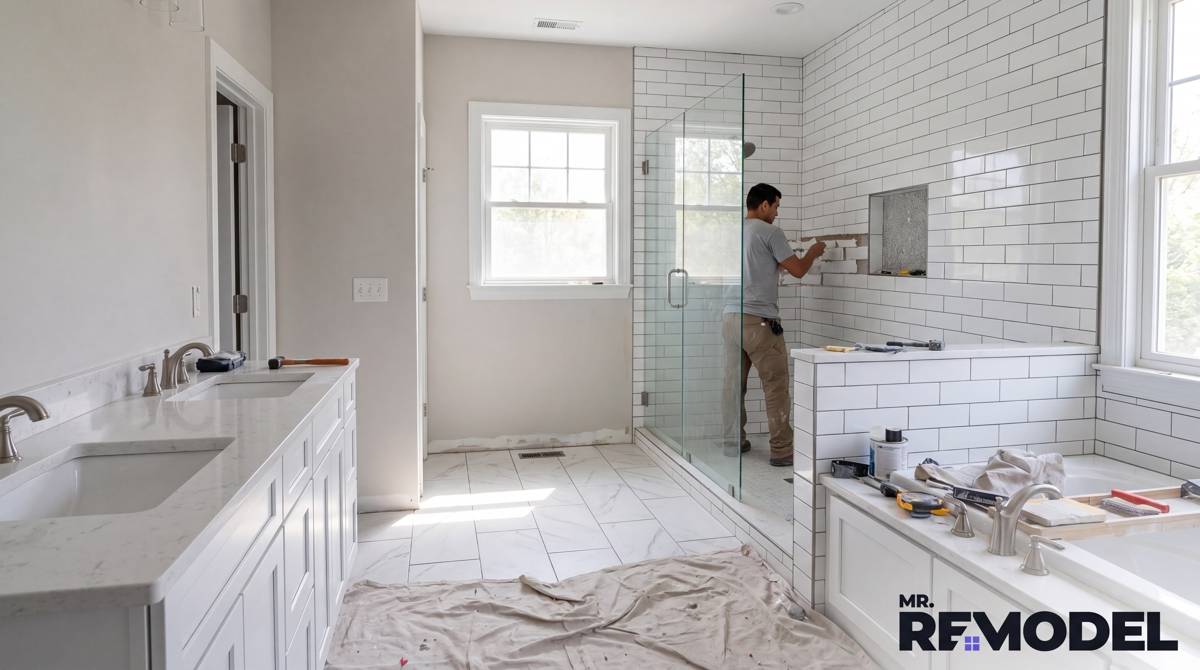
Table of Contents [hide]
Who This Is For
This guide is designed for homeowners who are in the planning and budgeting stages of a primary bathroom renovation. It provides detailed financial granularity, labor rate benchmarks, and ROI analysis to help you vet contractor bids and maximize your home equity.
Key Takeaways
- Investment Benchmarks: The typical 2026 master bathroom remodel ranges from $18,500 to $30,000, with most projects landing between $26,000 and $29,000.
- Labor-Heavy Budgets: Unlike national estimates that suggest labor is a minor cost, actual 2026 data show labor accounts for 40% to 65% of the total budget.
- Efficiency Gains: Upgrading to modern fixtures can save households nearly 700 gallons of water per year, providing long-term utility savings.
- High Resale Value: Mid-range renovations currently offer a 67% to 75% return on investment when homeowners maintain the existing bathroom layout.
Bathroom renovations remain the second most prioritized home upgrade in the United States. According to home renovation statistics cited by the University of South Alabama, homeowners are increasingly focused on primary suites.
In the current 2026 market, the cost of these projects has shifted significantly due to labor shortages and material demand. For many, a master bathroom is no longer just a utility. It has become a sanctuary that requires precise financial planning to execute correctly.
Defining the Average Cost for a Master Bathroom Remodel
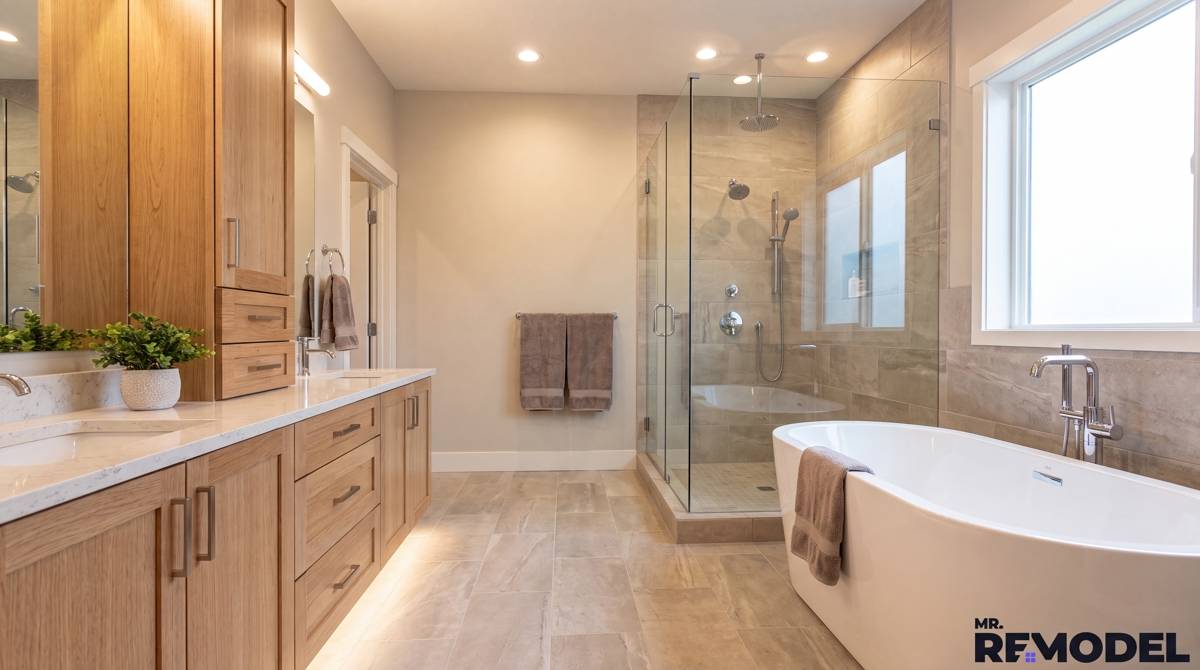
The average investment for a primary bathroom renovation typically falls between $18,500 and $30,000. This range assumes a mid-range scope with standard material grades. Most homeowners find their final bills clustering in the $26,000 to $29,000 neighborhood.
For those pursuing luxury or custom footprints, costs escalate quickly. High-end projects often range from $50,000 to over $120,000. These price points are usually driven by footprint expansions, custom wet rooms, and premium stone selections.
See Related: Bathroom Remodel Cost by City: Real Project Data & Local Averages
Price Per Square Foot Benchmarks
Calculating cost by square footage is a reliable way to verify a contractor's bid. Mr. Remodel data indicates a wide variance based on the complexity of the work.
- Mid-Range (Existing Layout): $180 to $280 per square foot.
- Luxury Custom Work: $500 to $800+ per square foot.
These numbers highlight the cost of structural changes. If you move plumbing lines or tear down walls, you enter the luxury pricing bracket immediately.
The Math of Labor and General Contractor Fees
One of the most common mistakes homeowners make is underestimating labor. Many online calculators claim labor is only 20% to 35% of the bill. However, actual 2026 labor ratios sit closer to 40% to 65% for custom master bathrooms.
Skilled trades are in high demand. Because master bathrooms involve plumbing, electrical, and complex tiling, you are paying for specialized expertise. Every hour of professional work contributes significantly to the final total.
Specialized Trade Hourly Rates
To protect yourself from inflated bids, you should understand what trades actually cost. Specialized trades command higher rates because of their licensing and liability requirements.
Tile labor alone for a master suite can average between $2,500 and $6,000. This depends on the size of the tiles and the complexity of the pattern.
General Contractor (GC) Markups
If you hire a full-service firm, expect a management fee. Standard General Contractor markups range from 15% to 20% of the total project cost.
This fee covers project management, material procurement, and subcontractor scheduling. While it increases the total price, it often prevents expensive errors and timeline delays. It is a vital component of a stress-free renovation.
Strategic Trends: Tub-to-Shower Conversions
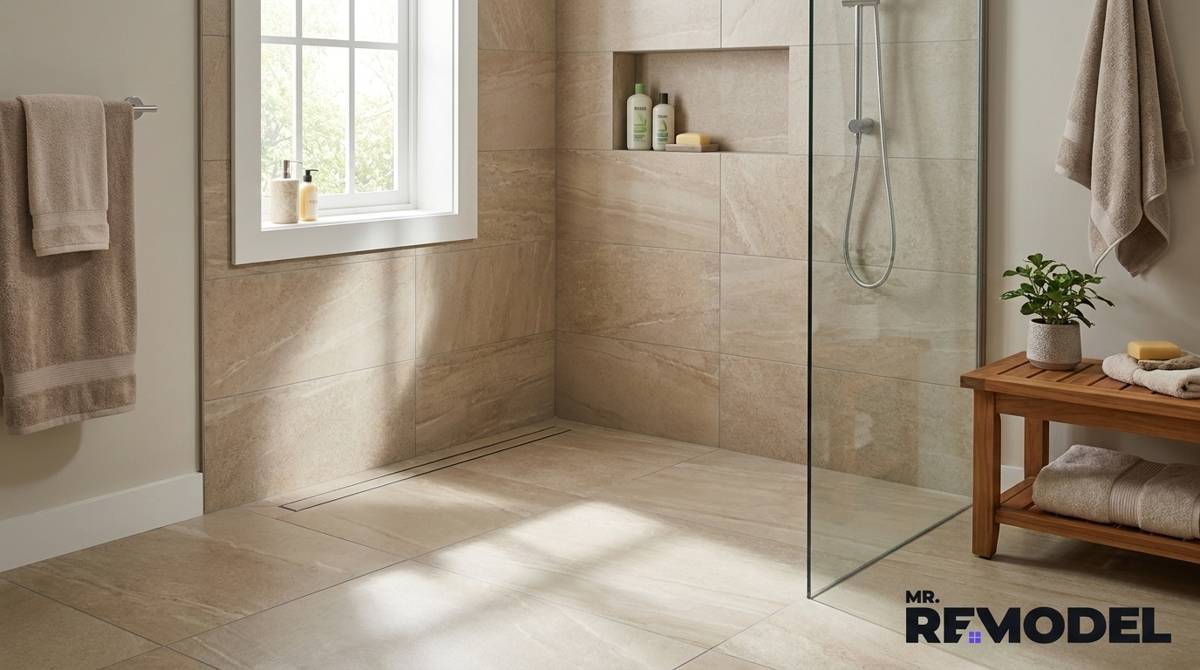
A dominant trend for 2026 is the removal of oversized soaking tubs in favor of large walk-in showers. This shift is driven by daily functionality and the desire for more floor space.
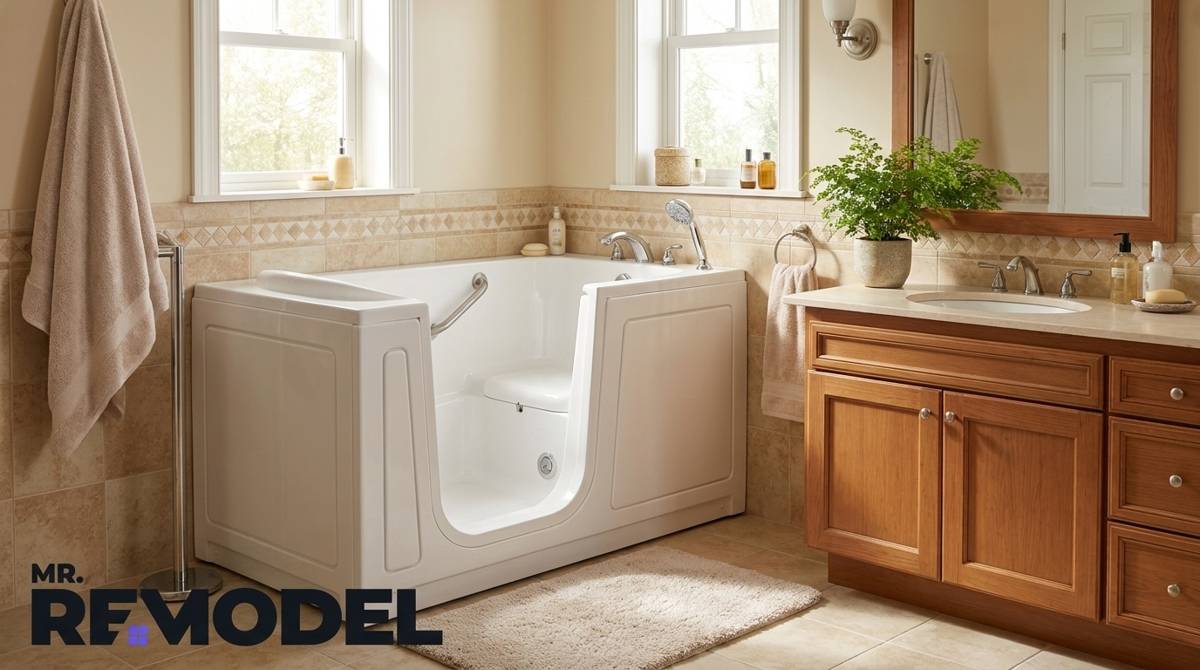
A standard tub-to-shower conversion typically costs between $1,200 and $3,600. This is often handled by specialized bathtub replacement companies that can complete the swap in a few days.
This specific upgrade is a high-impact move. It modernizes the room without requiring a full gut renovation. It is one of the most cost-effective ways to refresh a master suite.
See Related: Signs You Need a Bathroom Remodel: From Aesthetics to Structural Safety
Maximizing Your Return on Investment (ROI)
The financial justification for a remodel depends on how you spend your budget. Not all upgrades offer the same return on equity. Mr. Remodel research shows a clear divide between mid-range and high-end returns.
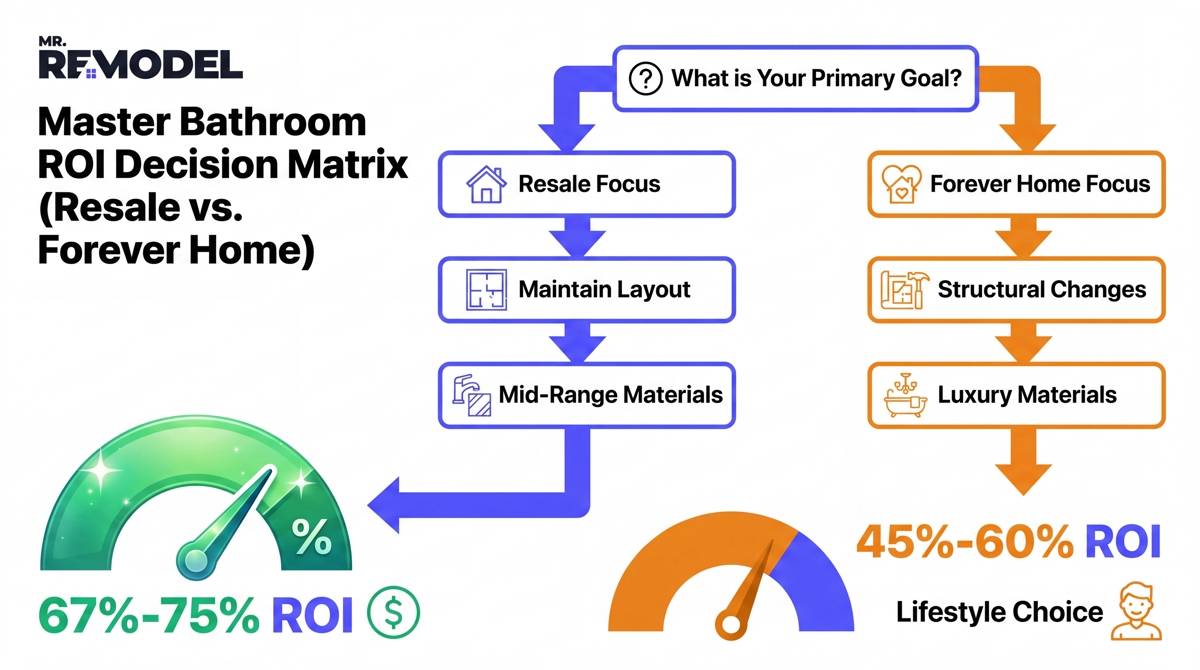
- Mid-Range ROI: 67% to 75%. This is achieved by updating surfaces and fixtures while keeping the existing layout.
- High-End ROI: 45% to 60%. Lower yields occur because of the massive capital required for structural changes and custom materials.
If your primary goal is resale value, stick to high-quality mid-range materials. Focus on lighting, modern vanities, and clean tile designs.
Neighborhood Comparables and Over-Capitalization
Before committing to a $50,000 project, check your local market. PBS suggests evaluating neighborhood home values first.
If your home is valued at $300,000, a $60,000 bathroom might be an over-capitalization. You may not see that money back when you sell. Aim to keep your renovation budget proportional to your home's total value.
Water Efficiency and Long-Term Savings
A master bathroom remodel is also an opportunity to lower your monthly bills. Modern fixtures are significantly more efficient than those manufactured ten years ago.
According to EPA WaterSense data, upgrading to efficient faucets and showerheads can save households about 700 gallons of water annually. This helps offset some of the long-term costs of your investment while protecting local water resources.
See Related: Energy Efficient Bathroom Remodeling: WaterSense Fixtures and 2026 Rebates
Budgeting for Small and Large Scopes
Not every project needs to be a full master suite overhaul. If you are working with a tighter budget, you can still achieve a fresh look with targeted updates.
For instance, a $500 bathroom remodel usually focuses on DIY painting and new hardware. A $3,000 bathroom remodel can include a new vanity and a modern toilet installation.
These smaller projects are excellent for guest baths or half-baths. However, for a master suite, these budgets are best used for cosmetic staging before a sale rather than a structural renovation.
Frequently Asked Questions
What is the highest cost in a bathroom remodel?
Labor is the single largest expense, often making up over 50% of the total budget. Among materials, cabinetry and custom tile work are usually the most expensive line items.
Is it cheaper to keep the existing bathroom layout?
Yes. Keeping your plumbing and electrical lines in their current positions can save you $5,000 to $10,000. Moving a toilet or shower requires significant subfloor and wall modifications.
How long does a master bathroom remodel take?
A full renovation typically takes four to nine weeks. This includes the time needed for demolition, inspections, tiling, and final fixture installation.
Do I need a permit for a master bathroom remodel?
Yes. Any project that involves plumbing, electrical, or structural changes requires a permit from your local municipality. This ensures the work meets safety codes and protects your home insurance.
How do I know if I am overpaying for a contractor?
Compare your bid to the average plumbing rates of $45 to $200 per hour. If a contractor cannot explain their labor costs or refuses to provide itemized pricing, it is a red flag.
Secure Your Master Bathroom Investment
The average cost for a master bathroom remodel is a significant investment that requires careful oversight. By understanding the 2026 labor market and focusing on high-ROI upgrades, you can create a beautiful space that adds real value to your home.
If you are ready to start your renovation, Mr. Remodel is here to help. We provide transparent data and connect you with vetted, local professionals who specialize in primary suite transformations. Get a free, no-obligation quote and ensure your remodel is handled by the top-rated experts in your area.