1-855-QUOTEMR

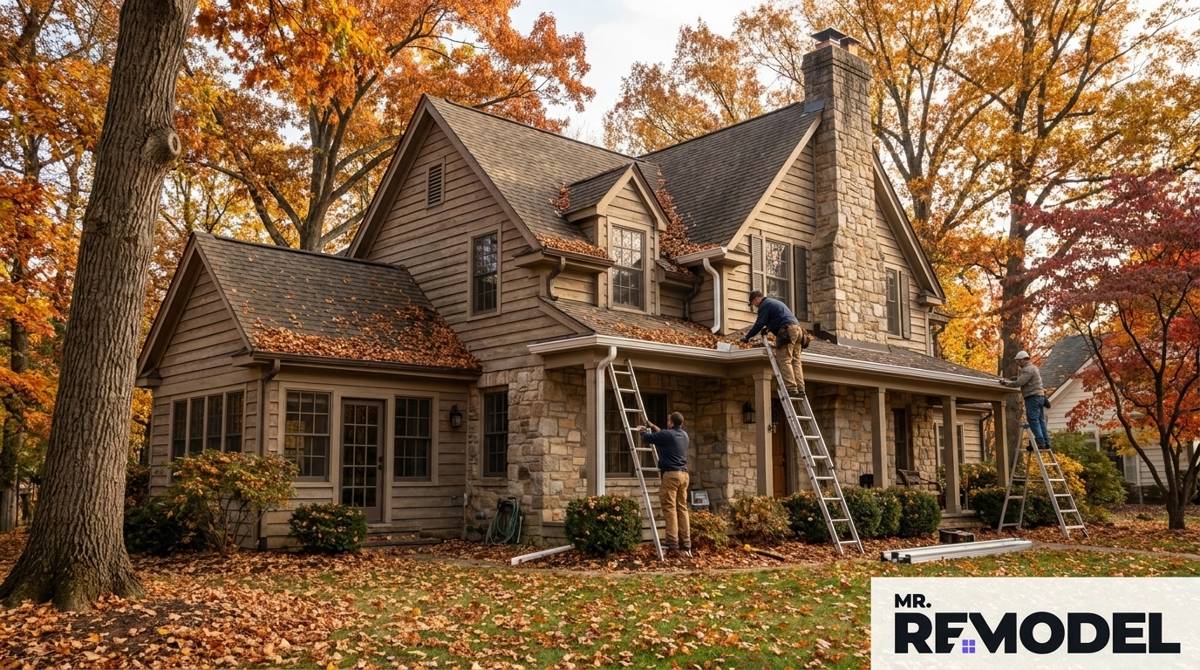
Table of Contents [hide]
Who This Is For
This guide is for homeowners planning a gutter replacement project and trying to determine the best season to schedule work. It will help you compare spring, summer, fall, and winter gutter replacement so you can plan around weather, contractor availability, and your home’s condition.
Key Takeaways
- No Perfect Season: There is no single best season for every homeowner.
- Popular Timing: Spring and fall are often practical replacement periods.
- Plan Ahead: Waiting until gutters fail can increase risks and limit scheduling options.
- Weather Matters: Rain, snow, heat, and storms can affect installation timing.
- Smart Move: Proactive replacement is usually better than emergency replacement.
A failing gutter system rarely waits for perfect weather. The best time of year to replace gutters depends on your climate, contractor availability, gutter condition, and whether your home needs protection before the next rainy, snowy, or storm-heavy season.
For many homeowners, spring and fall are practical times to plan gutter replacement. However, summer and winter can also work in the right situation. The real goal is to replace failing gutters before overflow, leaks, or poor drainage create bigger problems.
Does the Time of Year Matter for Gutter Replacement?
Yes, timing can affect scheduling, installation conditions, and your home's preparedness for upcoming weather. Gutters help manage roof runoff, so replacing them before a wet or stormy season can make a major difference.
The Environmental Protection Agency (EPA) explains, through its Soak Up the Rain program, that homeowners can help manage stormwater runoff by redirecting downspouts, using rain barrels, planting rain gardens, and improving drainage around the property. If gutters are sagging, leaking, or overflowing, timing should be based on risk, not convenience alone.
Mr. Remodel's inquiry data is useful here as a replacement planning context. Gutter replacement is the largest gutter category, with 6,273 inquiries. New gutter installation generated 2,847 inquiries, and gutter repair generated 1,924 inquiries.
Replacement accounts for about 57% of all gutter inquiries. That shows many homeowners reach a point where planning a full replacement becomes more practical than continued repairs.
See Related: Gutter Replacement Checklist for Homeowners
Spring Gutter Replacement
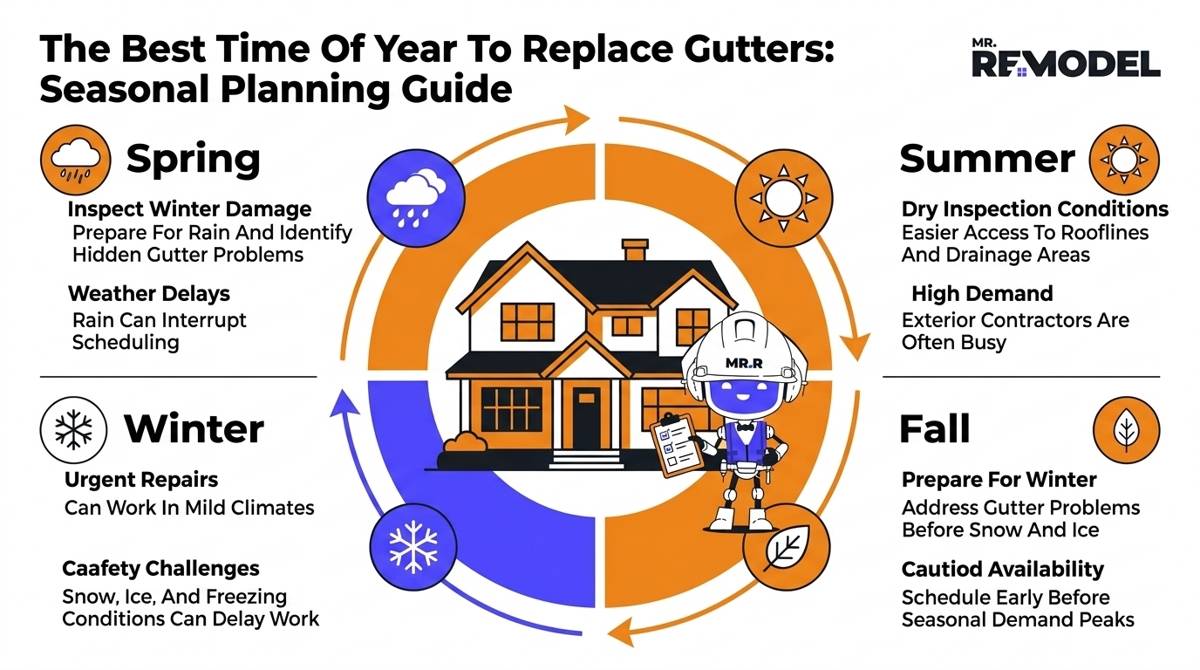
Spring is a common time to inspect gutters after winter. Snow, ice, wind, and debris can reveal damage that was not obvious before.
Pros
Spring gives homeowners time to fix drainage problems before heavy summer storms in many areas. It is also easier to spot clogs, leaks, sagging sections, and areas where water pools near the home.
Contractors may also be able to identify winter-related damage and recommend repairs before the next major rainy period.
Cons
Spring can be busy for exterior home projects. Rain may also delay installation in some areas.
The National Oceanic and Atmospheric Administration (NOAA) provides U.S. climate normals that show how rainfall and temperature patterns vary by region. That means spring timing may be better in some climates than others.
Summer Gutter Replacement
Summer can be a good time to replace gutters when the weather is more predictable. Longer daylight hours may also help contractors complete exterior projects efficiently.
Pros
Summer often gives homeowners more flexibility for planning. If spring storms exposed gutter problems, summer can be a good time to replace the system before fall leaves or winter weather arrives.
Dry weather may also make it easier to inspect fascia, roof edges, and drainage areas.
Cons
Extreme heat can make outdoor work harder and may affect scheduling. Contractors may also be busy with roofing, siding, windows, and other exterior projects.
If gutters are already failing, waiting until late summer may allow water problems to continue.
Fall Gutter Replacement
Fall is often one of the most practical times to replace gutters. It gives homeowners a chance to prepare before winter rain, snow, ice, and heavy leaf drop.
Pros
Fall replacement can help prevent clogged, leaking, or sagging gutters from going into winter in poor condition. It is also a natural time to inspect drainage after summer storms.
Homeowners with nearby trees may benefit from replacing or upgrading their gutters before leaves create heavy clogs.
Cons
Fall can be a busy season for gutter contractors. Homeowners who wait too long may face limited availability before colder weather arrives.
If you know your gutters are failing, schedule service early rather than waiting until the first major fall storm.
Ready to plan gutter replacement before the season gets busier? Mr. Remodel connects homeowners with fully vetted local contractors. You can use Mr. Remodel to find local gutter contractors and request a free, no-obligation quote.
Winter Gutter Replacement
Winter gutter replacement depends heavily on local weather. In mild climates, winter work may be possible. In areas with snow, ice, or freezing conditions, scheduling may be more limited.
Pros
Winter can work if the gutters are failing and conditions are safe for installation. Some homeowners may also find more contractor availability outside peak seasons.
If a gutter system is pulling away, leaking badly, or causing water to collect near the home, waiting may not be wise.
Cons
Snow, ice, freezing temperatures, and short daylight hours can make installation harder. Safety concerns may delay work.
The Federal Emergency Management Agency (FEMA) discusses water intrusion, drainage, and moisture-related risks in its Homeowner’s Guide to Retrofitting. If winter weather makes installation impossible, ask a contractor whether temporary repairs are needed until replacement can happen.
Season-By-Season Comparison
The best season depends on your home’s condition and local weather. Use this table as a planning guide, not a strict rule.
The Biggest Mistake Homeowners Make
The biggest mistake is waiting until gutters fail. By that point, water may already be spilling near the foundation, roofline, siding, or landscaping.
Warning signs include:
- Sagging gutters
- Leaks in multiple areas
- Overflow during rain
- Gutters pulling away from the fascia
- Rust, cracks, or holes
- Water is pooling near the foundation
- Repeated repairs
If you notice several of these problems, replacement timing may matter more than season.
See Related: Signs You Need New Gutters
Should You Replace Gutters Before They Fail?
Yes, if the system is clearly aging or no longer draining well. Waiting for total failure can increase the chance of water-related problems.
The National Association of Home Builders (NAHB) provides lifecycle context for home components in its Study of Life Expectancy of Home Components. Still, condition matters more than age alone.
If gutters are old but working well, you may be able to plan. If they are leaking, sagging, or overflowing, replacement should be considered sooner.
See Related: How Often Should Gutters Be Replaced?
How Much Does Timing Affect Cost?
Timing can affect scheduling, urgency, and contractor availability, but homeowners should be careful with unsupported seasonal pricing assumptions. The most reliable way to budget is to compare written estimates.
Industry-standard gutter replacement cost ranges include:
Emergency replacement may cost more than planned replacement if damage, repairs, or urgent scheduling are involved. Planning gives you more time to compare materials, profiles, downspouts, and contractor estimates.
See Related: Gutter Replacement Cost Guide
Frequently Asked Questions
What season is best for gutter replacement?
Spring and fall are often practical seasons because they help homeowners prepare for rain, leaves, snow, or storms. However, the best season depends on your climate, gutter condition, and contractor availability.
Can gutters be replaced in winter?
Yes, gutters can sometimes be replaced in winter if weather conditions are safe. This is more realistic in mild climates. Snow, ice, freezing temperatures, and safety concerns may delay installation in colder areas.
Should I replace gutters before selling my home?
It may be worth replacing gutters before selling if they are visibly damaged, leaking, sagging, or pulling away from the home. Working gutters can also help reduce drainage-related inspection concerns.
How long does gutter replacement take?
Many gutter replacement projects can be completed quickly, but timing depends on home size, number of stories, material, weather, and fascia repairs. Ask your contractor for a project-specific timeline.
Planning Gutter Replacement Before Problems Develop
The best time of year to replace gutters is before failing gutters create bigger drainage problems. Spring and fall are often popular choices, but summer and winter can also work depending on urgency and local weather.
If your gutters are leaking, sagging, overflowing, or pulling away, do not wait for the perfect season. Compare local gutter contractors through Mr. Remodel and request a free, no-obligation quote.