1-855-QUOTEMR

Table of Contents [hide]
Who This Is For
This guide is for homeowners researching gutter replacement costs and deciding whether replacing a house's gutters is the best solution for protecting their home, improving drainage, and planning a smarter exterior upgrade.
Key Takeaways
- Top Project: Gutter replacement is the most requested gutter project type in Mr. Remodel data.
- Cost Drivers: Material, linear footage, home height, downspouts, and labor all affect gutter replacement pricing.
- Repair Choice: Replacement is often better than repeated repairs when gutters are leaking, sagging, rusted, or pulling away.
- Guard Add-Ons: Gutter guards can increase project costs, but they may help reduce cleaning and maintenance needs.
- Material Value: Aluminum, copper, and steel gutters each offer different costs, lifespans, and maintenance needs.
A failing gutter system can turn a simple rainstorm into a problem with the foundation, siding, or roofline. This gutter replacement cost guide explains what affects pricing, when replacement makes sense, and how homeowners can compare materials before starting a project.≠
Gutters may not be the most exciting part of a home, but they play a major role in water control. When they work well, they move roof runoff away from the house. When they fail, water can collect near the foundation, damage trim, stain siding, and create long-term moisture problems.
How Much Does Gutter Replacement Cost?
Most homeowners spend $2,000 to $3,500 to replace gutters, with a working national average of about $2,500. Typical gutter replacement projects can range from $1,200 to $5,200, while premium material projects, such as copper gutters or complex custom systems, may cost $5,000 to $10,000 or more.
Gutter replacement is often priced by linear foot. Installed costs commonly range from $4 to $30+ per linear foot, depending on the material, home height, roofline complexity, downspout count, and whether the project includes gutter guards or old gutter removal.
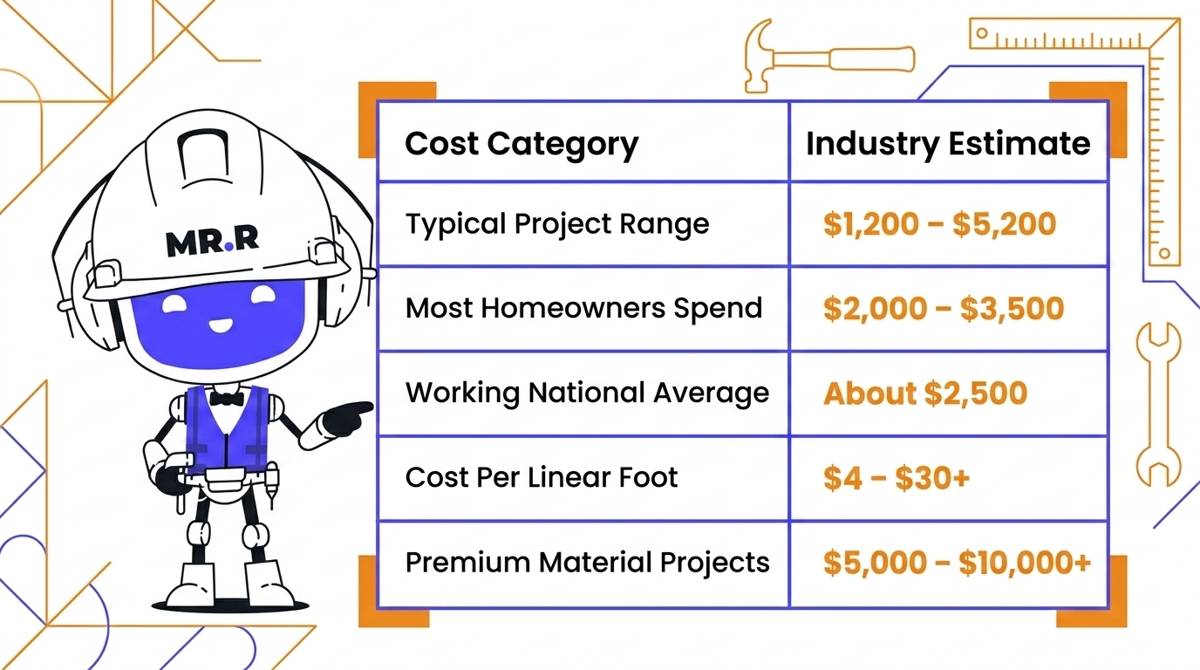
These numbers are national industry benchmarks, so local pricing can vary. The best way to compare gutter replacement costs is to request quotes with the same scope of work, including material type, linear footage, downspouts, removal, disposal, and any gutter guard add-ons.
What Factors Affect Gutter Replacement Pricing?
Most gutter replacement pricing starts with the system's length. A larger home with more roof edges will usually need more linear feet of gutters, more hangers, and more downspouts.
Other factors can include:
- Number of stories
- Roofline complexity
- Gutter material
- Seamless or sectional system type
- Downspout quantity
- Removal of old gutters
- Fascia condition
- Gutter guard add-ons
A simple one-story home may be easier to access than a tall home with steep rooflines. That can affect labor time, safety needs, and the overall cost of gutter installation.
Replacement Cost vs Repair Cost
Gutter repair vs replacement depends on the age and condition of the system. Small leaks, loose brackets, or isolated damage may be repairable.
Replacement may make more sense when problems are widespread. This includes sagging sections, rust, repeated leaks, major separation from the fascia, or gutters that no longer move water correctly.
If repair costs keep adding up, replacing gutters on a house may be the better long-term choice. A new system can also give homeowners a chance to upgrade materials, improve drainage, or add gutter guards.
Most Common Gutter Projects According to Mr. Remodel Data
Mr. Remodel data shows that gutter replacement is the largest gutter-related project category. Gutter replacement generated 6,273 inquiries, which makes it the leading homeowner gutter request in the dataset.
By comparison, new gutter installation generated 2,847 inquiries, while gutter repairs generated 1,924. Gutter replacement demand is approximately 2.2 times higher than new gutter installation demand.
Gutter Replacement
Gutter replacement is common because many homeowners do not address gutter problems until the system is already failing. By that point, spot repairs may not solve the larger issue.
Replacement also gives homeowners a cleaner, more reliable water management system. It can help protect siding, fascia, landscaping, and the foundation from poorly controlled runoff.
New Gutter Installation
New gutter installation usually applies to homes that do not already have a complete system. It may also apply to additions, detached garages, porches, or homes with partial gutter coverage.
See Related: Gutter Installation Cost Guide
Gutter Repair
Gutter repair projects are less common than replacement projects in the dataset. That suggests many homeowners are dealing with full-system issues rather than one small defect.
Repairs can still be useful when damage is limited. A contractor may be able to reseal joints, reattach loose sections, or correct minor slope issues.
What Impacts Gutter Replacement Costs?
Gutter replacement costs are not based on material alone. The design of the home, the drainage layout, and the condition of nearby exterior components all matter.
A professional estimate should look at both the gutter system and how water moves around the home. That matters because gutters are part of a larger drainage plan.
1. Linear Footage
Linear footage is one of the biggest cost factors. More roofline length means more gutter material, more fasteners, and more installation time.
Homeowners should expect larger homes, homes with multiple roof sections, and homes with attached garages to need more gutter coverage. This is why contractors usually measure the home before giving a reliable gutter replacement estimate.
2. Home Height and Accessibility
A one-story home is usually easier to work on than a two-story or three-story home. Taller homes may require more equipment and additional safety steps.
Access also matters. Landscaping, tight side yards, decks, or steep grading can make installation more difficult.
3. Downspouts and Drainage Components
Downspouts help move water from the gutter system down and away from the home. A replacement project may include new downspouts, elbows, extensions, splash blocks, or other drainage parts.
The U.S. Environmental Protection Agency explains that redirecting downspouts to a lawn, garden, rain barrel, or other suitable area can help reduce runoff from a property through its downspout redirection guidance. Homeowners should also consider local rules and where water will discharge before redirecting downspouts.
Labor Requirements
Labor needs can vary depending on the old gutter removal, fascia repairs, roofline shape, and whether the system is seamless or sectional. Homes with many corners, long runs, or difficult access may require more time.
Ready to compare local options? Mr. Remodel connects homeowners with fully vetted local contractors, making it easier to request quotes and compare project options. For gutter projects, start with local gutter replacement contractors.
Gutter Materials and Cost Differences
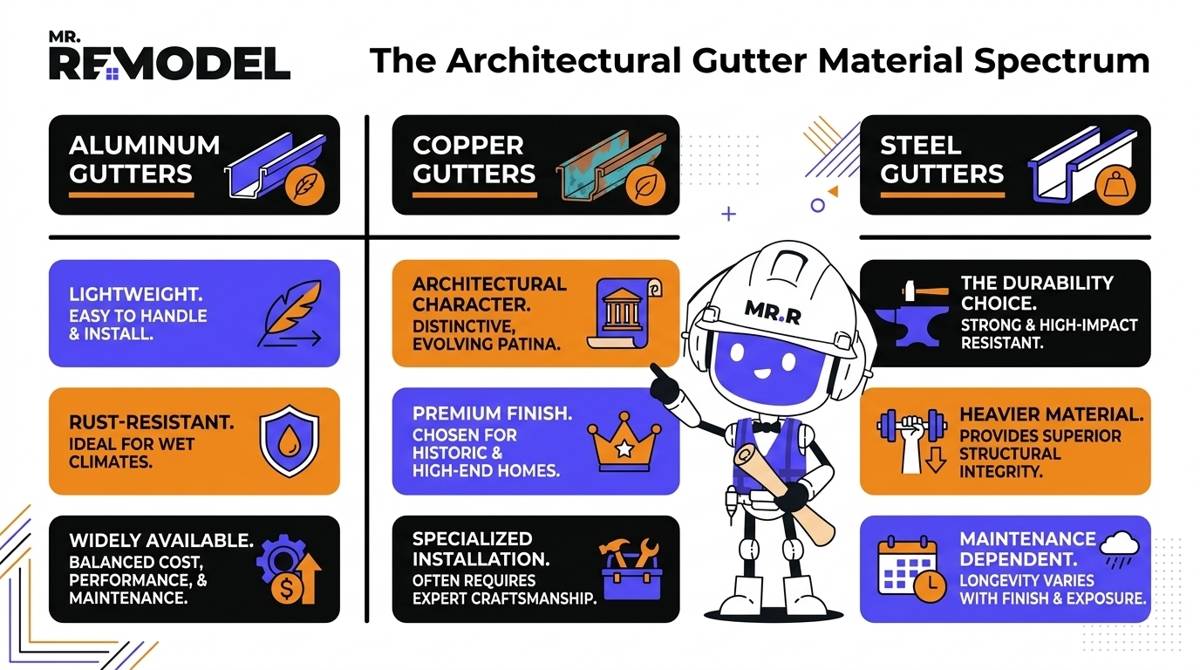
Gutter material has a major impact on cost, appearance, durability, and maintenance. Homeowners often compare aluminum gutters, copper gutters, and steel gutters before choosing a system.
The approved brief does not include verified material cost ranges, so this section compares common material considerations instead of listing exact prices.
Aluminum Gutters
Aluminum gutters are a common choice because they are lightweight, widely available, and often used in residential replacement projects. They also resist rust, which makes them practical for many homes.
Aluminum gutters can dent more easily than some heavier materials. Still, many homeowners choose them because they balance cost, performance, and maintenance.
Copper Gutters
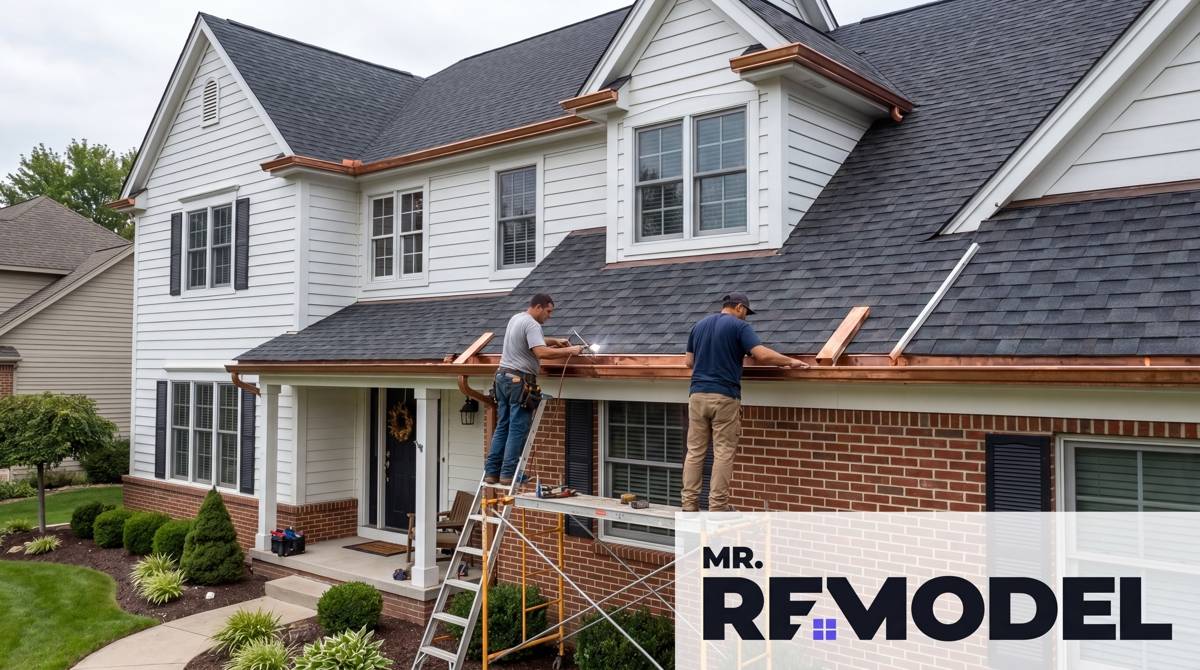
Copper gutters are often chosen for their appearance and long-term visual character. They can be a strong fit for historic homes, premium exteriors, or homeowners who want a distinctive finish.
Copper gutters usually cost more than standard materials. They may also require contractors who are familiar with specialty gutter materials and installation methods.
Steel Gutters
Steel gutters are strong and can handle more impact than lighter materials. They may be useful for homeowners who want added durability.
Steel can be heavier and may require more maintenance depending on the finish and exposure. Homeowners should ask contractors how steel compares with aluminum or copper for their climate and home design.
See Related: Aluminum vs Copper vs Steel Gutters
Seamless Gutters vs Sectional Gutters
Seamless gutters are made in long continuous runs, usually formed on-site. Sectional gutters are assembled from shorter pieces.
The main difference is the number of joints. Fewer seams can mean fewer potential leak points, while sectional systems may be easier to install in some situations.
Why System Type Matters
System type can affect gutter replacement pricing, labor needs, and long-term maintenance. A seamless system may require special equipment, while sectional gutters may involve more connection points.
A contractor can help homeowners compare both options based on roofline shape, budget, and drainage needs.
See Related: Seamless Gutters vs Sectional Gutters
Should You Add Gutter Guards During Replacement?
Gutter guards are optional add-ons that help reduce the amount of leaves, twigs, and debris entering the gutter system. They do not eliminate all maintenance, but they can make upkeep easier.
Adding guards during replacement may be more efficient than installing them later. The contractor is already working on the gutter system, which may reduce project disruption.
What Gutter Guards Can Help With
Gutter guards may be useful for homes with heavy tree cover or frequent debris buildup. They can also help reduce clogs that cause overflow during storms.
Common reasons homeowners consider gutter guards include:
- Less frequent cleaning
- Fewer clogs
- Better water flow during rain
- Reduced overflow risk
- Added protection for new gutters
Gutter guard costs depend on the guard type, home size, gutter design, and installation method.
See Related: Gutter Guard Cost Guide
Replace Gutters or Install New Gutters?
Replacing gutters means removing an old or failing system and installing a new one. Installing new gutters often means adding gutters where none existed before.
The right choice depends on the current home. A house with damaged, sagging, or leaking gutters may need replacement. A home with missing sections may need a new installation plan.
When Replacement Makes Sense
Replacement may be the better choice when the system has widespread problems. This includes multiple leaks, poor slope, rust, separation from the fascia, or repeated overflow.
Homeowners should also consider replacement when older gutters no longer match the home’s drainage needs.
When New Installation Makes Sense
New installation may apply to homes that never had gutters or only have gutters on part of the roofline. This can help direct water away from problem areas.
A contractor can evaluate roof runoff, soil conditions, and where downspouts should discharge water.
See Related: Gutter Installation Cost Guide
Why Gutter Replacement Matters for Home Protection
Gutters help manage roof runoff before it causes problems near the home. When gutters fail, water can spill near the foundation, soak exterior materials, and contribute to moisture issues.
University of Minnesota Extension notes that many basement water problems can be solved by properly handling rainwater and surface drainage with gutters, downspouts, extenders, or splash blocks. This is one reason a failing gutter system should not be ignored.
Moisture Can Damage Building Materials
Moisture problems can affect wood and other building materials over time. The USDA Forest Service’s Wood Handbook includes guidance on wood properties, moisture relations, and how moisture affects wood-based products.
That is why failing gutters should not be ignored. Even if the gutter issue seems minor, repeated exposure to water can cause bigger exterior problems.
Gutter Lifespan Matters
The National Association of Home Builders provides general life expectancy guidance for home components in its Study of Life Expectancy of Home Components. Homeowners can use lifespan guidance as a planning tool, not a hard rule.
A gutter system’s actual life depends on material, installation quality, maintenance, weather exposure, and drainage performance.
Do New Gutters Increase Home Value?
New gutters may support home value by improving exterior function and curb appeal. They can also reassure buyers that the home has a working drainage system.
The approved brief does not include a verified national return-on-investment source, so this guide does not make a specific ROI claim. Instead, homeowners should think about gutter value in terms of protection, maintenance, appearance, and buyer confidence.
Value Goes Beyond Resale
The value of new gutters is not only about resale price. A working system can help protect the foundation, siding, fascia, landscaping, and basement or crawl space areas from poor drainage.
This makes gutter replacement a practical maintenance investment for many homeowners.
Buyer Confidence Matters
Visible gutter problems can make a home look poorly maintained. Sagging, stained, rusty, or leaking gutters may raise concerns during a showing or inspection.
A clean replacement system can improve the home’s exterior appearance and reduce obvious maintenance red flags.
See Related: How Much Do Gutters Increase Home Value?
How to Plan a Gutter Replacement Project
A well-planned gutter replacement project starts with a clear look at the home’s current drainage problems. Homeowners should note where water overflows, where downspouts discharge, and whether fascia or siding damage is visible.
It also helps to decide whether the project should include upgrades. These may include seamless gutters, larger downspouts, gutter guards, or a more durable material.
Questions to Ask Before Getting Quotes
Before comparing estimates, homeowners should understand what each quote includes. A low quote may not include removal, downspouts, guards, or minor repairs.
Ask contractors about:
- Old gutter removal
- Linear footage
- Material type
- Seamless or sectional system
- Downspout placement
- Gutter guard options
- Fascia concerns
- Warranty details
Clear quotes make it easier to compare gutter replacement pricing.
What a Contractor Should Review
A contractor should review more than the gutter length. The estimate should also consider roofline layout, water flow, downspout discharge points, home height, and access.
This helps make sure the new system is designed to move water away from the house effectively.
Frequently Asked Questions
How much does it cost to replace gutters?
Gutter replacement costs depend on linear footage, material, home height, downspouts, labor, old gutter removal, and add-ons like gutter guards.
Because every home has a different roofline and drainage layout, homeowners should compare quotes that include the same scope of work.
Is it better to repair or replace gutters?
Repair may be enough for small leaks, loose hangers, or isolated damage. Replacement is often better when gutters are old, sagging, rusted, pulling away, or failing in several areas.
If repairs are frequent, replacement may be the better long-term investment.
How long do gutters last?
Gutter lifespan depends on material, installation quality, maintenance, and weather exposure.
A contractor can inspect the current system and help decide whether it still has useful life or should be replaced.
Do gutter guards reduce maintenance costs?
Gutter guards can reduce debris buildup and may lower cleaning frequency. They do not remove all maintenance needs.
The best choice depends on tree cover, roofline design, gutter type, and how often the system clogs.
Planning Your Gutter Replacement: Next Steps
A good replacement project should do more than swap old gutters for new ones. It should improve water movement, protect vulnerable exterior areas, and fit the home’s material, layout, and maintenance needs.
To move forward, compare quotes from local gutter replacement contractors through Mr. Remodel. You can review options, connect with fully vetted local contractors, and request a free, no-obligation quote on our website.