1-855-QUOTEMR

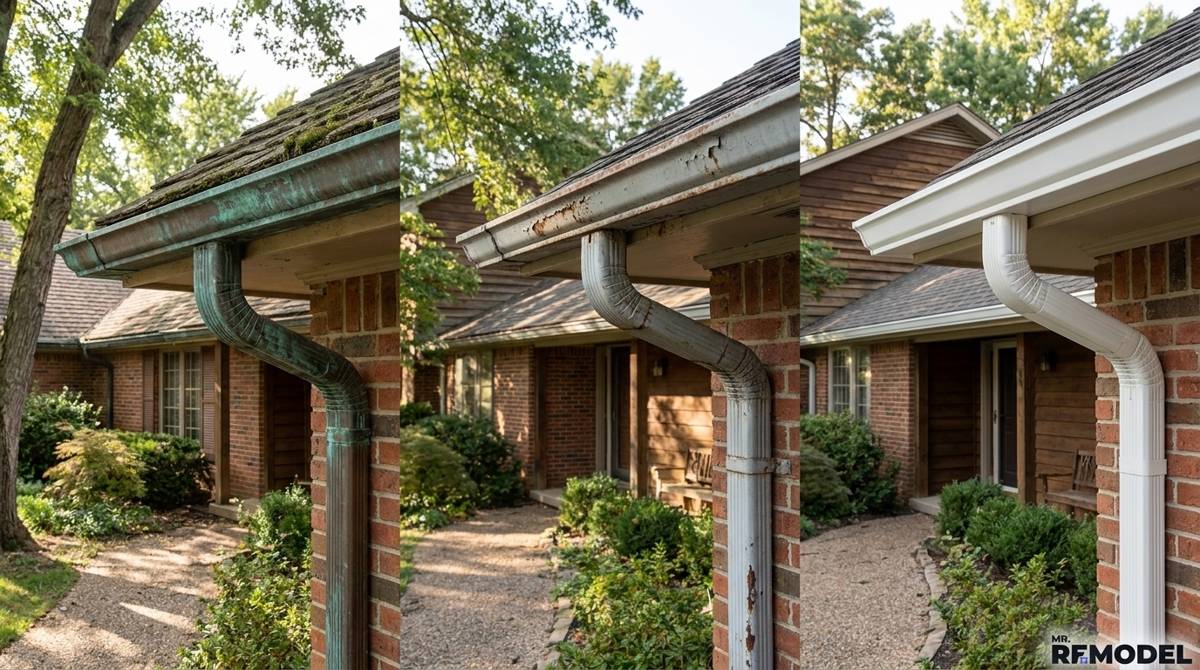
Table of Contents [hide]
Who This Is For
This guide is for homeowners comparing gutter materials before a gutter replacement or installation project. It will help you understand how aluminum, copper, and steel gutters compare by cost, durability, maintenance, lifespan, and appearance.
Key Takeaways
- Best Balance: Aluminum is usually the most practical option for many standard gutter projects.
- Longest Lifespan: Copper costs more but can last the longest.
- Added Strength: Steel offers strong impact resistance.
- Cost Impact: Material choice can greatly change the total project cost.
- Maintenance Needs: Each material has different upkeep and appearance concerns.
The gutter material you choose can affect your budget, curb appeal, and how often your system needs maintenance. This guide to aluminum vs copper vs steel gutters compares the three materials by cost, durability, lifespan, and long-term value.
There is no single best gutter material for every home. Aluminum works well for many standard projects, copper fits premium exterior designs, and steel can make sense when strength is a top priority.
Why Gutter Material Matters
Gutters do more than finish the roofline. They help move roof runoff away from the home, which can reduce water buildup around siding, fascia, landscaping, and the foundation.
The EPA’s Soak Up the Rain program explains that homeowners can help manage stormwater runoff by redirecting downspouts, using rain barrels, planting rain gardens, and improving drainage around the property.
Material affects how long gutters last, how much they cost, how they look, and how much maintenance they need. That makes material selection one of the biggest decisions in a gutter installation or replacement project.
Aluminum Gutters
Aluminum gutters are one of the most common residential choices. They are lightweight, rust-resistant, and usually easier to fit into a standard gutter budget.
They often provide the best mix of price, performance, and low maintenance for many homeowners.
Pros
Aluminum gutters are popular because they are affordable and practical. They can work well on many home styles.
Common benefits include:
- Lower cost than copper
- Rust resistance
- Lightweight installation
- Wide availability
- Good fit for seamless systems
Cons
Aluminum can dent more easily than steel. It may not be the best choice for homes where impact resistance is a major concern.
It can also expand and contract with temperature changes, so installation quality matters.
Typical Costs
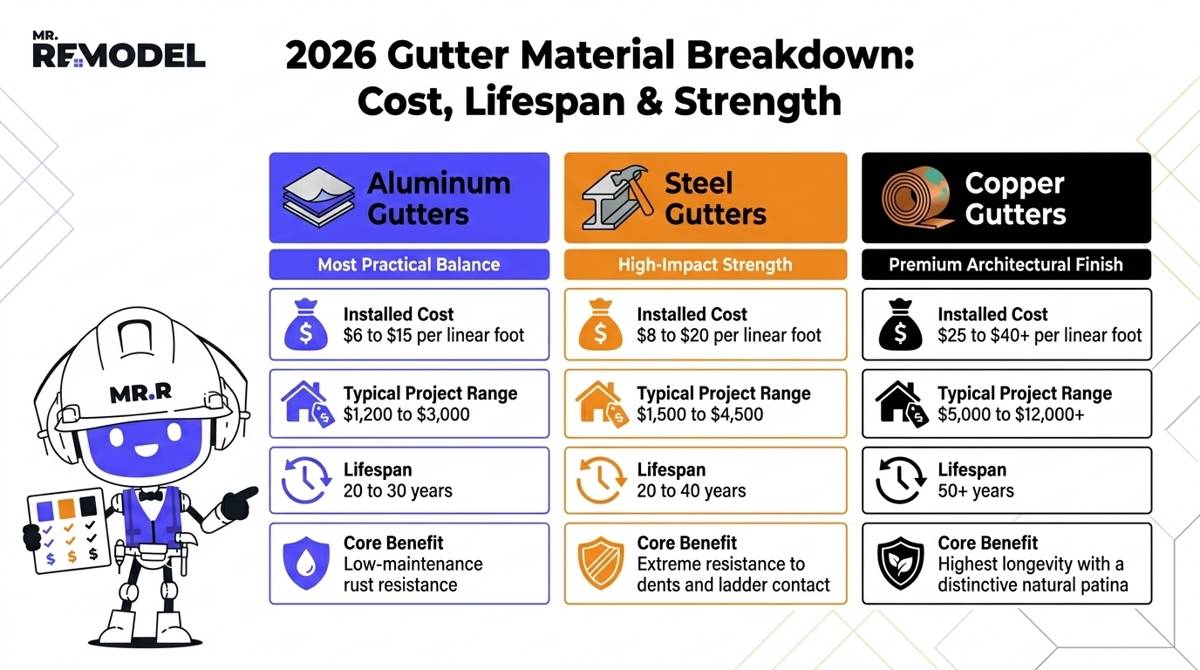
Approved-brief benchmarks place aluminum gutters at about $6 to $15 per linear foot installed.
Typical aluminum gutter projects often range from about $1,200 to $3,000, depending on home size, roofline, downspouts, access, and labor.
Steel Gutters
Steel gutters are known for their strength. They can be a good fit for homeowners who want a tougher gutter material than aluminum.
Steel is often chosen when durability and impact resistance matter more than having the lowest upfront cost.
Pros
Steel gutters can withstand dents and impacts well. They may be useful for homes in areas with falling branches, ladder contact, or other exterior wear.
Common benefits include:
- Stronger than aluminum
- Good impact resistance
- Solid long-term performance
- Practical middle-ground pricing
Cons
Steel is heavier than aluminum. Depending on finish and exposure, it may also need more maintenance to help prevent corrosion.
A poor installation can shorten the life of the system, especially if water sits in the gutter instead of draining properly.
Typical Costs
Approved-brief benchmarks place steel gutters at about $8 to $20 per linear foot installed.
Typical steel gutter projects often range from about $1,500 to $4,500, depending on the home, material finish, system type, and installation details.
Copper Gutters
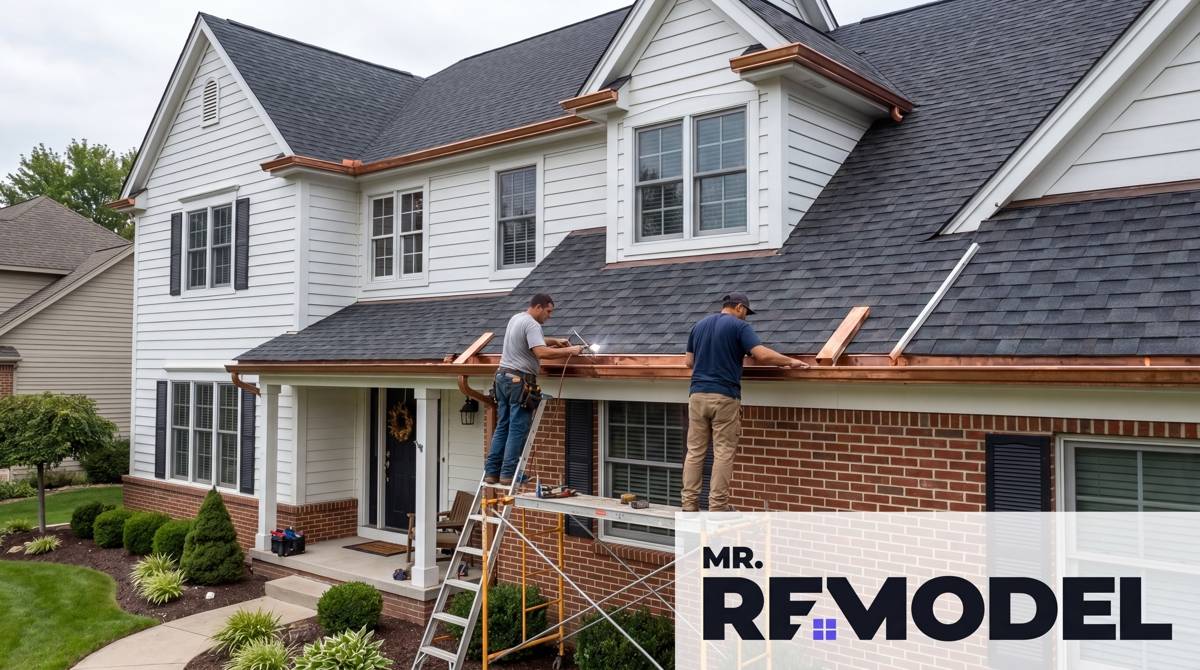
Copper gutters are a premium option. They are often chosen for historic homes, luxury exteriors, or homeowners who want a distinctive look.
Copper develops a natural patina over time, which many homeowners consider part of its appeal.
Pros
Copper is durable, long-lasting, and visually distinctive. It can add character to homes with traditional, historic, or high-end exterior designs.
Common benefits include:
- Longest lifespan
- Premium appearance
- Natural patina
- Strong curb appeal
- High-end material value
Cons
Copper has the highest upfront cost of the three materials. It may also require more specialized installation.
It is not always necessary for standard homes where budget and function matter more than appearance.
Typical Costs
Approved-brief benchmarks place copper gutters at about $25 to $40 or more per linear foot installed.
Typical copper gutter projects often range from about $5,000 to $12,000 or more, especially on larger homes, historic properties, or complex rooflines.
Aluminum vs Copper vs Steel Gutters: Side-By-Side Comparison
The right material depends on your budget, home style, maintenance goals, and how long you plan to keep the system.
Cost Comparison
Aluminum is typically the most affordable of the three. Steel usually falls in the middle, while copper is the premium option.
For many homeowners, aluminum offers the best balance of cost and performance. Copper may be worth considering when appearance and long-term material character matter more than upfront price.
Lifespan Comparison
Approved-brief benchmarks estimate aluminum gutters at about 20 to 30 years, steel gutters at about 20 to 40 years, and copper gutters at 50 or more years.
The NAHB Study of Life Expectancy of Home Components provides general lifespan guidance for gutters and other exterior components. Actual lifespan depends on material, installation quality, maintenance, weather exposure, and drainage performance.
Maintenance Comparison
Aluminum is low-maintenance for many homes. Steel may need more attention to help prevent corrosion, depending on the finish and exposure.
Copper lasts a long time, but homeowners should be comfortable with its natural patina. Some homeowners like the aged look, while others may prefer a more consistent finish.
Appearance Comparison
Aluminum has a clean, standard look and is available in many finishes. Steel offers a sturdy appearance but is usually chosen more for strength than style.
Copper is the most distinctive and often makes the strongest visual statement. It can pair well with historic homes, premium exteriors, and traditional architectural details.
See Related: Gutter Replacement Cost Guide
How Gutter Material Affects Installation Costs
Material affects more than the price per foot. It can also affect labor, equipment needs, system type, and installation complexity.
Copper and steel may require more specialized handling than aluminum. Large homes, tall homes, and complex rooflines can raise costs regardless of material.
Ready to compare options? Mr. Remodel connects homeowners with fully vetted local contractors. You can use Mr. Remodel to find local gutter contractors and request a free, no-obligation quote.
See Related: Gutter Installation Cost Guide
Does Gutter Style Matter Too?
Yes. Material is only one part of the decision. Homeowners should also compare seamless and sectional gutter systems.
Seamless gutters usually have fewer joints, while sectional gutters may cost less upfront. The best choice depends on budget, roofline, and maintenance goals.
See Related: Seamless Gutters vs Sectional Gutters
Which Gutter Material Is Best for Your Climate?
Climate can influence which gutter material makes the most sense. Rainfall, humidity, freeze-thaw cycles, salt air, heat, and tree coverage can all affect gutter performance and maintenance.
For example, homeowners in wet or humid climates may want to ask about corrosion resistance. Homes in areas with heavy tree cover may require a more robust maintenance plan, regardless of the material.
Long-term moisture management matters because the USDA Forest Service’s Wood Handbook explains how moisture conditions affect wood and wood-based materials. A well-planned gutter system can help reduce repeated exposure to moisture around fascia, trim, siding, and other vulnerable exterior areas.
See Related: Best Gutter Materials for Different Climates
Frequently Asked Questions
Are aluminum gutters better than steel gutters?
Aluminum gutters are usually better for homeowners who want lower cost, rust resistance, and easy availability. Steel gutters may be better when strength and impact resistance matter more.
Are copper gutters worth the cost?
Copper gutters can be worth the cost for homeowners who want a premium appearance, a long lifespan, and a distinctive exterior detail. For budget-focused projects, aluminum or steel may be more practical.
Which gutter material lasts the longest?
Copper usually lasts the longest, with approved benchmarks placing its typical lifespan at 50 or more years. Aluminum and steel can also last for decades when installed and maintained properly.
What is the best gutter material for most homes?
Aluminum is often the best choice for many homes because it balances cost, performance, rust resistance, and availability. Steel may be better for strength, while copper is best for premium appearance and long-term lifespan.
Choosing the Right Gutter Material
Choosing between aluminum, copper, and steel gutters comes down to budget, style, durability, and maintenance expectations. Aluminum is practical for many homes, steel adds strength, and copper offers the longest lifespan with a premium look.
Before choosing, compare material costs, system type, and long-term maintenance needs. To move forward, connect with local gutter contractors through Mr. Remodel and request a free, no-obligation quote.