1-855-QUOTEMR

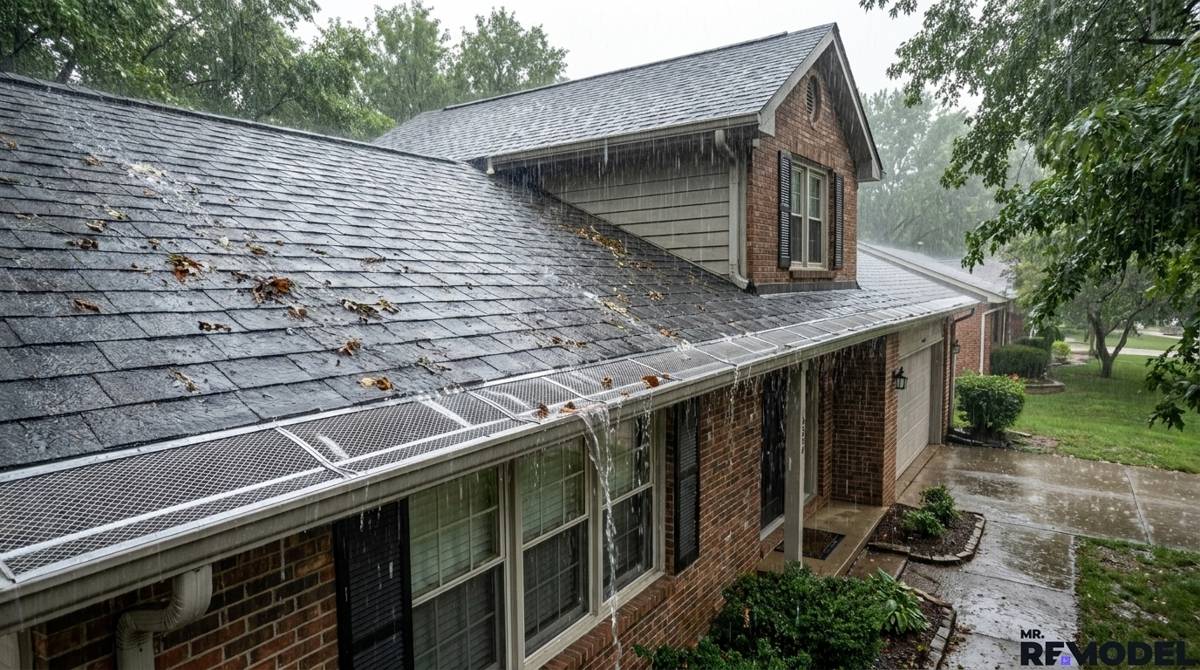
Table of Contents [hide]
Who This Is For
This guide is for homeowners looking to improve gutter performance and reduce maintenance in areas with frequent heavy rainfall. It will help you compare gutter guard types, water-flow performance, debris control, and when gutter protection may be worth adding.
Key Takeaways
- Water Flow: Not all gutter guard designs perform equally in heavy rain.
- Debris Control: Water-flow capacity matters as much as debris protection.
- Balanced Option: Micro-mesh systems are often preferred for their balance of performance and maintenance.
- System Design: Proper gutter sizing remains critical during heavy storms.
- Smart Timing: Many homeowners add gutter guards during replacement or installation projects.
A gutter guard that blocks leaves but slows water can still overflow during a hard storm. This guide to the best gutter guards for heavy rain compares guard types, water-flow performance, debris control, and long-term maintenance needs.
Heavy rain creates a different challenge than light debris. A good gutter protection system should keep leaves and roof grit out while still allowing fast-moving runoff to enter the gutter rather than spill over the edge.
Why Heavy Rain Creates Unique Challenges for Gutters
Heavy rain can overwhelm gutters that are clogged, undersized, poorly sloped, or paired with the wrong guard style. Even a clean gutter can struggle if water cannot enter the system quickly enough.
The National Oceanic and Atmospheric Administration (NOAA) provides U.S. climate normals that show how rainfall and temperature patterns vary across the country. That is why homeowners in rainy climates should think about water flow, not just debris blocking.
Water Volume
During heavy rain, roof runoff moves quickly toward the gutter edge. The larger and steeper the roof, the more water the system may need to handle.
If a guard surface sheds water too quickly, runoff can skip over the gutter. This is one reason design matters.
Overflow Risks
Overflow can send water toward the siding, landscaping, walkways, and the foundation. The Environmental Protection Agency (EPA) explains, through its Soak Up the Rain program, that homeowners can help manage stormwater runoff by redirecting downspouts, using rain barrels, planting rain gardens, and improving drainage around the property.
A gutter guard should support drainage, not create a new overflow point.
Debris Accumulation
Leaves, pine needles, twigs, and roof grit can collect on top of gutter guards. If debris falls during storms, it can slow water entry.
That is why maintenance still matters even with gutter guards.
See Related: Gutter Replacement Cost Guide
How Different Gutter Guard Types Work
Gutter guards are not all built the same. Some sit on top of the gutter, some insert into the gutter, and some use surface tension to guide water.
The Federal Emergency Management Agency (FEMA) discusses water intrusion, drainage, and moisture-related risks in its Homeowner’s Guide to Retrofitting. A gutter guard should be part of a larger water-management plan, not a stand-alone fix for poor drainage.
Micro-Mesh Guards
Micro-mesh guards use a fine mesh to block small debris while allowing water to pass through. They are often one of the stronger choices for balancing water flow and debris protection.
Typical installed cost estimates range from about $7 to $15 per linear foot.
Screen Guards
Screen guards use a perforated or mesh-like surface to block larger debris. They are often more affordable than micro-mesh systems.
Typical installed cost estimates range from about $4 to $10 per linear foot, but smaller debris may pass through or collect on top.
Reverse Curve Guards
Reverse-curve guards feature a curved design that directs water into the gutter while sending debris over the edge. They can work well, but performance may vary during very heavy rain.
Typical installed cost estimates range from about $8 to $20 or more per linear foot.
Foam Inserts
Foam inserts sit in the gutter and allow water to pass through them. They are usually budget-friendly.
Typical installed cost estimates range from about $2 to $6 per linear foot, but debris can collect on top and reduce performance.
Brush Guards
Brush guards look like large bristles placed inside the gutter. They catch debris while allowing water to move through.
Typical installed cost estimates range from about $3 to $6 per linear foot, but leaves and needles may become trapped in the bristles.
Which Gutter Guards Perform Best in Heavy Rain?
For heavy rain, the best choice is usually the guard type that balances fast water entry with reliable debris control. Micro-mesh systems often provide the strongest all-around balance for many homes.
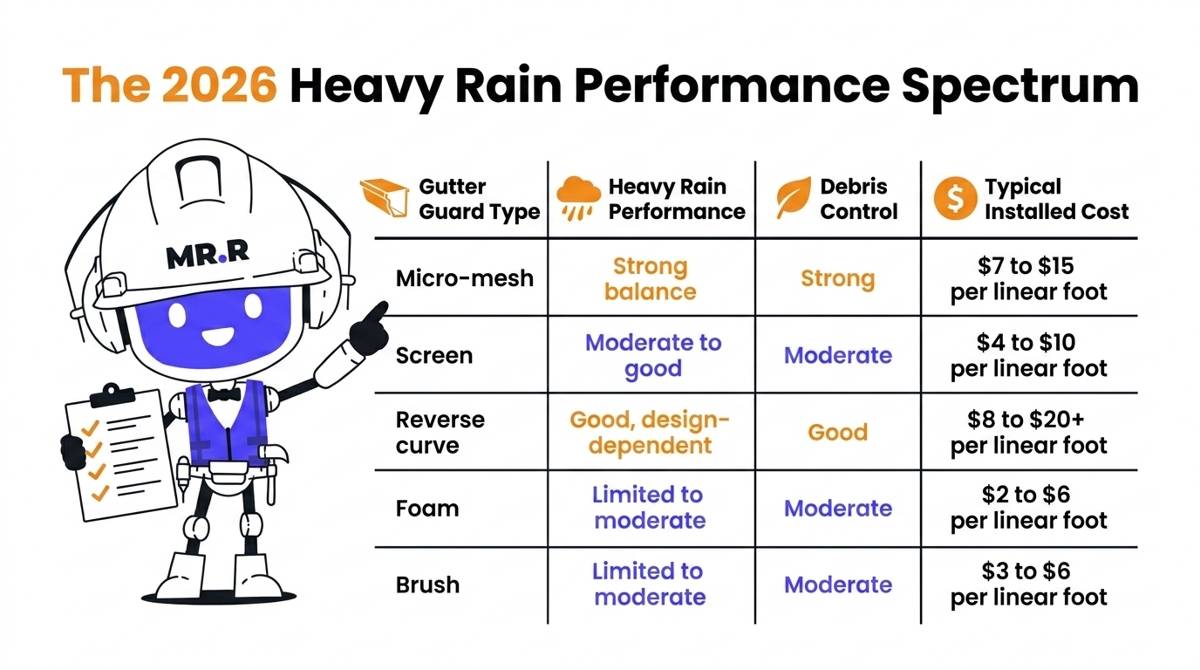
No guard type removes all maintenance. The right choice depends on rainfall, roof size, tree coverage, gutter size, and downspout capacity.
What Matters More Than the Gutter Guard?
A gutter guard cannot fix a poorly designed gutter system. Heavy rain performance depends on the full drainage setup.
The National Institute of Building Sciences (NIBS) Whole Building Design Guide explains that water management is important for long-term building performance.
Gutter Size
A small gutter may overflow during heavy rain, even with a good guard. Larger roof sections may need larger gutters or better downspout placement.
The guard should match the gutter’s water capacity.
Downspout Capacity
Downspouts control how quickly water leaves the gutter. If downspouts are clogged, too small, or too few, water may back up and overflow.
A contractor should review both gutter size and downspout layout.
Roof Runoff Volume
Roof size, slope, and shape all affect runoff volume. Steeper roofs can send water into the gutter faster.
That means two homes with the same gutter guard may perform differently depending on roof design, local rainfall, and downspout placement.
See Related: K-Style vs Half-Round Gutters
Ready to compare gutter protection options? Mr. Remodel connects homeowners with fully vetted local contractors. You can use Mr. Remodel to find local gutter contractors and request a free, no-obligation quote.
How Gutter Guards Fit a Climate-Based Gutter Plan
Gutter guards are only one part of choosing the right system for rainy conditions. Material, profile, size, downspouts, and installation quality also matter.
For example, a home in a rainy area may need larger gutters, more downspouts, seamless sections, or stronger hanger spacing. A home with heavy tree coverage may need a guard that balances water entry with debris control.
See Related: Best Gutter Materials for Different Climates
Frequently Asked Questions
Do gutter guards work in heavy rain?
Yes, some gutter guards can work well in heavy rain, but performance depends on the design and the full gutter system. Micro-mesh and well-designed screen systems often balance water flow and debris protection well.
Can gutter guards cause overflow?
Yes. Some guards can contribute to overflow if water cannot enter the gutter fast enough. Overflow can also happen when gutters are undersized, downspouts are clogged, or debris covers the guard.
What type of gutter guard is best?
Micro-mesh guards are often a strong all-around choice because they block smaller debris while still allowing water through. The best option depends on rainfall, trees, roof shape, gutter size, and downspout capacity.
Are gutter guards worth the cost?
Gutter guards may be worth it for homes with frequent clogs, heavy tree coverage, or hard-to-reach gutters. They reduce maintenance, but they do not eliminate the need for cleaning or inspections.
Choosing the Right Gutter Guard for Heavy Rain Conditions
The best gutter guards for heavy rain are those that promote water flow while reducing debris buildup. Micro-mesh systems often offer the best balance, while screen and reverse-curve systems can also work, depending on the home.
Before choosing, look at the full system. Gutter size, downspout capacity, roof runoff volume, and maintenance needs all matter. To move forward, compare local gutter contractors through Mr. Remodel and request a free, no-obligation quote.