1-855-QUOTEMR

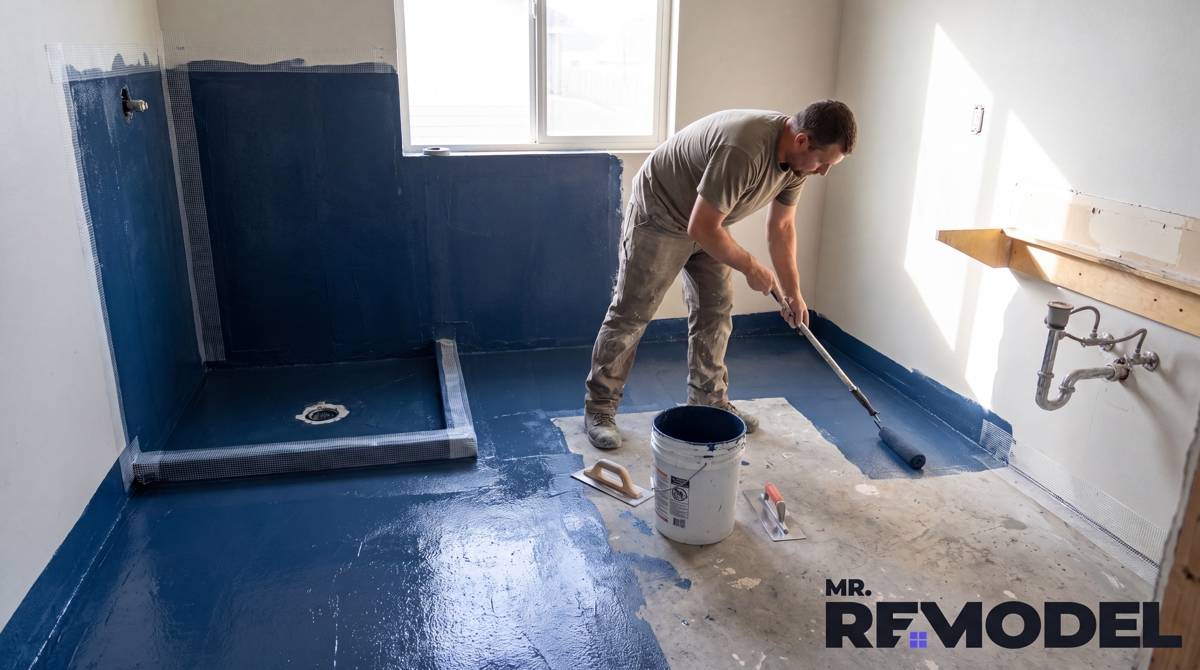
Table of Contents [hide]
Who This Is For
This structural defense report is developed for single-family homeowners who are tired of persistent bathroom moisture, suspect structural rot behind shower walls, or are planning a high-ROI shower conversion. If you need itemized cost benchmarks, real-world structural mitigation data, and a clear path toward professional wet-area waterproofing, this guide is for you.
Key Takeaways
- Foundational Asset Defense: Effective waterproofing is the core mechanical requirement for every high-value shower upgrade; without it, surface finishes (tile/grout) will fail within months.
- The Single-Family Baseline: Over 98% of residential wet-area remediation projects originate from single-family households, requiring custom structural flashing and membrane expertise.
- The 7-Day Crisis Sector: A massive 66.1% of homeowners experiencing bathroom moisture issues demand project initiation within seven days to prevent secondary drywall and framing rot.
- Realistic Cost Anchoring: Structural wet-area conversions command a stable, data-backed contract average of $15,794.85, providing a predictable investment benchmark for homeowners.
- Mitigation ROI: Professional waterproofing creates a moisture-impermeable barrier that prevents expensive structural frame decay and respiratory-risk mold development.
Are you constantly battling surface-level bathroom moisture, dealing with peeling wall paint, or spotting discolored grout lines that refuse to dry? For single-family homeowners, these persistent symptoms are rarely just superficial eyesores; they are the early warning signs of deep, structural assembly failure occurring behind your vanity and shower partitions.
According to residential air health research by the Environmental Protection Agency’s Guide to Mold and Moisture Control, failing to establish a moisture-impermeable barrier behind wet-area finishes leads to catastrophic structural degradation of wood framing and interior drywall.
Once water penetrates the surface barrier, it begins a slow process of rot that eventually compromises your home’s structural stability. Despite this technical reality, many homeowners rely on superficial topical sealants that fail to address the core drainage assembly.
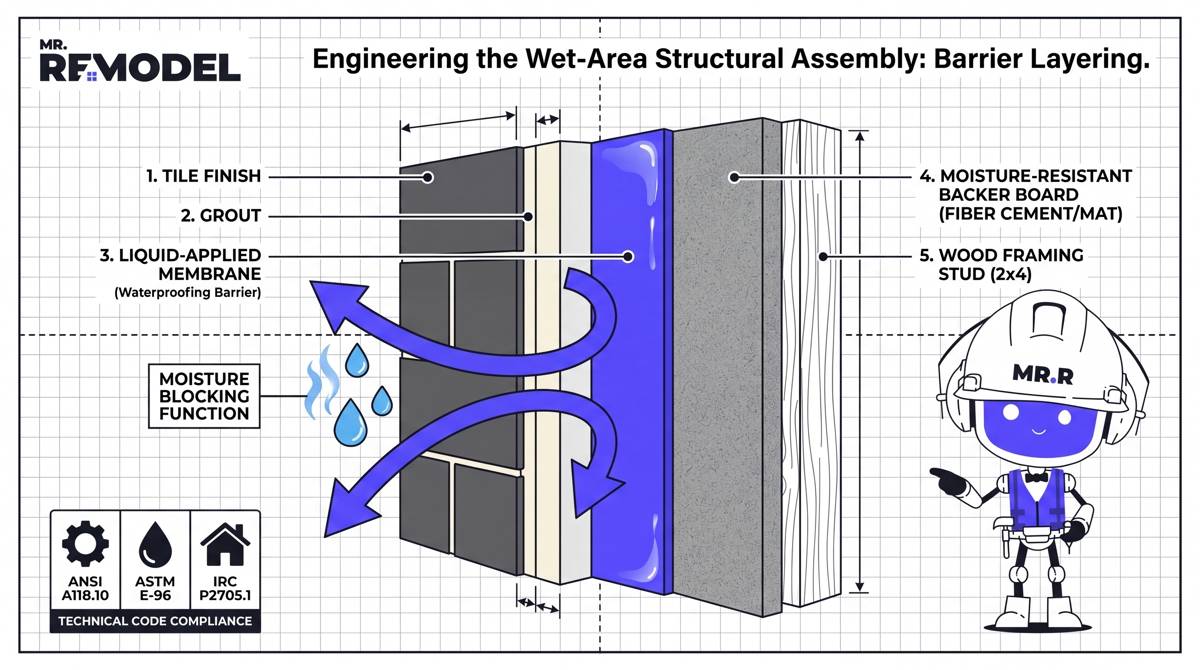
Engineering the Wet-Area Structural Assembly
Professional waterproofing is not just about slapping a layer of plastic behind a tile wall. It requires a comprehensive "wet-area assembly" that integrates mechanical flashing, liquid-applied membrane layers, and vapor-permeability management.
When remodeling a master suite, expert crews must ensure that your flashing overlaps perfectly with the shower pan's perimeter. If the flashing sequence is incorrect, specifically at the critical transition points between your wall board and the floor base, moisture will wick directly into the subfloor framing.
According to building guidelines from the Department of Housing and Urban Development’s Minimum Property Standards, waterproofing failure is the primary reason for expensive, premature shower teardowns. Investing in professional, comprehensive bathroom remodeling solutions ensures that these critical transitions are sealed using industrial-grade, moisture-curing polymers.
See Related: Ventilation and Moisture Control for Efficiency: Protecting Your Home Investment
Evaluating the ROI of Structural Remediation
When you choose to tear out a leaky, outdated unit, you have a one-time opportunity to correct the structural assembly. While superficial "patch and paint" jobs seem cheaper, they fail to stop moisture from migrating deeper into your wall cavities.
Our verifiable project data confirms that the average investment for a high-performance shower conversion sits at $15,794.85. This investment covers the entire structural reset, such as tear-off, membrane application, and high-durability finish installation, ensuring you never have to repeat the demolition process due to water damage.
See Related: Bathroom Remodeling Costs and Value: The Definitive Guide to Maximizing ROI
Managing Moisture Hazards and High-Urgency Timelines
Modern single-family properties, particularly those in high-humidity markets like Florida and the Gulf Coast, require professional-grade moisture control to remain sustainable. Small, enclosed shower footprints concentrate high volumes of hot water vapor, which requires superior air-exchange rates.
If your current bathroom lacks a mechanical exhaust fan rated for at least 1 cubic foot per minute per square foot, you are essentially trapping moisture inside your wall assembly. Over time, this stagnant humidity feeds mold colonies that hide inside your wallboard.
Research into BSC Info-312: Wet-Area Assemblies explains how modern flashing and membranes must work together to maintain a dry structural skeleton.
See Related: Mold and Moisture Problems in Bathrooms: Diagnosis and Permanent Solutions.
The 7-Day Mitigation Crisis
Homeowners rarely realize the extent of their moisture decay until it is too late. Because structural framing rot develops silently, 66.1% of our moisture-focused consumers require field project initiation within seven days to prevent the rot from spreading.
We maintain a rapid-deployment network of certified specialists who stock heavy-duty membranes and moisture-resistant board types on their primary fleet vehicles. This logistics capability allows our crews to move from your initial quote to full structural tear-off within a single week.
See Related: Bathroom Remodel Timeline Explained: 2026 Action vs Reality Guide
Selecting High-Durability Wet-Area Finishes
Once your structural waterproofing membranes are installed, the surface material choice serves as your final line of defense. Selecting between traditional tile assemblies and modern solid-surface shower walls is a critical decision for your daily maintenance load.
Tile assemblies offer a beautiful custom aesthetic, but they require precision-set, moisture-proof grout to succeed. If you prefer a completely seamless, low-maintenance finish, solid-surface acrylic or composite panels offer an impenetrable barrier that resists mold and soap scum buildup naturally.
See Related: Tile vs. Acrylic Shower Walls: 2026 Comparison of Cost, Durability, and Maintenance
Vetting Professional Wet-Area Remodeling Contractors
Because bathroom waterproofing requires intimate knowledge of building codes and specialized liquid-membrane application techniques, you should avoid hiring unvetted, generalist handymen. Improper installation of a shower pan or wall flashing will negate your structural protection.
When speaking with Mr. Remodel and our partner network, ensure your contractor performs a "pre-install" structural framing assessment. This check ensures your studs are straight, rot-free, and ready for the moisture-resistant backer board.
See Related: Bathroom Remodel Cost by Home Size: 2026 Property Type Guide
Stop ignoring potential structural rot and moisture damage. Let Mr. Remodel connect you with certified local contractors who prioritize rigorous waterproofing standards. Check comprehensive bathroom remodeling solutions and safeguard your property investment.
Frequently Asked Questions
Why do shower wall finishes leak if they look like they are sealed correctly?
Leaks rarely occur through the tile surface itself. They originate from failed grout, compromised corner sealant, or missing membrane flashing behind the wallboard. Waterproofing is a hidden structural assembly, not just a surface application.
What is the average ticket price for professional bathroom wet-area waterproofing?
Comprehensive bathroom suite upgrades, including structural remediation and waterproofing, average $15,794.85. This cost accounts for the specialized moisture membranes and professional labor required to tear out old rot and build a watertight assembly.
How do I know if I have structural rot behind my shower wall?
Signs include peeling wall paint, soft or sagging drywall near the shower base, a persistent musty smell that doesn't dissipate, or grout that never seems to dry out after a shower. If you see these signs, you need a professional diagnostic assessment immediately.
Why is speed so critical when addressing bathroom leaks?
Because water travels through wood framing and insulation rapidly, mold colonies can establish themselves in as little as 48 hours. Our data shows 66.1% of homeowners require project starts within 7 days because moisture decay expands exponentially the longer the leak remains unmitigated.
How does Mr. Remodel ensure my shower won't leak in the future?
Mr. Remodel connects you with factory-certified installation specialists who use standardized membrane application protocols. By verifying structural moisture barriers before the decorative tile or walls are set, our contractors ensure your investment lasts for years.
Protect Your Home Envelope and Secure Lasting ROI
Investing in professional bathroom waterproofing services requires balancing a calculated up-front budget against the high cost of catastrophic interior damage. Preparing for regional moisture challenges and choosing a complete-teardown approach prevents expensive structural framing repairs down the line.
Choosing a certified waterproofing system and partnering with professional installation teams turns a standard aesthetic update into a powerful long-term asset. Perfecting your wet-area structural assembly shields your investment, builds home equity, and ensures your master suite remains clean and dry.
Ready to secure a clear, moisture-resistant plan for your single-family home? Get your free, no-obligation quote from Mr. Remodel to analyze your local structural needs and launch your upcoming wet-area renovation with total peace of mind.