1-855-QUOTEMR

Table of Contents [hide]
Who This Is For
This guide is for homeowners who want a clear, straightforward answer about whether their upcoming renovation legally requires city approval. If you are arguing with a contractor over paperwork or simply want to protect your property value, this breakdown is for you. We explain exactly what triggers a mandatory inspection, why permits delay your start date, and why skipping this crucial step can destroy your home equity.
Key Takeaways
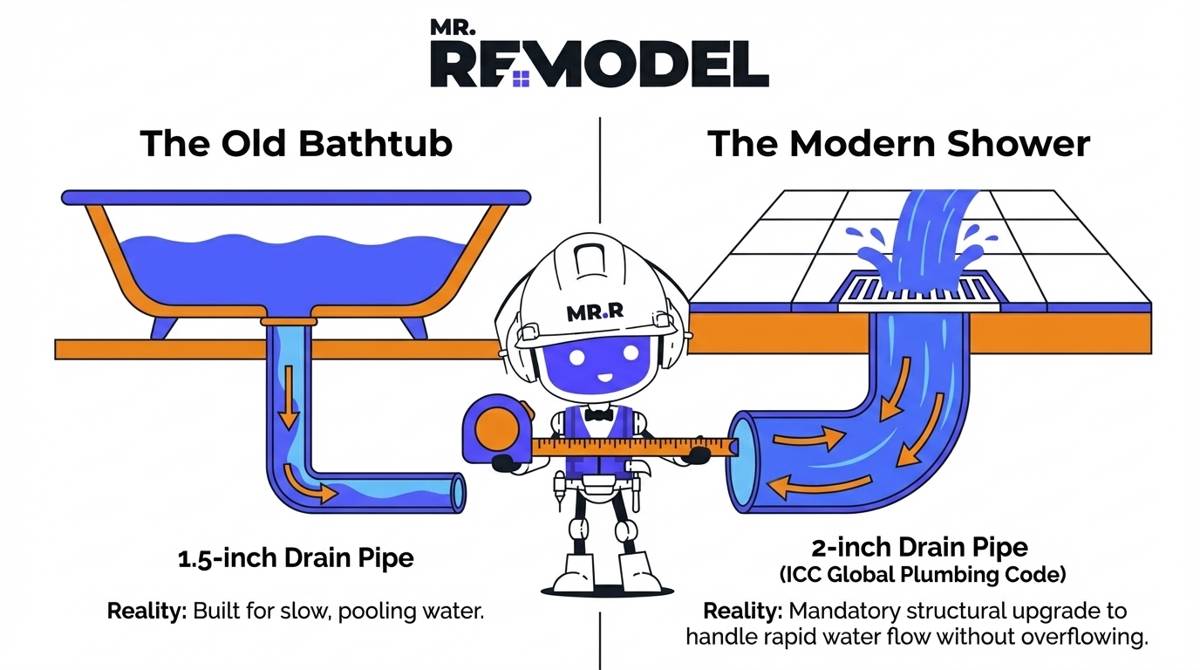
- The Drain Pipe Rule: Converting a bathtub to a shower requires widening the drain pipe from 1.5 inches to 2 inches. This structural plumbing change legally triggers a mandatory permit.
- The Appraisal Penalty: Unpermitted renovations are now easily flagged by digital permit tracking during the home sale process, instantly reducing your resale value.
- The Timeline Conflict: Over 54% of homeowners want to start their project in seven days, but securing a legal permit takes two to four weeks.
- The 24-Hour Flood Test: A premium tub-to-shower conversion requires a rough-in inspection in which the city verifies that the waterproof shower pan can hold standing water for a full 24 hours.
- Equity Insurance: Paying a basic $300 permit fee is the cheapest and most effective way to protect a massive $18,000 remodeling investment.
Navigating bathroom remodel permits and inspections is often the most confusing and frustrating part of a home renovation. Homeowners frequently find themselves stuck in a tug-of-war with their contractors, wondering whether a simple shower upgrade actually requires the city to get involved. You need an objective referee to tell you the truth about municipal building codes and timelines.
According to data from Mr. Remodel, skipping the permitting phase is the absolute most dangerous financial mistake a homeowner can make today. In 2026, building departments and real estate appraisers use highly advanced tracking systems that make it impossible to hide unpermitted construction. By understanding exactly why permits exist and how they impact your installation schedule, you can protect your property from massive financial penalties and legal liabilities.
The 2026 Appraisal Penalty
In the past, many homeowners skipped permits because they believed the city would never find out. Today, that old trick no longer works. As of January 2026, many municipalities have adopted digital twin permit tracking. This software automatically cross-references property tax records, real estate listings, and local permit histories.
If you try to sell your home with an unpermitted luxury bathroom, modern AI-driven home appraisals will automatically deduct value for non-permitted living space improvements. The National Association of Realtors (NAR) provides extensive resources proving that skipping a basic $300 permit can end up costing you $15,000 or more in lost equity during a home sale.
The Drain Pipe Technicality
Homeowners often ask why a simple tub-to-shower conversion requires a permit if the plumbing fixtures are staying in the same spot. The answer lies in the global plumbing code.
The International Code Council (ICC) strictly mandates that a walk-in shower have a 2-inch drain pipe to handle rapid water flow. Standard bathtubs only have a 1.5-inch drain pipe. Widening this pipe requires cutting into the subfloor and altering the main drain line. Any time you alter a main drain, a plumbing permit is required by law.
Upgrading your room also triggers mandatory electrical and ventilation inspections. The U.S. Department of Energy enforces strict energy codes for high-efficiency ventilation fans, and the National Fire Protection Association (NFPA) requires dedicated safety circuits for any new outlets placed near a water source.
See Related: Choosing a Bathroom Remodeling Contractor
Do You Need a Permit? A Quick Breakdown
To know if your specific project requires a permit, you must look at your exact scope of work. Here is a simplified breakdown of the most common projects and their likelihood of permitting based on our 2026 market data.
- Complete Room Remodel (100% Likelihood): If you are stripping the room down to the studs, you will need a permit. This project involves mandatory electrical rewiring, plumbing alterations, and structural framing checks.
- Tub-to-Shower Conversion (95% Likelihood): Because this requires a mandatory drain pipe upgrade and a 24-hour flood test on the new shower pan, you will almost always need a plumbing permit.
- Shower Only Upgrade (40% Likelihood): This is a mixed bag. If you are leaving the existing drain and valve exactly where they are, you might bypass a permit. If you move the plumbing even an inch, a permit is required.
- Bathtub Upgrade (Low Likelihood): Swapping an old bathtub for a new one of the same size is usually considered a cosmetic, like-for-like replacement and is typically exempt from municipal permits.
The Timeline Conflict and The Flood Test
Understanding the permit process requires adjusting your expectations for speed. Our analytics reveal a massive timeline conflict in the modern market. Over 54.5% of leads requesting highly technical conversions want their project to start within seven days.
If a contractor agrees to start a structural conversion tomorrow, they are likely breaking the law. A legal permit application takes 14 to 28 days to be processed by a standard city building department.
The Inspection Bottleneck
Even after the permit is approved, physical inspections will pause your project. When a contractor builds a custom shower pan, they cannot simply tile over it and finish the job. They must call the city for a rough-in inspection. The city inspector usually has a 48-hour window to arrive at your home.
During this visit, the inspector requires a flood test. The contractor must plug the new drain and fill the shower pan with standing water for a full 24 hours to prove it does not leak into the subfloor. This mandatory safety check is the primary reason why a true structural conversion can never be a one-day project.
See Related: Bathroom Remodel Warranties Explained
Geographic Compliance and Protection
The primary benefit of a permit depends heavily on where you live.
In high-regulation states like California and New York, permits are strictly about compliance and appraisal protection. Fortunately, the California Department of Housing and Community Development (HCD) enacted the AB 1308 Building Permit Streamlining Act for 2026. This law requires cities to expedite permit turnaround times for residential remodels, making the legal process much faster and less painful for homeowners.
In lower-regulation areas, pulling a permit is about safety and insurance liability. If an unpermitted plumbing alteration bursts and floods your home, your homeowners' insurance company has the legal right to deny your entire water damage claim. The permit is your ultimate insurance policy against disaster.
You can protect your home equity and ensure total legal compliance by working with verified professionals through Mr. Remodel. Get a free quote for your bathroom remodel to connect with local contractors who handle all the confusing municipal paperwork and inspections for you.
Frequently Asked Questions
What happens if I remodel my bathroom without a permit?
If the city discovers unpermitted work, they can issue a stop-work order, force you to tear out the new drywall to expose the plumbing, and charge you double the original permit fee as a penalty. Furthermore, unpermitted work will cause your home to fail a buyer inspection when you attempt to sell the property.
Do I need a permit to replace my bathroom vanity?
Typically, no. If you are replacing a vanity cabinet and reconnecting the sink to the same plumbing pipes, it is considered a cosmetic like-for-like replacement. However, if you are moving the sink to a different wall, you are altering the plumbing layout and will need a permit.
How much does a bathroom remodel permit cost?
Permit costs vary wildly by municipality and project scope. On average, a residential plumbing and electrical permit for a standard bathroom remodel costs between $200 and $500. This fee covers the cost of the city inspector's visit to your home to verify the safety of the work.
Does a tub-to-shower conversion require an inspection?
Yes. Because converting a bathtub into a walk-in shower requires widening the drain pipe and building a completely new waterproof base, local building departments require a plumbing permit. An inspector must visit the home to perform a flood test on the new shower pan before the contractor is allowed to install the final tile or acrylic walls.
Permits Are Equity Insurance
It is incredibly tempting to listen to a contractor who promises to save you time and money by skipping the permit office. However, in the highly tracked 2026 real estate market, taking that shortcut is a guaranteed way to destroy your property value.
Do not risk your home equity on unpermitted speed. We connect you with elite, fully licensed local professionals who operate with total transparency. They will secure the necessary permits, navigate the confusing inspection windows, and deliver a beautiful, legally compliant renovation.
Start your fully permitted and protected project today.