1-855-QUOTEMR

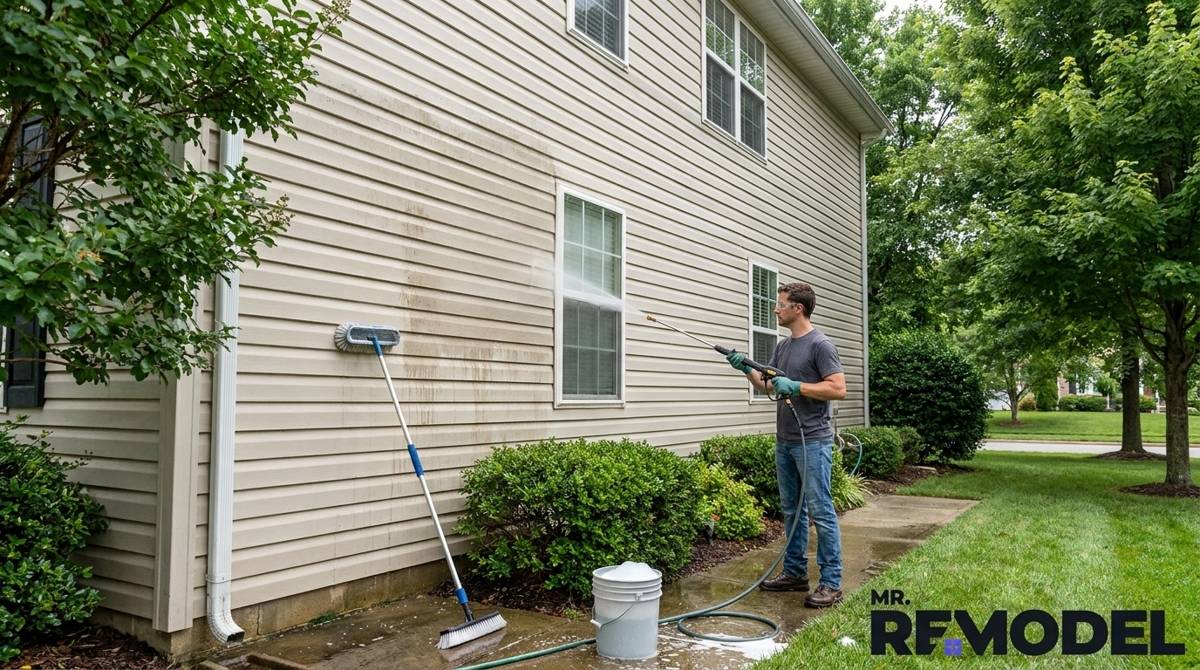
Table of Contents [hide]
Who This Is For:
Homeowners with dirty, stained, moldy, or faded-looking vinyl siding who want a safe do-it-yourself cleaning method, want to avoid damage, and want to know when siding needs repair or replacement instead of another wash.
Key Takeaways:
- Clean at Least Once a Year: Vinyl siding should usually be cleaned annually, or more often in shaded, humid, or tree-heavy areas.
- Use Gentle Tools First: Mild soap, water, and a soft-bristle brush are usually enough for routine cleaning.
- Be Careful With Pressure Washing: Pressure washers can damage siding or force water behind panels if used incorrectly.
- Treat Mold and Mildew Early: Prompt cleaning can help reduce staining and surface buildup.
- Inspect While You Clean: Cracks, warping, loose panels, or repeated mold may signal a bigger siding problem.
Vinyl siding is popular because it is affordable, low-maintenance, and easier to clean than many other exterior materials. But low maintenance does not mean no maintenance.
Over time, vinyl siding can collect dirt, pollen, mildew, algae, pollution, bird droppings, and tree sap. Regular cleaning helps protect curb appeal and gives you a chance to spot damage before it becomes more expensive.
Mr. Remodel siding data shows that vinyl is the most requested tracked siding material, with 4,057 inquiries. That represents about 69% of all tracked siding inquiries, which shows how common vinyl is among homeowners comparing siding options.
Why Vinyl Siding Needs Regular Cleaning
Vinyl siding sits outside all year. Sun, rain, wind, shade, landscaping, and nearby trees all affect how quickly it gets dirty.
Homes in humid climates may see mildew or algae more often. Homes near trees may collect sap, pollen, and leaf stains. Homes near roads may collect dust, pollution, and grime.
Routine cleaning helps siding look better, but it also supports basic vinyl siding maintenance. While cleaning, you can check for cracks, loose panels, warping, gaps, or areas where water may be getting behind the siding.
The Vinyl Siding Institute’s care and maintenance guidance recommends regular cleaning with common household tools and appropriate cleaning products.
Gather Your Cleaning Supplies
Before you start, collect everything you need. This keeps the job safer and helps you avoid tools that could scratch or damage the siding.
For most cleaning jobs, you will need:
- Garden hose
- Bucket
- Mild soap or vinyl-safe cleaner
- Soft-bristle brush
- Microfiber cloth or soft sponge
- Protective gloves
- Safety glasses
- Stable ladder, if needed
- Drop cloths for nearby plants
Avoid abrasive brushes, steel wool, harsh solvents, and cleaners that are not approved for vinyl siding. If your siding manufacturer provides cleaning instructions, follow those first.
Be careful with ladders. If the siding is too high to reach safely from the ground, consider hiring a professional instead of stretching or working from an unstable position.
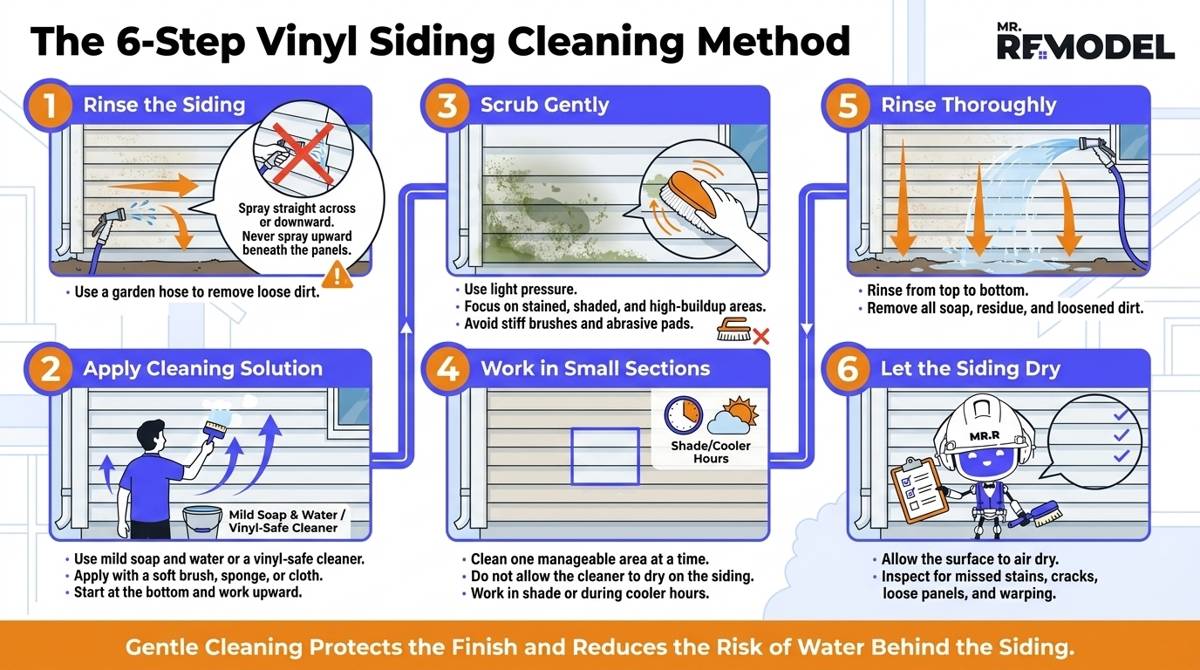
Step-by-Step Guide to Cleaning Vinyl Siding
A gentle wash is the safest place to start. Work in small sections so the cleaning solution does not dry on the surface.
1. Rinse the Siding
Start by rinsing the siding with a garden hose. Spray downward or straight across, not upward under the panels.
This removes loose dirt and helps prevent grit from scratching the surface while you scrub.
2. Apply Cleaning Solution
Mix mild soap with water or use a manufacturer-approved vinyl siding cleaner. Apply the solution with a soft brush, sponge, or cloth.
Start at the bottom and work upward when applying the cleaner. This can help reduce streaking.
3. Scrub Gently
Use light pressure. Focus on stained areas, corners, shaded walls, and spots near landscaping.
Do not use abrasive pads or stiff brushes. Vinyl can scratch, and scratches may collect dirt more easily later.
4. Work in Small Sections
Clean one manageable section at a time. This helps prevent soap from drying before you rinse.
On hot or sunny days, clean shaded sides first or work during cooler parts of the day.
5. Rinse Thoroughly
Rinse each section from top to bottom with clean water. Make sure all soap, cleaner, and loosened dirt are removed.
Leftover cleaner can leave streaks or residue.
6. Let the Siding Dry Naturally
Allow the siding to air dry. Once dry, walk around the home and check for missed stains, cracks, loose panels, or areas that may need repair.
How to Remove Mold, Mildew, and Tough Stains
Mold, mildew, algae, and tough stains may need extra care. The Environmental Protection Agency (EPA) offers guidance on mold cleanup in your home, including the importance of addressing moisture sources.
For mildew or algae, use a vinyl-safe cleaner and gently scrub the area. If the stain keeps returning, look for shade, poor drainage, leaking gutters, or plants growing too close to the wall.
For bird droppings, tree sap, or pollution stains, let the cleaning solution sit briefly before scrubbing. Do not scrape with sharp tools.
Rust stains may require a product designed for exterior stains and approved for vinyl. Test any cleaner in a small, hidden area first.
The Institute of Inspection Cleaning and Restoration Certification (IICRC) provides mold and mildew resources that can help homeowners understand why moisture control matters.
Should You Pressure Wash Vinyl Siding?
Pressure washing can be appropriate in some cases, but it must be done carefully. Too much pressure can crack siding, loosen panels, force water behind the wall, or damage caulk and trim.
North Carolina State Extension’s guide to pressure washing your home explains that pressure washing can damage surfaces when used improperly. For vinyl siding, gentle cleaning is often safer.
If you use a pressure washer:
- Use low pressure
- Use a wide spray pattern
- Keep the nozzle moving
- Hold the wand at a safe distance
- Spray straight or downward
- Never spray upward under siding panels
- Avoid windows, vents, electrical fixtures, and loose siding
Hand washing is safer if the siding is older, cracked, loose, brittle, or already damaged.
Need help repairing or replacing damaged siding? Get a free quote from fully vetted local siding contractors.
Common Mistakes to Avoid
Vinyl siding is durable, but the wrong cleaning method can still cause damage.
Do not use abrasive brushes or harsh chemicals. These can scratch, discolor, or weaken the siding surface.
Do not spray upward under the panels. Vinyl siding is designed to shed water downward, and spraying upward can push water behind it.
Do not clean in direct intense sunlight if the cleaner dries too fast. Dried cleaner can leave streaks and residue.
Do not ignore manufacturer instructions. Different siding products and finishes may have specific cleaning rules.
Do not treat repeated mold as only a surface problem. Recurring growth may point to shade, moisture, poor drainage, or ventilation issues.
When Cleaning Is Not Enough
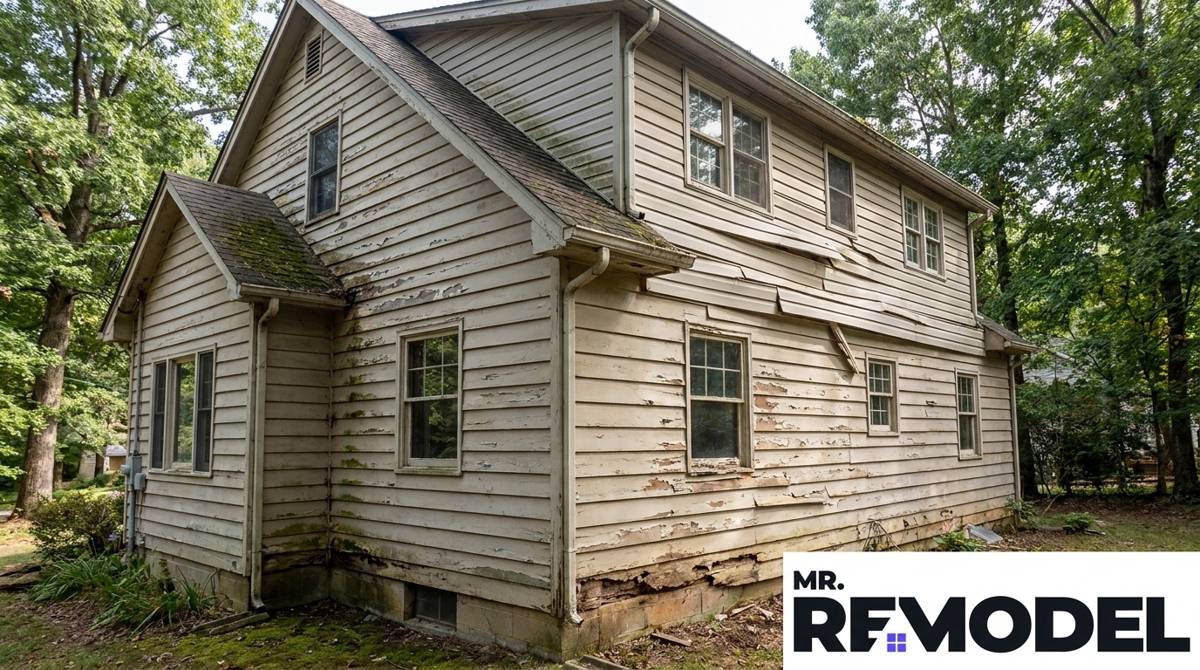
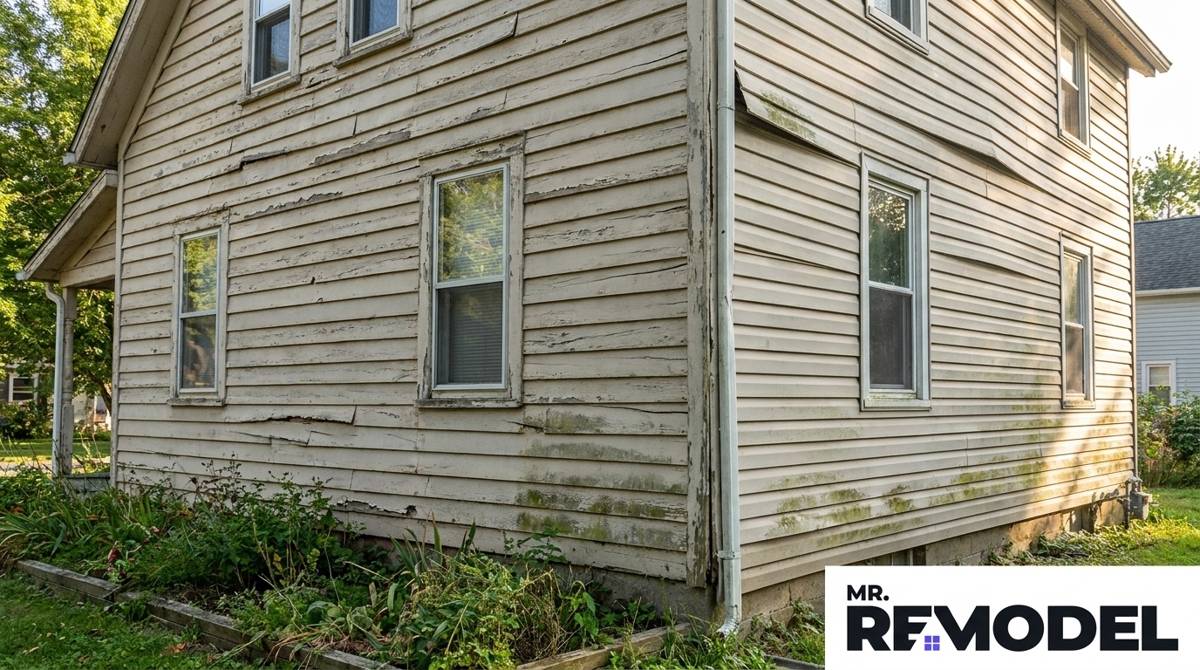
Sometimes vinyl siding looks dirty because it is damaged, aging, or failing. Cleaning may improve appearance, but it cannot fix structural or installation problems.
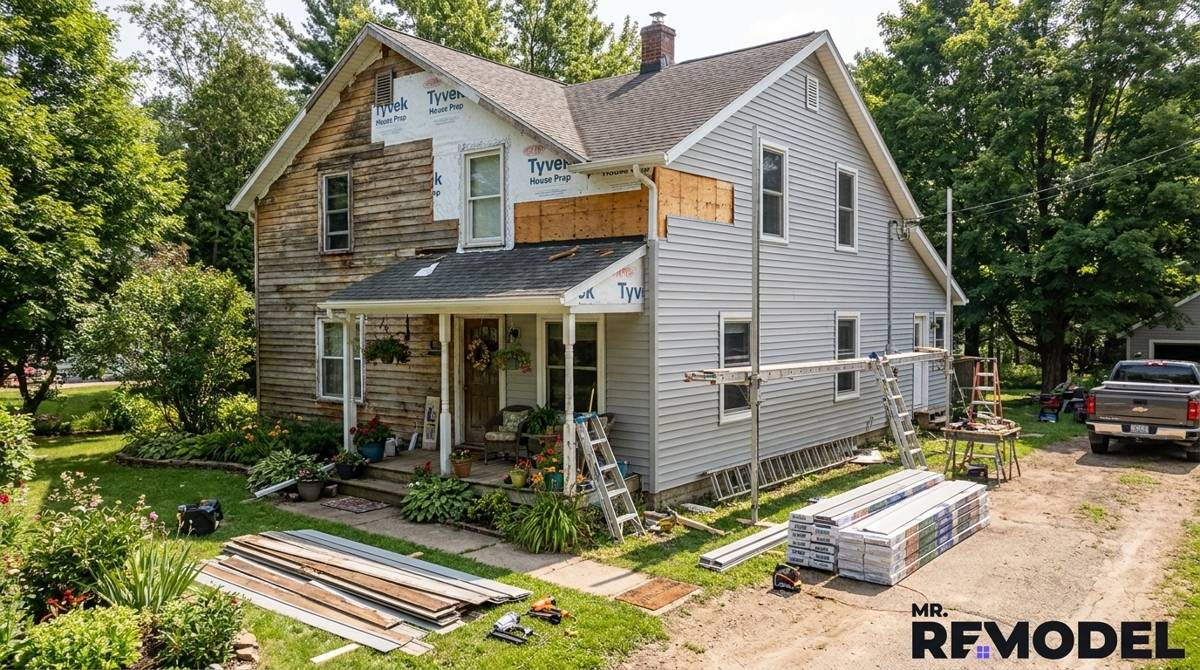
Watch for cracks, holes, loose panels, warping, buckling, severe fading, melted areas, water stains, or panels pulling away from the wall.
The International Association of Certified Home Inspectors’ vinyl siding inspection guide explains common inspection concerns, including installation defects and visible damage.
Repeated mold or mildew in the same area may also signal a drainage problem. Check gutters, downspouts, sprinklers, landscaping, and shaded walls.
Mr. Remodel data shows that installation projects account for 5,462 inquiries, or about 92%, compared with 445 repair inquiries, or about 8%. This shows that many homeowners eventually evaluate larger siding work instead of small repairs alone.
See Related: Siding Maintenance Guide
Frequently Asked Questions
How often should vinyl siding be cleaned?
Vinyl siding should usually be cleaned at least once a year. Homes in humid, shaded, coastal, dusty, or tree-heavy areas may need cleaning more often because mildew, algae, pollen, and dirt can build up faster.
Can I pressure wash vinyl siding?
Yes, but only carefully. Use low pressure, a wide spray pattern, and avoid spraying upward under the panels. Hand washing is safer for older, brittle, cracked, loose, or damaged siding.
What is the best homemade cleaner for vinyl siding?
A mild mix of soap and water is usually the safest homemade cleaner for routine vinyl siding cleaning. For mildew or tougher stains, follow the siding manufacturer’s cleaning guidance and test any solution on a small hidden area first.
Does bleach damage vinyl siding?
Bleach can damage finishes, landscaping, and nearby surfaces if mixed or used incorrectly. Only use cleaning products that are safe for vinyl siding, follow label directions, and never mix bleach with other cleaners.
Can mold permanently stain vinyl siding?
Mold, mildew, and algae can leave stubborn stains if ignored for too long. Cleaning early helps reduce staining, but repeated growth may point to shade, moisture, poor drainage, or another issue that needs correction.
How to Clean Vinyl Siding: Final Takeaway
Regular cleaning helps vinyl siding look better and can make it easier to catch small problems early. In most cases, mild soap, water, a soft brush, and careful rinsing are enough.
If the siding is cracked, warped, loose, severely faded, or repeatedly growing mold, cleaning may not be enough. To compare repair or replacement options, connect with fully vetted local siding contractors.