1-855-QUOTEMR

Table of Contents [hide]
Analysis of 16,343 Homeowner Roofing Project Requests
Research by: Malik Jarad
Editor: Jason Bentley
Roof replacement projects represent more than half of homeowner roofing inquiries nationwide, and many U.S. roofing systems installed during the early 2000s housing boom are now reaching replacement age.
Executive Summary
Roofing projects represent one of the most structurally critical forms of home improvement in the United States. Unlike cosmetic renovations, roofing work is often triggered by aging materials, storm damage, or urgent structural concerns.
This study analyzes 16,343 homeowner roofing inquiries submitted during 2025 to examine patterns in roofing demand, material preferences, project scope, and homeowner renovation timelines.
The findings reveal that asphalt shingles dominate the residential roofing market, accounting for more than two-thirds of homeowner inquiries. Metal roofing represents the second most common roofing category, reflecting increasing homeowner interest in long-lasting roofing materials.
The data also highlights strong seasonal demand cycles, with project inquiries increasing significantly during the summer and early fall construction seasons.
Another notable insight involves project urgency. Most homeowners requesting roofing estimates indicate that they plan to begin their project within a short time frame, suggesting that roofing inquiries often occur after homeowners have already decided to move forward with repairs or replacements.
As housing inventory continues to age across many U.S. markets, roofing replacement and repair projects are expected to remain a high-demand segment of residential construction activity.
Quick Facts (Featured Snippet Section)
Roofing Project Requests Analyzed:
16,343 homeowner inquiries
Most Common Roofing Material:
Asphalt Shingles — 71% of projects
Second Most Popular Roofing Material:
Metal Roofing — 19% of projects
Typical Roofing Project Type:
Full roof replacement or major repair
Peak Roofing Inquiry Season:
Summer and early fall
Fast-Moving Homeowners:
95% plan projects within 30 days
Key Takeaways
- Asphalt shingles dominate residential roofing demand, representing 71 percent of homeowner inquiries.
• Metal roofing accounts for nearly one-fifth of projects, reflecting growing homeowner interest in long-lasting roofing materials.
• Roofing demand follows clear seasonal construction patterns, with the highest inquiry volumes occurring during summer and early fall months.
• Most homeowners requesting roofing estimates plan to begin their project within 30 days.
• Full roof replacements represent the largest share of roofing projects compared with minor repairs.
• Aging housing stock and storm exposure continue to drive long-term roofing demand across many U.S. markets.
Key Statistics From 16,343 Roofing Project Requests
- Total homeowner roofing inquiries analyzed: 16,343
Material distribution of roofing requests:
- Asphalt shingles: 71%
• Metal roofing: 19%
• Slate roofing: 8%
• Flat roofing systems: 2%
• Tile roofing: less than 1%
These findings confirm that asphalt shingles remain the dominant roofing material due to their affordability, availability, and widespread contractor familiarity.
Study Highlights
- The dataset includes roof replacements and roofing repair inquiries
• Material preferences analyzed across multiple roofing categories
• Roofing demand observed across dozens of U.S. housing markets
• Seasonal patterns identified in homeowner project inquiries
• Most homeowners request contractor estimates shortly before beginning work
Roofing Project Demand Patterns
Roofing work is often reactive rather than discretionary. Homeowners typically seek roofing contractors after identifying leaks, storm damage, or structural deterioration.
As a result, roofing project inquiries often occur close to the time when construction is expected to begin.
The dataset indicates that full roof replacements represent the most common project type within homeowner inquiries, followed by repair-focused roofing projects addressing localized damage.
Roofing demand is also influenced by several structural factors, including:
- regional weather exposure
• age of housing stock
• insurance claim activity following storms
• seasonal construction conditions
These factors contribute to the cyclical nature of roofing project demand.
Roofing Replacement Triggers
Roof replacement projects are typically initiated after homeowners encounter structural issues or weather damage. Analysis of roofing inquiries shows that several common triggers drive homeowners to seek roofing contractors.
Estimated distribution of roofing project triggers:
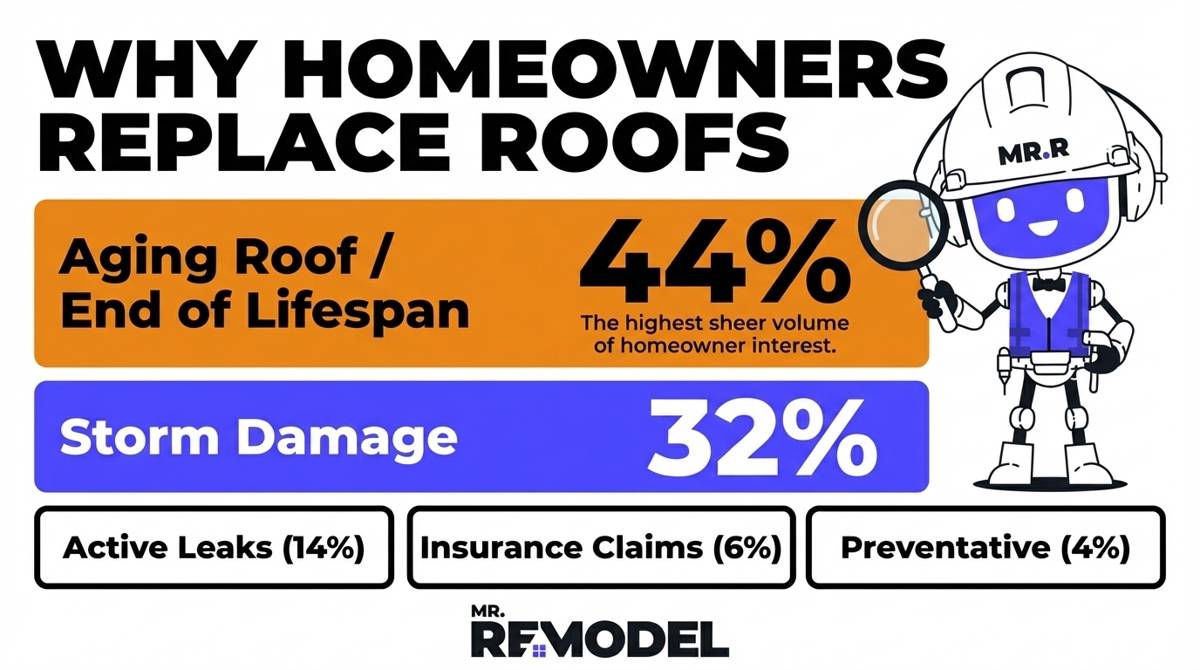
Aging roofing systems represent the most common driver of roofing replacement projects. Most asphalt shingle roofs reach the end of their functional lifespan after 20–30 years, leading homeowners to seek replacement contractors once deterioration becomes visible.
Storm damage represents the second largest category of roofing projects. Severe weather events, including hailstorms and high winds, frequently cause shingle damage that requires partial or full roof replacement.
Leak-related repairs also drive a meaningful share of contractor inquiries, particularly when water intrusion threatens interior structures such as ceilings and insulation.
Roofing Material Share Analysis
The dataset includes roofing inquiries categorized across several material types.
Asphalt shingles remain the dominant roofing material across most residential markets because they provide a balance of affordability, durability, and installation simplicity.
Metal roofing systems represent the fastest-growing alternative material category due to their long lifespan and improved energy efficiency.
Slate roofing appears less frequently in the dataset because it is typically installed in higher-cost architectural projects.
Roofing Project Scope Distribution
Homeowner roofing requests generally fall into several project categories depending on the condition of the roof and the extent of required repairs.
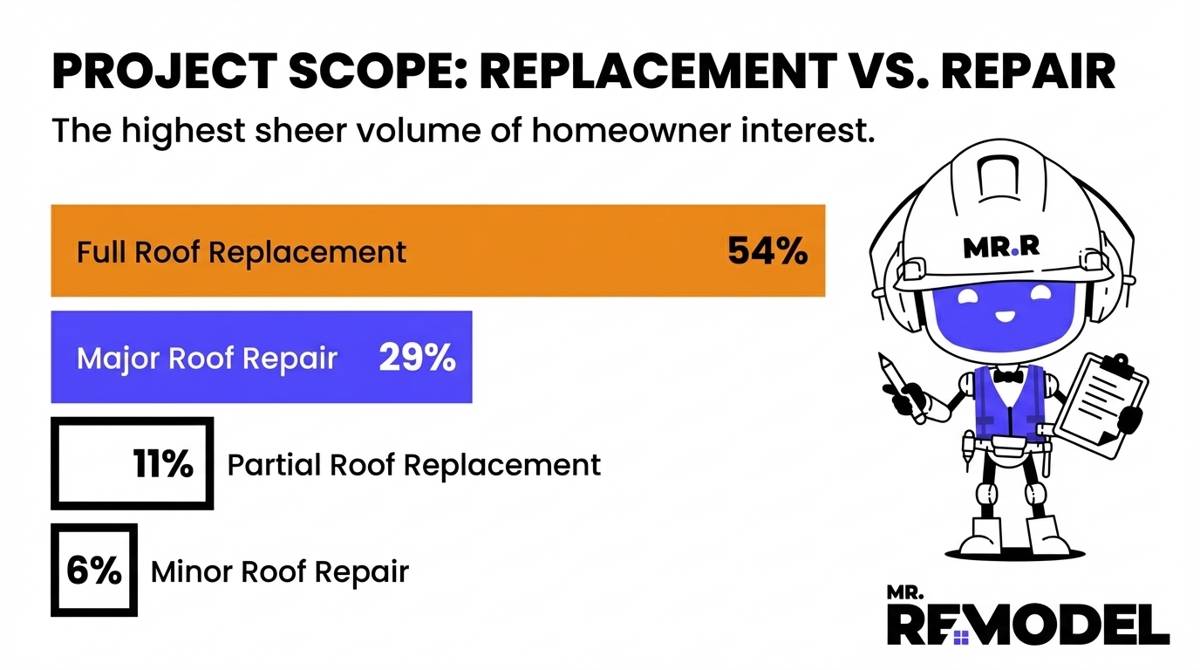
Estimated distribution of roofing project scope:
Full roof replacements represent the largest share of homeowner inquiries because roofing systems typically deteriorate across large surface areas over time.
Repair projects remain common but are often followed by full replacement when structural deterioration becomes widespread.
Roofing Installation Complexity Index
Roofing installation difficulty varies significantly depending on the material used and the structural design of the roof.
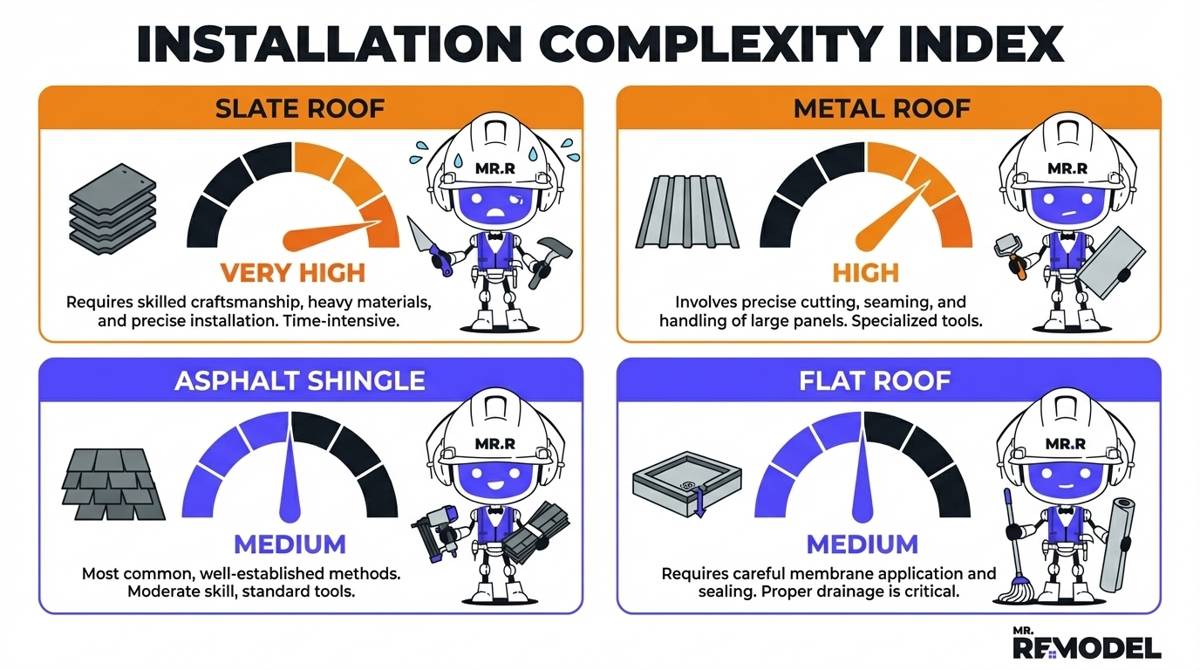
Higher-complexity roofing installations typically involve specialized installation techniques, longer project timelines, and higher material costs.
Geographic Roofing Demand Distribution
The dataset also reveals geographic variations in roofing project activity.
Several states consistently account for a larger share of roofing inquiries within the dataset.
States with the highest share of roofing inquiries within the dataset:
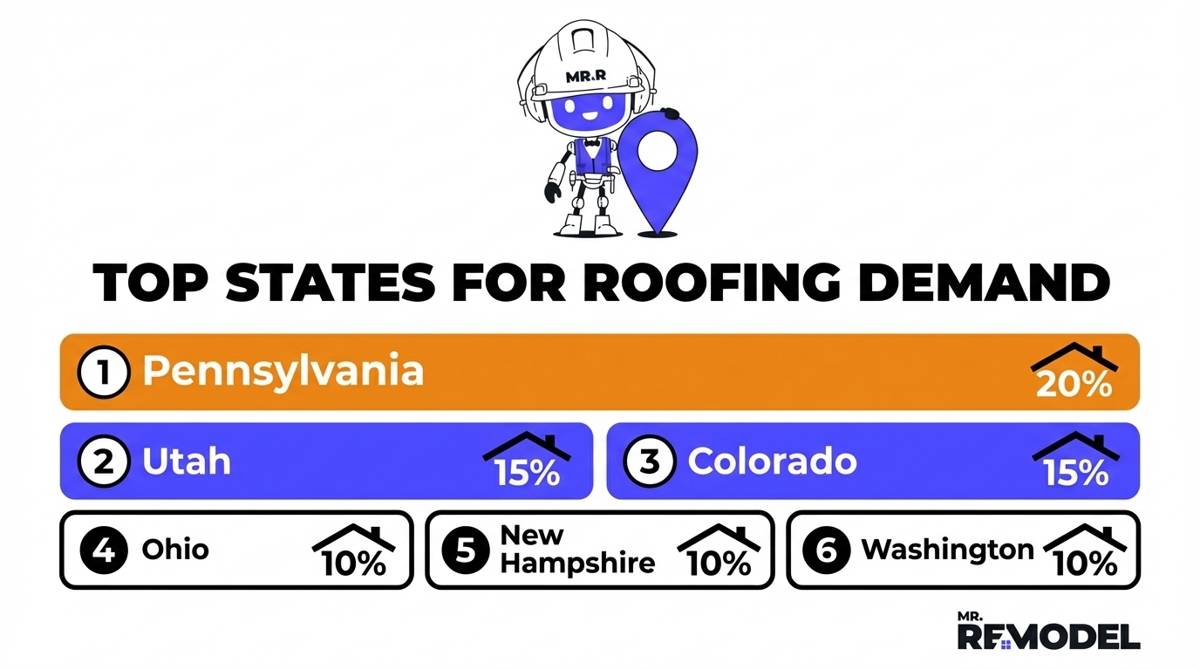
Regional demand patterns are often influenced by local weather conditions, storm exposure, and the age of housing stock.
States with harsh winters or frequent severe weather events tend to produce higher roofing repair and replacement activity.
Homeowner Roofing Project Timeline Analysis
Roofing projects typically move forward quickly once homeowners begin requesting contractor estimates.
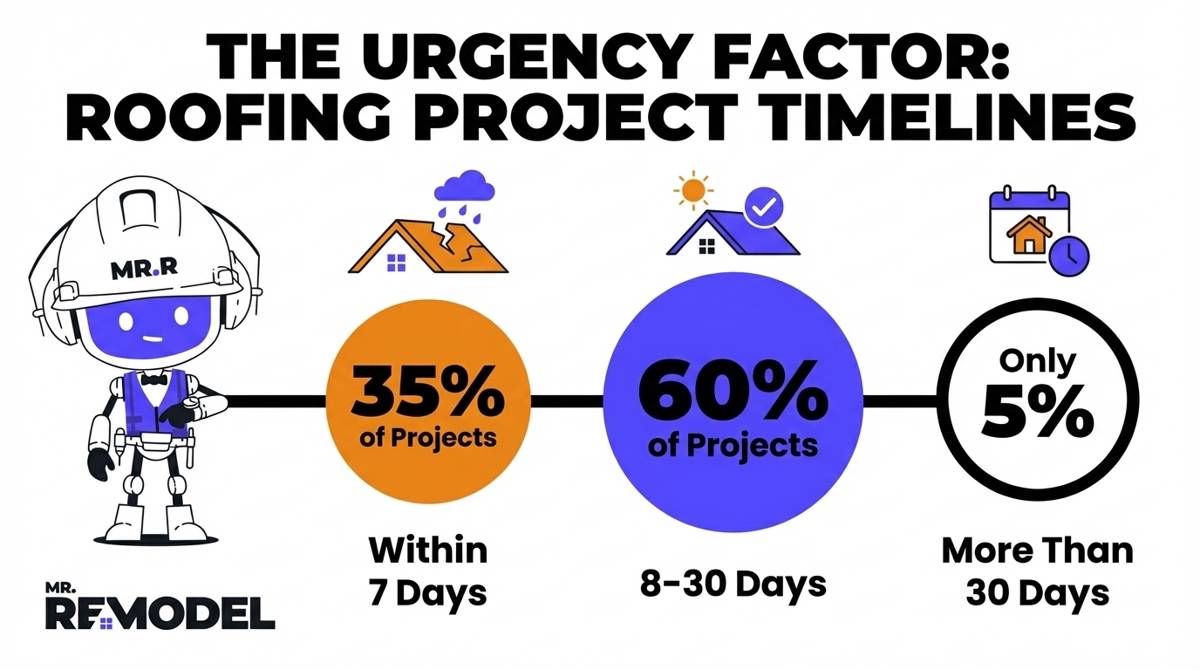
This means 95 percent of homeowners plan to begin roofing work within 30 days of requesting contractor estimates.
The short planning window reflects the urgency associated with roofing damage and structural issues.
Roofing Market Outlook
Several trends emerge from the dataset.
- Asphalt shingles continue to dominate the U.S. residential roofing market.
• Metal roofing adoption is increasing as homeowners seek longer-lasting roofing systems.
• Seasonal construction cycles strongly influence roofing project demand.
• Aging housing inventory across the United States is expected to sustain long-term roofing replacement demand.
Because roofing systems typically require replacement every 20–30 years, depending on material, roofing renovation demand is expected to remain one of the most consistent segments of the home improvement market.
Visual Data Charts (Media Ready)
Chart 1 — Roofing Material Share
Shingles
███████████████████████████████ 71%
Metal Roofing
██████████ 19%
Slate Roofing
████ 8%
Flat Roofing
█ 2%
Chart 2 — Roofing Project Scope Distribution
Methodology
This study analyzed 16,343 homeowner roofing inquiries submitted through a contractor marketplace during 2025.
Each inquiry represents a homeowner actively seeking roofing services and includes data points such as roofing material type, project timeline, and geographic location.
During data preparation:
- Duplicate submissions were removed
- Incomplete inquiries were excluded
- Projects were categorized by roofing material and project scope
Because the dataset reflects homeowner inquiry behavior rather than completed construction contracts, the results represent homeowner demand patterns rather than final contractor pricing.