1-855-QUOTEMR

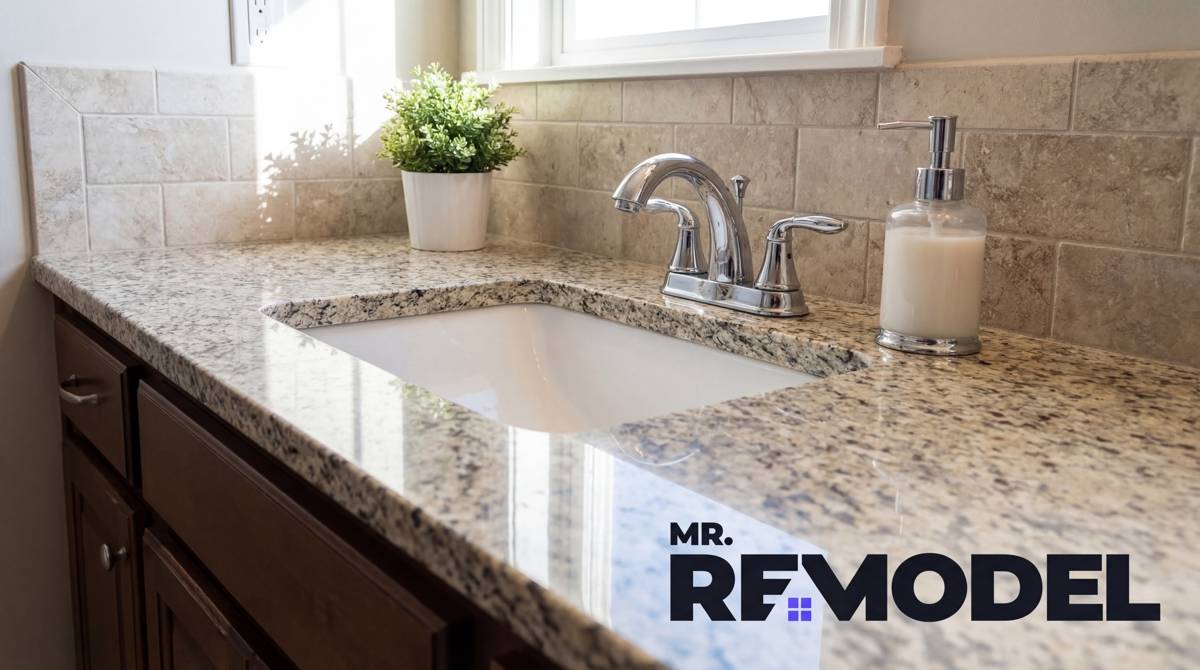
Table of Contents [hide]
Who This Is For
This guide is designed for homeowners currently planning a bathroom renovation who need to choose between natural stone and engineered surfaces. It is specifically tailored for those looking to balance long-term durability with high-end aesthetic value.
Key Takeaways
- Investment Protection: Choosing the right surface protects a complete bathroom remodel, which averages an investment of $15,154.50.
- Maintenance Needs: Granite requires periodic sealing to prevent moisture damage, while quartz is non-porous and maintenance-free.
- Health & Safety: Peer-reviewed data confirms that both materials are safe for home use, debunking common myths about radon in natural stone.
- Customization: Quartz offers consistent patterns and colors, whereas granite provides one-of-a-kind natural beauty that cannot be replicated.
Selecting a countertop is one of the most visible decisions you will make during a renovation. According to internal data from Mr. Remodel, the average cost for a complete bathroom overhaul is $15,154.50. At this level of investment, your choice of material is about more than just color.
The bathroom is a high-moisture environment that subjects surfaces to humidity, cosmetic chemicals, and constant water exposure. Choosing the wrong material can lead to staining, mold growth, or structural degradation. Understanding the geological and chemical differences between quartz and granite is essential for protecting your home's value.
Understanding the Material Composition
To make an informed choice, you must understand what these materials actually are. While they may look similar on a vanity, their internal structures dictate how they perform over time.
What is Granite?
Granite is a natural igneous rock. It is composed primarily of quartz, feldspar, and mica. Because it is forged in the earth by volcanic heat, every slab is unique. However, this natural formation also makes it inherently porous.
What is Quartz?
Unlike its natural counterpart, quartz countertops are engineered. The Natural Stone Institute notes that these surfaces typically consist of roughly 90% to 93% crushed natural quartz crystals mixed with 7% to 10% polyester resins and pigments. This manufacturing process creates a completely non-porous surface.
Durability and Moisture Resistance
In a bathroom, water is the primary enemy. The way a countertop interacts with moisture determines its lifespan and hygiene.
Porosity and Sealing
Granite contains tiny microscopic pores. If left untreated, water, oils, and soaps can seep into the stone, causing permanent staining or bacterial growth. To prevent this, granite must be professionally sealed upon installation and resealed every one to two years.
Quartz is engineered to be non-absorbent. Because the resin fills every gap between the stone particles, it never requires sealing. This makes it an ideal choice for high-traffic guest bathrooms or children's bathrooms where spills are common, and maintenance might be overlooked.
Scratch and Heat Resistance
- Granite: Highly heat-resistant. You can place a hot curling iron directly on the surface without fear of damage.
- Quartz: While very hard and scratch-resistant, the resins used in quartz can be damaged by extreme heat. Using a heat-resistant mat for styling tools is recommended.
Addressing Health Concerns: The Radon Question
A common concern among homeowners is whether natural stone surfaces emit harmful levels of radiation. This is a topic that often leads to unnecessary anxiety during the remodeling process.
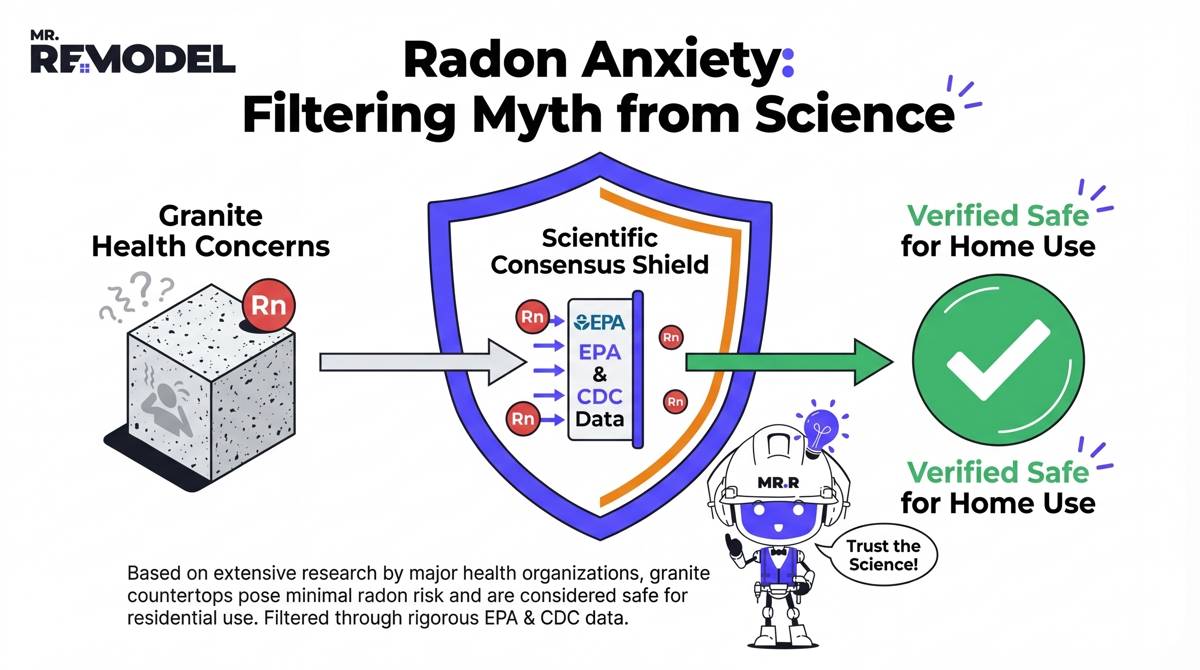
The US Environmental Protection Agency (EPA) has studied this extensively. Their research indicates that while granite may contain trace amounts of naturally occurring radioactive elements like uranium and thorium, the levels are typically too low to pose a health risk.
Furthermore, the Centers for Disease Control and Prevention (CDC) confirms that most building materials, including concrete and brick, emit very low levels of radiation. Granite countertops are not considered a significant contributor to indoor radon levels.
If you are ready to see these materials in your own home, Mr. Remodel connects you with top-rated local contractors who provide free, no-obligation quotes for your bathroom project. Compare pros and costs in minutes.
Aesthetic Differences and Design Versatility
The visual impact of your vanity often defines the "vibe" of the entire room. Your preference for natural variation versus modern consistency will likely drive your final decision.
The Natural Beauty of Granite
If you value one-of-a-kind design, granite is the winner. No two slabs are identical. You will see movement, veining, and color flecks that occurred naturally over millions of years. This adds a sense of luxury and organic texture to a bathroom.
The Modern Precision of Quartz
Quartz offers a controlled aesthetic. If you want a specific shade of white or a consistent marble-look veining that matches across multiple vanities, quartz is the better option. Manufacturers can create looks ranging from concrete-industrial to bright, sparkling solids.
Comparing the Costs of Quartz and Granite
When looking at your total remodel budget, the countertop cost usually includes the material, templating, fabrication, and installation.
While the initial purchase price is comparable, quartz often has a lower "total cost of ownership" because you do not need to purchase sealing products or professional stone cleaning services over the years.
Which is Better for Your Complete Remodel?
Choosing between these two comes down to your lifestyle and the scope of your project. At Mr. Remodel, we see homeowners split their decisions based on these two profiles:
Choose Granite if:
- You want a 100% natural, unique product.
- You don't mind the occasional maintenance of sealing the stone.
- You want the highest possible heat resistance for hair tools.
Choose Quartz if:
- You want a "set it and forget it" low-maintenance bathroom.
- You prefer a modern, consistent aesthetic.
- You are concerned about germs and want a non-porous, antimicrobial surface.
Frequently Asked Questions
Does quartz or granite add more home value?
Both materials are considered high-end upgrades that significantly boost resale value. Most buyers view them as roughly equal, though quartz is currently trending higher in modern urban markets due to its low-maintenance reputation.
Can I install these countertops myself?
Professional installation is highly recommended. These slabs are extremely heavy and brittle before they are secured. Platforms like Mr. Remodel help by matching you with contractors who have the specialized tools needed for precision cutting and installation.
Is quartz more hygienic than granite?
Technically, yes. Because quartz is non-porous, it does not harbor bacteria, mold, or mildew in the way that unsealed natural stone can. This makes it a popular choice for families and health-conscious homeowners.
How do I clean these surfaces?
For both materials, warm water and mild dish soap are best. Avoid harsh chemicals or abrasive scrubbers. For granite, ensure you are using a stone-safe cleaner that won't strip away the protective sealer.
Will granite countertops crack?
Granite is incredibly durable but can crack if subjected to a heavy impact or if the cabinets beneath it shift. Proper installation by a qualified professional is the best way to prevent structural issues.
Securing Your Renovation Success With The Right Bathroom Countertop
Your bathroom vanity is the centerpiece of your daily routine. Whether you choose the timeless, organic allure of granite or the sophisticated, worry-free performance of quartz, you are making a move to protect your home’s value.
Remember that a complete bathroom remodel is a significant $15,154.50 investment on average, and the surfaces you choose today will dictate your comfort for years to come.
Don't leave your renovation to chance. Get started with Mr. Remodel to receive free quotes from licensed, local contractors in your area.