1-855-QUOTEMR

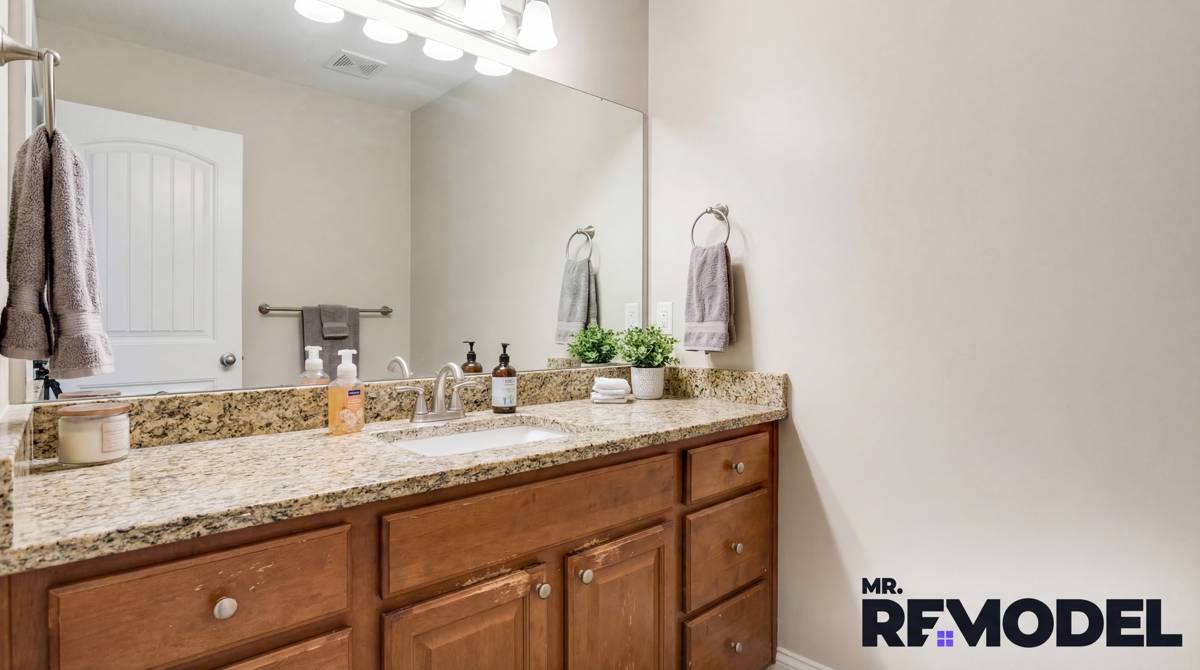
Table of Contents [hide]
Who This Is For: This guide is for homeowners in the research phase of a bathroom renovation who need to understand the structural, financial, and aesthetic differences between vanity styles before hiring a professional.
Key Takeaways
- Structural Impact: Changing vanity types often requires plumbing relocation and floor patching, transitioning a simple swap into a complete remodel.
- 2026 Trends: Expect a shift toward organic modernism featuring warm woods, fluted textures, and earthy tones as the vanity becomes a room's focal point.
- Budget Reality: According to Mr. Remodel data, the average cost for a complete bathroom transformation involving vanity and structural changes is $15,154.50.
- Efficiency Standards: Proper planning requires adhering to NKBA guidelines, such as maintaining 30 inches of clear floor space in front of the unit.
Selecting a bathroom vanity is no longer just about picking a cabinet color; it is a pivotal architectural decision that dictates the flow and functionality of your most personal space.
Research shows that bathroom renovations remain one of the top home improvement projects for boosting property value, with high-quality vanity upgrades serving as a primary driver for buyer interest.
Understanding the Core Vanity Styles
Choosing the right silhouette is the first step in your design journey. Each type offers distinct advantages for storage, floor space, and installation complexity.
Freestanding Vanities: The Reliable Classic
The freestanding vanity is the most common choice for American homes. These units rest directly on the floor, providing maximum storage capacity through a combination of drawers and under-sink cabinets.
They range from box-like designs that sit flush against the baseboard to furniture-style pieces with decorative legs. Because they cover a large portion of the floor, they are ideal for hiding unfinished tiling or older plumbing.
Floating (Wall-Mounted) Vanities: The Standard
In 2026, minimalist and modern designs continue to dominate the market. Floating vanities are mounted directly to the wall, leaving the floor space beneath them open and unobstructed.
This style creates the illusion of a much larger room and makes floor cleaning effortless. However, City of Laguna Hills guidelines note that these often require building permits if you are altering the layout or reinforcing wall structures.
Corner Vanities: Space-Saving Specialists
For tiny powder rooms or bathrooms with awkward 90-degree layouts, corner vanities offer a triangular or L-shaped solution. They reclaim "dead" space while providing a functional basin and a small amount of tucked-away storage.
Double Vanities: The Primary Suite Essential
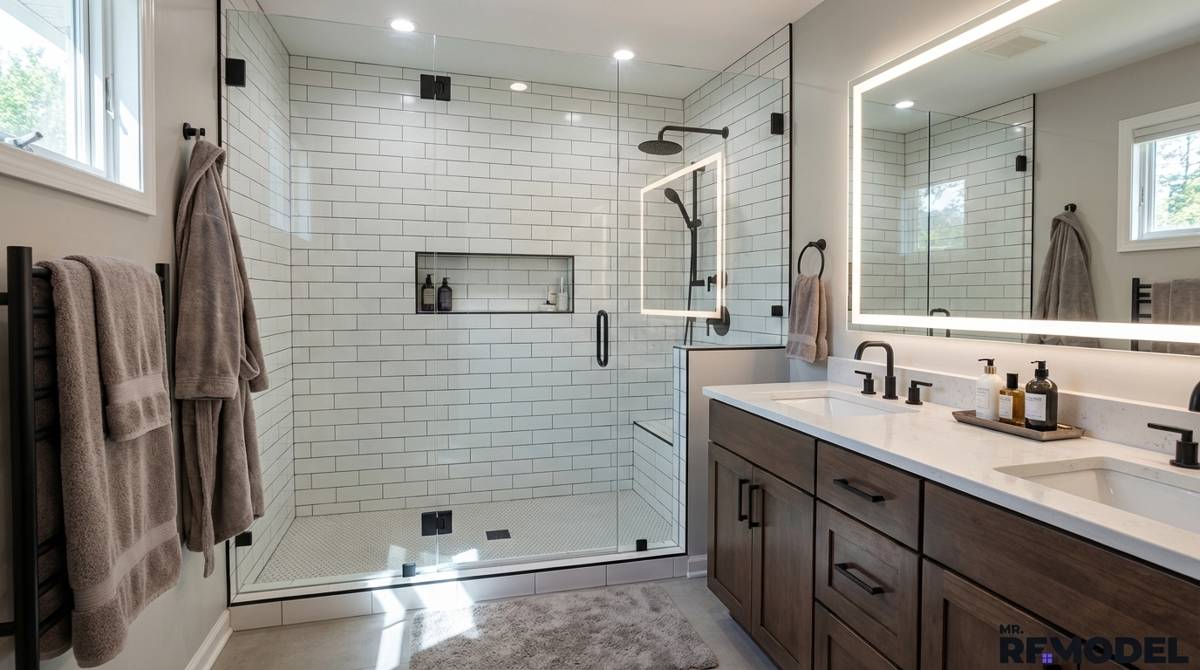
A standard upgrade for shared bathrooms, double vanities typically range from 60 to 72 inches. They provide individual personal space and help streamline morning routines for busy couples or families.
Technical Specifications and Building Codes
A vanity is more than furniture; it is a plumbing fixture that must meet strict safety and ergonomic standards to be functional and legal.
Clearance and Space Planning
According to the National Kitchen & Bath Association (NKBA), you must maintain at least 30 inches of clear floor space from the front edge of the vanity to the opposite wall or fixture.
Furthermore, if you are installing a double vanity, the distance between the centerlines of the two sinks should be at least 36 inches to ensure both users have adequate elbow room.
Electrical and Safety Requirements
When upgrading a vanity, you will likely need to address electrical placement. The Prince William County Government mandates that GFCI electrical outlets must be placed within 36 inches of the outside edge of the sink basin.
This is a critical safety measure to prevent water-related electrical hazards. If your new vanity is a different height or width from your old one, moving these outlets is a common secondary task.
|
Pro Tip: If you are transitioning from a freestanding unit to a floating model, you must install wall blocking, which is a heavy-duty wood support inside the wall, to hold the weight of the vanity and the stone countertop. |
Why a New Vanity Often Means a Complete Remodel
Many homeowners believe a vanity swap is a DIY afternoon project. However, Mr. Remodel data indicates that replacing a vanity almost universally triggers a "Complete Remodel" scope.
The Ripple Effect of Installation
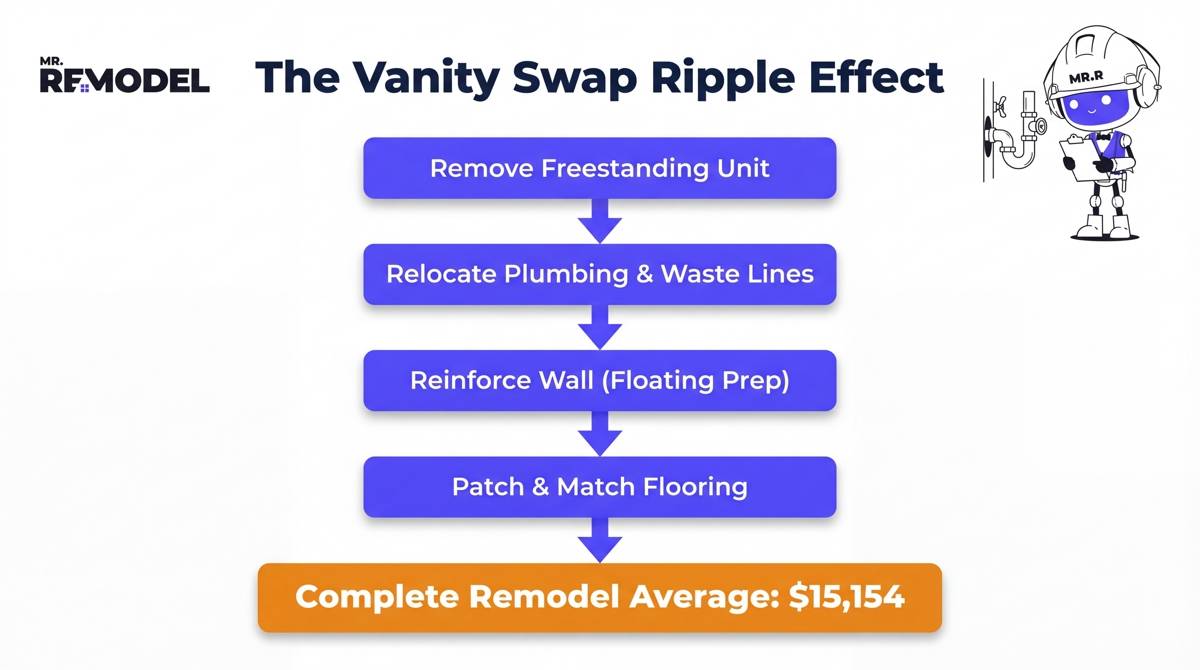
When you remove an old vanity, you often discover that the flooring was not finished underneath it. Transitioning styles means:
- Patching or replacing the floor to match the new footprint.
- Relocating plumbing lines to align with new drawer configurations.
- Repairing and painting drywall that was previously hidden.
While Mr. Remodel data shows that only 4.4% of recent projects were classified as "Complete Remodels," these represent the most significant spatial transformations. These projects involve high-level coordination between plumbers, electricians, and finish carpenters.
Investment and ROI
Based on Mr. Remodel customer data, the average cost for a complete remodel (including a high-end vanity and structural updates) is $15,154.50.
While this is a significant investment, upgrading to highly functional styles like double or floating vanities is a proven strategy to increase daily usability and long-term home value.
If you are ready to transform your bathroom, get a free quote from Mr. Remodel and let us connect you with the best local contractors to handle your complete renovation with ease.
2026 Design Trends: The Aesthetics of the Modern Vanity
The vanity is no longer just a storage hub; it is the primary focal point of the bathroom. 2026 is seeing a shift toward organic modernism.
Texture and Materiality
- Fluted Drawer Fronts: Ribbed and fluted wood textures are the standout trend of the year, adding depth and visual interest.
- Warm Woods: Natural oak and walnut are replacing the sterile white cabinets of the past decade.
- Earthy Tones: Expect to see vanity bases in sage green, terracotta, and deep navy.
Sink Styles: Pedestal vs. Vessel
Frequently Asked Questions
Does replacing a vanity require a permit?
Generally, a simple swap of a similar size does not. However, if you are relocating plumbing or electrical outlets, most local governments require a permit to ensure the work meets safety codes.
How much does it cost to have a vanity professionally installed?
While the vanity itself can cost $500 to $3,000, professional installation as part of a larger project usually factors into a total remodel budget. Mr. Remodel data shows average comprehensive project costs around $15,154.50.
Can I install a floating vanity on any wall?
No. Floating vanities require reinforced wall blocking. Professional platforms like Mr. Remodel help by matching you with contractors who understand these structural requirements to ensure your vanity stays securely on the wall.
What is the standard height for a bathroom vanity?
Modern "comfort height" vanities are typically 36 inches tall, which is the same as kitchen counters. Older vanities were often 30 to 32 inches, but the taller height is now preferred for better ergonomics.
How does Mr. Remodel help with my bathroom project?
Mr. Remodel acts as your project concierge. We use proprietary data to help you understand costs and then connect you with vetted, local professionals who specialize in complete bathroom transformations.
Planning Your Dream Bathroom
Choosing the right bathroom vanity requires balancing your aesthetic desires with the practical realities of plumbing, local codes, and structural support. Whether you opt for a trend-forward floating unit with fluted wood or a massive double vanity for family convenience, understanding the scope of the project is key.
Remember that a vanity upgrade is often the catalyst for a total room refresh. By preparing for the costs and technical requirements now, you ensure a smoother renovation process and a higher return on your investment.
Don't navigate the complexities of plumbing and structural permits alone. Mr. Remodel provides free quotes and connects homeowners to top-tier local contractors who can bring your vision to life. Get your free, no-obligation quote here.