1-855-QUOTEMR

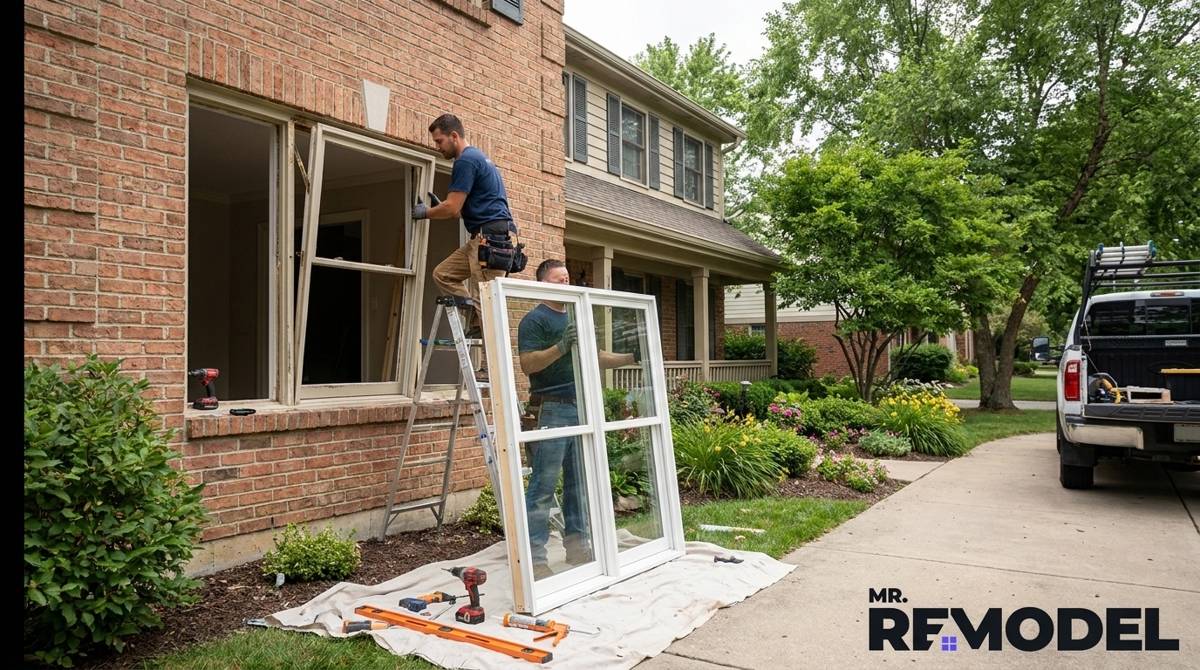
Table of Contents [hide]
Who This Is For:
Homeowners replacing several windows, planning a larger exterior upgrade, or trying to decide whether a contractor has the experience and capacity to manage a residential replacement project correctly from measurement through final cleanup.
Key Takeaways:
- Contractors Need More Than Product Knowledge: Residential window replacement contractors should understand both window products and building-envelope installation.
- Multi-Window Projects Require Planning: Measurements, sequencing, scheduling, and quality control are critical when multiple openings are involved.
- Existing Openings Should Be Inspected: A contractor should not assume every replacement is simple.
- Responsibilities Should Be Clear: Homeowners should know who handles removal, flashing, sealing, trim, cleanup, and warranty service.
- Older Homes May Need Lead-Safe Work: Homes built before 1978 can require additional renovation procedures.
Replacing windows is a construction project that affects the wall openings, trim, air sealing, water management, comfort, and long-term performance of your home.
That is why residential window replacement contractors should be evaluated by more than the window brands they offer. The right contractor should be able to manage measurements, ordering, removal, installation, finishing, cleanup, and post-project service.
Mr. Remodel window data shows that residential homeowners make up nearly all installation or replacement demand in the dataset. Among 25,004 installation or replacement inquiries, 24,841 came from homeowners, or about 99.3%.
What a Residential Window Replacement Contractor Actually Does
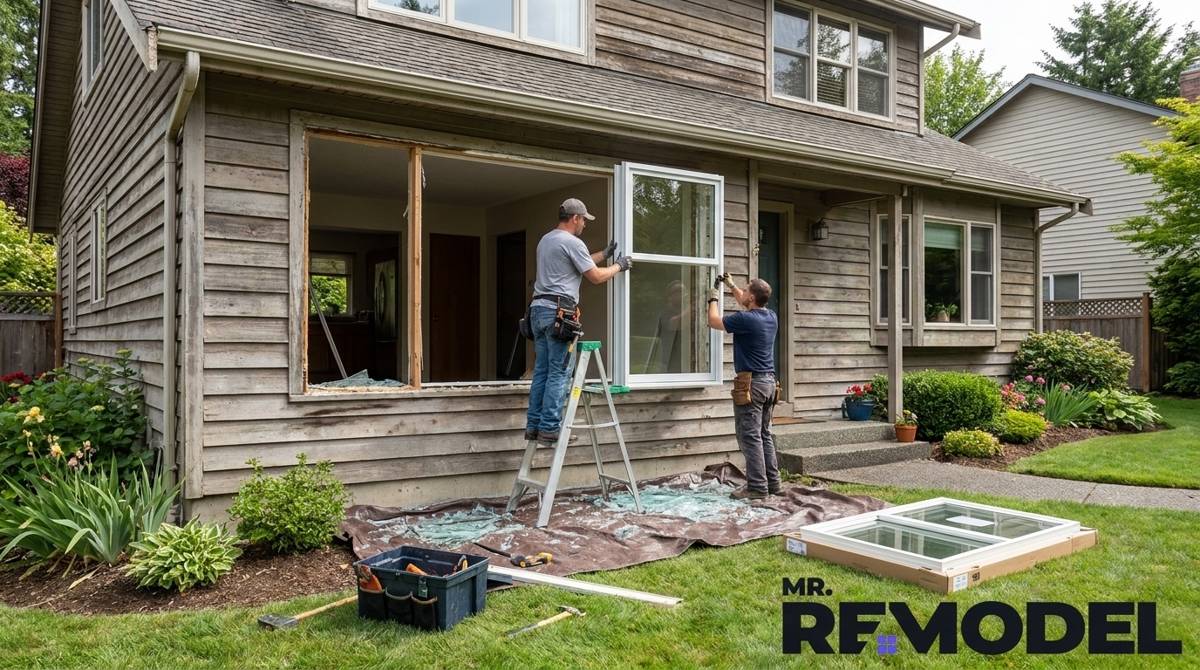
A qualified window replacement contractor does more than remove old windows and place new units in the openings. The job can include measuring existing openings, recommending an installation method, ordering the right products, protecting the home, removing old units, checking the surrounding frame, installing and flashing new windows, air sealing gaps, replacing trim, cleaning up, and coordinating warranty support.
The United States (U.S.) Department of Energy Building America Solution Center explains that complete window and frame replacement may include removing the window and frame, evaluating surrounding materials, repairing deteriorated areas, flashing, water sealing, and air sealing.
That makes window replacement a building-envelope task, not simply product delivery. A contractor should understand how the window connects to the wall system around it.
Multi-Window Experience Matters
Many residential window projects involve several openings, not just one. In Mr. Remodel installation or replacement inquiries with window-count data, the median project involved 5 windows, and the average was about 5.9 windows.
The largest recorded project-size group was 10-window inquiries, with 6,664 inquiries. There were also 6,312 inquiries for 3 windows, 3,151 for 4 windows, and 2,459 for 8 windows.
That matters because multi-window replacement requires more than repeating the same task several times. A contractor has to manage accurate ordering across different openings, maintain consistent product styles, coordinate installation sequencing, account for weather exposure, coordinate crews, manage debris removal, and protect the home’s interior.
For a whole-home or multi-room project, ask how the contractor ensures consistent workmanship from the first window to the last.
The Contractor Should Inspect More Than the Window
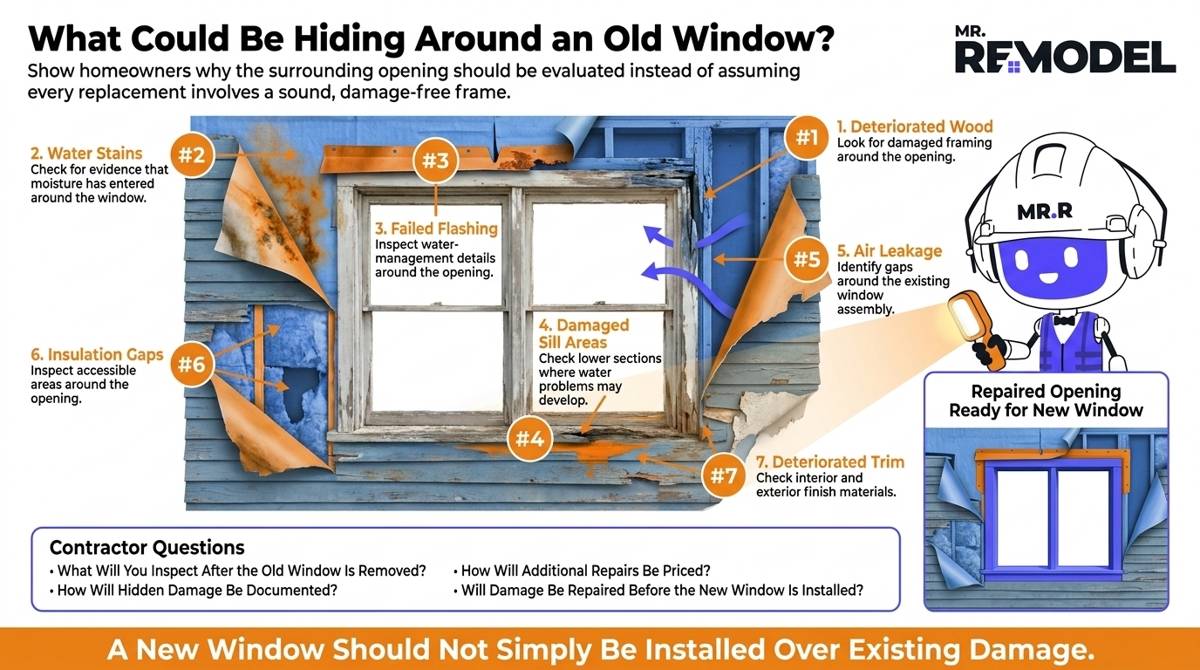
Old windows can hide problems around the opening. A contractor may find deteriorated wood, water stains, failed flashing, damaged sill areas, air leakage, gaps in insulation, or trim deterioration.
A good contractor should explain what they inspect before installation and what happens if unexpected damage is uncovered. The answer should be clear before the contract is signed.
The Building America Solution Center recommends inspecting the rough opening and repairing deteriorated materials before installing a replacement window. This helps prevent new windows from being installed over old damage.
If a contractor never mentions the condition of the opening, flashing, or surrounding materials, ask more questions.
Ask Which Replacement Method They Recommend
Not every home needs the same installation method. The contractor should explain whether an insert replacement or a full-frame replacement is the better fit for your home.
Insert or Pocket Replacement
Insert or pocket replacement keeps the existing frame in place. It may be appropriate when the existing frame is square, sound, dry, and in good condition.
This method can be less disruptive, but it is not the right solution if the old frame or surrounding materials are damaged.
Full-Frame Replacement
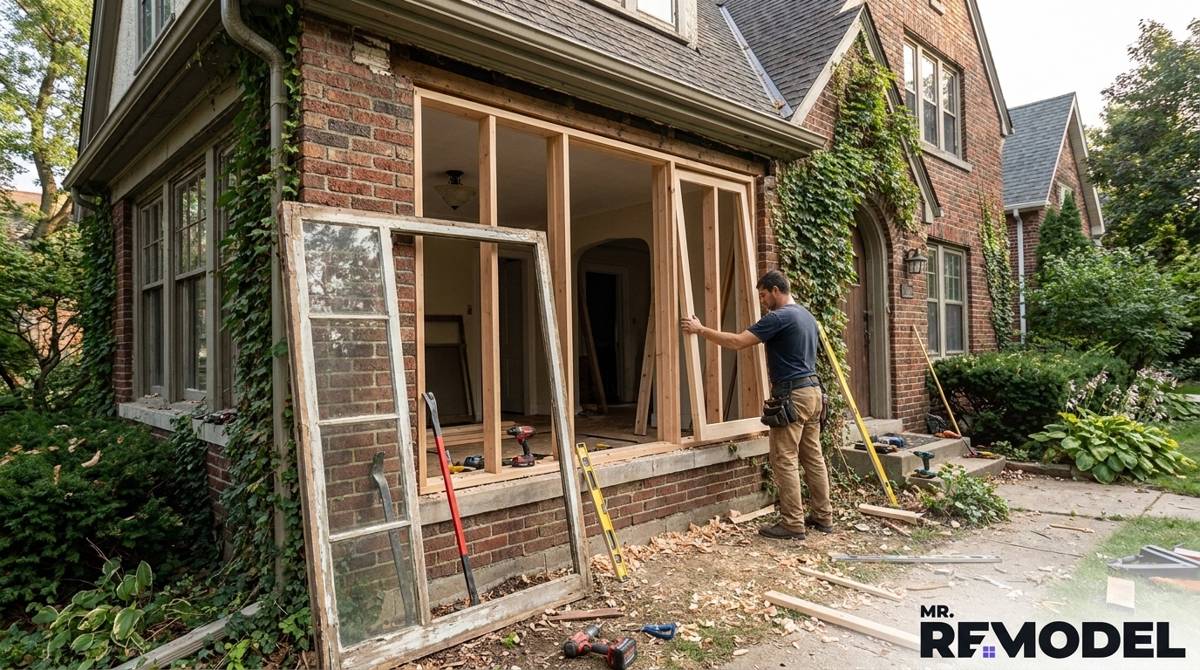
Full-frame replacement removes the existing window and frame. It may be necessary when there is deterioration, water damage, structural concern, poor prior installation, or a need to change the opening or trim details.
The contractor should explain why one method fits the home rather than automatically recommending the same method for every project.
See Related: Pocket vs. Full-Frame Window Replacement | 2026 Cost Comparison
Replacing several windows can involve product selection, measurements, installation planning, and finish work across the entire home. Mr. Remodel helps homeowners connect with fully vetted local window contractors for residential replacement projects.
Who Will Actually Perform the Installation?
Some companies use in-house crews. Others use subcontractors. Either approach can work, but homeowners should know who will be inside the home and who is responsible for quality control.
Ask whether installers are employees or subcontractors, who supervises the crew, whether the same crew handles the full project, what training installers receive, and who the homeowner should contact if there is a problem.
ENERGY STAR recommends asking whether installers are trained or certified to install the selected product and whether they follow manufacturer installation instructions through its Residential Windows, Doors, & Skylights guidance.
This is especially important when warranty coverage depends on proper installation.
How Contractors Should Prepare for Installation Day
An experienced residential contractor should explain what installation day will look like. This is especially important when several windows are being replaced.
Ask how furniture should be moved, how floors will be covered, how landscaping will be protected, and whether rooms need to be cleared. Ask how the crew handles dust, debris, pets, children, security while openings are exposed, disposal of old windows, and daily cleanup.
Scheduling also matters. About 23,771 installation or replacement inquiries in Mr. Remodel data indicated a desired start within 30 days. This reflects the homeowner's desired timing, not the actual contractor completion time.
A good contractor should explain the path from measurement to ordering to installation, including custom product lead times, any required permits, and potential weather delays.
Flashing and Air Sealing Should Be Part of the Conversation
Installation details can affect comfort, water protection, and long-term performance. Homeowners do not need a technical installation manual, but they should expect clear answers.
The Building America Solution Center explains that windows and doors should be fully flashed to help direct water away from the opening and protect the wall assembly.
Ask contractors how sill flashing will be handled, how side and head flashing are integrated, how gaps around the frame are air-sealed, and whether exterior sealants are compatible with surrounding materials.
A contractor who can explain these steps clearly is more likely to understand the full installation process.
Older Homes Require Additional Planning
If your home was built before 1978, window replacement may disturb painted surfaces. That can trigger lead-safe requirements.
The Environmental Protection Agency (EPA) says its Renovation, Repair and Painting (RRP) program applies to covered renovation work in pre-1978 homes, including window replacement. Homeowners can review the EPA’s RRP requirements for contractors for more information.
EPA also provides lead-safe renovation guidance covering containment, work practices, and cleanup.
Ask whether the contractor is EPA Lead-Safe Certified where required, uses lead-safe work practices, explains containment and cleanup, and understands any state program requirements.
What Should the Installation Warranty Cover?
The manufacturer’s warranty and contractor’s workmanship warranty are not the same. The manufacturer may cover parts of the window product. The contractor’s installation warranty should address workmanship.
Ask what workmanship is covered, how long coverage lasts, who handles service calls, whether air or water leaks related to installation are covered, whether labor is included, and what could void coverage.
Make sure warranty details are written into the contract or supporting documents. A verbal promise is not enough.
See Related: Understanding Manufacturer Warranty vs Installation Warranty
Questions to Ask Before Hiring
Use these questions before choosing a contractor:
- How many multi-window residential replacements do you complete?
- Who takes the final measurements?
- Which installation method do you recommend for my home?
- Who will actually install the windows?
- What happens if you discover rot or water damage?
- How will flashing and air sealing be handled?
- How will you protect the interior of my home?
- What is the expected project schedule?
- What workmanship warranty do you provide?
- Who handles service after installation?
See Related: Questions to Ask Window Installers: Hiring Guide
Frequently Asked Questions
What does a residential window replacement contractor do?
A residential window replacement contractor may handle measuring, ordering, old window removal, opening inspection, installation, flashing, air sealing, trim work, cleanup, and warranty support. The exact scope should be explained in the written proposal.
Should one contractor replace all of my windows?
Using a single contractor for a multi-window replacement can help ensure product consistency, streamline scheduling, simplify warranty support, and improve project coordination. The right scope still depends on your window condition, budget, priorities, and whether you want to replace everything at once.
How many windows do homeowners usually replace at once?
Among Mr. Remodel installation or replacement inquiries with recorded window counts, the median project involved 5 windows. The largest single recorded group was 10-window inquiries, which shows why whole-project capability matters.
What happens if a contractor finds rot around a window?
Deteriorated materials may need to be removed and repaired before the replacement window is installed. The contractor should explain how hidden damage will be evaluated, documented, priced, and repaired before work begins.
Do residential window contractors need lead-safe certification?
EPA Renovation, Repair, and Painting requirements can apply when covered renovation work disturbs painted surfaces in pre-1978 housing, and window replacement is specifically included. Homeowners with older homes should ask whether lead-safe certification or state program requirements apply.
Residential Window Replacement Contractors: Final Takeaway
The right residential window replacement contractor should be able to manage the complete project, not simply sell windows. For a multi-window replacement, measurement accuracy, installation method, opening inspection, crew quality, scheduling, cleanup, and warranty support all matter.
Before hiring, look for a contractor who can explain the process clearly and take responsibility for the finished result. To compare qualified options, get a free quote from fully vetted local window contractors through Mr. Remodel.