1-855-QUOTEMR

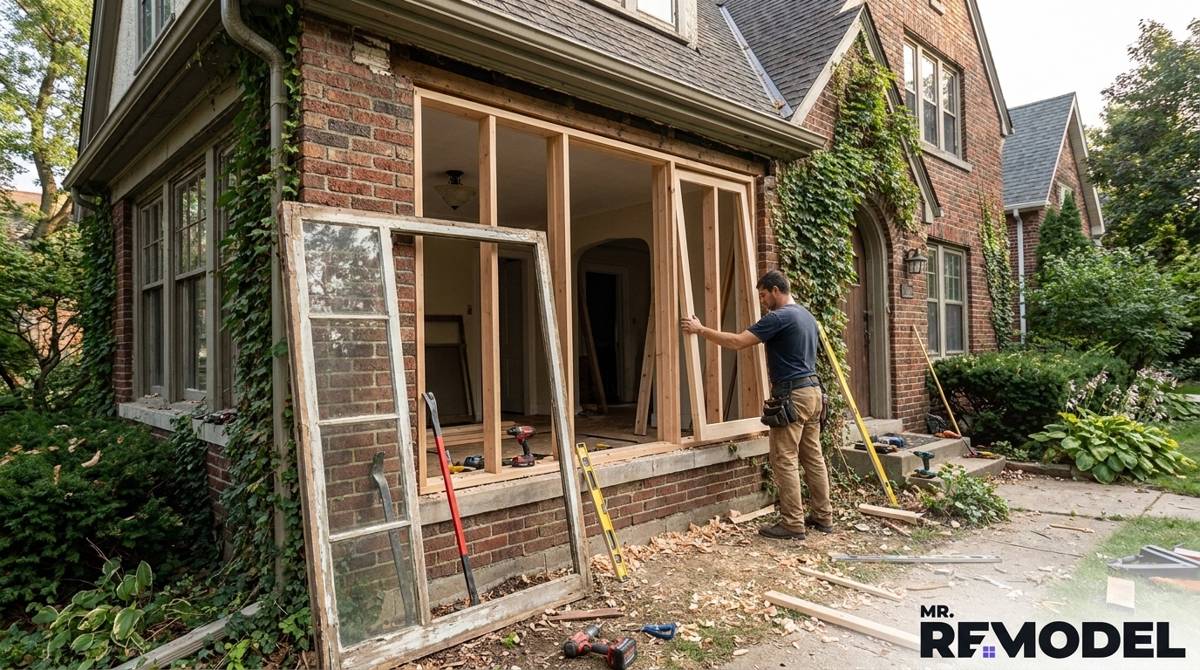
Table of Contents [hide]
Who This Is For:
Homeowners comparing contractors for one or more window openings that may require complete frame replacement.
Key Takeaways:
- Confirm Frame Condition: Require an inspection before selecting the replacement method.
- Compare Installation Methods: Understand full-frame and pocket replacement scopes.
- Define Repair Responsibility: Address concealed moisture, rot, or framing damage.
- Review Opening Details: Document flashing, insulation, sealing, and trim work.
- Plan Multiple Openings: Confirm consistent measurements, products, and installation practices.
Choosing window frame replacement contractors starts with determining which parts of the existing assembly need to be removed. A deteriorated or unsuitable frame may support a full-frame approach, while a sound frame may allow pocket replacement. The right method depends on the condition of each opening.
Based on Mr. Remodel data, the median window installation inquiry involved five windows. Multi-window projects require consistent assessments, measurements, specifications, and installation practices across every opening.
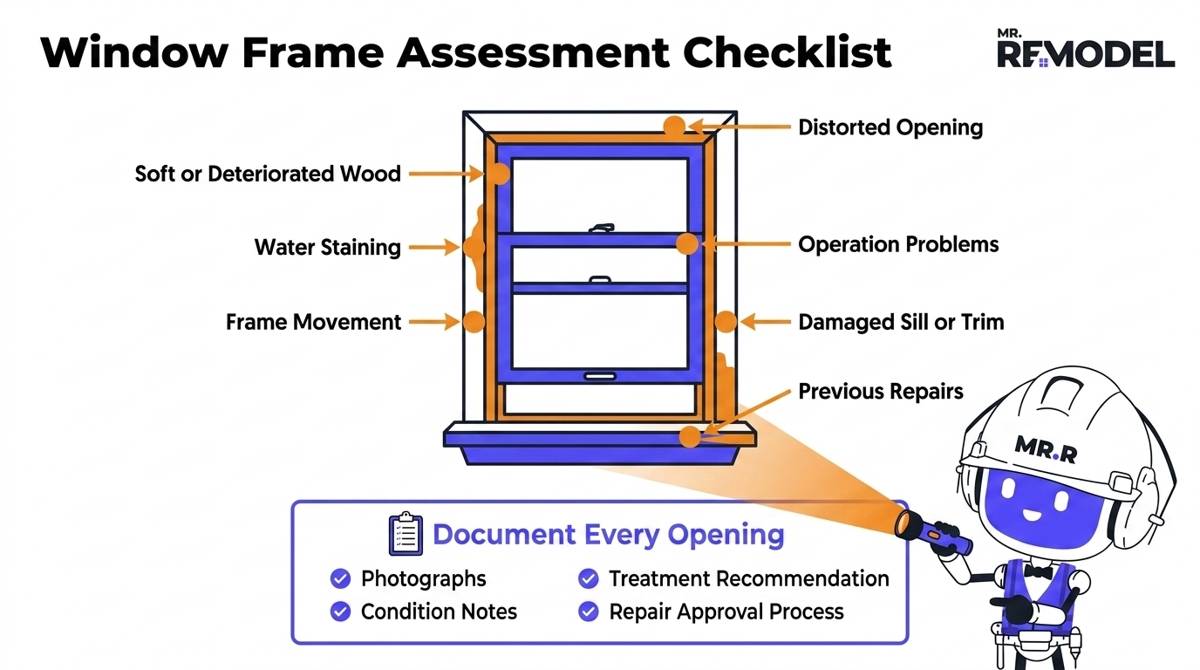
When Window Frames Need Replacement
A contractor should inspect the existing frame, sill, sash, trim, and surrounding materials before recommending complete frame replacement. Age or appearance alone does not establish the appropriate installation method.
Conditions That Require Closer Evaluation
Soft wood, visible deterioration, persistent operation problems, water staining, frame movement, and severely distorted openings may justify further inspection. The assessment should document the condition of each opening and explain which components will remain.
If the existing frame is suitable for reuse, the contractor should explain how it will be prepared for pocket replacement.
Frame Replacement vs Structural Repair
Replacing a window frame is not always the same as repairing the surrounding wall structure. Once the existing assembly is removed, the crew may discover damaged sheathing, framing, or other materials outside the original scope.
The contract should establish how additional repairs will be documented, priced, and approved. Proposals should avoid assuming extensive concealed damage before inspection or leaving all potential repair costs undefined.
Full-Frame Replacement vs Pocket Installation
Full-frame and pocket replacement involve different removal scopes. Contractors should identify the planned method for each opening instead of applying one approach throughout the home without an assessment.
Full-Frame Replacement
Full-frame replacement removes the existing window and its frame, exposing more of the rough opening. This method gives the crew access to inspect and prepare surrounding materials before installing the new assembly.
The Building America Solution Center’s guidance on complete window and frame replacement describes removing the existing unit, preparing the opening, and integrating the replacement with the wall assembly.
Full-frame work may require new interior casing, exterior trim, flashing, insulation, and finish restoration. These elements should appear in the written estimate.
Pocket Installation
Pocket replacement places a new window inside the retained frame. It generally disturbs less surrounding trim, but the frame must be sound, properly sized, and suitable for reuse.
Ask how the contractor determines frame suitability and how much glass area will remain. The proposal should also describe preparation of the retained frame, perimeter sealing, and trim transitions.
See Related: Pocket vs. Full-Frame Window Replacement
Inspecting and Preparing the Rough Opening
Full-frame removal allows the contractor to inspect the sill, framing, sheathing, and wall opening.
Document Conditions Before Repairs
Ask the crew to photograph unexpected deterioration before covering it. The contractor should explain whether minor preparation is included and which conditions require a written change order.
The opening should also be checked for dimensions, level, square, and suitability for the approved window. Final product measurements should be taken or verified by the company responsible for ordering and installation.
Prepare for the New Assembly
Preparation may involve removing debris, correcting limited irregularities, and creating a suitable surface for flashing and installation. The process depends on the wall construction, the window, and the manufacturer's instructions.
The Department of Energy’s Window Replacement Checklist emphasizes compliance with applicable codes, standards, manufacturer instructions, and installation specifications.
Comparing Window Frame Materials
Frame material affects appearance, maintenance, structural characteristics, and thermal performance. Common options include vinyl, fiberglass, wood, aluminum, and composite products.
Compare Complete Products
Material names alone do not establish quality or performance. Compare the manufacturer, product line, frame design, glass package, finish, hardware, and certified ratings.
The U.S. Department of Energy’s guidance on purchasing energy-efficient residential windows recommends considering climate, U-factor, and solar heat gain coefficient. Durability, maintenance, water resistance, sound control, and appearance may also affect product selection.
Match Materials to Project Conditions
Ask how the proposed frame relates to the home’s climate, exterior materials, interior finishes, maintenance preferences, and opening sizes. Different elevations may require separate specifications when appearance or exposure conditions vary.
The estimate should identify the interior and exterior finishes and explain whether factory-applied and field-applied finishes have different maintenance or warranty terms.
See Related: Window Frame and Material Options
Flashing, Insulation, and Weather Sealing
Window installation involves separate water-management, insulation, and air-sealing details. Caulk may be part of the assembly, but it is not a complete flashing system.
Integrate Flashing With the Wall
The contractor should explain how sill, side, and head flashing will be arranged and connected to the surrounding water-resistive barrier. The appropriate method depends on the opening, wall construction, window type, and manufacturer instructions.
The Building America Solution Center’s guide to fully flashed windows and doors describes properly lapped flashing that directs water outward.
Seal the Perimeter
Insulation fills the gap around the new frame, while air-sealing materials limit air movement through the perimeter. Ask which materials the installer will use and how the installation will avoid distorting the frame.
These details should be inspected before interior trim conceals the opening.
Ready to compare frame assessments and complete installation scopes? Get a free window frame replacement quote today.
Interior and Exterior Trim Work
Full-frame replacement often disturbs casing, stools, aprons, exterior trim, or siding transitions. The estimate should define what will be removed, retained, replaced, and finished.
Ask whether the proposal includes paint-ready surfaces or completed painting and staining. If replacement trim is included, confirm its material, profile, width, and finish.
Exterior responsibilities should also be clear. Sealant, trim, cladding transitions, and siding repairs may be completed by the window contractor, a subcontractor, or another trade.
Comparing Contractor Estimates and Warranties
Based on Mr. Remodel data, 52.94% of window installation inquiries involved at least five windows. For projects of this size, estimates should distinguish the method and finish requirements for every opening.
A complete comparison should cover:
- Window and frame specifications
- Final measurement and ordering responsibility
- Pocket or full-frame installation
- Rough-opening inspection and preparation
- Concealed-condition procedures
- Flashing, insulation, and air sealing
- Interior and exterior trim
- Painting, disposal, permits, and cleanup
- Product and workmanship warranties
Mr. Remodel data also shows that 27.07% of window installation inquiries involved at least 10 windows. Whole-home projects require enough crew capacity to maintain consistent workmanship while protecting occupied rooms and exposed openings.
Review Scheduling Separately
Based on Mr. Remodel data, 95.07% of window installation prospects wanted to begin within 30 days. Ask contractors to separate assessment, final measurement, ordering, delivery, installation, repairs, and finish work in the schedule.
Material availability and opening conditions may affect the sequence, so each stage should have a clearly identified status.
Compare Written Protections
The Federal Trade Commission recommends obtaining multiple written estimates describing the work, materials, expected completion date, and price.
Manufacturer and workmanship warranties should also be reviewed separately. Confirm their coverage periods, exclusions, labor provisions, registration requirements, and claim procedures.
See Related: Choosing a Window Replacement Contractor
FAQ About Window Frame Replacement Contractors
How do contractors determine whether a frame needs replacement?
Contractors inspect the frame, sill, operation, visible condition, dimensions, and surrounding materials. The assessment should explain whether the frame is suitable for reuse or should be removed.
What is the difference between full-frame and pocket replacement?
Full-frame replacement removes the existing window and frame, exposing more of the rough opening. Pocket replacement installs a new unit within a retained frame that has been assessed as suitable for reuse.
Does frame replacement include rough-opening repairs?
Not automatically. Minor preparation may be included, while concealed deterioration or structural repairs may require additional work. The contract should describe what is included and how changes receive approval.
Who replaces the interior and exterior trim?
Responsibility varies by proposal. Confirm who removes, replaces, finishes, paints, or stains the interior casing, exterior trim, siding transitions, and other disturbed materials.
How many window frames can be replaced at once?
Capacity depends on the crew, products, opening conditions, installation methods, and finish work. Based on Mr. Remodel data, 10 windows was the most frequently selected quantity, accounting for 26.65% of window installation inquiries.
Plan a Complete Window Frame Replacement Project
A clear project plan should connect the frame assessment, installation method, rough-opening preparation, materials, flashing, sealing, and trim work. Consistent documentation keeps every opening aligned with the approved scope.
Ready to have your window frames professionally assessed? Get your free, no-obligation window frame replacement quote today.