1-855-QUOTEMR

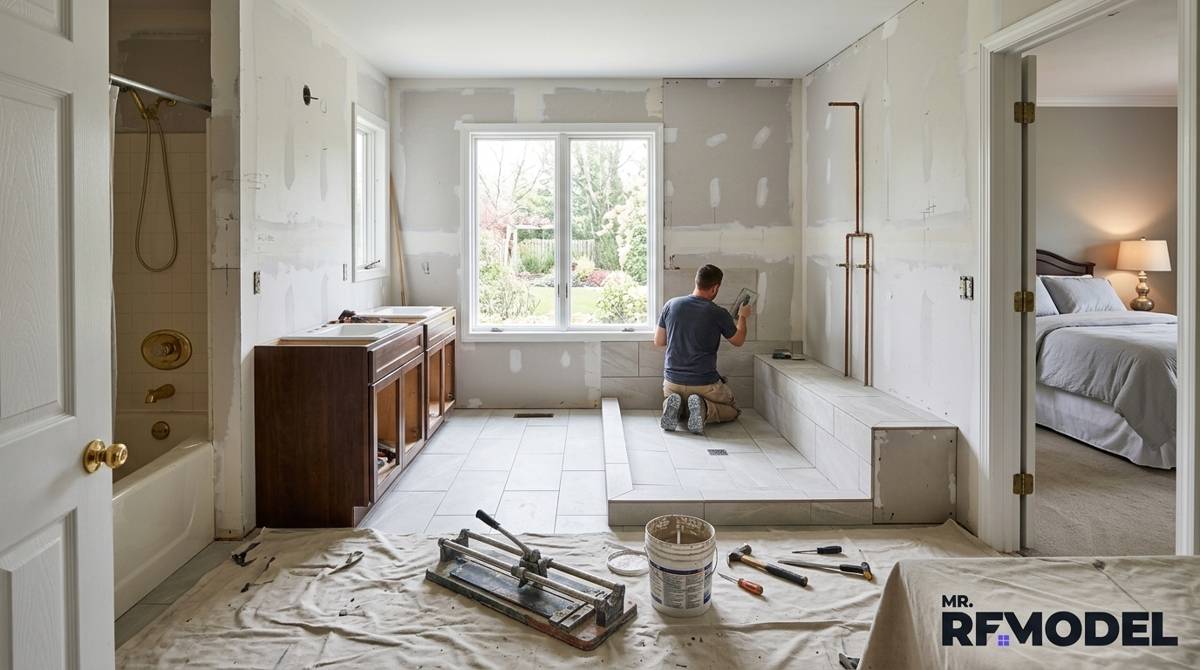
Table of Contents [hide]
Who This Is For
This guide is tailored for high-equity homeowners who want to transform an outdated master bathroom into a luxurious, functional retreat. If you need transparent financial benchmarks and project footprints to review contractor estimates confidently, this data analysis is for you.
Key Takeaways
- The Baseline Entry: A standard pull-and-replace master suite upgrade averages a fully burdened $15,154.50.
- The Premium Horizon: Altering a structural footprint or moving plumbing lines pushes regional project averages to $22,579.00.
- The Market Volume: Massive database counts show 33.56% of property owners choose full tear-downs over minor fixes.
- The Structural Step: Deep inspections of subfloor structures are required to address hidden moisture damage before installing heavy tile layers.
- The Spatial Flow: Federal standards outline crucial spatial parameters around fixtures and double vanities to ensure long-term accessibility.
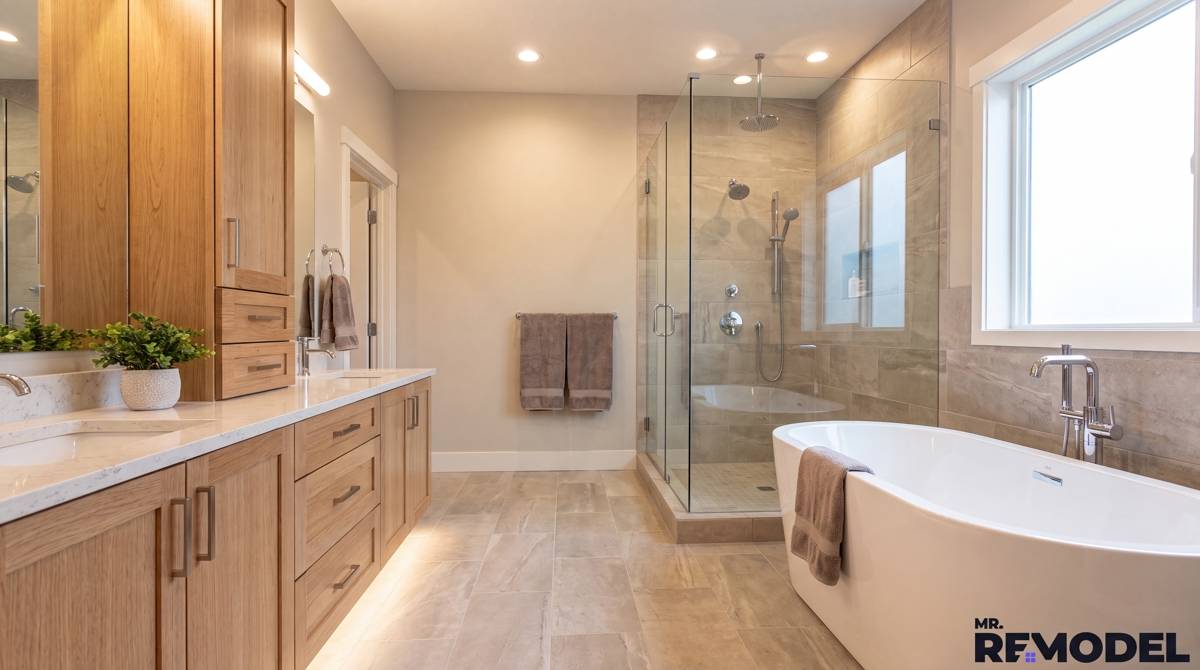
Flipping through modern interior design catalogs often makes a full-suite space transformation look effortless, but reality hits hard once you look at the actual construction invoice. If you are preparing a realistic budget for a master bathroom suite renovation, database metrics reveal a national average cost of $15,154.50 for a standard project.
This baseline investment changes quickly once you alter your original plumbing layout or upgrade to high-end finishes. Using a trusted technical matchmaking platform like Mr. Remodel ensures you instantly connect with elite local experts who provide accurate, site-specific pricing tailored to your home.
The 2026 Master Suite Remodeling Cost Spectrum
Understanding the different financial tiers of a bathroom renovation helps you spot unrealistic contractor bids. A true full-suite upgrade requires a deeper investment than basic cosmetic updates.
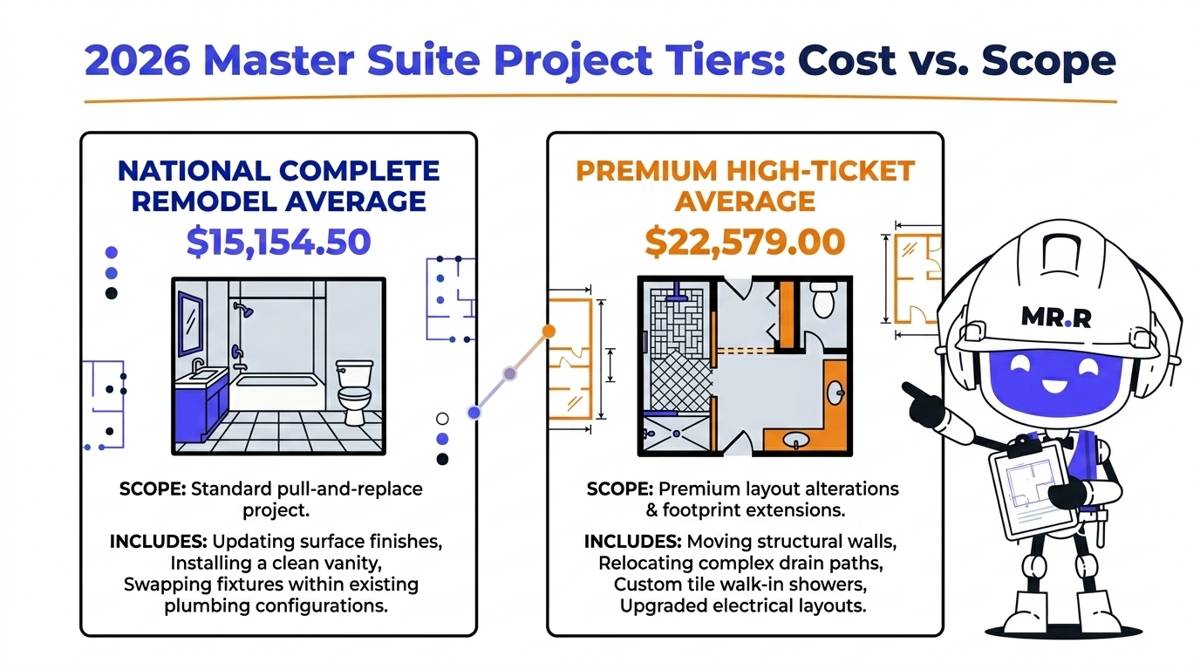
National Complete Remodel Average ($15,154.50)
This precise center benchmark covers a standard pull-and-replace project. Homeowners update old finishes, install a clean vanity, and swap out basic fixtures within existing plumbing lines.
Premium High-Ticket Average ($22,579.00)
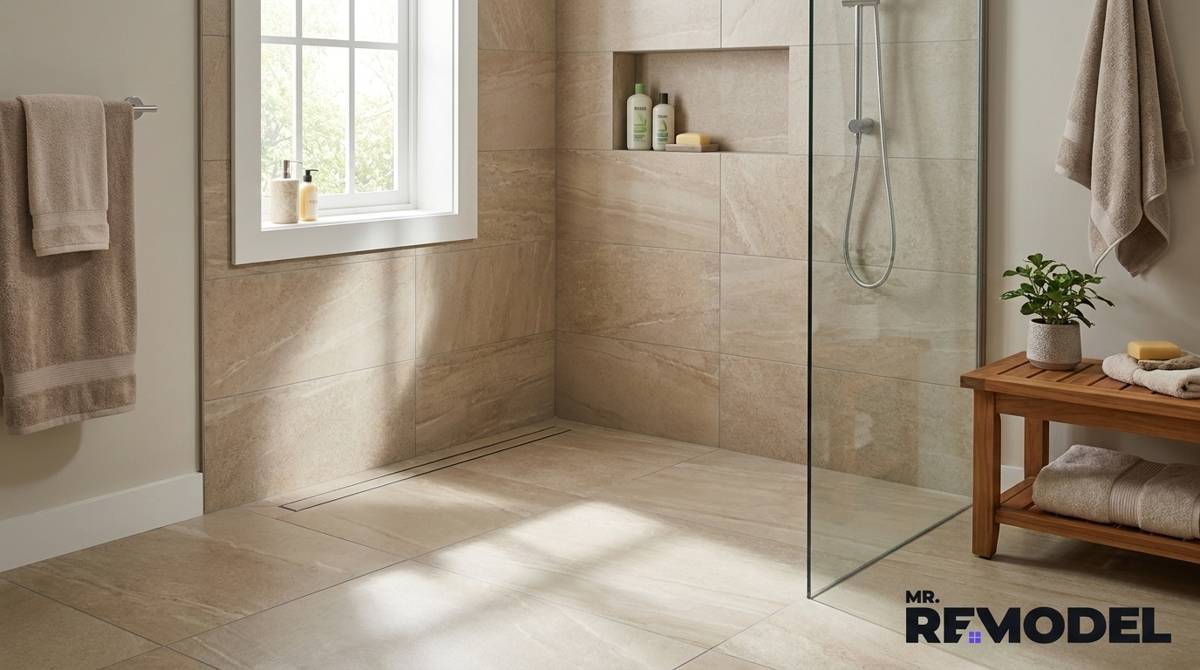
Moving structural walls or relocating complex drain paths pushes your requirements into this premium category. This tier includes large custom tile walk-in showers and upgraded electrical layouts.
According to the U.S. Department of Housing and Urban Development housing guidelines, a full-suite teardown requires checking the subfloor for hidden moisture damage. Resolving these issues early preserves home equity far better than superficial cosmetic patches.
See Related: Bathroom Remodeling Costs and Value: The Definitive Guide to Maximizing ROI
Pull-and-Replace vs. Footprint Extensions
Altering your original architectural footprint causes labor rates to jump rapidly. Moving structural lines or widening enclosures requires specialized engineering permits.
The 33% Demand Shift
Our national data index confirms that 33.56% of property owners opt for complete space transformations rather than simple patches. Modern homeowners prioritize comprehensive functionality.
The Plumbing and Framing Penalty
- Fixture Relocation: Moving a toilet stack or heavy drain line demands extensive subfloor work.
- Structural Framing: Adjusting load-bearing walls requires certified header installations.
- Upgraded Layouts: Expanding wet-area footprints triggers extra material costs.
Planning these changes carefully ensures your investment aligns with your household budget. Get your free, no-obligation quote now to coordinate with trusted local specialists.
See Related: Tub-to-Shower Conversion Options: 2026 Design and Cost Guide
Regional High-Capital Corridors and Structural Drivers
Connecticut homeowners face an average premium ticket of $22,579.00. This is driven by heavy consumer demand for built-in double vanities, luxury linear drains, and top-tier custom tile configurations.
Pennsylvania projects an average of $20,452.17 in costs due to older, historic housing stock. These properties require substantial subfloor remediation and joist reinforcement before installers can safely place heavy new materials.
California is our highest-volume zone. Projects here are heavily dictated by strict building codes and specific spatial layout compliance standards.
To ensure safe physical access, the United States Access Board outlines strict framing clearance parameters around double vanities and entry pathways.
Additionally, advanced building research from the Lawrence Berkeley National Laboratory demonstrates that expanding wet-area zones requires full-envelope vapor barriers. This specialty ventilation stops humidity from tracking into bedrooms.
Frequently Asked Questions
What is a pull-and-replace remodel?
This method involves replacing all old surface materials and fixtures while keeping the original layout and plumbing configuration exactly where they are.
Why does moving a toilet add so much cost?
Relocating a main toilet stack requires cutting into floor joists, altering subfloor drainage lines, and securing specialized municipal plumbing permits.
How do vapor barriers protect a master bedroom?
High-efficiency vapor barriers trap high humidity inside the wet-area envelope, preventing mold and moisture tracking from damaging adjoining walls.
Evaluate Your Renovation Bids Confidently
Approaching a full master suite renovation with accurate market metrics gives you immense leverage. Tracking database-derived trends allows you to filter out unrealistic contractor quotes and protect your hard-earned remodeling capital.
Submitting your specific layout details to our independent matching network links you smoothly with local providers of expert bathroom remodeling services. Get your free, no-obligation quote now to connect with vetted specialists in your ZIP code.