1-855-QUOTEMR

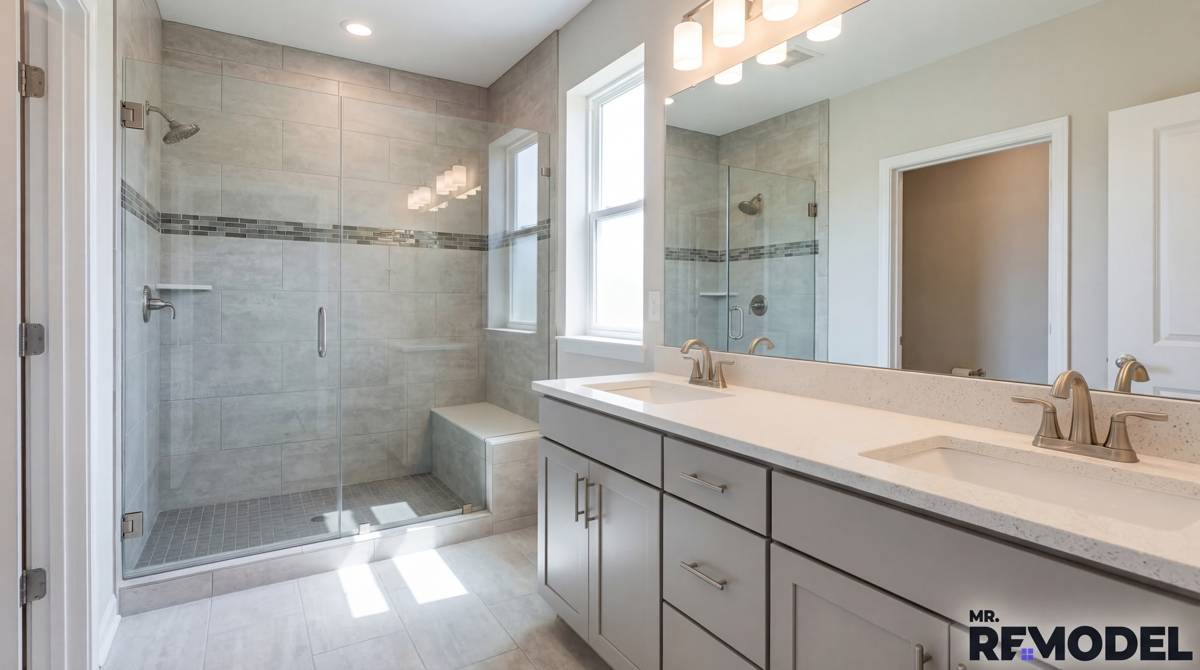
Table of Contents [hide]
Who This Is For
This guide is for homeowners planning a renovation who want to strike a balance between personal comfort and financial gain. It provides data-driven insights for sellers seeking to increase property value and long-term residents looking for smart investment baselines.
Key Takeaways
- Average ROI: A mid-range bathroom remodel typically yields a 60% to 70% return on investment (ROI).
- Investment Baseline: Recent 2026 market data shows an average initial project investment of approximately $16,249.
- Top Value Add: Bathtub-to-shower conversions are currently the highest-demand upgrade for modern homebuyers.
- Market Speed: Updated bathrooms significantly decrease a home's time-on-market during the resale process.
Deciding to renovate a bathroom is rarely just about aesthetics; it is a strategic financial move. According to the U.S. Census Bureau’s American Housing Survey, bathroom remodeling remains one of the most frequent and high-value home improvements in the United States.
For most homeowners, the primary question isn't whether it adds value, but exactly how much. Recent economic shifts have altered the math on home equity, making it crucial to consider current project costs versus projected resale gains.
How Much Does a Remodel Cost?
To understand how much value a bathroom remodel adds, you must first establish a realistic cost baseline. While national aggregators often use broad estimates, current project data provides a clearer picture of the initial layout required.
Based on internal data from Mr. Remodel, which tracked 45 recently completed projects through early 2026, the average customer investment for a bathroom transformation is $16,248.91. This represents a total tracked investment of over $731,200 across various project types.
Average Cost by Project Type
Understanding the specific type of renovation helps predict your eventual equity gains. Different upgrades carry different price tags and appeal to different buyer demographics.
Calculating the Added Resale Value
The standard recoup rate for a mid-range bathroom remodel typically ranges from 60% to 70%. When we apply these industry multipliers to the Mr. Remodel average investment baseline of $16,250, the math becomes clear.
A homeowner can expect their property's resale value to increase by approximately $9,750 to $11,375 immediately following the renovation. However, the Joint Center for Housing Studies of Harvard University notes that long-term equity growth often outpaces these immediate numbers as housing stock ages.
Factors That Influence Your Specific ROI
- Local Market Trends: In high-demand urban areas, the recoup rate can often exceed 80%.
- Finish Quality: Using durable, mid-range materials typically yields a better percentage return than ultra-luxury custom finishes.
- Functional Improvements: Fixing underlying plumbing or layout issues adds invisible value that prevents deal-breaking inspections.
Pro Tip: To maximize your budget, focus on the master suite, as it provides a higher return than guest powder rooms.
To obtain specific numbers for your home, platforms like Mr. Remodel can connect you with local, vetted contractors and provide you with free, no-obligation quotes tailored to your neighborhood's market trends.
Why the Bathtub-to-Shower Conversion is Winning
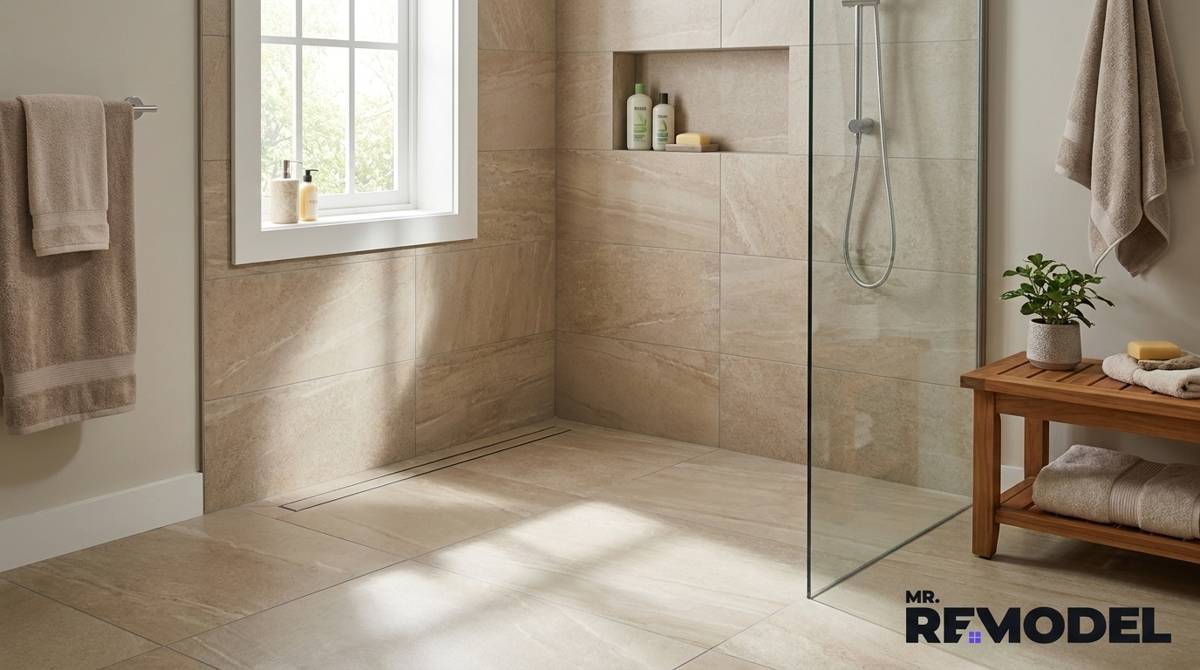
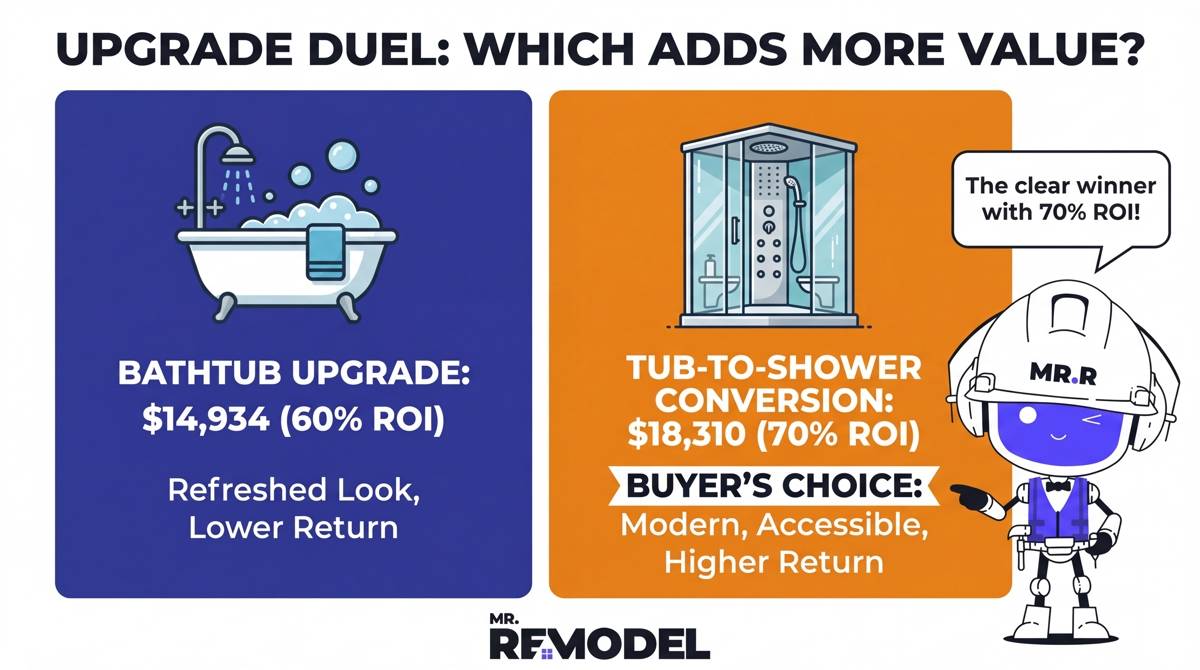
If you are looking for the gold standard of bathroom ROI in 2026, look no further than the bathtub-to-shower conversion. While this project carries a slightly higher average cost of $18,310.52, it addresses a major shift in buyer preferences.
Modern buyers, particularly those in the millennial and Gen X demographics, tend to prioritize large walk-in showers over traditional tub-shower combinations in their primary bathrooms. Data from HUD USER suggest that modernizing these spaces directly correlates with a decrease in time-on-market for sellers.
The Efficiency Factor
Upgrading fixtures isn't just about looks; it's about utility costs. The National Institute of Building Sciences emphasizes that low-flow showerheads and dual-flush toilets add long-term value through energy and water savings.
These green upgrades are increasingly attractive to buyers who are conscious of rising utility rates. Incorporating these into your shower conversion can push your ROI toward the higher end of the 70% spectrum.
Comparing Shower Upgrades vs. Full Remodels
Interestingly, a complete remodel often costs less on average ($15,154.50) than a specialized bathtub-to-shower conversion ($18,310.52). This is often due to the intensive plumbing and structural changes required to move drains and waterproof a new shower footprint.
Which Should You Choose?
- Choose a Shower Upgrade if your vanity and flooring are in good shape, but your bathing area looks dated.
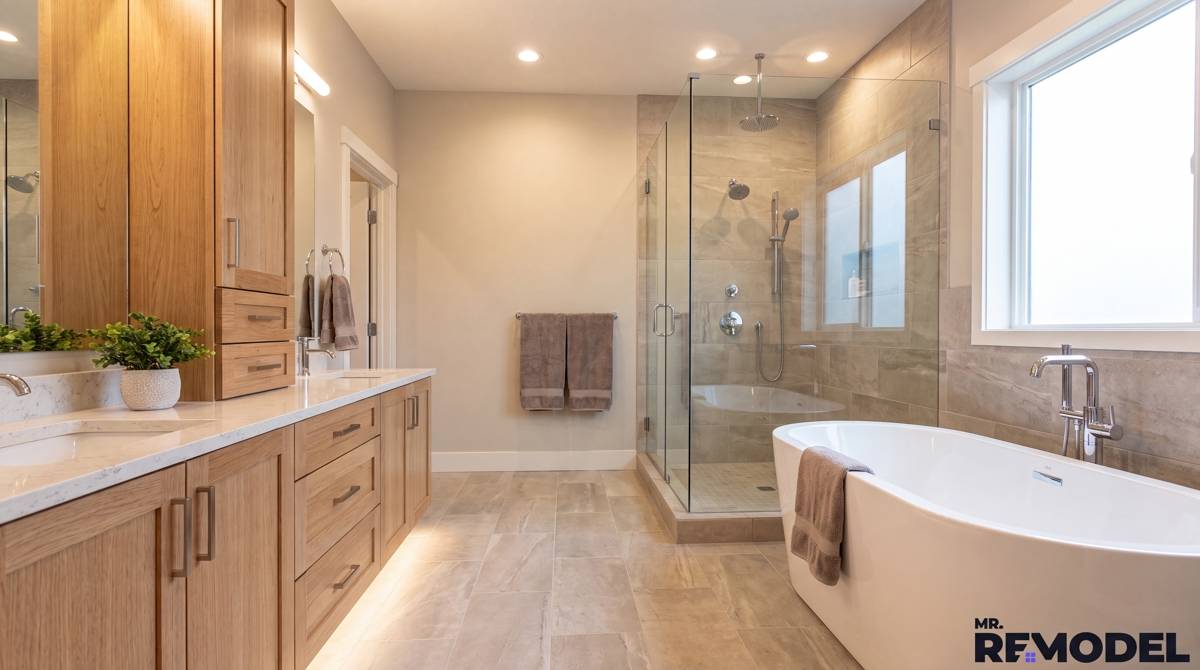
- Choose a Full Remodel if you need to update the entire aesthetic of the room to match a modern home style.
- Choose a Conversion if you want to target the premium buyer market and increase the "wow factor" of your primary suite.
The Invisible Benefits of a Remodel
Value isn't always measured in dollars at the closing table. There is a significant joy factor and functional benefit to a modern bathroom. Updated ventilation systems help prevent mold, while improved lighting enhances daily routines.
Furthermore, a remodel prevents deferred maintenance. By addressing small leaks or cracked grout now, you avoid massive repair bills later that could eat into your home's total equity.
Frequently Asked Questions
Does a bathroom remodel always add value?
Generally, yes. While you may not recoup 100% of the cost in immediate cash, the increase in home equity and the increased speed of sale make it a top-tier investment.
What is the most expensive part of a bathroom remodel?
Plumbing and labor typically account for the largest portion of the budget. Platforms like Mr. Remodel help by matching you with contractors who provide transparent breakdowns, so you aren't surprised by hidden costs.
Is a walk-in shower better for resale than a tub?
In primary bathrooms, yes. However, real estate experts recommend keeping at least one bathtub in the house to remain attractive to families with young children.
How long does a typical remodel take in 2026?
Most mid-range remodels take between two and three weeks. Mr. Remodel data shows that working with verified local professionals can streamline this timeline by ensuring all materials are on-site before work begins.
Can I do a bathroom remodel myself to save money?
While DIY can save on labor, mistakes in waterproofing or plumbing can be incredibly costly. Hiring a pro ensures the work is permitted and warranted, which is a major selling point for future buyers.
Investing in Your Home’s Future
A bathroom remodel is one of the most reliable ways to increase your home’s value. By focusing on high-impact projects, such as shower upgrades or conversions, you can expect a return of 60% to 70% on an average investment of $16,250.
Beyond the numbers, an updated bathroom offers better efficiency, lower utility costs, and a much faster path to a successful home sale.
Don't rely on national guesswork when it comes to your home's equity. Mr. Remodel takes the stress out of renovation by connecting you with top-rated local contractors in your area. Get a free, no-obligation quote here.