1-855-QUOTEMR

Table of Contents [hide]
Who This Is For:
This guide is for U.S. homeowners comparing companies for a multi-window full-frame replacement project. It explains how to evaluate opening preparation, flashing, sealing, trim restoration, estimates, scheduling, and warranties.
Key Takeaways:
- Confirm the Method: Ask why full-frame replacement is recommended for each opening and what the broader scope includes.
- Inspect the Opening: Require an assessment of the exposed framing and written documentation of conditions requiring additional work.
- Define Water Management: Include flashing, insulation, air sealing, drainage, and exterior sealant details in the estimate.
- Plan Multiple Windows: Review crew capacity, opening protection, project staging, room access, and daily cleanup.
- Compare Complete Estimates: Evaluate removal, repairs, trim, siding, warranties, exclusions, and change-order procedures.
Full-frame replacement removes the existing window and frame, exposing the rough opening for inspection and preparation. Its broader scope may involve flashing, air sealing, insulation, interior casing, exterior trim, siding, and repairs around the opening.
Based on Mr. Remodel data, installation accounted for 98.30% of detailed window inquiries, highlighting strong homeowner demand for complete replacement services. Choosing a full frame window replacement company requires comparing how each provider handles the window, opening, surrounding wall, finish work, and overall project coordination.
When Is Full-Frame Window Replacement Appropriate?
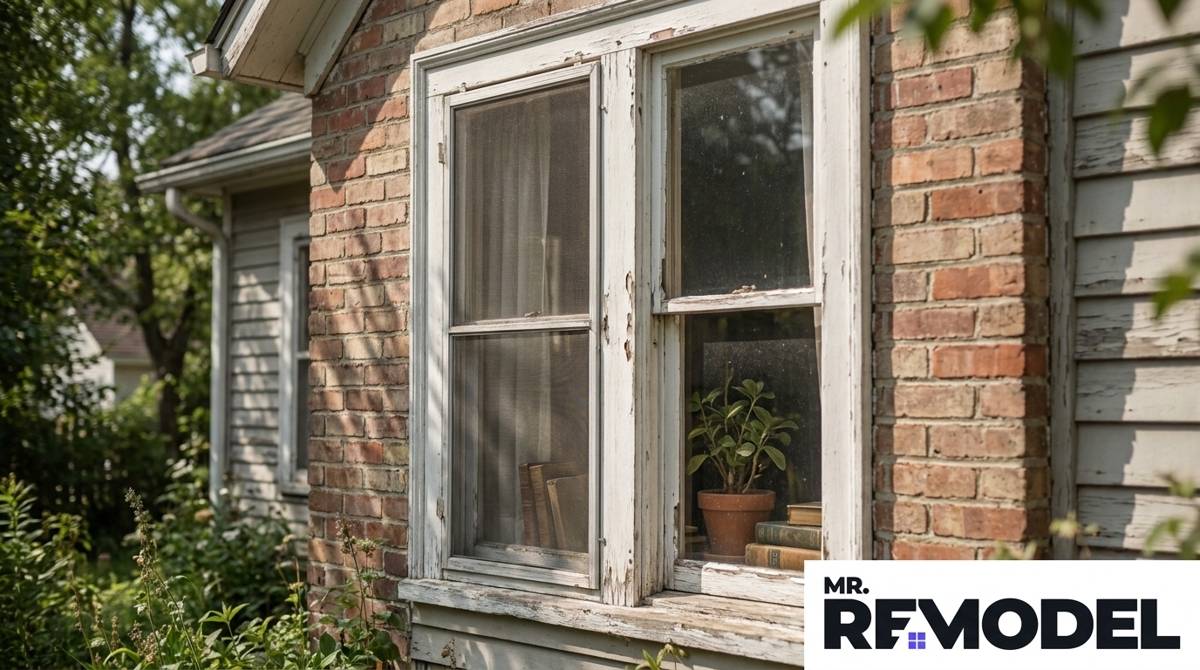
Full-frame replacement may be appropriate when the existing frame has deteriorated, opening conditions need further inspection, or the current installation lacks suitable flashing or air sealing. It may also be considered when window dimensions will change, retaining the old frame would significantly reduce visible glass, or renovation work has exposed the surrounding wall.
The method provides access to parts of the opening that remain concealed during pocket replacement. This allows the company to prepare the opening and connect the new window with the surrounding wall assembly.
Full-frame replacement is not automatically required for every older window. Ask the company to explain why it recommends this method for each opening and what will be removed, inspected, installed, repaired, and restored. The estimate should distinguish full-frame openings from windows receiving another installation method.
See Related: Pocket vs. Full-Frame Window Replacement
How to Compare Full Frame Window Replacement Companies
Use the same criteria for every company so that you can compare equivalent products, installation responsibilities, and finish work.
1. Review Relevant Projects
Ask for examples involving similar wall materials, siding, trim, and window quantities. Comparable projects can show how the company manages opening preparation, exterior restoration, and multiple crews or trades.
2. Confirm Final Measurements
Identify who measures each opening, approves the final order, and handles incorrectly sized or specified products. The window schedule should list the dimensions, manufacturer, product line, frame, glass, hardware, color, and operating style for every opening.
3. Define the Removal Work
The estimate should specify whether the company removes the sash, frame, interior casing, exterior trim, existing flashing, and affected siding. It should also identify which materials will be retained and protected.
4. Document Opening Preparation
Ask how the crew will inspect, clean, and prepare the exposed rough opening. The scope should explain how irregular dimensions, gaps, damaged materials, or unsuitable surfaces will be documented and addressed.
5. Review Water Management
Require a description of the sill or pan treatment, jamb flashing, head flashing, drainage path, exterior sealants, and connection with the wall’s water-management layer. Final details should follow the manufacturer’s instructions and suit the home’s construction.
6. Define Finish Restoration
Confirm who handles interior casing, exterior trim, siding, capping, painting, disposal, and cleanup. The proposal should distinguish completed finishes from surfaces left paint-ready.
7. Compare Warranty Coverage
Review the manufacturer warranty and the company’s workmanship warranty separately. Ask which parts of the opening, flashing, sealing, trim, and installation labor fall within the workmanship coverage.
See Related: Can You Replace Windows Without Removing Siding?
What Happens After the Existing Frame Is Removed?
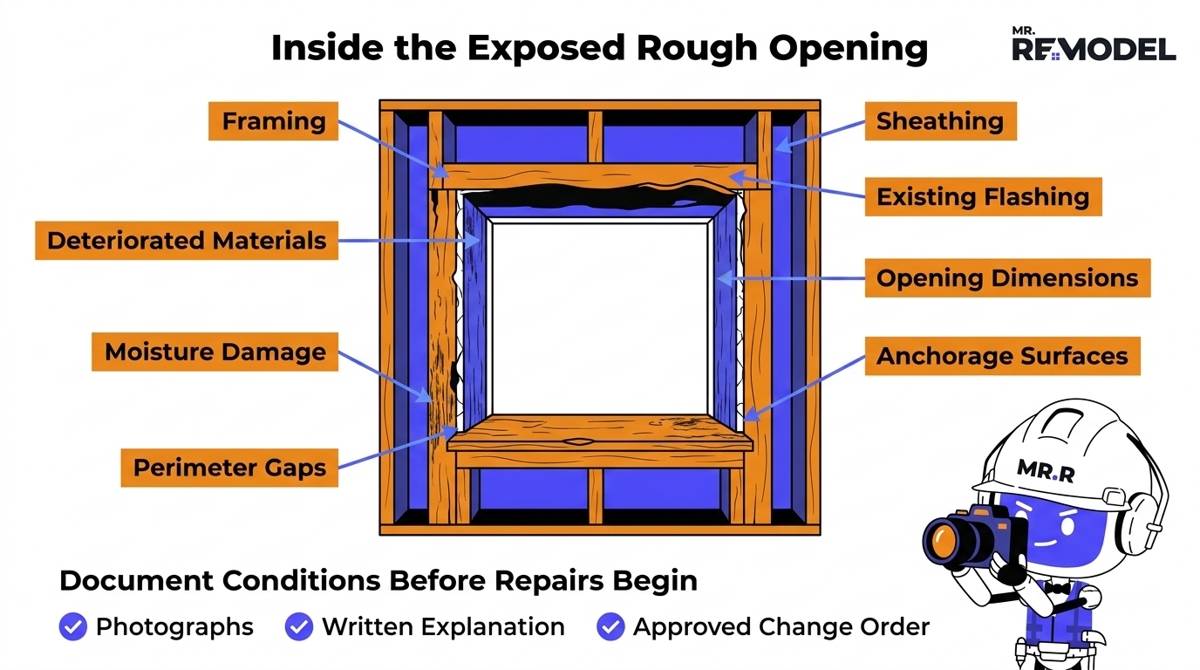
Removing the existing frame exposes areas of the rough opening that were previously concealed. The crew can examine the accessible framing, sheathing, flashing, dimensions, anchorage surfaces, and perimeter gaps.
The written scope should explain how the company responds to moisture staining, deteriorated wood, damaged sheathing, unsuitable framing, missing flashing, irregular dimensions, or surfaces requiring additional preparation.
Require photographs and a written explanation before extra repairs begin. The contract should describe how unforeseen work is priced, who approves it, and how it may affect the schedule. Any change to the original scope, materials, or price should be recorded through a written change order.
Compare Flashing, Air Sealing, and Trim Work
Full-frame replacement provides access for connecting the new window with the surrounding wall. A complete estimate should identify:
- Sill or pan treatment
- Jamb and head flashing
- Connection with the water-resistive barrier
- Window anchorage
- Rough-opening insulation
- Interior air sealing
- Exterior sealant joints
- Interior casing
- Exterior trim
- Siding restoration
- Paint-ready or completed finishes
The Building America Solution Center describes window flashing as a layered system that directs water down and out of the wall assembly. Exterior caulk may be part of the installation, but it does not replace the complete flashing and drainage scope.
Air sealing should be completed before trim covers the perimeter. Building America guidance on air sealing rough openings explains that fibrous insulation alone does not form an air barrier.
Ask the company to document the materials and responsibilities for each opening based on the manufacturer’s instructions and existing wall construction.
Plan a Multi-Window Full-Frame Project
Mr. Remodel data shows that the median installation inquiry involved five windows. Approximately 52.94% of inquiries included at least five windows, while 27.07% involved 10 or more.
Projects with several full-frame openings require coordination among removal, inspection, installation, flashing, trim, siding, and cleanup. Ask each company about:
- Crew size and on-site supervision
- Daily window-removal limits
- Temporary protection for exposed openings
- Product delivery and secure storage
- Access to occupied rooms
- Rough-opening inspection procedures
- Siding and trim coordination
- End-of-day cleanup
- Phased and whole-home installation options
Use an opening-by-opening schedule listing the product, installation method, removal scope, trim, siding, finish requirements, and inspection status. This gives the homeowner, installer, supplier, and other trades one consistent reference.
See Related: How Many Windows Should You Replace at Once?
Compare Estimates, Schedules, and Warranties
A complete estimate should identify the window manufacturer, product line, dimensions, installation method, removal scope, opening preparation, flashing, insulation, sealing, trim, siding restoration, disposal, and cleanup.
It should also address concealed conditions, change-order procedures, permit responsibility, product availability, manufacturing estimates, installation scheduling, payment terms, exclusions, and warranty coverage.
The Federal Trade Commission recommends obtaining written estimates that describe the work, materials, completion date, and price. Compare proposals based on the complete scope instead of the window price alone.
Mr. Remodel data shows that 95.07% of installation prospects wanted to begin within 30 days. Contacting companies early provides more time to coordinate measurements, product availability, permits, crew scheduling, and finish work.
FAQ About Full-Frame Window Replacement
What does full-frame window replacement include?
Full-frame replacement generally removes the existing window and frame, prepares the rough opening, and installs a complete new unit. The scope may also include flashing, insulation, air sealing, casing, exterior trim, siding work, disposal, cleanup, and finish restoration.
Is full-frame replacement better than pocket replacement?
The appropriate method depends on the existing frame, opening condition, desired glass area, and project goals. Full-frame replacement provides greater access around the opening, while pocket replacement retains more of the existing assembly.
Does full-frame replacement require removing siding?
Some installations require portions of the exterior trim or siding to be removed, while others allow more limited access. The estimate should identify which materials will be disturbed and who will restore them.
How many windows are commonly included in a replacement inquiry?
The median installation inquiry in Mr. Remodel data involved five windows. Ten windows was the most frequently selected quantity, representing 26.65% of installation inquiries.
What should a full-frame replacement estimate include?
The estimate should cover product specifications, removal, opening preparation, flashing, sealing, insulation, trim, siding, disposal, scheduling, payment terms, exclusions, change orders, and warranties. It should also explain how additional work discovered after removal will be documented and priced.
Choose a Company With a Complete Installation Plan
A strong full-frame replacement proposal explains why the method suits each opening and assigns responsibility for removal, opening preparation, flashing, sealing, trim, and restoration. For a multi-window project, it should also provide an organized plan for deliveries, room access, inspections, and cleanup.
Ready to move forward with your window project? Get your free, no-obligation full-frame window replacement quote today.