1-855-QUOTEMR

Table of Contents [hide]
Who This Is For:
This guide is for U.S. homeowners planning to replace several windows with double-hung units. It explains how to compare contractors based on installation methods, product specifications, measurements, sash operation, scheduling, project capacity, and warranty coverage.
Key Takeaways:
- Choose the Installation Method: Determine whether each opening requires pocket or full-frame replacement.
- Test Both Sashes: Confirm that the upper and lower sashes move smoothly, remain aligned, lock correctly, and seal when closed.
- Document Every Product: Record the manufacturer, product line, dimensions, frame, glass, ratings, hardware, screens, and grilles.
- Plan Multiple Openings: Compare crew capacity, delivery plans, daily installation targets, inspections, and cleanup procedures.
- Separate the Warranties: Review manufacturer coverage and installation workmanship coverage independently.
Double-hung windows depend on two movable sashes working together. Both must remain aligned, move through their intended range, lock correctly, and seal when closed. Choosing the right product is only one part of achieving consistent operation across several openings.
Based on Mr. Remodel data, installation accounted for 98.30% of detailed window inquiries, showing strong homeowner interest in complete replacement projects. Comparing double-hung window replacement contractors by product specifications, installation scope, quality checks, and project capacity can help you identify the strongest proposal.
Confirm That Double-Hung Windows Fit the Project
A double-hung window has an upper and lower sash that slide vertically. Depending on the window design, homeowners can open the lower sash, upper sash, or both to adjust ventilation.
Before requesting estimates, decide which rooms would benefit from two operable sashes. Consider opening dimensions, cleaning access, frame material, glass configuration, screens, grilles, locks, and hardware. Where applicable, confirm that bedroom windows satisfy local emergency escape and rescue opening requirements.
Ask contractors to quote the exact product configuration and provide its applicable NFRC ratings. NFRC window ratings can include U-factor, solar heat gain coefficient, visible transmittance, and air leakage. Compare ratings for the complete window being proposed because materials and configurations can differ among product lines.
Compare Pocket and Full-Frame Replacement
The installation method determines how much of the existing window assembly remains in place.
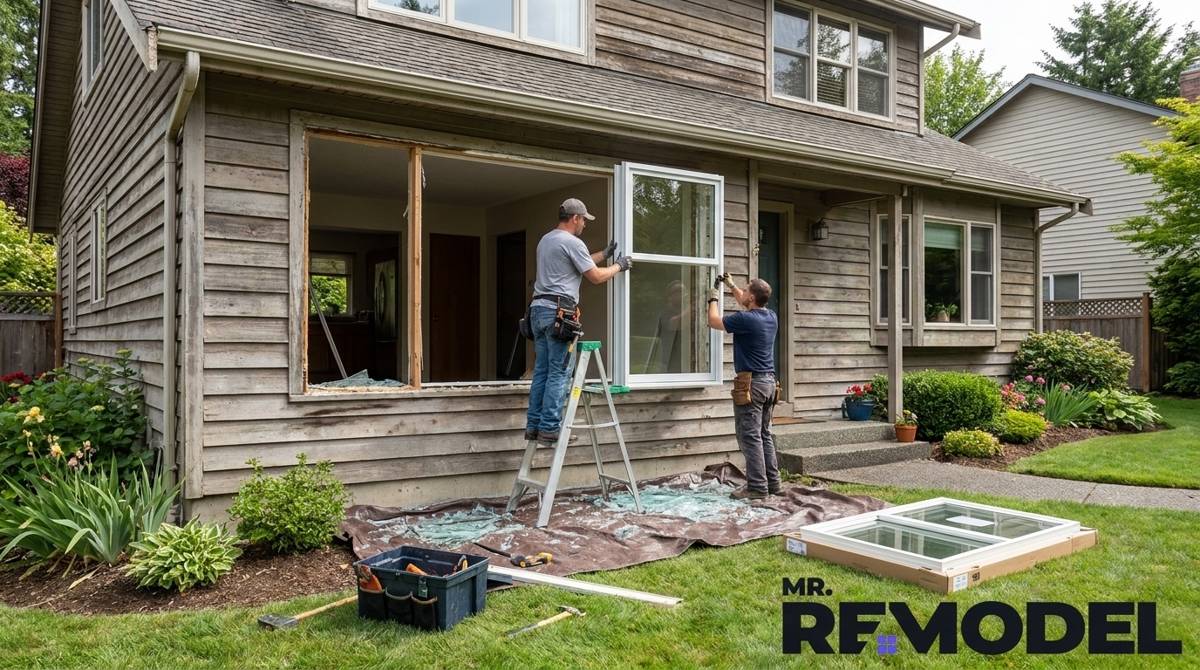
A pocket replacement fits the new window inside the retained frame. It can limit disturbance to surrounding trim and siding, but the existing frame must be suitable for reuse. Because the new unit sits within that frame, the method may also affect the amount of visible glass.
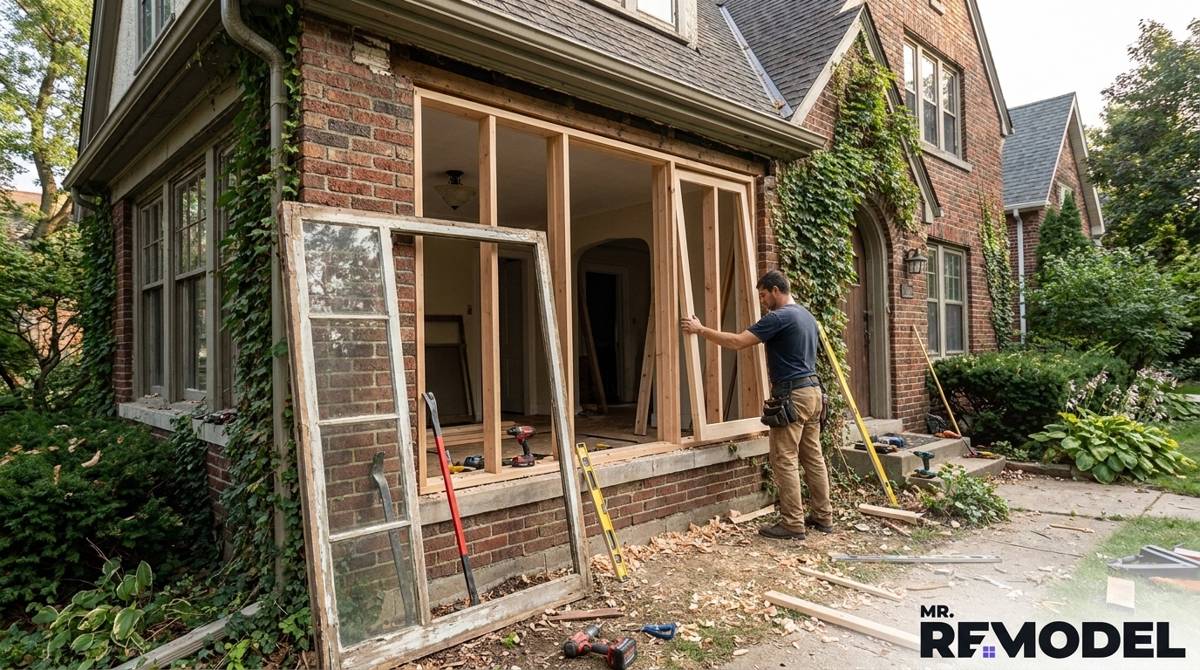
A full-frame replacement removes the existing window and frame. This exposes more of the rough opening for assessment, flashing, insulation, and sealing. It may require additional coordination involving interior trim, exterior finishes, or siding.
The appropriate method depends on the condition of each opening, the product instructions, and the project scope. Require every estimate to identify whether pocket or full-frame replacement applies to each window, along with the included flashing, sealing, trim, and finish work.
See Related: Pocket vs. Full-Frame Window Replacement
How to Compare Double-Hung Window Replacement Contractors
Use the same criteria for every contractor so that the proposals are easier to compare.
1. Review Relevant Installations
Ask for examples of projects involving multiple double-hung replacement windows. Relevant experience can demonstrate how the contractor coordinates product specifications, alignment, trim, and quality checks across several openings.
2. Confirm Final Measurements
Identify who performs and approves the final measurements before the order is submitted. The agreement should explain how incorrectly sized or incorrectly specified units will be handled.
3. Document the Exact Product
The proposal or window schedule should list the manufacturer, product line, dimensions, frame material, glass package, operating features, screens, grilles, locks, hardware, colors, and applicable ratings for each opening.
4. Compare Installation Methods
Require the contractor to identify pocket or full-frame installation by opening. The scope should explain which existing components remain and which will be removed or replaced.
5. Define the Finish Work
Confirm whether the estimate includes removal, disposal, flashing, insulation, perimeter sealing, interior trim, exterior trim, cleanup, and paint-ready surfaces. Clearly defining these responsibilities reduces uncertainty when comparing total prices.
6. Review Quality Checks
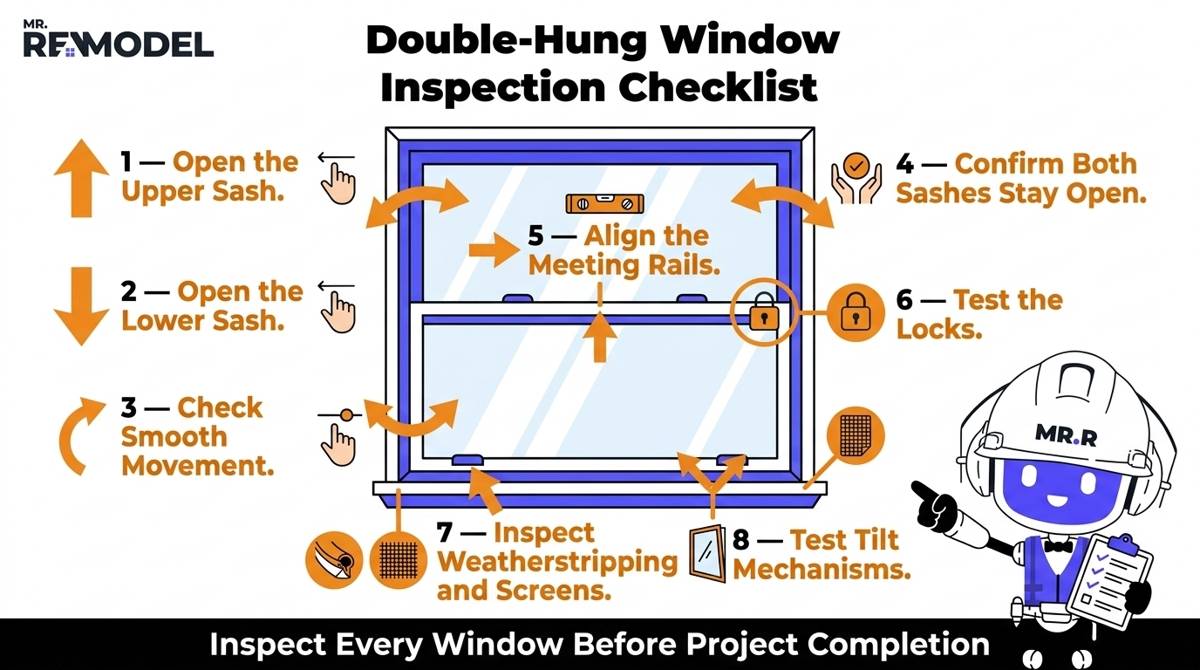
Ask how the crew will test both sashes, locks, screens, weatherstripping, and tilt mechanisms when included. Each installed window should receive an opening-by-opening inspection before the project is considered complete.
7. Separate Warranty Coverage
A manufacturer warranty generally addresses eligible product defects, while a workmanship warranty addresses covered installation concerns. Compare the coverage period, labor provisions, exclusions, transferability, and claim process for each warranty.
See Related: Choosing a Window Replacement Contractor
Check Sash Operation, Alignment, and Locking
Double-hung windows should be inspected while the installation crew still has access to the project. Open and close both sashes through their intended range, checking that each moves consistently and remains in position when opened.
The meeting rails should align, and the locks should engage without excessive force. If the product includes tilt-in sashes, test the release mechanisms and confirm that each sash returns securely to its operating position. Screens should fit correctly, weatherstripping should remain continuous, and frames should appear square and free from visible damage.
Record any operation, finish, or hardware concerns during the walkthrough. A difficult sash can involve product design, adjustment, hardware, or opening conditions, so the contractor should inspect the complete assembly before determining the appropriate correction.
Plan for a Multi-Window Project
Mr. Remodel data shows that the median installation inquiry involved five windows. Approximately 52.94% of inquiries included at least five windows, while 27.07% involved 10 or more. Ten windows was the most frequently selected quantity, accounting for 26.65% of installation inquiries.
Projects of this size require consistent ordering, handling, installation, and inspection. Ask each contractor about crew size, on-site supervision, delivery timing, secure storage, room access, daily installation targets, exposed-opening protection, and cleanup.
Use a window schedule that assigns each opening an identification number and lists its product, dimensions, installation method, glass package, finish details, and inspection status. This provides one reference for the homeowner, supplier, and installation crew.
You can also compare completing the work as one project with dividing it into phases. The contractor should explain how either approach affects ordering, product consistency, room access, and scheduling.
See Related: How Many Windows Should You Replace at Once?
Compare Estimates, Scheduling, and Warranties
A complete written estimate should identify:
- Window quantity and dimensions
- Manufacturer and product line
- Frame and glass specifications
- Pocket or full-frame installation
- Removal and disposal
- Flashing, insulation, and perimeter sealing
- Interior and exterior finish work
- Permit responsibility
- Product availability and manufacturing estimates
- Installation schedule
- Payment terms
- Change-order procedures
- Manufacturer and workmanship warranties
The Federal Trade Commission recommends comparing multiple written estimates that describe the work, materials, expected completion date, and price. Review proposals using equivalent product and service specifications rather than the total price alone.
Mr. Remodel data shows that 95.07% of installation prospects wanted to begin within 30 days. Starting contractor conversations early provides more time to compare product availability, measurement appointments, manufacturing estimates, and crew schedules.
FAQ About Double-Hung Window Replacement Contractors
Who should measure double-hung replacement windows?
The contractor or another party responsible for the final order should measure and approve every opening before the windows are ordered. The agreement should explain how sizing or specification errors will be handled.
Is pocket or full-frame replacement better for double-hung windows?
The appropriate method depends on the condition of the existing frame, the opening, and the desired finish. Each estimate should identify the installation method for every window and list the included flashing, sealing, trim, and finish work.
What ratings should I compare when choosing double-hung windows?
Compare NFRC ratings for the exact product and configuration included in the proposal. Relevant ratings may include U-factor, solar heat gain coefficient, visible transmittance, and air leakage.
How should double-hung windows be inspected after installation?
Both sashes should open, close, remain in position, and lock correctly. The walkthrough should also cover meeting-rail alignment, weatherstripping, screens, tilt mechanisms, glass, hardware, seals, and visible frame condition.
What warranties should a double-hung window contractor provide?
Review the manufacturer and workmanship warranties separately. Compare their coverage periods, labor provisions, exclusions, transferability, and claim procedures.
Choose a Contractor for Consistent Window Performance
A strong double-hung replacement proposal defines the exact product, assigns the appropriate installation method to each opening, and includes clear procedures for testing both sashes. For a multi-window project, the contractor should also provide an organized plan for deliveries, installation, inspection, and cleanup.
Ready to compare products and installation options for your home? Get your free quote from Mr. Remodel today.