1-855-QUOTEMR

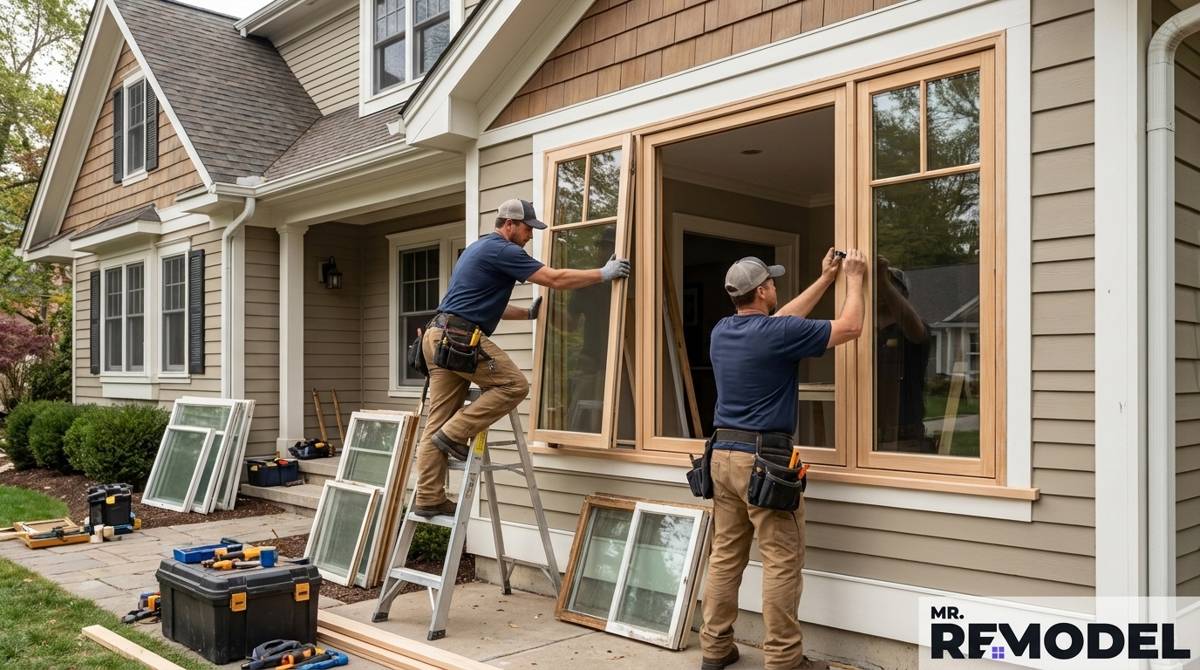
Table of Contents [hide]
Who This Is For:
This guide is for U.S. homeowners comparing contractors for custom-sized, specialty-shaped, or multi-window replacement projects. It explains how to evaluate measurements, estimates, installation capacity, warranties, and contractor accountability.
Key Takeaways
- Confirm who takes final measurements and pays if a custom unit is ordered incorrectly.
- Compare written estimates using identical product specifications, installation methods, and included services.
- Verify contractor licensing and insurance according to applicable state and local requirements.
- Ask how the contractor coordinates crews, deliveries, and opening protection for multi-window projects.
- Review manufacturer and workmanship warranties separately because they cover different problems.
Choosing custom window replacement contractors requires more than comparing prices. The contractor must accurately measure each opening, order the correct products, and coordinate an installation method suited to your home.
In the Mr. Remodel dataset, 98.30% of detailed window leads requested installation rather than repair, although the data does not identify which projects required custom windows. Mr. Remodel helps homeowners connect with independent local home-improvement professionals who can evaluate their project requirements.
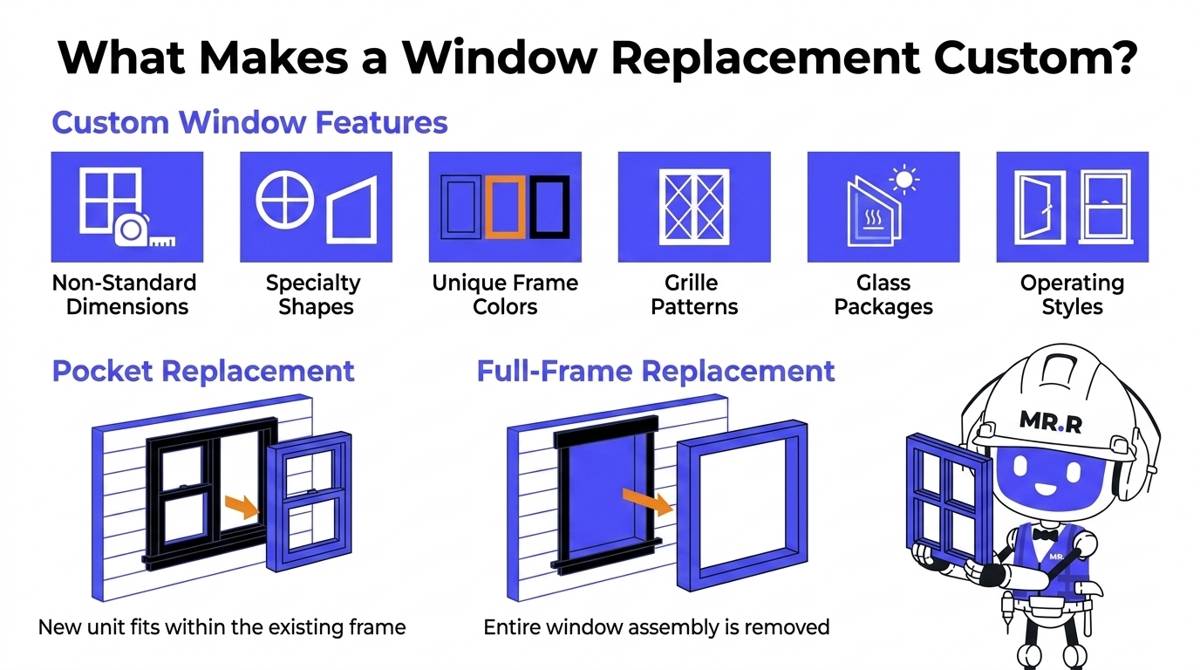
What Makes a Window Replacement Custom?
A replacement may be considered custom because of non-standard dimensions, specialty shapes, unique frame colors, grille patterns, glass packages, or operating styles. A project may also require full-frame installation or modifications to the existing opening.
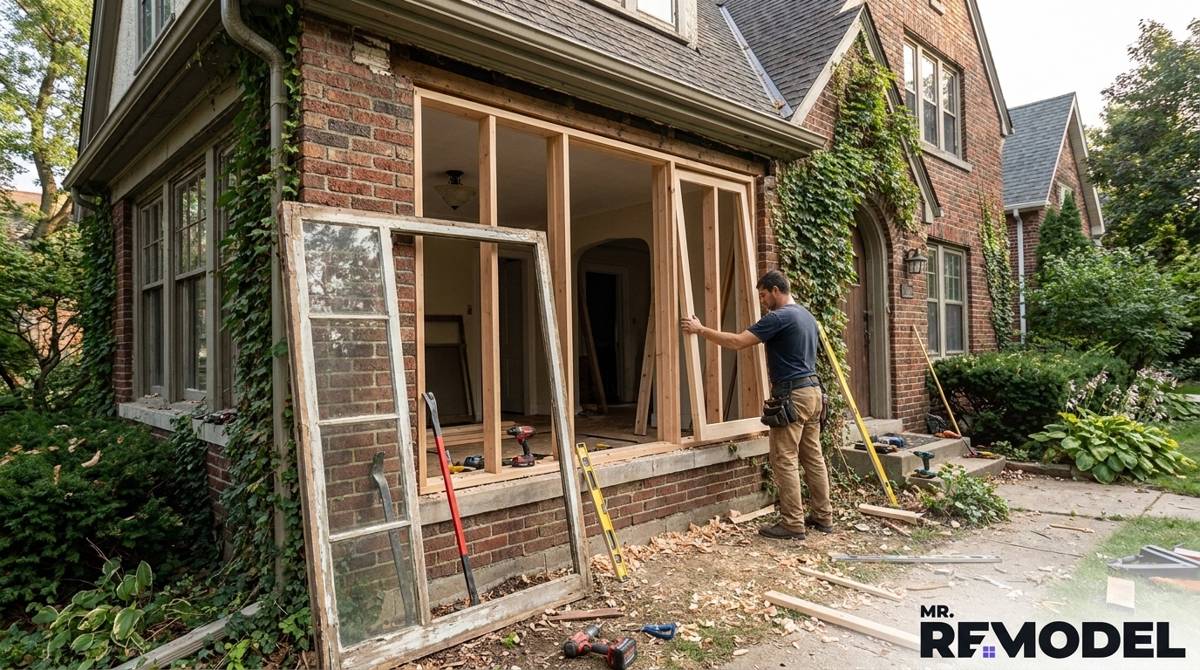
Ask whether the contractor supplies and installs the window or coordinates with a separate manufacturer. You should also know whether the proposal assumes a pocket replacement, which fits a new unit within an existing frame, or a full-frame replacement that removes the entire window assembly.
See Related: Window Replacement Options
How to Compare Custom Window Replacement Contractors
Use the same criteria for every company so you can compare equivalent proposals rather than relying on sales presentations.
1. Establish Measurement Responsibility
Ask who performs and approves the final measurements before ordering. The contract should state who is responsible for the cost and scheduling consequences if a unit is manufactured to incorrect dimensions.
2. Review Relevant Experience
Request examples of projects involving similar window sizes, shapes, materials, and installation methods. If your openings are out of square or surrounded by damaged siding or trim, ask how the contractor has handled comparable conditions.
3. Verify Credentials
Licensing requirements vary by state, county, and project scope. The Federal Trade Commission advises homeowners to verify licensing and insurance rather than relying solely on a contractor’s claims.
Ask for current proof of insurance and confirm the information with the appropriate issuing organization. Portfolio images and customer reviews do not replace credential verification.
4. Require a Detailed Written Scope
Every estimate should clearly identify:
- Manufacturer, product line, and window dimensions
- Frame, glass, and operating specifications
- Pocket or full-frame installation
- Removal and disposal of old materials
- Flashing, insulation, sealants, and opening protection
- Interior and exterior trim or finishing
- Permit responsibility, when applicable
- Payment schedule, exclusions, and change-order terms
Multiple written estimates are only useful when they describe comparable products and work. A lower price may exclude disposal, trim, finishing, or repairs discovered after removal.
5. Identify Who Performs the Work
Ask whether employees or subcontractors will install the windows and who will supervise the site. The proposal should identify the company responsible for correcting installation problems.
6. Separate Warranty Coverage
A manufacturer warranty generally addresses eligible product defects, while a workmanship warranty addresses covered installation problems. Review the coverage period, labor provisions, exclusions, transferability, and claim process for each warranty.
7. Discuss Change Orders
Removing an old window can expose concealed rot, damaged framing, or other conditions that were not visible during the initial estimate. Require written approval for changes in scope, materials, price, or schedule before additional work proceeds.
See Related: Choosing a Window Replacement Contractor
Can the Contractor Handle a Multi-Window Project?
In our dataset, the median replacement inquiry involved five windows. Based on form selections, 52.94% of inquiries involved at least five windows, while 27.07% involved 10 or more. These figures describe inquiry scope within the dataset, not national project-size averages.
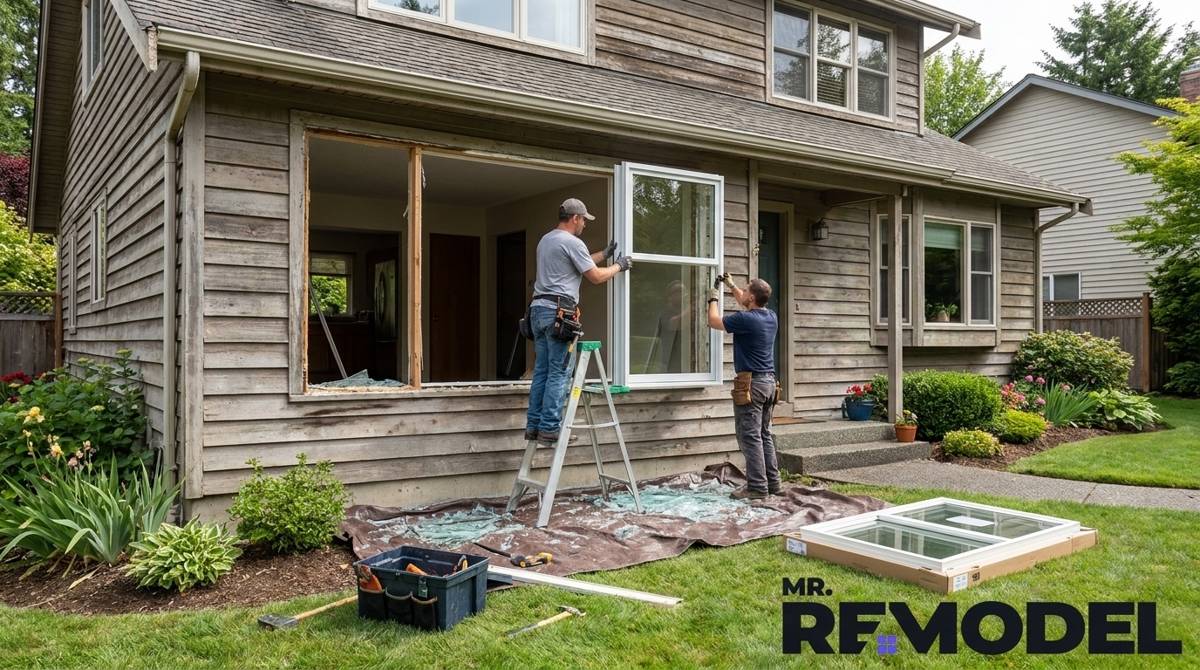
For a larger project, ask how the contractor plans deliveries, material storage, and room-by-room access. Confirm how many windows the crew removes each day, how exposed openings will be protected, and who handles cleanup and on-site supervision.
Ready to discuss your project? Compare window replacement options based on your location and approximate number of windows, and custom requirements.
Compare Timelines and Warranties
A responsible schedule separates consultation, final measurement, manufacturing, delivery, and installation. Custom products may not follow the same schedule as in-stock windows, so ask which dates are confirmed and which remain estimates.
Although 95.07% of replacement prospects in the provided dataset said they wanted to begin within 30 days, that reflects homeowner readiness. It does not mean custom windows were manufactured or installed within that period. Contacting contractors early gives you more time to compare availability and understand how damaged or delayed deliveries will be handled.
See Related: Window Replacement Timeline
Before signing, confirm who handles product warranty claims and who returns to correct covered installation defects.
Final Contractor Comparison Checklist
Before choosing a contractor, compare the exact window specifications, installation method, included finish work, manufacturing estimate, and installation schedule. Review permit responsibility, payment terms, exclusions, change-order procedures, and both types of warranty coverage.
For pre-1978 homes, ask whether federal or state lead-safe requirements apply. The Environmental Protection Agency identifies window replacement as work that can disturb lead-based paint and advises homeowners to use appropriately certified contractors when its rule applies.
FAQ About Custom Window Replacement Contractors
How many written estimates should I request?
Request multiple written estimates so you can compare equivalent products, installation methods, and responsibilities. The FTC recommends obtaining multiple estimates and carefully reviewing the proposed work, materials, price, and completion terms.
Who should measure custom replacement windows?
The contractor or other party accepting responsibility for the final order should perform or approve the measurements. Your contract should explain who pays for manufacturing or ordering errors.
Do custom replacement windows require permits?
Permit and inspection requirements depend on the jurisdiction and project scope. Confirm the requirements and responsible party with your local authority before work begins.
Choose a Contractor Based on Scope and Accountability
The right comparison starts with three questions: who owns the final measurements, what the written scope includes, and who remains accountable for the installation. Evaluate those details alongside credentials, scheduling capacity, and warranty coverage before signing a contract.
Mr. Remodel is a free service that connects homeowners with independent local home-improvement professionals. Ready to compare providers for your project? Get your free, no-obligation quote now.