1-855-QUOTEMR

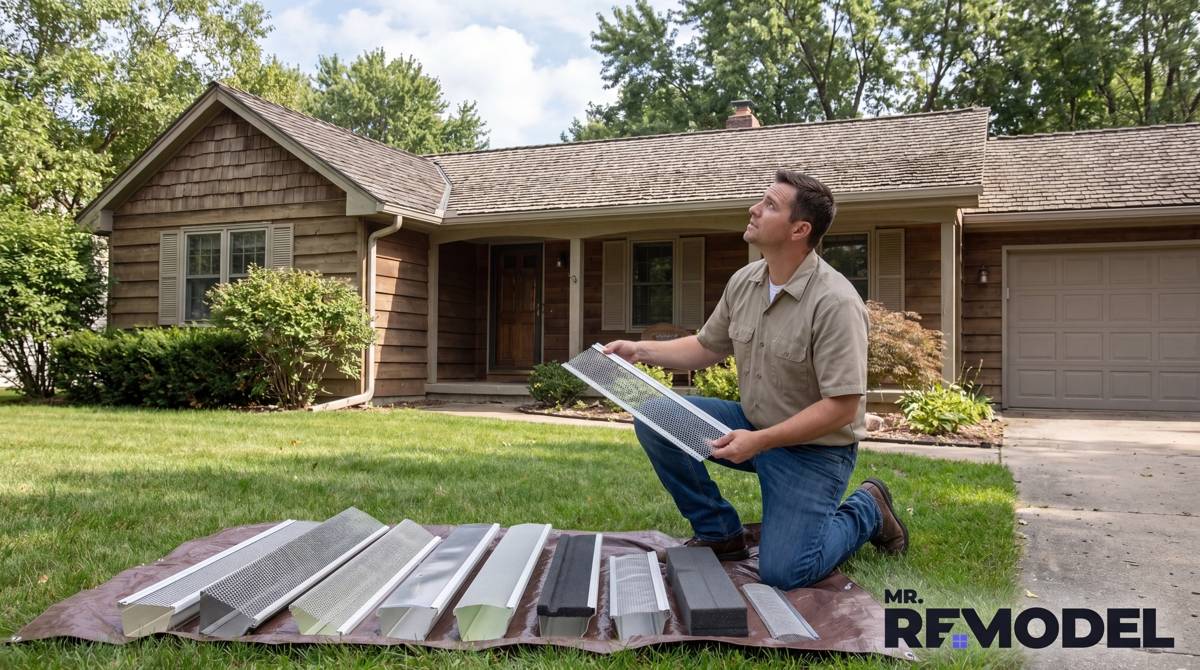
Table of Contents [hide]
Who This Is For
This guide is designed for homeowners evaluating high-ticket exterior upgrades. It helps those weighing upfront capital against long-term performance before hiring a contractor. If you need to stop dangerous ladder work or protect your foundation, this comparison provides the financial and logistical data you need.
Key Takeaways
- Financial Break-Even: Most premium gutter guard systems reach a financial break-even point within 5 to 10 years by eliminating professional cleaning fees.
- Property Value Realities: While guards protect structural integrity, they typically offer a marginal 0% to 10% direct return on property resale value.
- Regional Performance: Your local environment, such as the wildfire-prone West or hurricane-heavy South, should dictate the material and style of guard you select.
- The Warranty Trap: Attempting to DIY install premium reverse curve systems often voids 20-year manufacturer warranties and risks roof damage.
- Maintenance reduction: High-quality micro-mesh systems can reduce gutter cleaning frequency by over 70%, though no system is entirely maintenance-free.
Cleaning gutters is more than a weekend chore. It is a significant financial burden that costs the average homeowner between $300 and $600 annually in professional fees. For many, Mr. Remodel data suggests that moving toward a permanent solution is the only way to avoid these recurring costs.
Investing in the right protection requires understanding the 2026 market. While standard screen and mesh guards currently hold a 41% market share, specialized options like micro-mesh are growing rapidly. This guide breaks down the five primary types to ensure your investment lasts for decades.
Micro-Mesh Gutter Guards: The Gold Standard
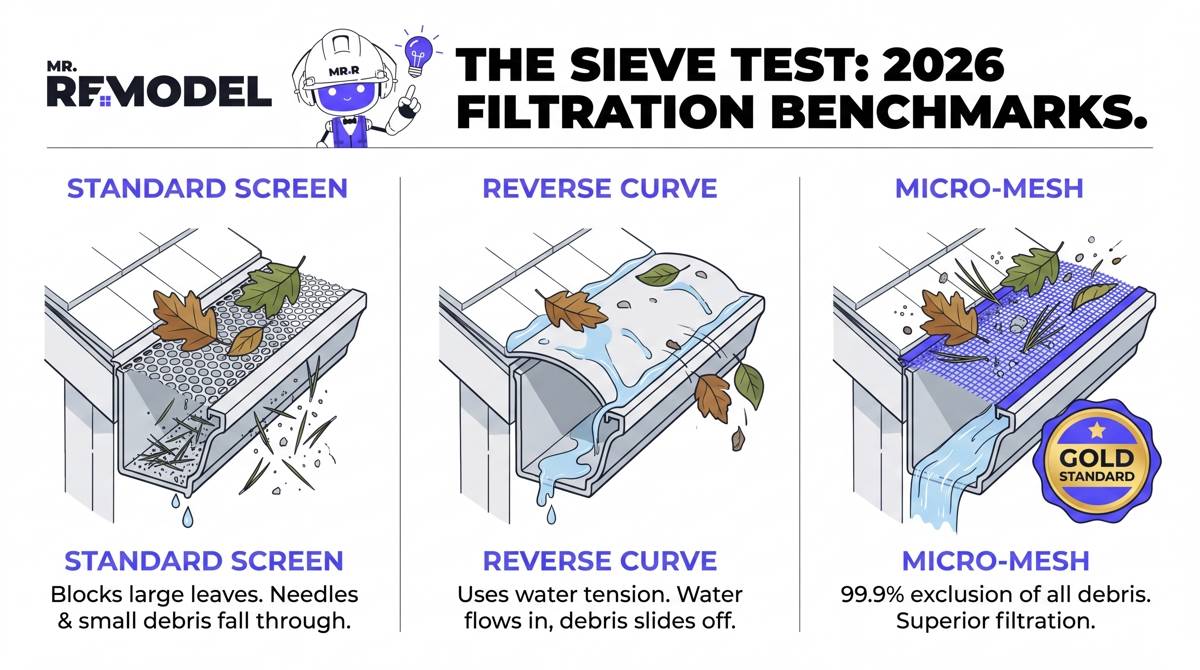
Micro-mesh is currently the fastest-growing segment in the industry, accelerating at a 4.64% CAGR. These systems use surgical-grade stainless steel with holes so small they block even fine sand and pine needles. This makes them ideal for homes in the Northeast or Pacific Northwest.
Installed Costs and Longevity
Micro-mesh commands a higher price point, typically ranging from $8 to $30 per linear foot when professionally installed. While the upfront cost is higher, these systems boast a 20 to 30-year lifespan. This longevity is why they are often considered a permanent home upgrade.
Pros and Cons
The primary benefit is near-total debris exclusion. However, in regions with heavy oak catkins, the mesh can occasionally require a quick surface brushing. Despite this, the reduction in internal gutter sludge is unmatched by any other category.
See Related: Gutter Guard Cost in 2026: Are They Worth It Or A Waste?
Reverse Curve (Surface Tension) Systems
Reverse curve guards use the principle of water tension. Water follows the curve into the gutter, while leaves and debris fall off the edge. These are heavy-duty systems usually made of aluminum or copper.
The Professional Installation Requirement
You cannot effectively DIY a reverse curve system. These guards must be integrated with your roof’s pitch to function. If the angle is off by even a few degrees, water will overshoot the gutter entirely. This creates waterfalls that can erode your landscaping.
The Warranty and Labor Factor
One critical factor in 2026 is the warranty trap. Attempting a DIY installation on these premium systems automatically voids the manufacturer's 20-year warranty. Furthermore, homes with a steep roof pitch (8:12 or greater) face a mandatory 15% to 25% steep-slope labor upcharge.
See Related: Are Gutter Guards Worth It? 2026 Costs, ROI, and Maintenance Realities
Standard Metal and Plastic Screens
Standard screens are the most common type of guard found on residential homes today. They are typically made of expanded metal or high-impact plastic. These systems are budget-friendly and serve as a basic barrier against large leaves.
Performance in Low-Debris Areas
If you live in a region with only a few deciduous trees, a standard screen might be sufficient. They are easy to install and replace. However, they often struggle with smaller debris. Seeds and pine needles can easily become wedged in the openings.
Why Fine Debris Bypasses These Systems
Over time, small particles build up inside the gutter despite the screens. This leads to a common frustration for homeowners. While the large leaves are gone, the gutters still need to be flushed out periodically to prevent clogs.
See Related: Clogged Gutters: When Cleaning Isn't Enough
Foam Gutter Inserts
Foam inserts are large blocks of porous polyurethane that sit directly inside the gutter trough. They are designed to let water soak through while keeping debris on top. They are the most affordable entry point for many homeowners.
2026 Pricing for Foam
Foam inserts offer a very low barrier to entry, often costing only $2 to $4 per linear foot. This makes them attractive for temporary fixes or for homeowners on a strict budget. You can often outfit an entire home for under $500.
Long-Term Maintenance Concerns
The downside to foam is its lifespan. In the South, which holds a 34.84% market share due to heavy rain and humidity, foam can trap organic matter. This can lead to mold growth or the foam becoming heavy and sagging over time.
Brush Gutter Guards
Brush guards look like giant pipe cleaners that sit inside your gutters. The bristles point upward to catch leaves while allowing water to flow underneath. They are incredibly simple to install and require no specialized tools.
Best Use Cases
These are excellent for preventing birds from nesting in your gutters. They also work well in environments with large, flat leaves. However, like foam and screens, they are not effective against fine needles or oak tassels.
Financial Breakdown: 2026 Installation Costs
To understand the scope of this project, we must look at the total investment. Most American homes require approximately 200 linear feet of gutter protection. The following table illustrates the expected professional installation costs for 2026.
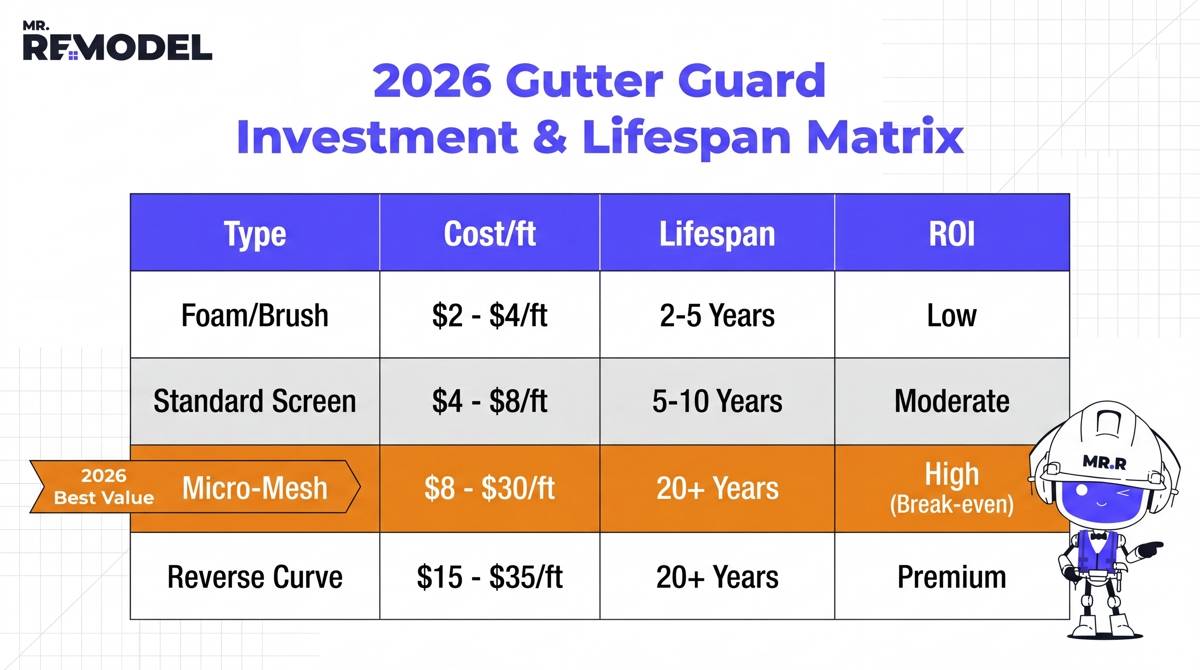
While the costs for micro-mesh and reverse curve are high, they are the only types that offer a true 5-to-10-year break-even point. If you plan on staying in your home for more than a decade, the premium systems are mathematically superior.
Regional Drivers: Wildfires and Hurricanes
In 2026, the choice of gutter guard is increasingly driven by climate safety. In the Western United States, market growth is hitting a 5.34 % CAGR due to wildfire mitigation efforts. Authorities like Fire Safe Marin emphasize that metal gutters and heavy-duty guards are essential.
Wildfire Defense in the West
Combustible debris in gutters exposes roof edges to fire during ember storms. Non-combustible metal guards, specifically micro-mesh, prevent this kind of kindling from accumulating. Organizations like Berkeley FireSafe highlight this as a key step in home hardening.
Hurricane Resilience in the South
In the South, the focus is on water volume. Systems must be able to handle the massive downpours associated with tropical storms. If a guard cannot process high-velocity water, it is essentially useless during a storm.
See Related: Storm Damage: Repair or Replace Decision Guide
Why Professional Installation Matters
It is tempting to look at a DIY material cost of $200 to $1,000 and think the project is simple. However, the complexity of the roofline and the height of the gutters make this a high-risk task. A professional ensures that your fascia boards are healthy before installation.
When you invest in your roofing and exteriors, you are protecting the foundation of your home. Professionals check for hardware fatigue and ensure the gutter is pitched correctly. If the gutter itself is failing, adding a guard will not solve your problems.
A professional gutter replacement or guard installation also protects your roof warranty. Many modern shingles require specific edge treatments that DIYers often overlook. According to the UC Agriculture and Natural Resources, proper installation is the only way to ensure both drainage and fire safety.
Research Methodology
This 2026 guide is based on a comprehensive analysis of 4,614 consumer inquiries from our proprietary dataset. We have combined these behavioral markers with 2026 industry-standard pricing models for residential homes. Our cost estimates are based on a standard 200-linear-foot home to provide an accurate financial anchor for your project.
Frequently Asked Questions
Do gutter guards prevent all cleaning?
No system is 100% maintenance-free. While guards stop internal clogs, you may still need to blow off surface debris once a year. However, they eliminate the dangerous, sludge-filled cleaning that causes most ladder accidents.
Will gutter guards work on steep roofs?
Yes, but they require professional calibration. Steep roofs cause water to move at higher speeds. You will likely need a system with a higher flow rate capacity, such as a specialized micro-mesh or a reverse curve with a wide entry.
How do I know if my gutters need to be replaced first?
If you see sagging, rust spots, or water marks on your fascia boards, the gutters are likely compromised. Adding guards to a failing gutter is a poor investment. A contractor can tell you if a full replacement is necessary.
Are metal guards better than plastic?
In almost all cases, yes. Metal guards, especially stainless steel and aluminum, resist UV damage and temperature fluctuations. They are also non-combustible, which is a requirement in many fire-prone regions.
How can Mr. Remodel help me choose?
Services like Mr. Remodel help by matching you with vetted contractors who understand local climate challenges. They ensure you receive multiple bids so you can find a fair labor rate and the right material for your specific tree canopy.
Making the Right Investment for 2026
Choosing between mesh, foam, screen, and reverse curve guards depends on your budget and your environment. While foam and screens offer immediate relief for a low cost, they lack the longevity of premium systems. For most homeowners, micro-mesh provides the best balance of exclusion and value.
Remember that the goal is to protect your home's foundation and your own safety. By eliminating the need for bi-annual ladder climbs, you are making a long-term investment in your well-being. Don't wait for the next heavy storm to find out your gutters are failing.
Protect your property by consulting with an expert platform like Mr. Remodel. Get free, no-obligation quotes and connect with local, vetted contractors who specialize in high-performance gutter systems.