1-855-QUOTEMR


Table of Contents [hide]
Who This Is For
This guide is for homeowners who recently received a window replacement quote of $16,500 or more, expecting to pay closer to $6,000. If you are skeptical that a contractor is trying to sell you a premium service you do not need, this article is your reality check. It explains the structural conditions where a full tear-out is necessary, not optional, for a safe, watertight home.
Key Takeaways
- Rot is Non-Negotiable: If the frame of your window has soft wood or water damage, you cannot install an insert. You must remove the entire unit to repair the rough opening and prevent structural failure.
- Siding Replacement Trigger: If you are replacing your siding, you should always choose full-frame replacement. This allows contractors to install a nailing fin that integrates with your water-resistive barrier for a superior seal.
- Glass Area: Insert windows reduce your visible glass by up to 3 inches. If your goal is to increase natural light, full-frame replacement is the only way to reclaim that space.
- Air Sealing: Full frame replacement allows installers to insulate the gap between the window and the studs with low-expansion foam. This stops drafts that insert windows cannot reach.
- The Cost Reality: The national average for this project is roughly $16,511 because it involves extensive carpentry and exterior trim work. This price reflects the labor required to rebuild the wall opening.
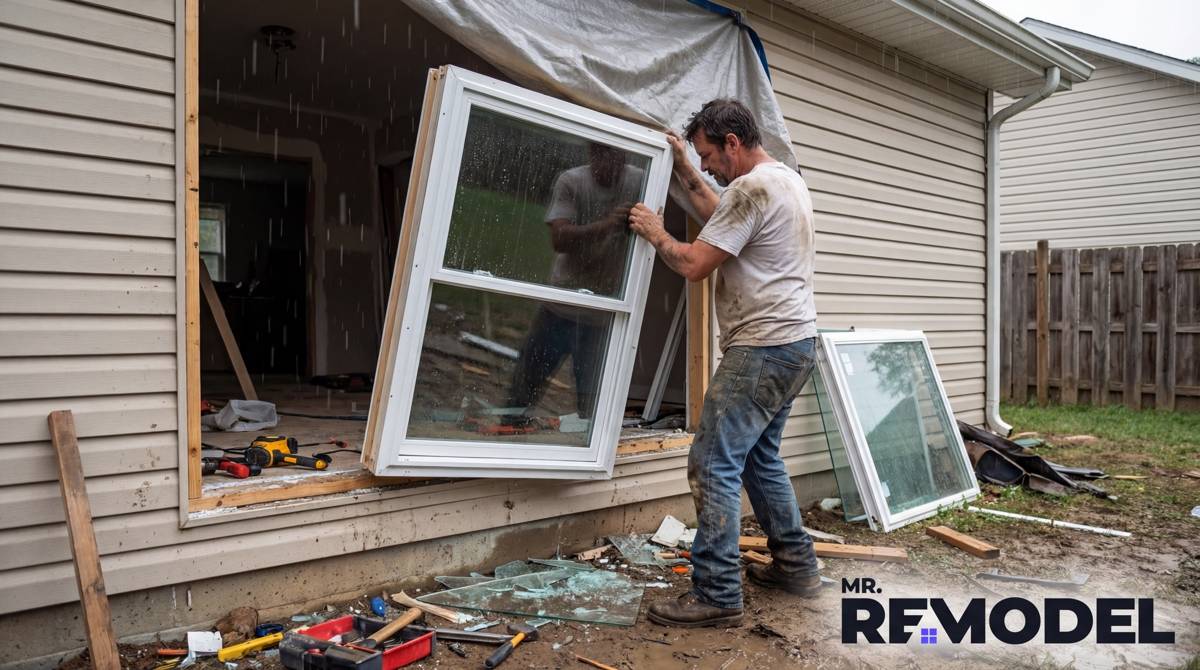
Receiving a quote for a window replacement that is double or triple what you expected is a common experience in 2026. You might have anticipated a simple swap of the glass and sashes. Instead, the contractor is proposing a full-frame window replacement involving demolition, carpentry, and new trim.
It is natural to wonder if this is an unnecessary upsell. However, for a significant percentage of homes, a full-frame replacement is a structural requirement. Mr. Remodel data shows that in states with heavy precipitation, like Oregon and Colorado, the average project cost jumps to over $24,000. This is not because homeowners in these states prefer luxury products. It is because their homes often suffer from water intrusion that rules out cheaper methods.
Understanding when a full frame is required protects you from two risks. It prevents you from overpaying for a project you do not need, and it prevents you from installing a new window into a failing wall that will leak again in five years.
See Related: Window Replacement Methods

Requirement 1: Wood Rot and Structural Decay
The most common reason a contractor will mandate a full-frame replacement is wood rot. An insert (pocket) window relies entirely on the existing wooden frame for support. The new unit is screwed into the old jambs.
If those jambs or the sill are compromised by rot, they cannot hold the screws. Installing a new window into a rotting frame is a code violation and a safety hazard. The new window will eventually sag, leak, or fall out of the opening.
The Screwdriver Test
You can verify this yourself. Take a flathead screwdriver and press it firmly against the exterior window sill and the bottom corners of the frame. If the wood is solid, you might be eligible for an insert. If the screwdriver sinks into the wood or if the wood crumbles, you have rot.
According to the Journal of Light Construction (JLC), proper remediation requires removing the entire window unit to expose the rough opening. This allows the carpenter to cut out the rot, replace the structural studs, and install new flashing tape before putting in the new window.
See Related: Pocket vs Full Frame Replacement
Requirement 2: Siding Replacement Projects
If you are planning to replace your siding, you have a unique opportunity to waterproof your home correctly. This is the second most common trigger for full-frame replacement.
New construction windows (used in full-frame replacement) feature a nailing fin. This is a flange around the perimeter of the window that sits flat against the plywood sheathing of your house. When you replace siding, you expose this sheathing.
By choosing full-frame replacement during a siding project, the installer can tape this nailing fin directly to your home's water-resistive barrier. FEMA P-804 Guidelines note that this method provides superior wind and water resistance compared to caulking a retrofit window against old siding. It effectively integrates the window into the wall system.
See Related: Retrofit vs New Construction Windows
Requirement 3: Increasing Glass Size and Light
Sometimes the requirement for a full-frame window replacement is aesthetic rather than structural. If you have small windows and want more light, an insert window will disappoint you.
The Frame-in-Frame Effect
An insert window sits inside your existing frame. This adds a new layer of vinyl or wood, which reduces the visible glass area by approximately 1 inch on all four sides. On a small bathroom window, this can reduce the total light by 15% to 20%.
A full-frame replacement removes the old frame entirely. This allows the new glass to extend all the way to the rough opening studs. If maximizing your view is your primary goal, a full-frame installation is the only method that delivers the results you want.
Unsure if your frames are rotted or just old?
Mr. Remodel connects you with local experts who can inspect your rough openings and give you an honest assessment. Get your free professional window assessment from us today.
Requirement 4: Energy Efficiency (Air Sealing)
While insert windows improve the glass efficiency, they do not address the air leakage around the frame.
In many older homes, the gap between the window frame and the wall studs was essentially empty. It might have been stuffed with loose fiberglass insulation, which does not stop airflow. The Department of Energy emphasizes that air sealing is critical for energy performance.
A full-frame tear-out exposes this gap. Installers can then fill the space with low-expansion spray foam. This creates an airtight seal that stops drafts from entering around the trim. If your current windows feel drafty even when the glass is intact, the issue is likely the frame installation itself, necessitating a full replacement to fix the insulation gap.
See Related: Drafty Windows Causes
Cost Analysis: Why It Costs $16,500+

It is important to understand that the higher cost of full-frame replacement pays for labor and carpentry, not just the window unit.
According to the 2025 Cost vs. Value Report by The Journal of Light Construction, the national average for a vinyl window replacement project is approximately $22,073. This aligns with Mr. Remodel data showing an average of $16,511.
Where the Money Goes
- Demolition: carefully removing old trim and siding without damaging the house.
- Carpentry: Replacing rotted wood and installing new interior/exterior trim.
- Waterproofing: High-quality flashing tapes and sealants.
- Time: A full-frame installation takes 2 to 4 hours per window, compared to 30 minutes for an insert.
Reference standards from the Fenestration & Glazing Industry Alliance (FGIA) validate that this process requires a higher skill level and significantly more time than a standard retrofit.
Frequently Asked Questions
Can I do a full-frame replacement on just one window?
Yes. It is common to do a full frame replacement on a single rotted window while using inserts for the rest of the house. However, be aware that the interior and exterior trim on that one window will look new and may not perfectly match the aged trim on the other windows.
Does full-frame replacement require painting?
Almost always. Because the interior casing (trim) is removed and replaced, you will need to paint or stain the new wood. You may also need to touch up the paint on the drywall around the window where the old trim was removed.
Will a full-frame replacement damage my stucco?
It can. Installing a full-frame window with a nailing fin in a stucco home requires cutting back the stucco. This is expensive and difficult to patch seamlessly. In stucco markets like California and Florida, contractors often use a "Flush Fin" retrofit window to cover the frame without breaking the stucco, unless there is severe rot or a need for hurricane-rated anchoring.
How long does a full-frame replacement take?
Expect the crew to complete about 3 to 5 windows per day. A whole-house project typically takes 3 to 5 days. This is longer than an insert replacement, which can often be finished in a single day.
Conclusion: A Necessary Investment
A full-frame window replacement is a significant construction project. It costs more and takes longer than a simple insert. However, when you have rot, siding replacement, or a need for air sealing, it is the only correct method.
Ignoring these warning signs to save money on an insert installation usually leads to greater costs down the road when the rot spreads or the window leaks.
Mr. Remodel helps homeowners distinguish between a necessary structural repair and an optional upgrade. We can connect you with certified installers who can perform a detailed inspection of your frames.
Find out exactly what your home requires.