1-855-QUOTEMR

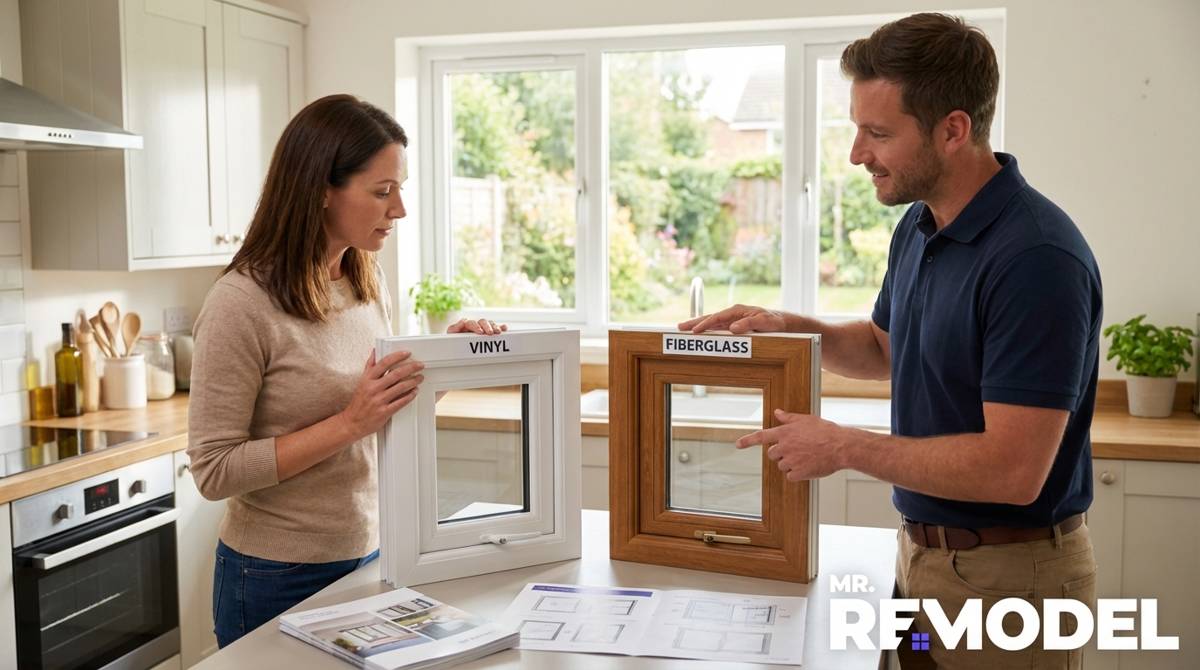
Table of Contents [hide]
Who This Is For
This guide is for homeowners ready to make a final decision on window replacement. It provides financial benchmarks and technical data to help you choose between value-driven vinyl and long-term fiberglass investments.
Key Takeaways
- Lifespan Advantage: Fiberglass windows last up to 50 years, nearly doubling the 20 to 30 year lifespan typical of vinyl frames.
- Cost Reality: While national averages suggest lower prices, recent data shows high-quality installations now average over $3,200 per unit.
- Thermal Stability: Fiberglass expands at nearly the same rate as glass. This prevents the seal failures common in vinyl windows during extreme temperature swings.
- ROI Potential: Fiberglass offers a higher resale value of up to 85% compared to roughly 76% for vinyl.
When planning a home renovation, the choice between vinyl and fiberglass often comes down to the balance of upfront costs and long-term value. According to recent U.S. Department of Energy data, frame material is the most critical factor in determining a window’s thermal performance and structural integrity.
Recent Mr. Remodel data reveal that the average cost per window has reached $3,208.40. This reflects the rising demand for high-performance materials and professional installation standards. For many homeowners, this translates to a total project average of approximately $16,511.21.
Vinyl Windows: Choosing Value
Vinyl windows remain the most popular choice for homeowners seeking a balance of affordability and efficiency. These frames are made from polyvinyl chloride (PVC) and contain stabilizers to resist UV degradation.
Why Homeowners Choose Vinyl
Vinyl is often the preferred choice for mid-sized projects. It helps keep total costs closer to the $11,000 range for a standard home.
- Affordability: Vinyl typically costs 15% to 30% less than fiberglass.
- Low Maintenance: You never need to paint or scrape vinyl. A simple wash with soap and water keeps them looking new.
- Energy Efficiency: Modern multi-chambered vinyl frames trap air effectively. This provides excellent insulation that meets most Energy Star requirements.
Limitations of Vinyl
While vinyl is cost-effective, it has physical limitations in extreme climates. Lawrence Berkeley National Laboratory research shows that vinyl has a high coefficient of thermal expansion.
This means vinyl expands and contracts significantly more than glass. Over time, this movement can stress the seals. This leads to air leaks or fogging between the panes.
Fiberglass Windows: The Longevity Play
Fiberglass windows are engineered for maximum durability. They are composed of glass fibers and resins that are pulled through a heated die. This process is known as pultrusion.
Superior Durability and Strength
Fiberglass is significantly stronger than vinyl. This strength allows for slimmer frames and more glass area. It is the ideal choice for modern architectural styles that prioritize natural light.
The Efficient Windows Collaborative notes that fiberglass is virtually immune to warping or rotting. It handles high-UV and high-moisture environments with ease. This makes it the standard for long-term homes where the owner does not want to worry about replacements for decades.
Thermal Performance and Stability
The biggest advantage of fiberglass is its stability. Because it is made of the same base material as the glass itself, the frame and the pane move together.
This prevents the gaps that often form in other window types. Stable seals mean your home stays more comfortable. It also ensures that your energy savings remain consistent for the entire 50-year life of the product.
Since the decision window for most homeowners is less than 30 days, it is recommended to get professional quotes early. Platforms like Mr. Remodel help by matching you with contractors who specialize in these high-performance materials.
Side-by-Side Comparison: Performance Data
The following table compares the two materials based on 2026 industry standards and real-world sales data.
|
Feature |
Vinyl Windows |
Fiberglass Windows |
|
Average Lifespan |
20 to 30 Years |
30 to 50+ Years |
|
Resale ROI |
Around 76% |
Around 85% |
|
Maintenance |
None (Cannot Paint) |
Low (Can be Painted) |
|
Expansion Rate |
High (Potential Seal Stress) |
Low (Matches Glass) |
|
Average Project Cost |
$11,000 to $15,000 |
$18,000 to $25,000+ |
|
Best Climate |
Moderate |
All (Excellent for Extremes) |
Performance in Extreme Climates
Your local weather should play a major role in your material choice. In regions with severe temperature swings, the stability of fiberglass is a massive asset.
High-Moisture and Coastal Zones
For coastal areas, moisture resistance is non-negotiable. Both materials resist rot. However, fiberglass offers better structural integrity against high wind loads.
Mr. Remodel data shows that high-value projects in coastal regions almost exclusively utilize fiberglass. This protects the investment against salt spray and humidity that can degrade lesser materials.
High-UV Environments
In states like Colorado or Arizona, UV rays can cause vinyl to become brittle over twenty years. High-quality fiberglass coatings are designed to resist fading and chalking.
While fiberglass may eventually require a fresh coat of paint after fifteen years, the underlying structure remains sound. Vinyl cannot be repainted once it begins to show its age.

Installation Realities and Professional Standards
Proper installation is just as important as the material itself. A poorly installed fiberglass window will not provide the 50-year performance you are paying for.
The Complexity of Fiberglass
Fiberglass is a rigid material. Unlike vinyl, which has some flex during installation, fiberglass must be perfectly plumb and level.
This rigidity requires specialized crews. These installers often charge a premium for their expertise. This labor cost is a major reason why fiberglass projects carry a higher total price tag.
The Speed of Vinyl
Vinyl windows are lightweight and more forgiving. This often leads to shorter project timelines. If you need a quick replacement before a season change, vinyl is the faster route to improved comfort.
Frequently Asked Questions
Which window material has the best ROI?
Fiberglass typically offers the highest return on investment. It recoups up to 85% of its cost at resale. This is because buyers value the 50-year lifespan and superior energy ratings.
Can you paint vinyl windows?
No, you should not paint vinyl windows. The paint will not adhere well to the PVC. It can also cause the frame to absorb too much heat and warp. If you want a specific color that you can change later, fiberglass is the better choice.
How much do new windows cost in 2026?
According to Mr. Remodel's data, the average installed cost is $3,208.40 per window. Factors like frame material, glass type, and local labor rates will influence your final quote.
Is fiberglass really better for energy bills?
Yes, fiberglass usually has a lower U-factor than vinyl. This means it is better at preventing heat transfer. Its dimensional stability also prevents the air leaks that often develop in older vinyl units.
How can Mr. Remodel help me choose?
Platforms like Mr. Remodel help by matching you with contractors who can provide side-by-side material quotes. They offer free estimates to help you see the exact price difference for your specific home.
Make Your Choice Between Vinyl and Fiberglass
Choosing between vinyl and fiberglass windows is a decision between immediate savings and long-term durability. Vinyl is the ideal solution for homeowners looking for a high-quality, budget-friendly upgrade. It provides excellent insulation and a clean look for a lower upfront investment.
However, if you plan to stay in your home for more than twenty years, fiberglass is the superior choice. Its unmatched strength, thermal stability, and high resale value make it a wise financial move. It ensures that your windows will remain functional and beautiful for the next half-century.
Ready for Your Custom Window Quote? The best way to decide is to see the numbers for your own home. Mr. Remodel connects you with top-rated local contractors to provide free, no-obligation quotes.