1-855-QUOTEMR

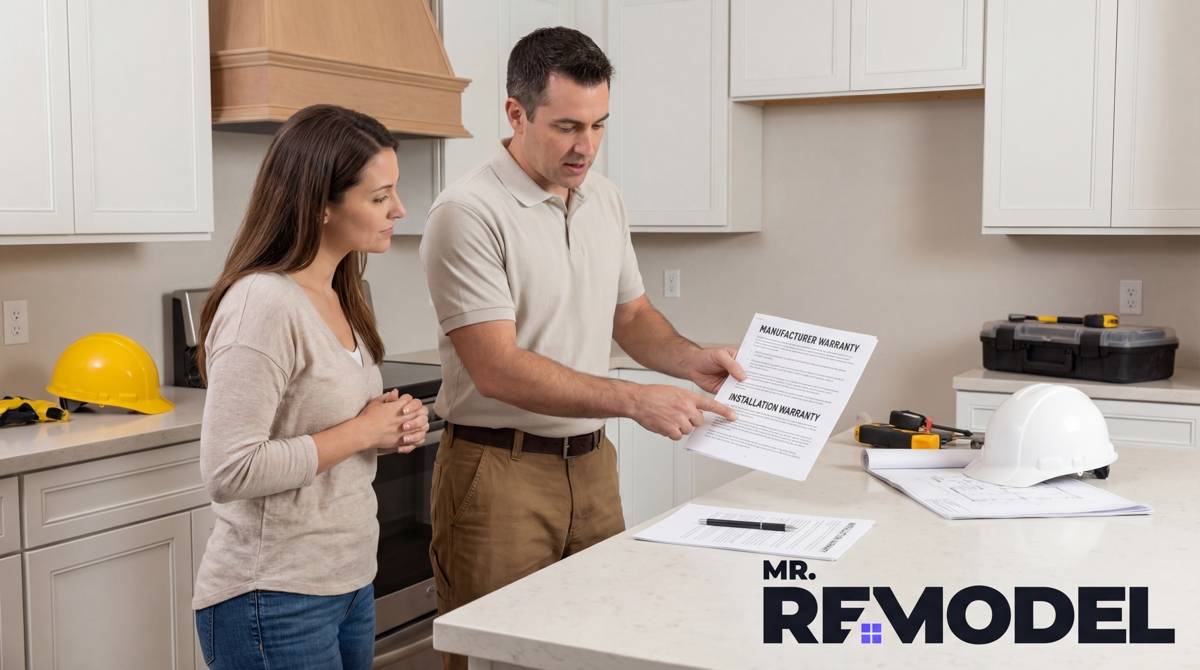
Table of Contents [hide]
Who This Is For
This guide is for homeowners planning a significant window replacement project—typically valued at $16,000 or more. It is designed to help you navigate the complex division of liability between the companies that make your windows and the professionals who install them.
Key Takeaways
- Manufacturer Warranties cover the physical components like glass, frames, and hardware defects.
- Installation Warranties protect against workmanship errors such as air leaks, water infiltration, and improper sealing.
- The Voids: Improper installation is one of the leading reasons manufacturers deny product warranty claims.
- The Stakes: With average project costs exceeding $16,000, a dual-warranty strategy is essential for financial security.
A home window replacement is a major capital improvement, with the average Mr. Remodel customer protecting an investment of $16,511.21. Despite this high cost, many homeowners realize too late that their protection is split between two entirely different legal contracts.
If a window fails, you may find yourself stuck between a manufacturer and an installer who both claim the other is at fault.
Decoding the Fine Print: Product vs. Workmanship
The fundamental difference between these two protections lies in what specifically failed. A manufacturer's warranty is a promise from the factory that the product itself is free from defects. An installation warranty is a promise from the contractor that the unit was placed into your home correctly.

What Manufacturer Warranties Cover
Manufacturer warranties typically focus on the long-term durability of the materials. According to the Federal Trade Commission (FTC), these written warranties must clearly state if they are full or limited. In the window industry, these usually include:
- Glass Seal Failure: Coverage for fogging or moisture between double-pane glass.
- Frame Integrity: Protection against warping, cracking, or peeling of vinyl, wood, or composite frames.
- Hardware Function: Ensuring that cranks, locks, and latches continue to operate as intended.
What Installation Warranties Cover
Installation warranties, often called workmanship warranties, cover the labor portion of the project. This is your primary shield against immediate failures. These warranties usually cover:
- Water Infiltration: Leaks occurring around the window frame due to poor flashing.
- Air Leaks: Drafts caused by improper sealing or insulation during the "Install" phase.
- Structural Alignment: Ensuring the window is level and square so it operates smoothly.
The $16,000 Risk: Why Dual Protection Matters
When your project includes 6 to 10 windows, the risk of a serial defect or a systemic installation error grows significantly. For the top 25% of projects, which range from $18,800 to over $84,600, the distinction between these warranties is a vital financial safeguard.
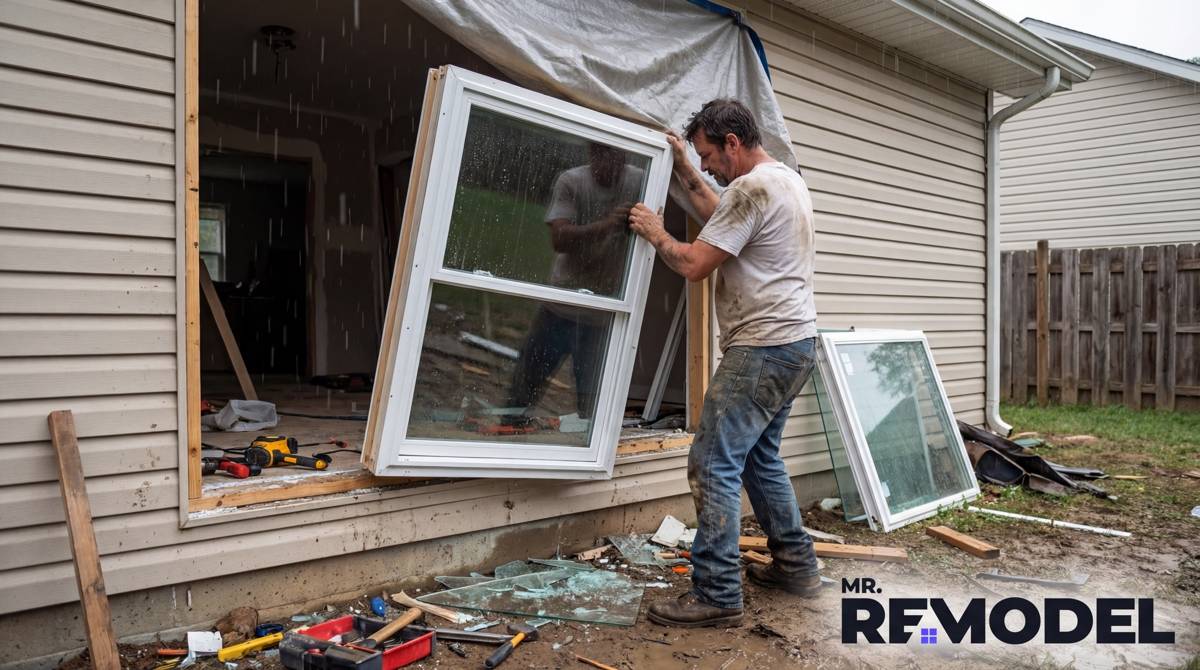
If a contractor installs ten windows improperly, the cost to remove and reset them could equal the original labor price. Without a robust installation warranty, you would be forced to pay for this correction out of pocket.
|
Pro Tip: Always verify that your installation warranty is in writing. Spoken promises are difficult to enforce if a dispute arises regarding water damage or energy loss. |
Climate Stress and Localized Risks
Geography plays a major role in how quickly warranty issues appear. Mr. Remodel data shows significant investment clusters in areas like Denver, Colorado, and Coos Bay, Oregon. These regions present unique stresses that test both the product and the installation.
|
Risk Factor |
Geographic Area |
Warranty Primary Focus |
|
High-Altitude UV |
Denver, CO |
Manufacturer (Frame/Seal Durability) |
|
Coastal Moisture |
Coos Bay, OR |
Installation (Waterproofing/Flashing) |
|
Temperature Swings |
Interior Plains |
Both (Expansion and Contraction) |
In coastal environments, installation errors like poor flashing manifest much faster due to consistent moisture. The U.S. Department of Energy warns that even the most energy-efficient window will fail to perform if it is not installed according to the manufacturer's strict specifications.
Are you planning a window project and want to ensure you have total coverage? Mr. Remodel connects you with top-rated local contractors and provides free quotes to help you start your project with confidence.
The "Dual-Risk" Scenario: How One Voids the Other
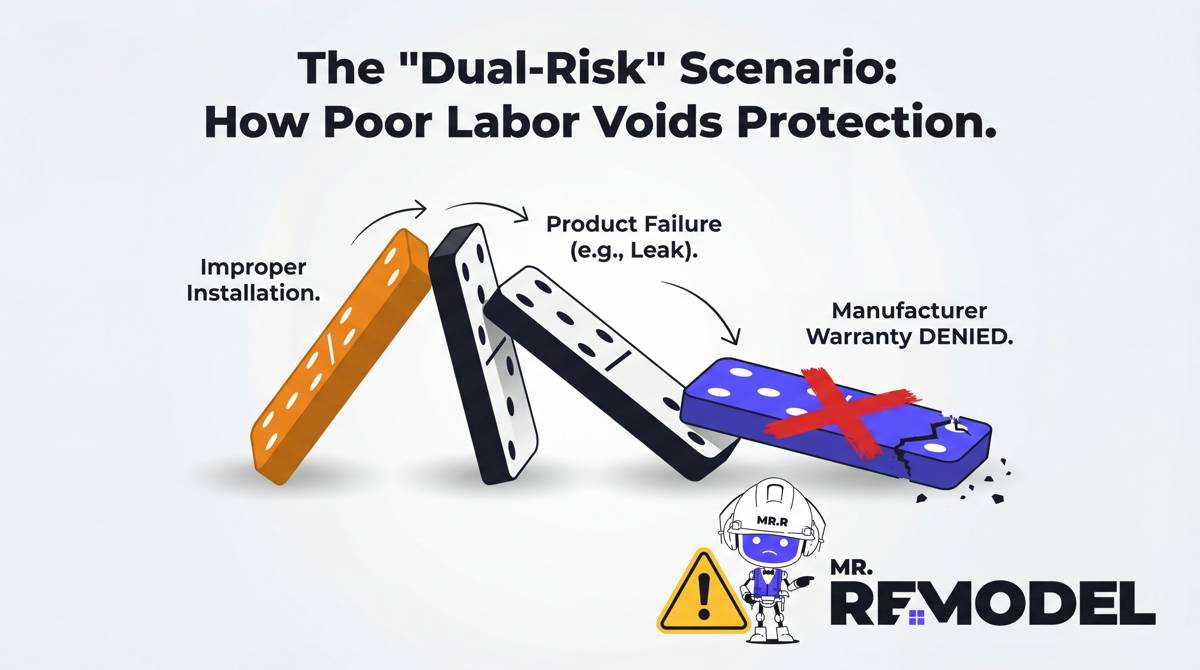
The most dangerous situation for a homeowner is when an installation error voids the manufacturer's warranty. Many high-end window brands require "certified" or "trained" installers. If an uncertified contractor installs the unit incorrectly, the manufacturer may legally deny a claim for a hardware or glass failure.
This creates a dual-risk scenario. If your window starts leaking air, the manufacturer may blame the installer. If the installer has no workmanship warranty, you have no recourse. This is why projects that are 100% new installations require the installation warranty to kick in the moment the "Handover" occurs.
Frequently Asked Questions
How long does a typical installation warranty last?
Most reputable contractors offer a workmanship warranty for 1 to 5 years. This is different from the product warranty, which can last 10 to 25 years or even a lifetime.
Can I use my own contractor and still keep the manufacturer's warranty?
Yes, but you must ensure they follow the manufacturer's installation manual exactly. Failure to follow these steps is a common reason for warranty denial.
What happens if the installation company goes out of business?
If the installer closes their doors, your installation warranty usually disappears. This is why using a platform like Mr. Remodel is helpful, as it matches you with established, vetted local contractors who have a history of honoring their work.
Does a manufacturer's warranty cover the cost of labor to replace a part?
Usually, no. Most manufacturer warranties only cover the cost of the replacement part. You would still have to pay a technician to install it unless you have a separate labor or installation warranty.
How do I prove a leak is an installation issue rather than a product defect?
Water appearing between the panes is almost always a product defect. Water appearing on the drywall or around the frame is almost always an installation or flashing issue.
Secure Your Investment with a Professional Shield
Understanding the boundary between product and labor is the only way to protect a high-value home improvement project. With the average window replacement reaching over $16,000, you cannot afford to leave your coverage to chance.
A dual-warranty strategy ensures that whether a part fails in year ten or a leak appears in week one, you are financially protected.
Ready to upgrade your home with peace of mind? Mr. Remodel provides free quotes and connects you with experienced local contractors who understand the importance of comprehensive warranty protection.