1-855-QUOTEMR

Table of Contents [hide]
Who This Is For
This guide is designed for homeowners planning high-end renovations or window replacements. It specifically helps those weighing the long-term energy savings of fiberglass against the sleek, modern aesthetic of aluminum frames.
Key Takeaways
- Thermal Efficiency: Fiberglass is approximately 500 times less conductive than aluminum, leading to significantly lower U-factors.
- Durability: Fiberglass frames expand and contract at nearly the same rate as glass, which preserves window seals longer than metal alternatives.
- Maintenance: Aluminum is prone to oxidation in coastal areas, while fiberglass may experience slight UV fading over several decades.
- Investment: While aluminum often has a lower entry price, fiberglass provides a higher lifetime ROI through energy savings and a lifespan of 50 years or more.
Choosing the right window frame is one of the most significant decisions in a high-end remodel. The frame material acts as the structural foundation and the primary thermal barrier for your home. Selecting between fiberglass and aluminum requires balancing your architectural vision with regional climate demands.
Thermal Performance: The Science of Insulation
The most significant difference between these two materials lies in their ability to handle heat. According to Energy.gov, aluminum is a highly conductive metal. This means it transfers heat rapidly between the interior and exterior of your home.
Understanding U-Factors and Conductivity
Fiberglass frames excel in insulation because they are made of glass fibers and resin. This composition does not conduct heat easily. Research from the National Renewable Energy Laboratory (NREL) indicates that non-metal frames consistently provide better insulation properties than metal ones.
The Role of Thermal Breaks
To make aluminum competitive in energy efficiency, manufacturers must insert a thermal break. This is an insulating strip placed between the interior and exterior sections of the frame.
Even with this technology, fiberglass remains the leader. High-performance fiberglass windows can achieve U-factors as low as 0.15. In contrast, standard aluminum frames without thermal breaks can have U-factors as high as 1.3.
Thermal Expansion and Seal Integrity
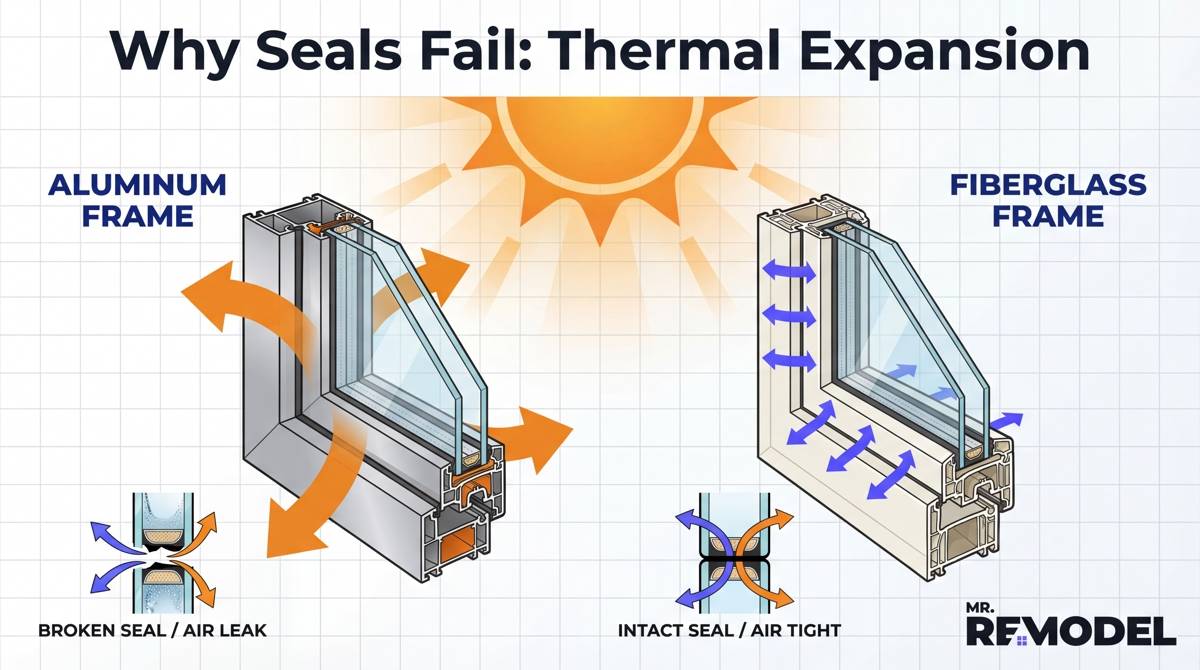
Fiberglass has a unique advantage in physical stability. It is made of the same base material as the glass panes it holds.
Because the frame and the glass expand and contract at similar rates, the seals remain intact. Aluminum expands significantly more than glass. This movement puts stress on the seals and can lead to premature air leakage.
Durability and Lifespan in Extreme Climates
When investing in a major project, longevity is a primary concern. Our internal data at Mr. Remodel shows that premium window projects often average around $16,511.21. At this investment level, homeowners expect the frames to last for decades.
Fiberglass: The 50-Year Solution
Fiberglass is arguably the most durable material on the market. It does not rot, warp, or corrode. It is particularly effective in regions with extreme temperature swings, such as the mountain regions of Colorado.
In these high-altitude environments, the material remains dimensionally stable despite intense UV exposure and freezing nights.
Aluminum: Strength Meets Modernity
Aluminum is prized for its incredible strength-to-weight ratio. This strength allows for very thin frames that support massive panes of glass.
It is the preferred choice for modern architectural designs that prioritize aesthetics. However, its lifespan is generally shorter than fiberglass, typically ranging from 15 to 30 years depending on the environment.
Coastal Considerations and Corrosion
If you live near the ocean, aluminum requires careful consideration. Salt air can cause pitting and oxidation on metal surfaces.
Technical reports from the Whole Building Design Guide (WBDG) emphasize that moisture and chloride ions are the leading causes of aluminum deterioration. Fiberglass is immune to this type of electrochemical corrosion.
Maintenance Requirements and Aesthetics
Both materials are marketed as low-maintenance compared to wood, but they have different care needs over time.
Surface Finishes and Fading
- Aluminum: Usually features a powder-coated or anodized finish. These are very tough but can be difficult to touch up if scratched.
- Fiberglass: Can be painted at the factory or in the field. This gives homeowners the flexibility to change their home’s color scheme in the future.
Identifying Signs of Failure
Homeowners should periodically inspect their windows for specific issues. For aluminum, look for stiff hinges or white, powdery residue, which indicates oxidation.
For fiberglass, check for fiber-bloom or a chalky surface. This only happens after decades of extreme UV exposure and can usually be resolved with a fresh coat of specialized paint.
Deciding on the right frame material depends heavily on your local climate and home structure. Mr. Remodel connects you with certified local contractors who provide free, no-obligation quotes to help you choose the best fit for your budget and style.
Real-World Cost Analysis
Understanding the cost of these materials requires looking beyond the price of a single unit. You must consider the scale of your project and the regional labor market.
Average Costs per Unit
Industry data shows a clear price gap between materials.
- Aluminum Windows: $200 to $800 per window.
- Fiberglass Windows: $500 to $1,500 per window.
While aluminum appears cheaper, it often requires more expensive glass packages to compensate for its poor insulation. This can narrow the price gap significantly in colder climates.
Scaling for Estate Projects
For larger homes, the total investment can rise quickly. Our data shows that high-end "Estate Scale" projects involving 11 or more windows can reach $84,672.01.
At this scale, the choice of fiberglass often becomes a strategic financial decision. The energy savings on a large home can offset the higher initial material cost within a few years.
Regional Cost Variations
Market data highlights how location affects your total bill.
- Oregon: High-end projects in this region have peaked at $57,734.00, likely due to a demand for high-performance fiberglass in wet, coastal climates.
- Colorado: Peak projects around $30,327.00 often focus on durable, industrial-style aluminum or fiberglass designed for mountain weather.
|
Material |
Initial Cost |
Est. Lifespan |
Best For |
|
Aluminum |
Lower |
15 to 30 Years |
Modern designs, Mild climates |
|
Fiberglass |
Higher |
50+ Years |
Efficiency, Extreme climates |
|
Vinyl |
Lowest |
20 to 30 Years |
Budget-conscious projects |
Maximizing ROI with the Right Choice
Return on investment is not just about the resale value of your home. It is about the reduction in monthly utility costs and the avoidance of replacement expenses 20 years down the line.
Energy Savings over Time
Because fiberglass provides superior thermal resistance, it keeps your HVAC system from overworking. Over 30 years, the energy savings from a fiberglass installation can often pay for the price difference between it and a cheaper material.
Resale Value and Curb Appeal
High-quality windows are a major selling point. Modern homebuyers are increasingly educated about energy efficiency. High-performance frames like fiberglass are viewed as a premium upgrade that justifies a higher asking price for the property.
Frequently Asked Questions
Which window frame is best for cold climates?
Fiberglass is the superior choice for cold climates. Its low thermal conductivity and ability to expand at the same rate as glass prevent drafts and heat loss. Platforms like Mr. Remodel help by matching you with contractors who specialize in high-altitude or northern climate installations.
Can you paint aluminum window frames?
While aluminum can be painted, it requires extensive preparation and specialized primers to ensure the paint bonds to the metal. It is generally easier to paint fiberglass frames if you want to change your home's look later.
Does aluminum rust?
Aluminum does not rust like iron, but it does corrode. In coastal or high-moisture areas, it can develop pits and white oxidation that can weaken the frame over time if not properly maintained.
How much does it cost to replace 10 windows with fiberglass?
The average cost per unit for premium fiberglass is approximately $2,750.00. For a 10-window project, you should expect to invest between $25,000 and $30,000, including professional labor and high-efficiency glass.
Is fiberglass worth the extra cost over aluminum?
For most homeowners, yes. The combination of a 50-year lifespan and significant energy savings typically provides a better long-term value than aluminum, especially in regions with high heating or cooling costs.
Decide Between Wood and Vinyl With A Vetted Professional
The choice between fiberglass and aluminum ultimately depends on your project's priorities. Aluminum offers the sleekest profiles for ultra-modern homes, but it requires thermal breaks to combat its natural conductivity. Fiberglass is the powerhouse of efficiency and durability, making it the ideal choice for long-term homeowners in harsh climates.
Mr. Remodel simplifies this complex decision by connecting you with top-rated local professionals. Get your free window replacement quotes and find the perfect contractor for your project.