1-855-QUOTEMR

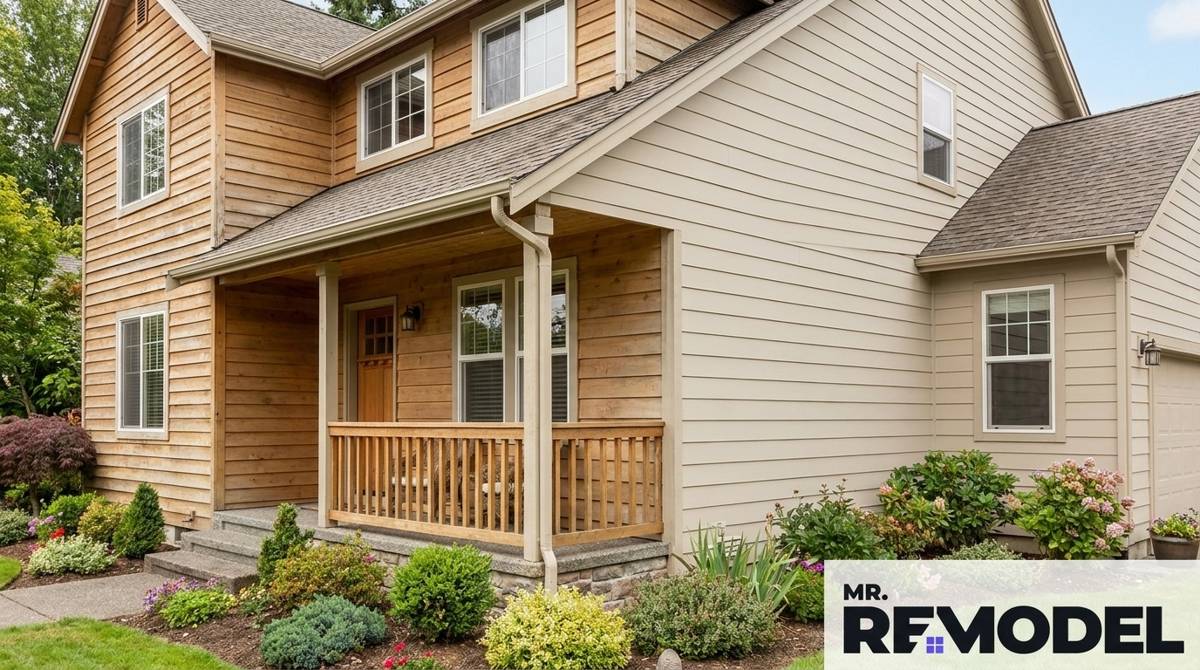
Table of Contents [hide]
Who This Is For:
Homeowners replacing siding, comparing natural wood and fiber cement, weighing curb appeal against maintenance, or choosing the best long-term siding material for their climate, budget, and home style.
Key Takeaways:
- Wood Offers Natural Beauty: Wood siding has a classic look that many manufactured materials try to imitate.
- Fiber Cement Needs Less Upkeep: Fiber cement generally offers stronger durability with lower ongoing maintenance than wood.
- Wood Has Niche Demand: Wood generated 354 Mr. Remodel siding inquiries, or about 6% of tracked siding inquiries.
- Installation Demand Is Strong: Installation accounts for about 92% of Mr. Remodel siding inquiries.
- The Better Choice Depends on Priorities: Appearance, climate, maintenance, fire resistance, and budget should guide the decision.
Wood siding and fiber cement siding both appeal to homeowners who want more character than basic exterior cladding. Wood offers natural warmth, texture, and historic charm. Fiber cement offers a wood-like appearance with stronger resistance to several common siding problems.
For homeowners comparing wood vs fiber cement siding, the decision usually comes down to maintenance. Wood can look beautiful, but it needs regular care. Fiber cement usually costs more than basic siding options, but it often requires less upkeep than natural wood.
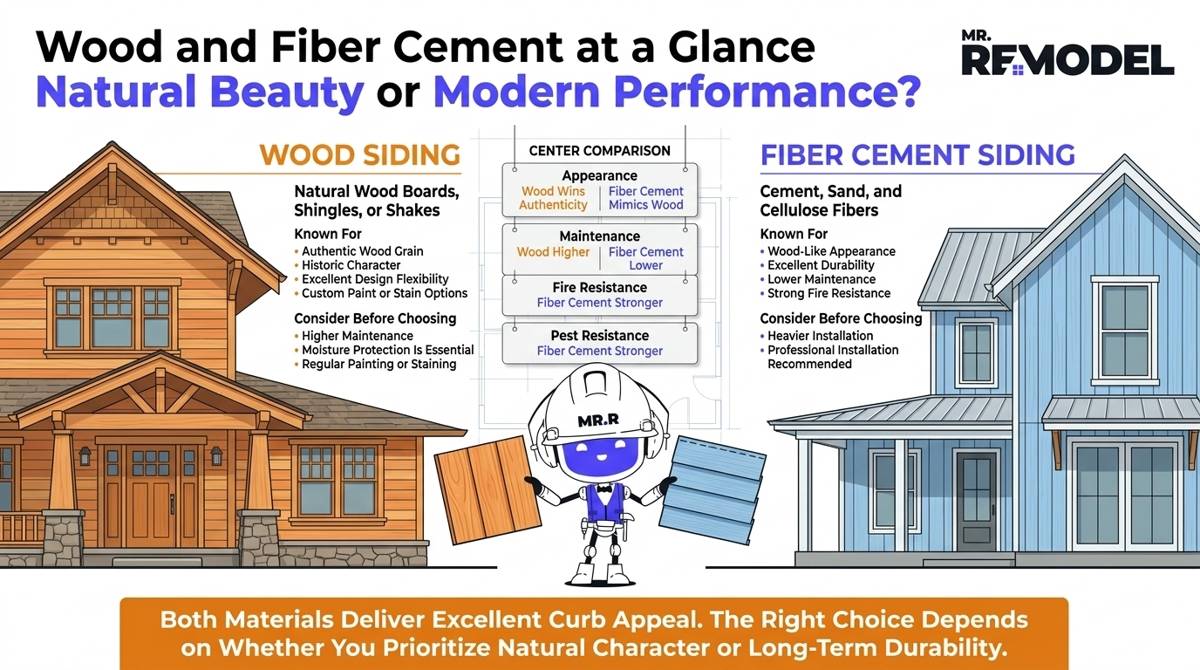
Wood and Fiber Cement at a Glance
Wood and fiber cement can both create strong curb appeal, but they perform very differently over time.
That does not make one material universally better. A historic home may look best with real wood. A homeowner who wants a similar look with less maintenance may prefer fiber cement.
Where Wood Siding Performs Best
Wood siding is valued for its natural appearance. It has texture, grain, depth, and warmth that manufactured materials often try to copy.
It can be installed as clapboard, shingles, shakes, board and batten, or custom profiles. It can also be painted or stained, giving homeowners more design flexibility.
The United States Department of Agriculture Forest Products Laboratory’s Wood Handbook explains wood as an engineering material, including moisture, durability, and decay considerations. That makes it useful for understanding both wood’s strengths and its maintenance needs.
Appearance and Character
Wood is often the better choice when the main goal is authentic character. It works especially well on historic homes, cottages, cabins, craftsman homes, and custom exteriors.
Painted wood can look classic and refined. Stained wood can highlight natural grain and texture.
Customization
Wood is easy to customize compared with many siding products. It can be shaped, painted, stained, repaired, or replaced in sections by skilled contractors.
This makes it attractive for homeowners who want a specific architectural look.
Trade-Offs
Wood’s main drawback is maintenance. It needs regular painting or staining, caulking, cleaning, and inspection.
If wood is neglected, it can absorb moisture, rot, split, warp, or attract insects. Repairs can become expensive when damage spreads behind the surface.
Wood siding may be worth it for homeowners who love the look and are prepared for the upkeep.
Where Fiber Cement Siding Performs Best
Fiber cement siding is made to provide a painted wood-like look with stronger durability than natural wood. It is commonly used on homes where homeowners want curb appeal without as much ongoing maintenance.
James Hardie is one of the best-known fiber cement siding brands. Its Why Hardie resource explains fiber cement composition, durability, weather resistance, and performance benefits from the manufacturer’s point of view.
Durability
Fiber cement generally resists several problems that affect wood siding. It does not rot like natural wood, and it is less attractive to many pests.
It also performs well in many climates when installed correctly. Proper clearances, flashing, caulking, and paint or finish care are still important.
Fire Resistance
Fiber cement usually has a stronger fire-resistance profile than wood. This may matter in wildfire-prone areas or communities where exterior fire performance is a major concern.
No siding material makes a home fireproof. Roofing, vents, landscaping, decks, and openings also affect fire risk.
Lower Maintenance
Fiber cement does not require the same level of upkeep as wood. It may still need repainting over time, but it usually does not need the frequent staining, sealing, and rot repair that wood can require.
Trade-Offs
Fiber cement is heavier than wood and usually more labor-intensive to install. Contractors need to follow product instructions carefully.
Poor installation can cause moisture issues, cracking, clearance problems, or warranty concerns. Homeowners should ask whether the contractor has experience with the specific fiber cement product being installed.
See Related: Fiber Cement Siding
Cost Comparison: Which One Costs More?
Wood and fiber cement can both fall into moderate to high cost ranges. Final pricing depends on home size, siding profile, local labor, finish choice, old siding removal, trim details, and hidden repairs.
Homeowners should treat siding replacement costs as planning estimates and compare local contractor quotes carefully.
Wood may cost more over time because maintenance adds up. Painting, staining, sealing, caulking, and spot repairs can become part of the long-term ownership cost.
Fiber cement may cost more upfront than some wood products in certain markets, especially because installation is labor-intensive. However, it may reduce long-term maintenance compared with natural wood.
Wood May Cost More Over Time When:
- The home needs frequent repainting or staining
- Moisture damage develops
- Insects damage boards
- Matching old profiles is difficult
- Repairs require custom carpentry
Fiber Cement May Cost More Upfront When:
- The product is premium
- The home has complex walls
- Labor rates are high
- Trim details are extensive
- Installation requires specialized experience
See Related: Siding Replacement Guide
Planning a siding replacement? Get a free quote from fully vetted local siding contractors.
Maintenance Comparison: Which Is Easier to Own?
Fiber cement is usually easier to own than wood. Wood requires more routine care because it is a natural material exposed to sun, rain, pests, and temperature changes.
Wood siding maintenance usually includes repainting or staining, checking for rot, replacing damaged boards, sealing gaps, and watching for insect activity.
Fiber cement maintenance usually includes cleaning, inspecting caulk joints, checking paint or finish wear, keeping vegetation away from the siding, and repainting when needed.
The National Association of Home Builders (NAHB) Life Expectancy of Home Components can help homeowners think about siding as a long-term home component, not just a one-time purchase.
Climate Comparison: Which Performs Better?
Climate can make the decision easier. Wood and fiber cement do not respond to moisture, fire, sun, and temperature changes in the same way.
Humid and Rainy Regions
Fiber cement usually has the advantage in humid and rainy regions because it is less vulnerable to rot than natural wood. Wood can still work, but it needs consistent maintenance and strong moisture protection.
Cold Climates
Both materials can work in cold climates when installed correctly. Wood needs protection from moisture and freeze-thaw damage. Fiber cement needs proper clearances, flashing, and paint or finish care.
Coastal Areas
Coastal homes face wind-driven rain, salt air, humidity, and storms. Fiber cement may have the durability edge, but installation quality matters for both materials.
The Federal Emergency Management Agency (FEMA) Home Builder’s Guide to Coastal Construction discusses siding and exterior wall performance in coastal, high-wind, and severe-weather environments.
Wildfire-Prone Areas
Fiber cement usually has a stronger fire-resistance profile. Wood may be less ideal in areas where fire risk is a major concern unless local codes, treatments, and full-home fire planning support its use.
Hot and Sunny Climates
Both materials can experience finish wear in strong sunlight. Wood paint or stain can break down over time, while fiber cement finishes may also need maintenance.
The U.S. Department of Energy’s Energy Saver design guidance explains that exterior upgrades should be considered as part of the home’s full energy and performance system.
Long-Term Value: Which One Makes More Sense?
Wood can offer excellent value when authenticity and design character are the top priorities. It can be the right choice for historic homes, custom homes, and homeowners who want a true natural material.
Fiber cement can offer excellent value when durability, lower maintenance, and fire resistance matter more. It gives homeowners a wood-like look without many of wood’s biggest weaknesses.
Mr. Remodel data shows homeowners usually evaluate siding materials during larger exterior projects. The dataset includes 5,462 installation inquiries and 445 repair inquiries. Installation accounts for about 92% of siding demand.
This shows that many homeowners compare siding materials when planning a larger upgrade, not a small repair.
Which Should You Choose?
Wood and fiber cement are both strong siding options, but they serve different homeowners.
Choose Wood If:
- You want authentic natural material
- Your home has historic character
- You like painted or stained wood
- You are comfortable with regular maintenance
- You want custom profiles or traditional details
- You have access to skilled wood siding contractors
Choose Fiber Cement If:
- You want a wood-like look with less upkeep
- You want stronger fire resistance
- You want better pest and rot resistance
- You prefer long-term durability
- You are willing to pay for skilled installation
- You want a premium exterior without natural wood maintenance
Before choosing, ask contractors how each material performs in your climate, how often maintenance is needed, what hidden repairs may be found, and what warranties apply.
See Related: Siding Material Comparison Guide
Frequently Asked Questions
Is fiber cement better than wood siding?
Fiber cement is usually better for homeowners who want lower maintenance, stronger fire resistance, and better resistance to rot and pests. Wood may be better for homeowners who want authentic natural character and are willing to maintain it.
Which siding lasts longer?
Both wood and fiber cement can last for decades when installed and maintained correctly. Fiber cement usually has the advantage because it is less vulnerable to rot, pests, and moisture-related damage than natural wood.
Which siding costs more?
Both materials can be moderate to high in cost. Wood may have higher long-term maintenance costs, while fiber cement may have higher installation costs because it is heavy and labor-intensive. Final pricing depends on product, labor, home size, and local market conditions.
Which requires more maintenance?
Wood requires more maintenance than fiber cement. It often needs regular painting or staining, sealing, caulking, rot checks, and pest inspections. Fiber cement still needs cleaning, caulk inspection, and repainting over time, but usually less often than wood.
Does wood siding increase home value?
Wood siding can support home value when it fits the home style, neighborhood, and buyer expectations. It may be especially valuable on historic or custom homes, but poor maintenance can hurt resale appeal.
Wood vs Fiber Cement Siding: Final Takeaway
Wood siding is best for homeowners who value natural beauty, historic character, and customization enough to handle regular maintenance. Fiber cement is usually better for homeowners who want a similar painted-wood look with stronger durability, fire resistance, and lower upkeep.
Neither material is right for every home. The best choice depends on your climate, budget, maintenance expectations, and design goals. To compare local siding options, connect with fully vetted local siding contractors.