1-855-QUOTEMR

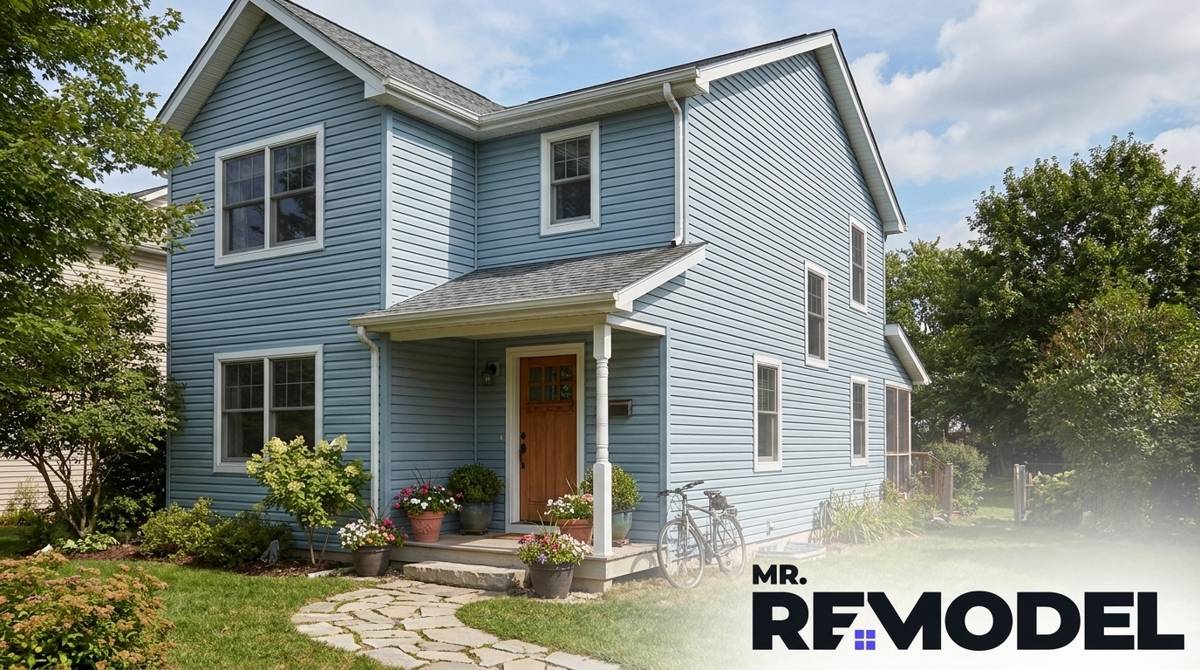
Table of Contents [hide]
Who This Is For
Homeowners replacing siding, comparing exterior materials, looking for a more affordable siding option, or trying to choose a low-maintenance material that fits their budget, climate, and long-term home goals.
Key Takeaways:
- Most Requested Material: Vinyl is the most requested siding material in the Mr. Remodel dataset.
- Budget-Friendly Choice: Vinyl is often more affordable than fiber cement, wood, and many premium siding options.
- Low Maintenance: Vinyl does not need painting and is usually easy to clean.
- Installation Matters: Proper fastening, spacing, and water management help vinyl perform well.
- Not Perfect for Every Home: Climate, impact risk, curb appeal goals, and resale plans should all factor into the decision.
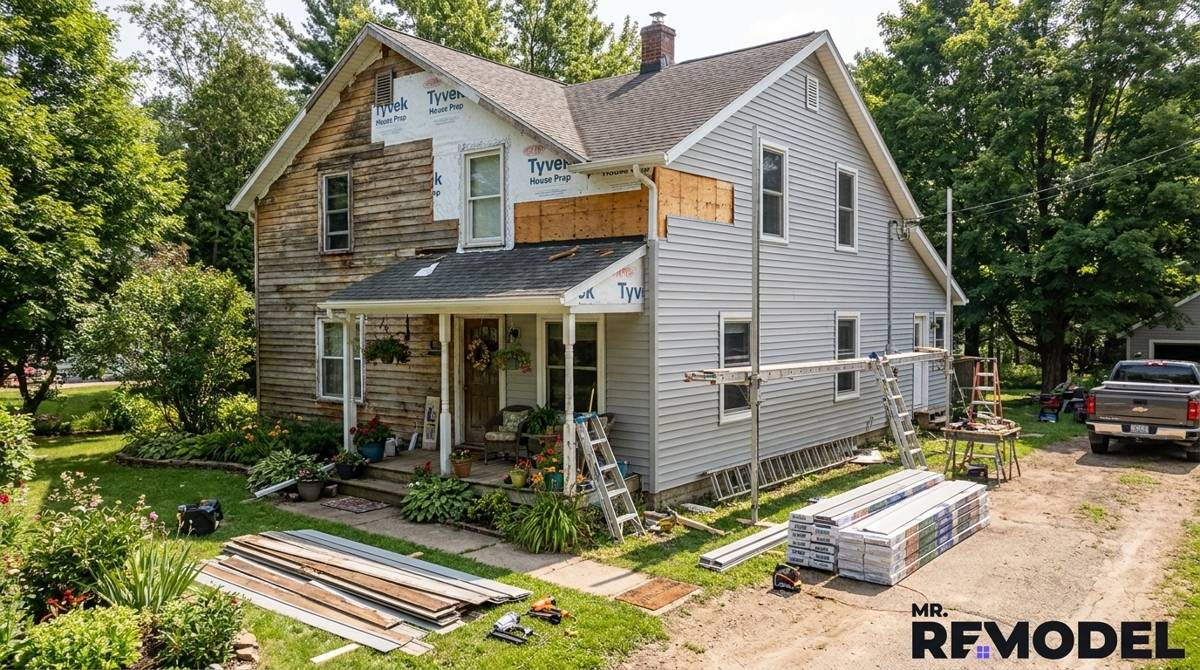
Vinyl siding remains one of the most common exterior choices for homeowners who want a practical mix of cost, curb appeal, and low maintenance. It is widely available, comes in many colors and profiles, and often costs less than premium siding materials.
For many homes, vinyl siding offers strong everyday value. Still, it is not the right choice for every property, climate, or design goal. Homeowners should compare lifespan, installation quality, energy performance, and appearance before making a final decision.
What Is Vinyl Siding?
Vinyl siding is an exterior cladding material made from polyvinyl chloride (PVC). It is installed in overlapping panels that help shed water and protect the exterior wall system.
Common styles include horizontal lap siding, Dutch lap siding, vertical siding, board and batten profiles, shakes, and shingles. Many products are designed to imitate painted wood, but with less maintenance.
The Polymeric Exterior Products Association, formerly the Vinyl Siding Institute, provides a vinyl siding installation manual that explains installation practices, code considerations, and certified installation methods.
Vinyl siding is commonly used on single-family homes, townhomes, rental properties, and whole-home replacement projects. It is especially popular with homeowners who want a clean exterior look without regular painting.
Why Vinyl Is the Most Popular Siding Material
Mr. Remodel siding data shows that vinyl is the clear homeowner favorite among tracked material categories. The dataset includes 5,907 siding inquiries, and vinyl generated 4,057 of them.
That means vinyl represents about 69% of all siding inquiries. It received about 3.5 times more inquiries than the “Other” category, about 11 times more than wood siding, about 20 times more than metal siding, and about 56 times more than stucco siding.
Installation projects also dominate siding demand. The dataset shows 5,462 installation inquiries compared with 445 repair inquiries, meaning installation accounts for about 92% of siding inquiries.
This does not mean vinyl is always the best siding material. It does show that homeowners often see vinyl as a practical choice when replacing or installing siding.
See Related: Types of Siding
Vinyl Siding Pros
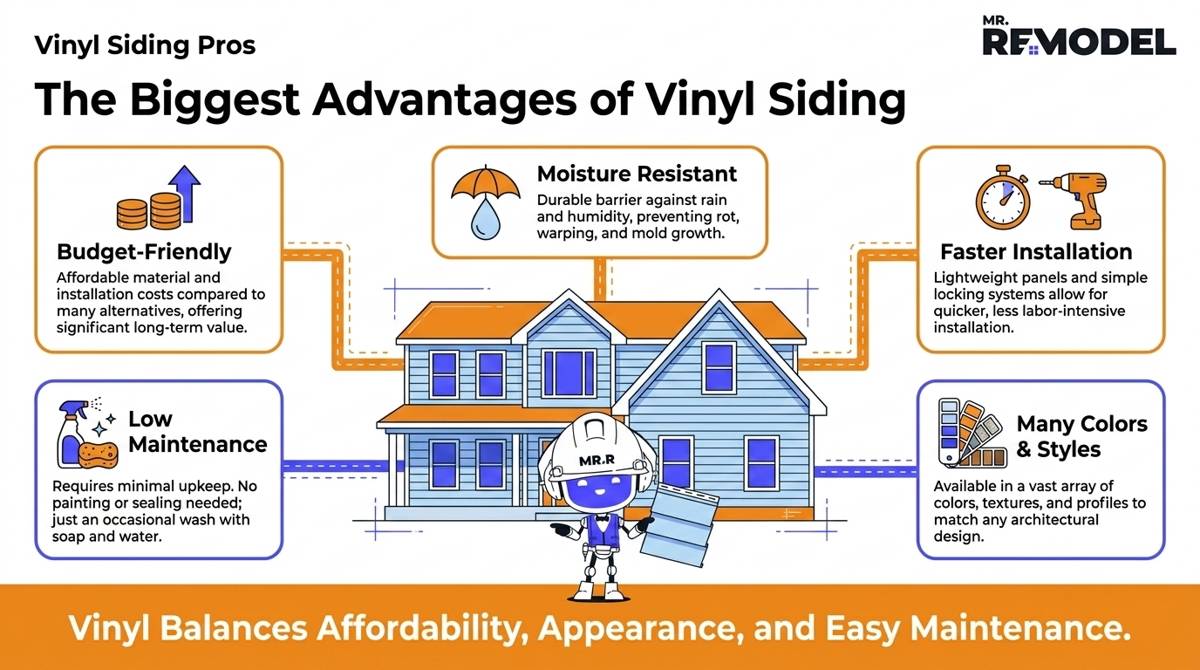
Vinyl siding has remained popular because it solves several homeowner concerns at once. It is usually budget-friendly, easy to maintain, and flexible enough for many home styles.
Affordability
Vinyl is often one of the more affordable siding materials. It can be a practical option for homeowners replacing a large amount of siding or trying to control exterior renovation costs.
Low Maintenance
Vinyl siding does not need repainting like wood. Most maintenance involves cleaning dirt, pollen, mildew, or algae from the surface.
The Polymeric Exterior Products Association’s vinyl siding resource library includes technical resources on maintenance, certified products, performance, and related vinyl siding topics.
Moisture Resistance
Vinyl does not rot like natural wood. That makes it appealing in regions where moisture, humidity, or frequent rain are concerns.
However, siding still needs proper installation and water management. The United States Environmental Protection Agency (EPA) explains that moisture control is important because moisture can contribute to mold and building damage.
Color and Style Variety
Modern vinyl comes in many colors, textures, and profiles. Homeowners can choose traditional lap siding, board and batten, shake-style accents, or mixed profiles for more visual interest.
Faster Installation
Vinyl is lighter than some siding materials, which can make installation more efficient. That can help control labor costs, depending on home size, removal needs, and repair work.
Vinyl Siding Cons
Vinyl has many benefits, but homeowners should understand the trade-offs before choosing it.
Expansion and Contraction
Vinyl expands and contracts with temperature changes. If it is fastened too tightly, it may buckle, warp, or move poorly.
That is one reason installation quality matters. The interactive vinyl siding installation manual explains proper installation details, including fastening, clearances, insulated vinyl siding, American Society for Testing and Materials (ASTM) standards, and maintenance recommendations.
Cracking in Extreme Cold
Vinyl can become more brittle in very cold conditions. Impact from hail, debris, or equipment may cause cracking when the material is under stress.
Fading Over Time
Vinyl siding can fade after years of sun exposure. Higher-quality products may resist fading better, but color changes can still happen over time.
Lower Impact Resistance Than Some Premium Materials
Vinyl may not resist impact as well as fiber cement, brick veneer, or some metal products. Homes in hail-prone areas may need to compare impact resistance carefully.
How Long Does Vinyl Siding Last?
Vinyl siding often lasts about 20 to 40 years, depending on product quality, climate, maintenance, and installation. Some products may last longer under favorable conditions, while harsh exposure can shorten lifespan.
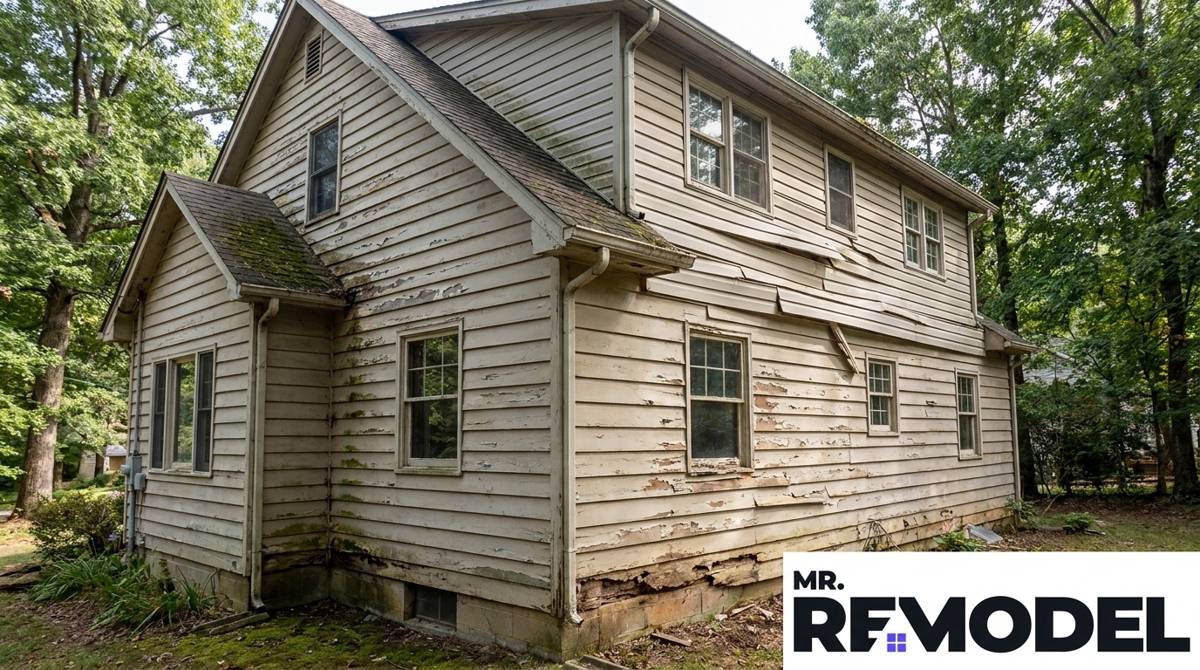
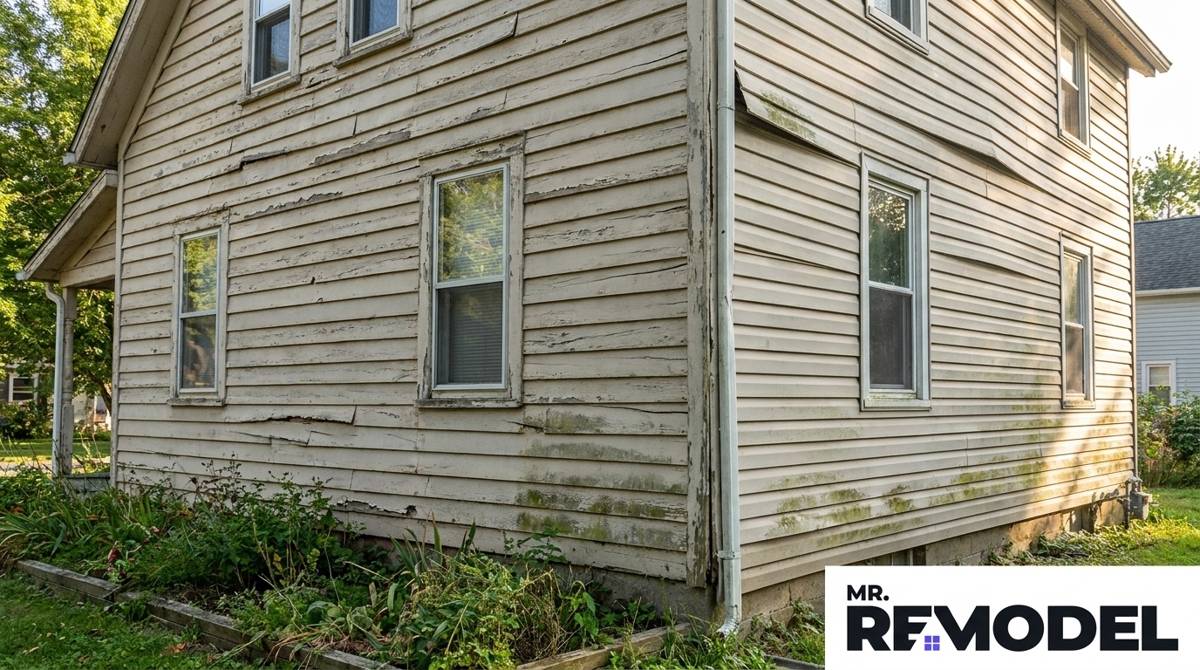
Sun exposure, storms, high heat, freezing weather, and poor installation can all affect how long vinyl lasts. Loose panels, cracked sections, warping, and severe fading may be signs that replacement is needed.
The U.S. Department of Energy’s Energy Saver design guidance explains that energy-efficient remodeling should consider the home as a system. Siding replacement can be a good time to review insulation, air sealing, house wrap, and exterior wall condition.
Thinking about replacing your siding? Get a free quote from fully vetted local siding contractors.
Vinyl Siding vs Other Siding Materials
Vinyl is often compared with fiber cement, engineered wood, natural wood, and metal. Each option has different strengths.
Vinyl vs Fiber Cement
Vinyl is usually more affordable and has lower maintenance. Fiber cement often offers stronger durability, a more premium look, and better resistance to some impact and fire concerns.
Fiber cement may cost more and may need repainting over time.
See Related: Fiber Cement Siding
Vinyl vs James Hardie Siding
James Hardie siding is a leading fiber cement brand. It is often chosen by homeowners who want a premium exterior with a wood-like appearance.
Vinyl is usually more budget-friendly, while James Hardie may appeal to homeowners focused on curb appeal, durability, and higher-end exterior design.
See Related: James Hardie Siding
Vinyl vs Engineered Wood
Engineered wood can provide a warmer, more natural look than vinyl. It may also be available in longer boards, which can reduce seams.
Vinyl usually requires less maintenance, while engineered wood may need more attention to sealing, painting, or moisture protection, depending on the product.
See Related: Engineered Wood Siding
Vinyl vs Natural Wood
Natural wood offers classic beauty and design flexibility, but it requires regular maintenance. It may need painting, staining, sealing, and repairs to prevent rot and pest damage.
Vinyl is usually easier to maintain, but some homeowners prefer the appearance of real wood.
Vinyl vs Metal
Metal siding can be strong, modern, and low-maintenance. It may work well on contemporary homes or properties where durability is a major goal.
Vinyl is often more affordable and familiar for traditional homes, while metal may cost more depending on the product and finish.
Is Vinyl Siding Right for Your Home?
Vinyl siding may be right for your home if you want an affordable, low-maintenance exterior that comes in many colors and styles. It can be a smart choice for whole-home replacement when budget and upkeep are major priorities.
It may not be the best choice if you want a premium wood-like appearance, strong impact resistance, or a material that fits a historic home more naturally.
Climate should also guide the decision. Vinyl can work well in many regions, but homes with extreme heat, severe cold, frequent hail, or intense sun exposure may need careful product selection.
The National Association of Home Builders (NAHB) provides homeowner and building resources, which can help homeowners think about materials, exterior systems, and long-term home performance.
The best approach is to compare quotes, materials, warranties, and installation details before choosing.
See Related: Siding Replacement Guide
Frequently Asked Questions
How long does vinyl siding last?
Vinyl siding often lasts about 20 to 40 years, depending on product quality, climate, installation, and maintenance. It may need replacement sooner if it becomes cracked, warped, brittle, loose, or severely faded.
Is vinyl siding cheaper than fiber cement?
Vinyl siding is usually cheaper than fiber cement siding. Fiber cement often costs more because it is heavier, more labor-intensive to install, and positioned as a more premium siding material.
Does vinyl siding increase home value?
Vinyl siding can support home value by improving curb appeal, reducing visible maintenance concerns, and making the exterior look cleaner and more updated. Actual resale impact depends on the home, market, installation quality, and existing siding condition.
What maintenance does vinyl siding require?
Vinyl siding usually needs periodic cleaning, annual inspections, and quick repairs if panels crack, loosen, or pull away. Homeowners should also keep gutters clear, trim vegetation away from siding, and check for moisture problems around seams, windows, and doors.
Is insulated vinyl siding worth it?
Insulated vinyl siding may be worth considering if you want added rigidity, improved comfort, and a siding system that supports broader exterior efficiency goals. The value depends on your climate, existing wall insulation, budget, and total project scope.
Vinyl Siding: Final Takeaway
Vinyl continues to dominate homeowner siding demand because it offers a practical mix of affordability, low maintenance, style variety, and wide availability. Mr. Remodel data shows 4,057 vinyl siding inquiries, or about 69% of all siding inquiries.
Still, the right siding depends on your home, climate, budget, and curb appeal goals. To compare vinyl with other siding materials, connect with fully vetted local siding contractors.