1-855-QUOTEMR

Table of Contents [hide]
Who This Is For
Homeowners replacing old siding, building a new home, comparing siding materials, or seeking the best balance of cost, durability, curb appeal, maintenance, and climate performance.
Key Takeaways:
- Vinyl Leads Demand: Vinyl is the most commonly requested siding material in the Mr. Remodel dataset.
- Every Material Has Trade-Offs: Cost, maintenance, durability, and appearance vary by siding type.
- Climate Matters: Heat, moisture, storms, freezing weather, and sun exposure can affect siding performance.
- Long-Term Costs Count: The cheapest material upfront is not always the lowest-maintenance choice over time.
- Installation Quality Matters: Professional installation helps siding last longer and protects the home better; siding is one of the biggest exterior decisions a homeowner can make. The right material can improve curb appeal, protect the home from weather, and reduce long-term maintenance.
This guide to the most common types of siding compares vinyl, fiber cement, James Hardie, engineered wood, natural wood, metal, stucco, and brick veneer.
Mr. Remodel siding inquiry data shows strong homeowner interest in siding installation and material selection. The dataset includes 5,907 siding inquiries, with 5,462 installation inquiries and 445 repair inquiries.
That means installation accounts for about 92% of siding inquiries, while repair accounts for about 8%. The same dataset shows vinyl as the strongest material category, with 4,057 inquiries, or about 69% of all siding material inquiries.
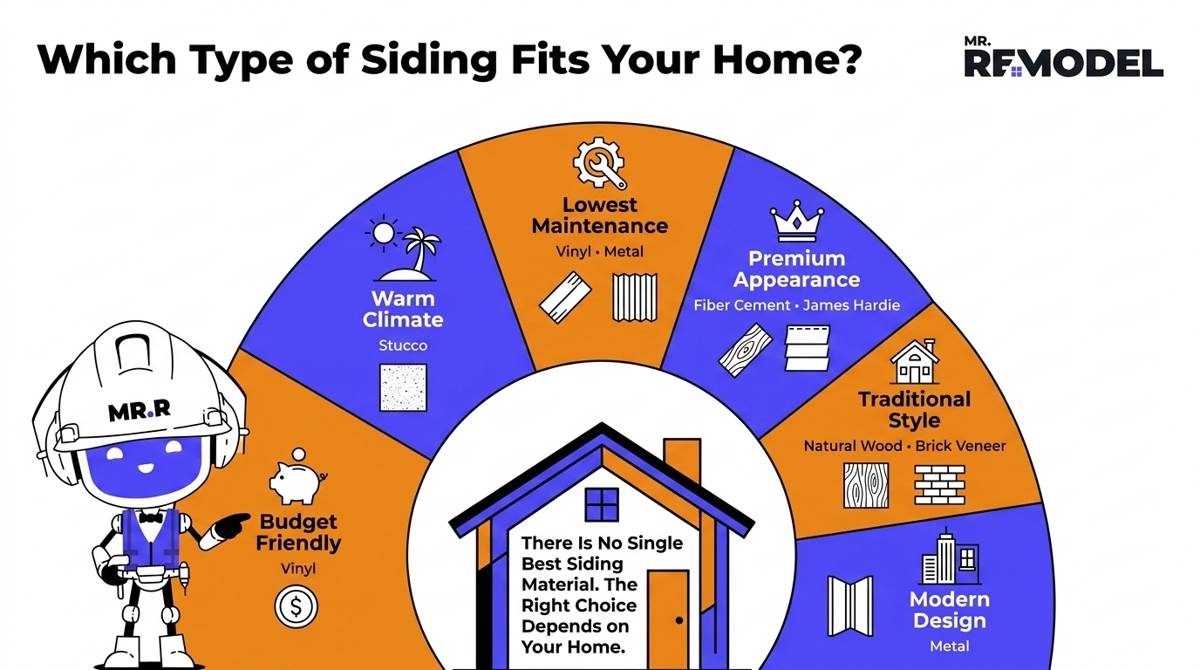
The Most Common Siding Materials
Most homeowners compare siding based on cost, appearance, maintenance, durability, and how well the material fits their climate. Some siding materials are affordable and easy to maintain. Others cost more but offer a more premium look or longer service life.
The most common siding options include:
- Vinyl siding
- Fiber cement siding
- James Hardie siding
- Engineered wood siding
- Natural wood siding
- Metal siding
- Stucco
- Brick veneer
The United States Department of Energy explains that the home exterior is part of the building envelope, which affects comfort and energy performance. Its Energy Saver resources can help homeowners understand how exterior systems contribute to home comfort and efficiency.
Siding alone is not insulation, but siding replacement can be a good time to review house wrap, air sealing, flashing, and exterior wall condition. A well-installed siding system should protect the home from the weather while supporting the rest of the exterior envelope.
See Related: Siding Replacement Guide
Vinyl Siding
Vinyl siding is one of the most common siding choices for American homes. It is popular because it is affordable, widely available, and relatively low-maintenance.
In Mr. Remodel siding data, vinyl generated 4,057 inquiries, making it the most requested siding material in the dataset. That accounts for about 69% of siding material inquiries.
Vinyl siding is made from polyvinyl chloride (PVC). It comes in many colors, profiles, and textures, including options that imitate wood grain.
Pros of Vinyl Siding
Vinyl is usually more affordable than fiber cement, wood, and many premium materials. It does not need painting, and basic cleaning can often be done with a garden hose and mild cleaner.
It is also widely available, which can make replacement pieces easier to find if repairs are needed.
Cons of Vinyl Siding
Vinyl can crack in very cold conditions, warp from heat exposure, or fade over time. Lower-quality vinyl may look less realistic than premium materials.
It can also be damaged by impact, especially from hail, lawn equipment, or severe storms.
Best For
Vinyl siding is a strong option for homeowners who want a cost-conscious, low-maintenance exterior. It works well for many suburban homes, rental properties, and homeowners replacing a large amount of siding on a budget.
See Related: Vinyl Siding
Fiber Cement Siding
Fiber cement siding is a durable siding material made from cement, sand, cellulose fibers, and other ingredients. It is often chosen by homeowners who want a more premium look than vinyl while still avoiding some of the maintenance needs of natural wood.
Fiber cement is a major siding option for homeowners planning a higher-end exterior upgrade. It is often compared with vinyl, engineered wood, and natural wood because it offers a balance of durability and appearance.
Pros of Fiber Cement Siding
Fiber cement is known for durability, fire resistance, and a wood-like appearance. It resists many common problems that affect wood siding, including some pest and rot concerns, when properly installed and maintained.
It can be painted in many colors and can fit traditional, modern, and craftsman-style homes.
Cons of Fiber Cement Siding
Fiber cement usually costs more than vinyl. It is also heavier, which can make installation more labor-intensive.
It may need repainting over time, depending on the finish and climate. Poor installation can also create moisture problems, especially if joints, flashing, or clearances are not handled correctly.
Best For
Fiber cement can be a good fit for homeowners who want a durable siding material with a more premium appearance. It may work well in areas where fire resistance, curb appeal, and long-term durability are high priorities.
See Related: Fiber Cement Siding
James Hardie Siding
James Hardie is a leading manufacturer of fiber cement siding. Many homeowners use the phrase “James Hardie siding” when they mean a specific brand of fiber cement siding.
Because James Hardie is a brand, homeowners should compare the quoted product line, finish, warranty, and installation requirements before choosing it over another fiber cement option.
James Hardie provides official product and installation information through its website. Homeowners can use manufacturer resources to compare product lines, finishes, and installation requirements.
Pros of James Hardie Siding
James Hardie siding is known for durability, curb appeal, and a wide range of styles. Some products are designed for regional climate needs, and the brand offers factory-applied finish options such as ColorPlus Technology.
It can create a high-end look that resembles painted wood without some of the maintenance needs of natural wood siding.
Cons of James Hardie Siding
James Hardie products usually cost more than basic vinyl siding. Installation also matters because fiber cement requires proper cutting, fastening, flashing, and clearance from roofs, decks, and grade.
Homeowners should ask whether the contractor has experience installing the specific product being quoted.
Best For
James Hardie siding can be a good fit for homeowners who want premium fiber cement siding, strong curb appeal, and a more polished exterior finish. It may also appeal to homeowners comparing long-term value against lower-cost materials.
See Related: James Hardie Siding
Engineered Wood Siding
Engineered wood siding is made from wood fibers or strands combined with resins, binders, and protective treatments. It is designed to provide a wood-like appearance with improved consistency and easier installation than some natural wood products.
Homeowners often compare engineered wood with natural wood, fiber cement, and vinyl when they want warmth, texture, and a more traditional exterior appearance.
Pros of Engineered Wood Siding
Engineered wood can offer a warm, natural look at a lower cost than some premium wood options. It is often lighter than fiber cement, which can make installation easier.
It can also be available in longer lengths, which may reduce seams on some homes.
Cons of Engineered Wood Siding
Moisture protection is important. If the product is cut, installed, or maintained poorly, water can create problems over time.
Homeowners should review manufacturer requirements for clearances, sealing, painting, and maintenance.
Best For
Engineered wood can be a good option for homeowners who want the look of wood with more predictable performance and a lower-maintenance profile than traditional wood. It may fit homes where warmth and texture are major design goals.
See Related: Engineered Wood Siding
Natural Wood Siding
Natural wood siding has a classic look that many homeowners love. It can be painted, stained, or shaped into different profiles, including clapboard, shingles, shakes, and board and batten.
Wood siding was reported separately in the Mr. Remodel dataset, with 354 inquiries. That is much lower than vinyl, but wood remains important for certain home styles.
Pros of Wood Siding
Wood offers natural warmth, texture, and character. It can work beautifully on historic homes, cottages, cabins, and custom designs.
It is also flexible from a design standpoint because it can be painted or stained in many finishes.
Cons of Wood Siding
Wood requires more maintenance than vinyl, fiber cement, or metal. It may need regular painting, staining, sealing, caulking, and inspection.
Moisture and pests can also cause damage if the siding is not protected. The United States Department of Agriculture (USDA) Forest Products Laboratory provides research on wood durability, moisture, and decay, which can help homeowners understand how exterior wood materials break down when exposed to water and poor maintenance.
Best For
Wood siding is best for homeowners who value natural appearance and are willing to maintain it. It may not be the best choice for homeowners who want the lowest upkeep possible.
Metal Siding
Metal siding includes materials such as steel and aluminum. It can be used for modern homes, farmhouse-style homes, accessory buildings, and certain regional designs.
Mr. Remodel data shows 198 metal siding inquiries. While that is much lower than vinyl, metal remains a useful option for homeowners who want strength, clean lines, or a more contemporary look.
Pros of Metal Siding
Metal siding can be durable, fire-resistant, and low-maintenance. It does not rot, and some products can handle harsh weather well.
It can also create a modern appearance that is difficult to achieve with traditional siding materials.
Cons of Metal Siding
Metal can dent from impact, hail, or debris. Some products may scratch, fade, or corrode depending on finish quality and climate.
It may also be more expensive than basic vinyl siding, especially for higher-end profiles.
Best For
Metal siding can work well for homeowners who want a durable, modern exterior and are comfortable with a less traditional appearance.
Stucco
Stucco is a cement-based exterior finish often used in warm, dry, or Mediterranean-style regions. It can create a smooth or textured look and is common in certain climates.
Mr. Remodel data shows 73 stucco inquiries, making it the smallest tracked material category. That does not mean stucco is rare everywhere. It often depends heavily on region and home style.
Pros of Stucco
Stucco can be durable, attractive, and long-lasting when installed correctly in the right climate. It can also create a seamless exterior look.
Cons of Stucco
Stucco can crack if the home shifts or if installation details are poor. Moisture management is important because trapped water can create major problems behind the surface.
It may not be ideal for every climate or every home design.
Best For
Stucco often works best in dry or warm regions where it is common and local contractors understand proper installation and repair methods.
Brick Veneer
Brick veneer gives homes a classic, durable appearance. Unlike structural brick, veneer is usually installed as an exterior facing over a framed wall system.
Brick veneer is often compared with siding when homeowners want a more traditional, long-lasting exterior. It can be attractive, but it usually requires a higher budget and skilled installation.
Pros of Brick Veneer
Brick veneer can offer strong curb appeal, long life, and low maintenance. It can also fit traditional, colonial, craftsman, and upscale home styles.
Cons of Brick Veneer
Brick veneer usually costs more than many siding options. It also requires proper moisture drainage and skilled installation.
Repairs can be more specialized than vinyl or engineered siding repairs.
Best For
Brick veneer can be a good fit for homeowners who want a classic, long-lasting exterior and have the budget for a more premium material.
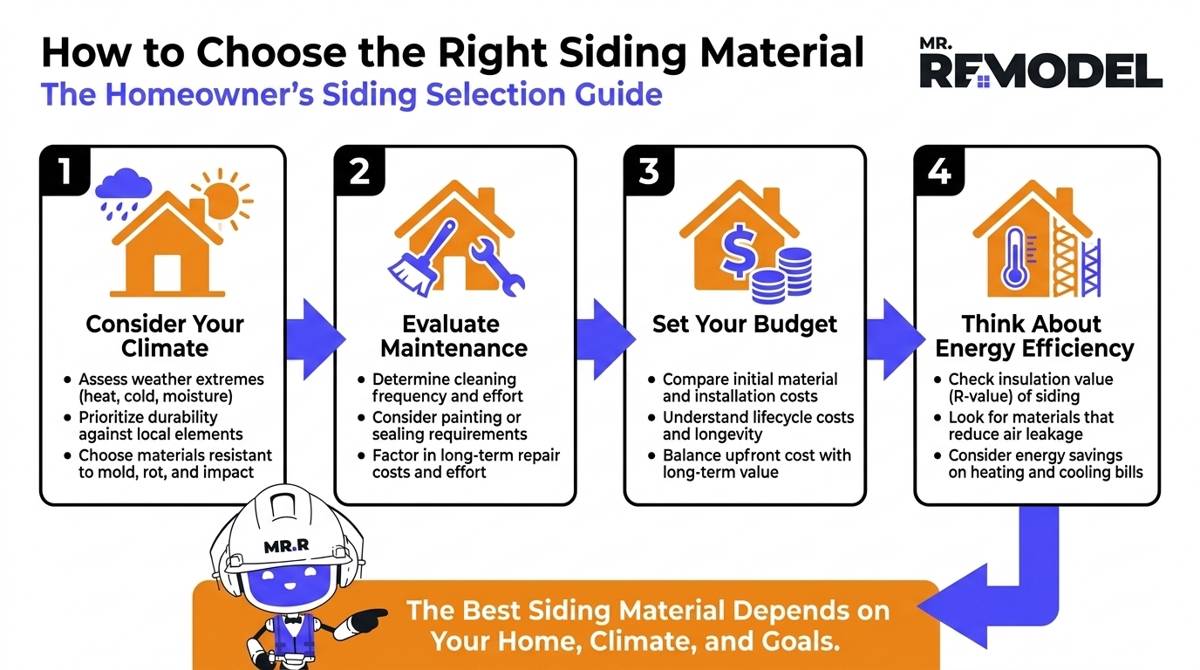
How to Choose the Right Siding Material
The best siding material depends on your home, budget, climate, and maintenance goals. A material that works well in one region may not be the best choice in another.
1. Climate
Start with climate. Homes in wet regions need strong moisture management. Homes in hot, sunny areas need materials that can handle ultraviolet exposure. Homes in storm-prone areas may need impact resistance and easier repair options.
2. Maintenance
Next, think about maintenance. Vinyl and metal are often lower maintenance. Wood usually needs more care. Fiber cement and engineered wood sit somewhere in the middle, depending on the product and finish.
3. Budget
Budget matters too, but it should not be the only factor. A cheaper material may cost less upfront, but may not offer the appearance, durability, or long-term value you want.
4. Energy Efficiency
Energy efficiency can also be part of the decision. Siding replacement can be a good time to improve house wrap, air sealing, or insulation details. The National Association of Home Builders (NAHB) provides housing resources that can help homeowners think about materials, construction quality, and long-term home performance.
Ready to replace your siding? Get a free quote from fully vetted local siding contractors.
Why Vinyl Continues to Lead Homeowner Demand
Vinyl continues to lead homeowner demand because it offers a practical balance of cost, availability, low maintenance, and curb appeal. It may not be the most premium siding option, but it works for many homeowners.
Mr. Remodel data shows 4,057 vinyl siding inquiries out of 5,907 total siding inquiries. That means vinyl represents about 69% of siding material inquiries.
Installation also dominates overall siding demand. The dataset shows 5,462 installation inquiries compared with 445 repair inquiries. Installation accounts for about 92% of siding inquiries.
This does not mean vinyl is always the best siding material. It means many homeowners see vinyl as a practical choice when planning siding installation or replacement.
Frequently Asked Questions
What is the best type of siding?
The best type of siding depends on your budget, climate, maintenance goals, and home style. Vinyl is popular for affordability and low maintenance; fiber cement is often chosen for durability and appearance; wood offers a classic look, and metal or stucco may work well in specific climates.
Is vinyl siding better than fiber cement?
Vinyl siding is usually more affordable and lower maintenance, while fiber cement often offers a more premium look and strong durability. The better choice depends on your budget, design goals, climate, and willingness to handle long-term maintenance.
Is James Hardie siding worth the cost?
James Hardie siding may be worth the cost for homeowners who want premium fiber cement siding, strong curb appeal, and a more wood-like appearance than basic vinyl. It usually costs more than vinyl, so the value depends on your home, budget, and long-term plans.
Which siding lasts the longest?
Brick veneer, fiber cement, metal, stucco, and well-maintained wood can all last for decades. Actual lifespan depends on climate, installation quality, moisture management, maintenance, and product quality.
Which siding requires the least maintenance?
Vinyl and metal siding are often among the lower-maintenance options because they do not need regular painting like wood. Fiber cement and engineered wood can also be manageable, but they may require repainting or finish maintenance over time.
Types of Siding: Final Takeaway
Every siding material has trade-offs. Vinyl is affordable and popular. Fiber cement and James Hardie siding offer premium durability and appearance. Engineered wood gives homeowners a wood-like look with modern product design. Natural wood, metal, stucco, and brick veneer each fit specific styles, climates, and budgets.
The right choice depends on your home’s condition, local climate, maintenance expectations, and long-term goals. To compare siding options for your home, connect with fully vetted local siding contractors.