1-855-QUOTEMR

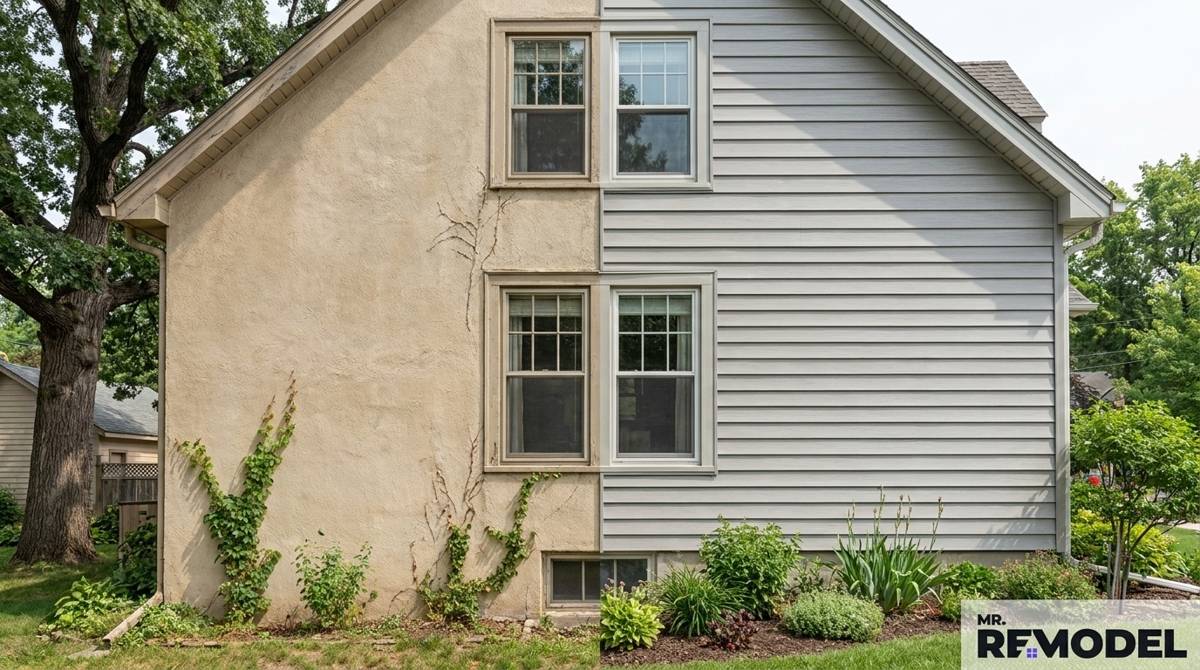
Table of Contents [hide]
Who This Is For:
Homeowners replacing exterior cladding, building a new home, comparing stucco with siding, or trying to choose the best long-term exterior finish for their climate, budget, maintenance goals, and home style.
Key Takeaways:
- Stucco Works Best in the Right Climate: It performs well in many dry and warm regions but can be more difficult in wet or freeze-thaw climates.
- Siding Offers More Choices: Homeowners can compare vinyl, fiber cement, engineered wood, metal, and natural wood.
- Repair Needs Are Different: Stucco repairs can require more specialized matching, while many siding materials allow section-by-section replacement.
- Vinyl Leads Tracked Demand: Vinyl generated 4,057 inquiries in the Mr. Remodel siding dataset.
- The Better Choice Depends on the Home: Climate, maintenance, appearance, installation quality, and budget should guide the decision.
Stucco and siding are both popular exterior finishes, but they work very differently. Stucco creates a seamless cement-based surface, while siding usually uses panels, boards, planks, or shingles attached to the exterior wall.
For homeowners comparing stucco vs siding, the best choice depends on climate, cost, appearance, maintenance, and how long you plan to stay in the home. Stucco may be a strong option in dry or warm climates. Siding may be better if you want more material choices, easier repairs, or a wider range of styles.
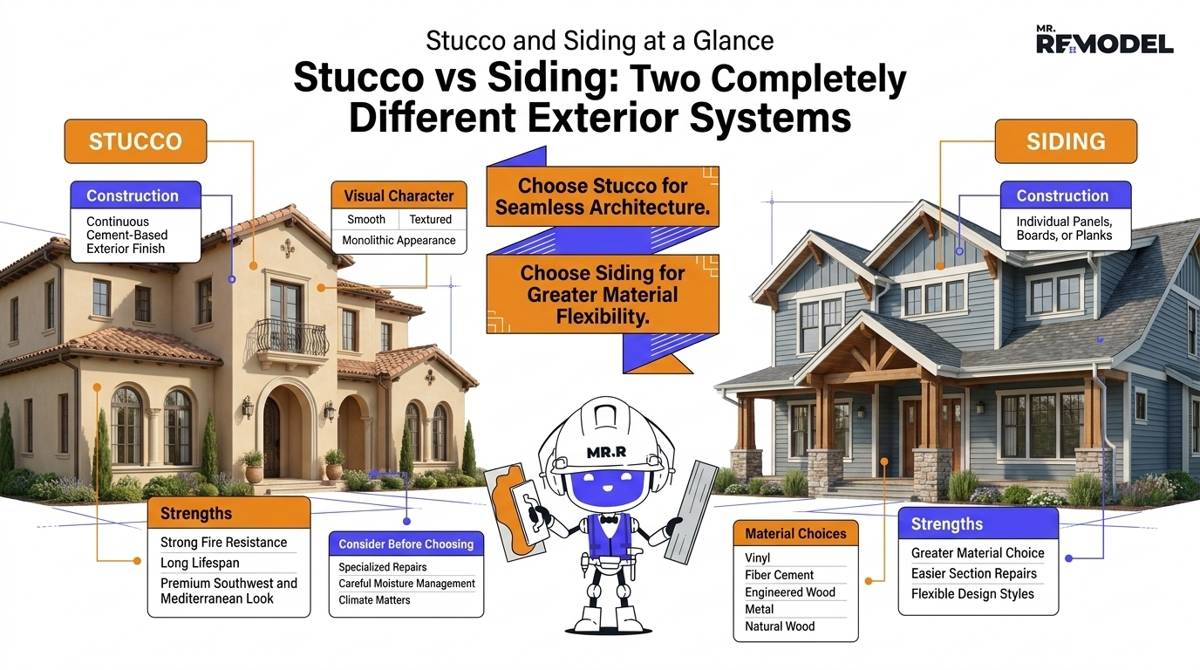
Stucco and Siding at a Glance
Stucco and siding differ most in installation, repair flexibility, material variety, and climate fit.
Stucco often wins when the homeowner wants a clean, continuous exterior finish. Siding often wins when the homeowner wants more choices, easier replacement, and better flexibility across different climates.
Where Stucco Performs Best
Stucco is a cement-based exterior finish, also called Portland cement plaster. The Portland Cement Association’s guide to stucco explains how it is used as an exterior plaster system.
Stucco is common in many warm, dry, and Southwestern-style markets. It can create a smooth or textured look that feels natural on Mediterranean, Spanish, desert modern, and some contemporary homes.
Appearance and Curb Appeal
Stucco has a seamless appearance that siding does not usually match. It can make a home look clean, solid, and regionally appropriate.
It can also be tinted, textured, or painted depending on the system and finish. For the right home style, stucco can create strong curb appeal.
Durability
Stucco can last for decades when it is installed correctly and maintained well. It performs best when the wall system manages water properly, and the surface is protected from major cracking.
The National Association of Home Builders’ Life Expectancy of Home Components can help homeowners consider exterior materials as long-term components rather than short-term upgrades.
Fire Resistance
Stucco has strong fire-resistance qualities because it is cement-based. This can make it appealing in areas where fire resistance is part of the discussion of exterior materials.
No exterior finish makes a home fireproof. Roofing, vents, decks, landscaping, and defensible space also matter.
Stucco Trade-Offs
Stucco is not ideal for every home. It can crack due to settlement, impacts, poor installation, or movement within the wall system.
It can also be more difficult to repair cleanly. Matching texture and color may require a skilled contractor, and poor patching can stand out.
Stucco also needs careful moisture management. In wet climates, areas with poor drainage, or freeze-thaw regions, trapped water can create major problems behind the surface.
Where Siding Performs Best
Siding is a broad category, not one single material. Homeowners can choose vinyl, fiber cement, engineered wood, natural wood, metal, or other products.
This variety is one of siding’s biggest advantages. A homeowner who wants low maintenance may choose vinyl. A homeowner who wants premium durability may choose fiber cement. A homeowner who wants modern curb appeal may compare metal or engineered wood.
More Material Choices
Siding gives homeowners more control over appearance, cost, and maintenance. Common choices include:
- Vinyl for affordability and low maintenance
- Fiber cement for durability and premium appearance
- Engineered wood for a wood-like look
- Natural wood for classic character
- Metal for modern durability
Vinyl generated 4,057 inquiries in the Mr. Remodel dataset, making it the most requested tracked siding material. That likely reflects its wide availability, lower maintenance needs, and practical cost profile.
Easier Section Repairs
Many siding materials can be repaired in sections. If one panel, plank, or area is damaged, a contractor may be able to replace that section.
This depends on whether matching material is available. Older vinyl colors, discontinued profiles, and weathered finishes can still be difficult to match.
Climate Flexibility
Because siding comes in several materials, homeowners can choose a product that better suits their climate. Fiber cement may work well where durability matters. Vinyl may work well for lower-maintenance projects. Metal may appeal in harsh climates or modern designs.
The United States Department of Energy’s Energy Saver design guidance explains that exterior upgrades should be viewed as part of the home’s larger energy and performance system, including insulation, air sealing, and wall assemblies.
See Related: Siding Material Comparison Guide
Cost Comparison: Which One Costs Less?
Stucco and siding costs vary widely by region, wall condition, home size, labor rates, and product choice. Homeowners should treat cost ranges as planning estimates and compare local quotes.
Stucco may be cost-effective in regions where it is common and contractors are experienced with it. In areas where stucco is less common, labor may cost more.
Siding cost depends heavily on the material. Vinyl is usually one of the more affordable options. Fiber cement, engineered wood, metal, and wood can cost more depending on product quality and installation needs.
Stucco May Cost More When:
- The home needs major wall preparation
- Local stucco labor is limited
- Existing siding must be removed
- Moisture damage is found
- Repairs require texture and color matching
Siding May Cost More When:
- A premium material is chosen
- Old siding removal is complex
- Hidden sheathing damage is found
- Trim and flashing details are extensive
- The home has multiple stories or complex walls
See Related: Siding Replacement Guide
Planning to replace your home's exterior? Get a free quote from fully-vetted local siding contractors.
Maintenance Comparison: Which Is Easier to Own?
Neither stucco nor siding is maintenance-free. The easier option depends on the climate and material.
Stucco needs regular inspections for cracks, staining, water intrusion, and surface damage. Small cracks should be addressed before they become larger problems.
Siding maintenance depends on the material. Vinyl is usually low maintenance. Fiber cement and engineered wood may need repainting or finish care. Wood needs the most maintenance.
Stucco Maintenance Usually Includes
Stucco maintenance usually means checking for cracks, repainting or recoating as needed, cleaning stains, inspecting around windows and doors, and ensuring water drains away from the wall.
Siding Maintenance Usually Includes
Siding maintenance may include cleaning, inspecting seams and trim, checking paint or finish condition, replacing damaged panels, keeping gutters clear, and maintaining proper clearance from landscaping.
The United States Department of Agriculture (USDA) Forest Products Laboratory’s Wood Handbook is useful when comparing wood-based siding products because it explains wood durability, moisture, and decay behavior.
Climate Comparison: Which Performs Better?
Climate is one of the biggest factors in the stucco or siding decision.
Dry and Warm Climates
Stucco often performs well in dry, warm climates, especially in areas where it is commonly used. It can fit the local architecture and contractor market.
Siding can also work well in these regions, especially fiber cement, vinyl, metal, and engineered wood.
Humid or Rainy Climates
Siding often gives homeowners more flexibility in humid and rainy climates. Vinyl, fiber cement, and metal may all be considered, depending on the home and installation details.
Stucco can work in wet regions, but only with excellent drainage, flashing, and wall assembly design. Poor moisture management can lead to hidden damage.
Coastal Areas
Coastal homes face wind-driven rain, salt air, humidity, and severe weather. The Federal Emergency Management Agency (FEMA) Home Builder’s Guide to Coastal Construction discusses siding and exterior wall performance in coastal, high-wind, and severe-weather environments.
Both stucco and siding need careful installation in coastal areas. Material choice should follow local code, exposure level, and contractor experience.
Freeze-Thaw Regions
Stucco can be more challenging in freeze-thaw regions if water enters cracks and expands as it freezes. This can worsen cracking and surface damage.
Siding materials may be easier to manage in these climates, though vinyl can become brittle in extreme cold, and wood-based products still need moisture protection.
Wildfire-Prone Areas
Stucco has strong fire-resistance qualities. Fiber cement and metal siding may also be strong options.
Homeowners in wildfire-prone areas should compare exterior wall systems, local codes, and full-home fire-risk factors, not just the surface material.
Hot and Sunny Climates
Stucco often fits hot, sunny climates well. Some siding materials can also perform well, but homeowners should ask about fading, heat movement, finish warranties, and product ratings.
Long-Term Value: Which One Makes More Sense?
Stucco can offer strong long-term value when it fits the region, the home style, and the climate. It may be especially appealing in areas where stucco is common, and buyers expect it.
Siding can offer strong long-term value because it gives homeowners more options. Vinyl may be best for budget-friendly value. Fiber cement may be best for premium durability. Engineered wood may be best for wood-like curb appeal. Metal may be best for modern durability.
Mr. Remodel data shows that homeowners usually evaluate exterior materials during larger installation projects. The dataset includes 5,462 installation inquiries and 445 repair inquiries, meaning installation accounts for about 92% of siding demand.
This shows that homeowners often compare materials when they are already planning a larger exterior upgrade.
Which Should You Choose?
There is no universal winner. Stucco and siding work best in different situations.
Choose Stucco If:
- You live in a dry or warm climate
- Stucco is common in your region
- You want a smooth or textured exterior
- Your home style fits stucco
- You have access to skilled stucco contractors
- Fire resistance is important
Choose Siding If:
- You want more material choices
- You want easier section repairs
- You live in a wet or freeze-thaw climate
- You want vinyl, fiber cement, engineered wood, or metal
- You want more control over cost and maintenance
- You may change materials during replacement
Before deciding, ask contractors how each option performs in your area, what moisture protection is included, how repairs are handled, and whether your existing wall system needs upgrades.
Frequently Asked Questions
Is stucco better than siding?
Stucco is better for some homes, especially in dry or warm climates where it is common and properly installed. Siding may be better for homeowners who want more material choices, easier repairs, or better flexibility in wet or freeze-thaw climates.
Is stucco more expensive than siding?
Stucco can be more or less expensive than siding, depending on region, labor, wall condition, and the siding material being compared. Vinyl is often cheaper than stucco, while premium siding materials like fiber cement, engineered wood, or metal may cost more.
Which lasts longer, stucco or siding?
Both stucco and siding can last for decades when installed and maintained correctly. Stucco can have a long lifespan in the right climate, while fiber cement, metal, and well-maintained wood siding can also last for many years.
Which requires more maintenance?
Stucco usually needs crack inspection, cleaning, and repair when damage appears. Siding maintenance depends on the material. Vinyl and metal are often lower maintenance, while wood, fiber cement, and engineered wood may need more finish care.
Does stucco increase home value?
Stucco can support home value when it fits the home style, climate, and local buyer expectations. However, resale impact depends on installation quality, condition, market demand, and whether buyers in the area prefer stucco or another siding material.
Stucco vs Siding: Final Takeaway
Stucco can be a strong exterior option when the home, climate, and local contractor market support it. It offers a seamless look, strong fire resistance, and long lifespan potential, but it needs careful moisture management and skilled repairs.
Siding offers more material choices, more design flexibility, and often easier repair options. The right choice depends on your climate, budget, maintenance expectations, and home style. To compare exterior options, connect with fully vetted local siding contractors.