1-855-QUOTEMR

Table of Contents [hide]
Who This Is For:
Homeowners replacing siding, comparing several siding materials, planning a major exterior upgrade, or seeking the best long-term balance of cost, durability, maintenance, curb appeal, and climate performance.
Key Takeaways:
- Vinyl Leads Demand: Vinyl is the most requested tracked siding material in the Mr. Remodel dataset.
- No Material Wins Every Category: The best siding depends on your climate, budget, maintenance goals, and home style.
- Premium Options Cost More Upfront: Fiber cement, engineered wood, metal, and wood may offer stronger appearance or durability benefits, but usually require a larger investment.
- Replacement Is the Main Decision Point: Installation accounts for about 92% of Mr. Remodel siding inquiries.
- Side-by-Side Comparisons Matter: Homeowners should compare material performance, not just price.
Choosing siding is not just about picking the color you like best. This siding material comparison guide breaks down vinyl, fiber cement, engineered wood, wood, metal, and stucco by cost, durability, maintenance, lifespan, climate fit, and curb appeal.
Mr. Remodel siding data shows that homeowners usually compare materials when planning larger installation projects. The dataset includes 5,907 siding inquiries, of which 5,462 are installation inquiries, and 445 are repair inquiries.
That means installation accounts for about 92% of siding demand. Vinyl is the strongest tracked material category, with 4,057 inquiries, or about 69% of siding inquiries. Wood generated 354 inquiries, metal generated 198, and stucco generated 73.
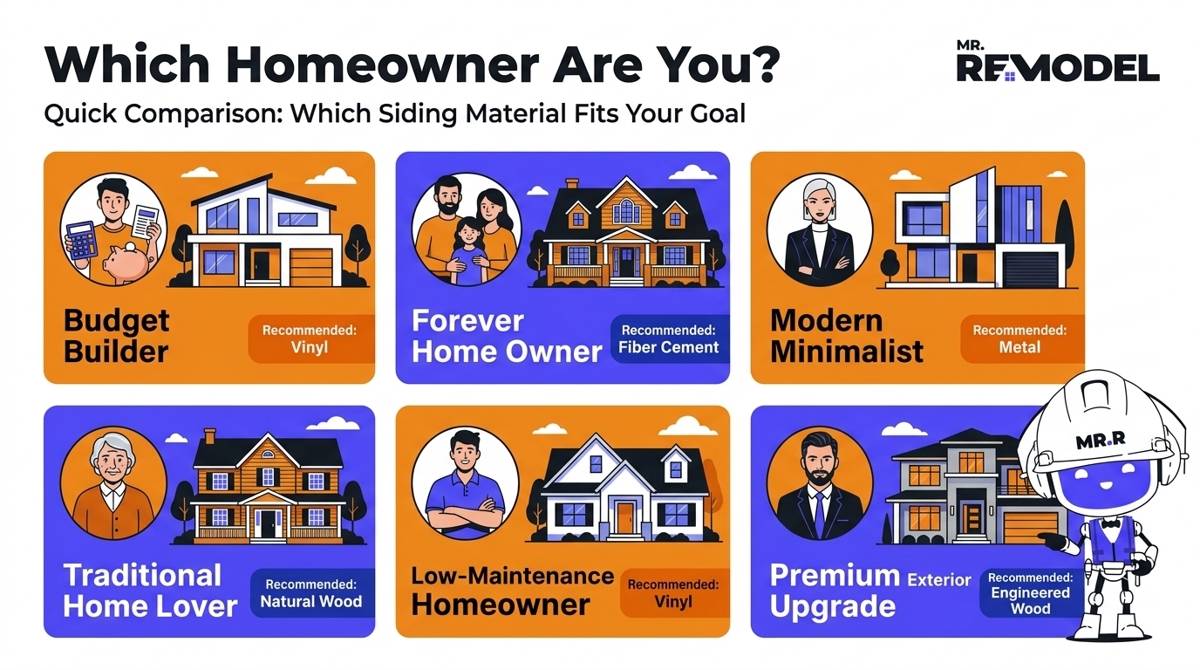
Quick Comparison: Which Siding Material Fits Your Goal?
Before comparing each material in detail, it helps to start with the homeowner's goal. The best siding material depends on what matters most to you.
Why Choosing the Right Material Matters
Siding protects the home from wind, rain, sun, pests, and moisture. It also affects curb appeal, maintenance, comfort, and buyer perception.
The United States Department of Energy explains that exterior upgrades are part of the home’s larger energy and comfort system. Its Energy Saver design guidance can help homeowners think about siding, insulation, air sealing, and exterior improvements together.
The Wrong Material Can Create Problems
A poor material match can lead to:
- More maintenance than expected
- Faster fading or wear
- Moisture issues
- Higher repair costs
- Poor curb appeal
- Shorter siding lifespan
The Right Material Should Match Your Home
A strong siding choice should fit:
- Your climate
- Your budget
- Your home style
- Your maintenance tolerance
- Your long-term plans
- Your neighborhood or homeowners' association rules
Side-by-Side Siding Material Comparison
Here is the broad material comparison homeowners usually need before narrowing down quotes.
|
|
|---|
These are planning ranges, not guarantees. Actual performance depends on product quality, installation, weather exposure, and maintenance.
Vinyl vs Fiber Cement Siding
Vinyl and fiber cement are two of the most common siding options homeowners compare. Vinyl usually wins on affordability and low maintenance. Fiber cement usually wins on premium appearance and durability.
Choose Vinyl If You Want:
- Lower upfront cost
- Easier maintenance
- Wide color and style availability
- A practical whole-home replacement option
Choose Fiber Cement If You Want:
- A more premium exterior
- Stronger durability
- Better fire resistance
- A painted wood-style look
James Hardie’s Why Hardie resource explains fiber cement performance, durability, and weather resistance from a manufacturer's perspective. Homeowners should still compare product lines, warranties, and local installation experience before choosing.
See Related: Vinyl vs Fiber Cement Siding
James Hardie vs LP SmartSide
James Hardie and LP SmartSide are both premium siding options, but they are not the same material. James Hardie is fiber cement. LP SmartSide is engineered wood.
LP Building Solutions provides product details for LP SmartSide Trim & Siding, including engineered wood siding styles, trim options, installation resources, and warranty information.
Choose James Hardie If You Want:
- Fiber cement durability
- Better fire resistance
- A premium painted exterior look
- Strong brand recognition
Choose LP SmartSide If You Want:
- A warmer wood-like appearance
- Lighter material handling
- Deep texture
- A premium alternative to vinyl and natural wood
See Related: James Hardie vs LP SmartSide
Wood vs Fiber Cement Siding
Wood and fiber cement are often compared because both can deliver a classic, higher-end look. The difference is maintenance.
Choose Wood If You Want:
- Natural texture
- Historic character
- Custom stain or paint options
- A traditional exterior
Choose Fiber Cement If You Want:
- A wood-like look with less upkeep
- Stronger resistance to pests and rot
- Better fire resistance
- Longer-term durability with moderate maintenance
The USDA Forest Products Laboratory’s Wood Handbook explains wood as a building material, including moisture, durability, and decay considerations. This is useful when comparing natural wood siding with lower-maintenance alternatives.
See Related: Wood vs Fiber Cement Siding
Stucco vs Siding
Stucco is different from panel or board siding. It is a cement-based exterior finish applied in layers. It can work well in the right climate but can be risky when moisture management is poor.
Choose Stucco If You Want:
- A smooth or textured exterior
- A regionally appropriate finish
- A clean, continuous look
- A material commonly used by local contractors
Choose Other Siding If You Want:
- Easier panel replacement
- More material variety
- More predictable repair matching
- Better fit for wet or freeze-thaw climates
Stucco generated 73 inquiries in the Mr. Remodel dataset, making it the smallest tracked material category. That does not mean stucco is rare everywhere. It is highly regional.
See Related: Stucco vs Siding
Metal vs Vinyl vs Fiber Cement
Metal siding is a smaller category than vinyl, but it can be a strong option for homeowners who want durability, a modern look, and lower maintenance than wood.
Choose Metal If You Want:
- Modern curb appeal
- Pest resistance
- Fire resistance
- Long lifespan potential
- A strong exterior material
Choose Vinyl If You Want:
- Lower cost
- Lower maintenance
- Broad availability
- Traditional residential appearance
Choose Fiber Cement If You Want:
- Premium appearance
- Strong durability
- Better wood-like design
- Fire resistance with a traditional look
The Federal Emergency Management Agency (FEMA) Home Builder’s Guide to Coastal Construction discusses siding and exterior wall performance in coastal, high-wind, and severe-weather environments. This can help homeowners think through material performance in demanding climates.
Which Material Is Best for Your Budget?
Budget is often the first filter homeowners use. It should not be the only one, but it matters.
Best Lower-Cost Option
Vinyl
Vinyl is usually the most practical, lower-cost option. It is widely available, easy to maintain, and popular for whole-home replacement.
Best Mid-Range Options
Engineered Wood
Engineered wood can be a good middle-ground choice for homeowners who want more texture than vinyl without moving into the highest-cost materials.
Metal
Metal can be mid-range to premium depending on panel type, finish, and installation complexity.
Best Premium Options
Fiber Cement
Fiber cement is often a premium choice for homeowners who want durability and a painted wood-like appearance.
Natural Wood
Wood can be expensive due to material costs and maintenance needs.
Stucco
Stucco cost varies by region, labor, repair needs, and wall assembly.
See Related: Siding Replacement Guide
Which Material Is Best for Low Maintenance?
Maintenance can affect the real long-term cost of siding.
Lowest Maintenance Choices
- Vinyl
- Metal
These materials do not require regular painting like wood. They still need cleaning and inspection.
Moderate Maintenance Choices
- Fiber cement
- Engineered wood
- Stucco
These may need repainting, finish care, crack repair, or moisture monitoring.
Highest Maintenance Choice
- Natural wood
Wood needs regular painting or staining, caulking, sealing, and inspection for rot or pests.
Which Material Is Best for Curb Appeal?
Curb appeal depends on the home’s style. The best-looking siding on one home may look wrong on another.
Best for Traditional Homes
- Fiber cement
- James Hardie
- Wood
- Vinyl with upgraded profiles
Best for Modern Homes
- Metal
- Fiber cement panels
- Engineered wood
- Mixed-material designs
Best for Historic Homes
- Natural wood
- Fiber cement alternatives
- Carefully selected engineered wood
Best for Budget-Friendly Curb Appeal
- Vinyl
- Insulated vinyl
- Mixed vinyl profiles
Which Material Is Best for Different Climates?
Climate should be one of the biggest siding decisions.
Cold Climates
Best materials to compare:
- Fiber cement
- Engineered wood
- Metal
- Higher-quality vinyl
Watch for:
- Freeze-thaw cycles
- Brittleness in low-quality vinyl
- Moisture behind siding
- Snow and ice buildup
Humid Climates
Best materials to compare:
- Vinyl
- Fiber cement
- Metal
- Properly installed engineered wood
Watch for:
- Moisture intrusion
- Mold or mildew
- Rot in wood materials
- Failed flashing
Coastal Climates
Best materials to compare:
- Fiber cement
- Metal with corrosion protection
- Engineered wood with strong moisture detailing
- Stucco where regionally appropriate
Watch for:
- Salt air
- Wind-driven rain
- High humidity
- Local code requirements
Wildfire-Prone Areas
Best materials to compare:
- Fiber cement
- Metal
- Stucco
Watch for:
- Local fire codes
- Defensible space
- Vent protection
- Roofing and deck materials
Sunny Climates
Best materials to compare:
- Fiber cement
- Stucco
- Metal
- Higher-quality vinyl
Watch for:
- Fading
- Heat movement
- Finish warranties
- Expansion and contraction
Which Material Offers the Best Value?
The best value is not always the cheapest option. Value is the balance of upfront cost, maintenance, lifespan, appearance, and repairability.
Best Value for Budget Projects
Vinyl
Vinyl often provides the strongest value for homeowners who need a practical replacement at a manageable price.
Mr. Remodel data supports vinyl’s popularity. Vinyl generated 4,057 inquiries, or about 69% of tracked siding inquiries.
Best Value for Premium Durability
Fiber Cement
Fiber cement can be a strong, long-term value for homeowners who want durability and a premium exterior.
Best Value for Wood-Like Appearance
Engineered Wood
Engineered wood may be a good fit for homeowners who want a realistic texture and a warmer appearance without choosing traditional wood.
Best Value for Modern Homes
Metal
Metal can offer long-term durability, fire resistance, and a clean, contemporary look.
Best Value for Regional Styles
Stucco
Stucco can be a strong value where it is common, climate-appropriate, and installed by experienced local contractors.
Replacing your siding? Get a free quote from fully vetted local siding contractors.
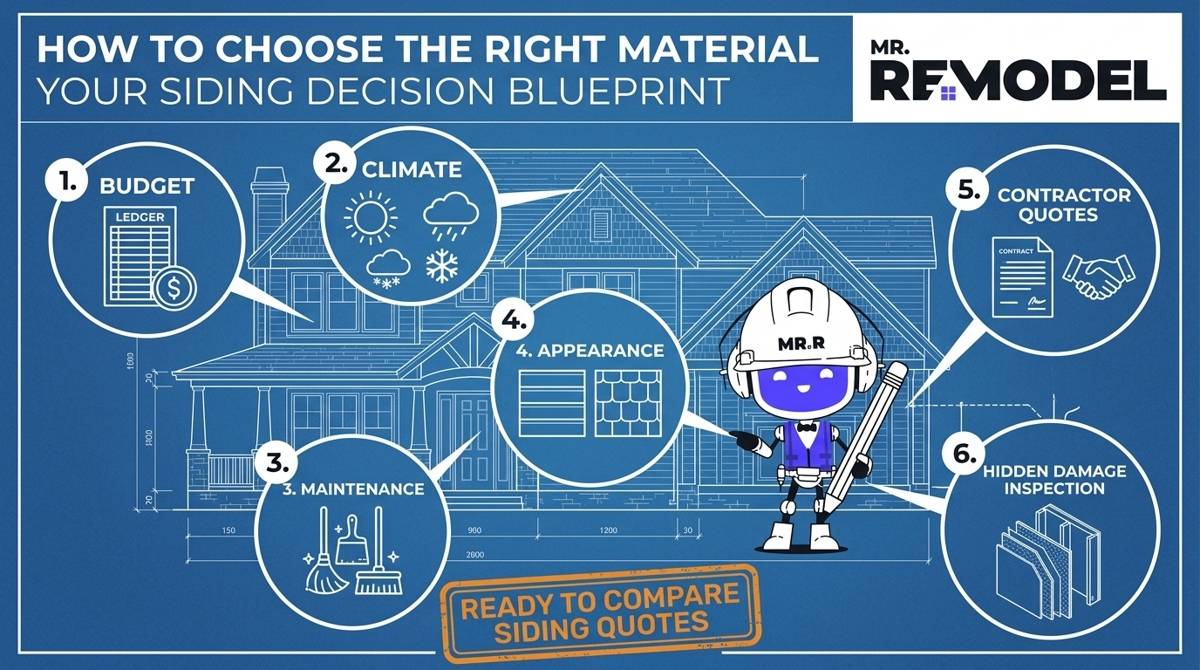
How to Choose the Right Material
Use this decision framework before requesting quotes.
1. Start With Your Budget
Ask:
- What is my total project budget?
- Am I prioritizing the lowest upfront cost?
- Can I pay more for longer-term performance?
2. Consider Your Climate
Ask:
- Is my area wet, dry, coastal, cold, hot, or storm-prone?
- Do I need better fire resistance?
- Do I need better moisture performance?
3. Decide How Much Maintenance You Want
Ask:
- Am I willing to repaint?
- Do I want low-maintenance siding?
- How often do I want to inspect or clean it?
4. Match the Material to the Home Style
Ask:
- Does the siding fit my architecture?
- Will it look right in my neighborhood?
- Are there homeowners' association (HOA) rules?
5. Compare Full Quotes, Not Just Material Prices
A siding quote should include:
- Old siding removal
- Disposal
- House wrap
- Flashing
- Trim
- Repairs
- Labor
- Warranty
- Cleanup
- Timeline
6. Ask About Hidden Damage
Old siding can hide:
- Moisture damage
- Rotten sheathing
- Pest damage
- Failed flashing
- Missing weather barrier
A good contractor should explain how hidden issues are handled.
Why Most Homeowners Compare Materials During Replacement
Most homeowners compare siding materials when they are planning a larger exterior project, not a small repair.
The Mr. Remodel dataset shows 5,462 installation inquiries and 445 repair inquiries. Installation accounts for about 92% of siding inquiries.
This shows that homeowners are usually thinking beyond a quick patch. They are comparing materials, costs, maintenance, and long-term value.
This is the right time to decide whether to stay with a familiar option like vinyl or upgrade to fiber cement, engineered wood, metal, stucco, or another material.
Frequently Asked Questions
What is the best siding material?
The best siding material depends on your budget, climate, maintenance goals, and home style. Vinyl is practical and affordable, fiber cement offers premium durability, engineered wood provides a wood-like look, metal works well for modern durability, and stucco can be strong in the right climate.
Which siding lasts the longest?
Metal, fiber cement, stucco, brick veneer, and well-maintained wood can all last for decades. Actual lifespan depends on installation quality, moisture management, climate, product quality, and routine maintenance.
What is the cheapest siding material?
Vinyl siding is often one of the cheapest common siding materials for homeowners. Final cost depends on home size, product quality, labor, removal, trim, repairs, and local pricing.
Which siding requires the least maintenance?
Vinyl and metal are often among the lowest-maintenance siding options because they do not need routine painting like wood. Fiber cement and engineered wood may require repainting or finish care over time.
Does better siding increase home value?
Better siding can support home value by improving curb appeal, reducing visible maintenance concerns, and helping buyers feel more confident about the home’s exterior. Exact resale impact depends on material, installation quality, home condition, local market conditions, and buyer preferences.
Siding Material Comparison Guide: Final Takeaway
There is no universal best siding material. Vinyl is popular because it is affordable, low-maintenance, and widely available. Fiber cement offers premium durability. James Hardie is a leading fiber cement brand. LP SmartSide gives homeowners an engineered wood option with a strong texture. Wood, metal, and stucco each fit specific climates, budgets, and design goals.
The right choice depends on your climate, budget, maintenance expectations, home style, and long-term plans. To compare materials and installation options, connect with fully vetted local siding contractors.