1-855-QUOTEMR

Table of Contents [hide]
Who This Is For
Homeowners who want maximum durability, live in harsh climates, are considering steel or aluminum siding, or are comparing premium siding materials before replacing their home’s exterior.
Key Takeaways:
- Durable Choice: Metal siding is one of the most durable residential siding materials available.
- Steel and Aluminum Differ: Steel is usually stronger, while aluminum is lighter and naturally corrosion-resistant.
- Higher Upfront Cost: Metal siding generally costs more than vinyl but may last longer.
- Niche Demand: Metal siding generated 198 inquiries in the Mr. Remodel dataset.
- Replacement Context Matters: Most siding inquiries are for installation, not repair.
Metal siding is no longer just for barns, garages, or commercial buildings. More homeowners are considering metal siding for modern curb appeal, strong weather resistance, low maintenance, and long-term durability.
It is still a smaller residential siding category than vinyl, but it can be a smart choice for the right home. Before choosing it, homeowners should compare steel, aluminum, vinyl, fiber cement, and engineered wood based on cost, appearance, climate, and long-term maintenance.
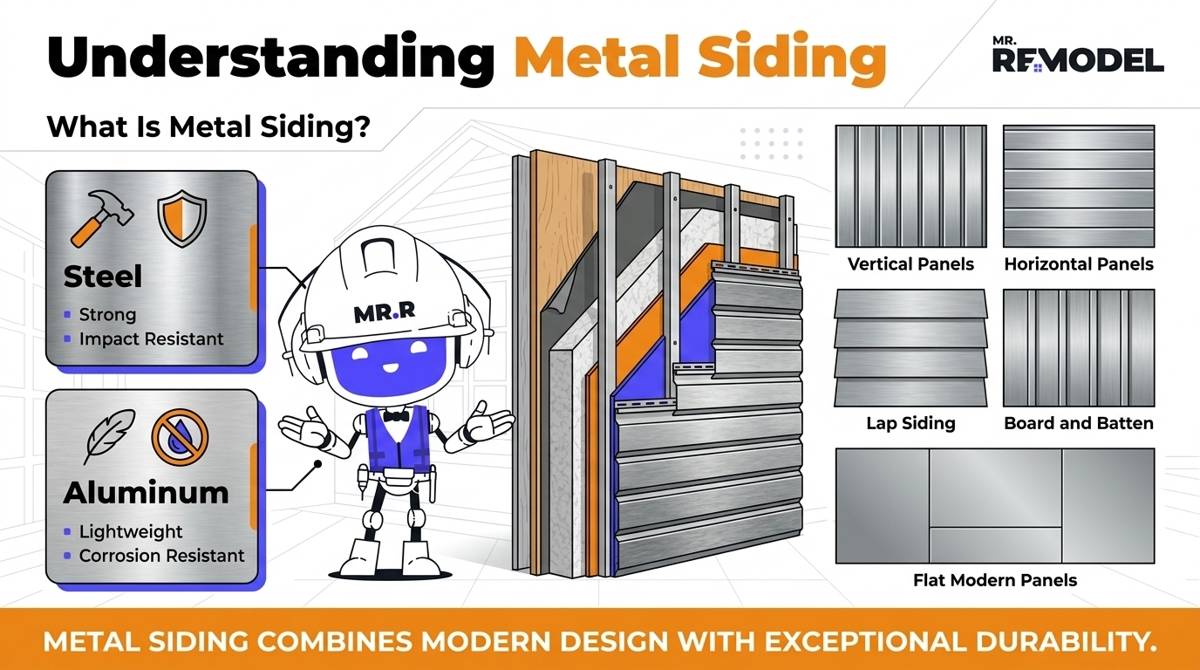
What Is Metal Siding?
Metal siding is exterior cladding made from steel, aluminum, or another metal product. For homes, the most common options are steel siding and aluminum siding.
Steel siding is usually valued for strength and impact resistance. Aluminum siding is lighter and naturally resistant to corrosion, which can make it useful in some moisture-prone or coastal settings.
Metal siding can be installed in vertical panels, horizontal panels, lap profiles, board and batten styles, ribbed panels, or modern flat designs. It can create a clean contemporary look, but it can also work on farmhouse, industrial, and mixed-material exteriors.
The National Institute of Building Sciences (NIBS) explains exterior wall performance through its Whole Building Design Guide: Building Envelope Design Guide. For homeowners, the key takeaway is that siding works as part of a larger exterior wall system, not as a standalone material.
Pros of Metal Siding
Metal siding can offer major advantages when durability and low maintenance are priorities.
Exceptional Lifespan
Metal siding can last for decades when properly installed and maintained. Lifespan depends on the metal type, coating, climate, maintenance, and installation quality.
Steel products rely on protective coatings to help resist corrosion. The Steel Framing Industry Association explains steel’s durability and corrosion resistance in its steel durability resources, which can help homeowners understand why coating and exposure matter.
Fire Resistance
Metal does not burn like wood siding. That can make it appealing in areas where fire resistance is a concern.
Homeowners in wildfire-prone regions should still follow local code requirements and broader fire-safety guidance. No siding material protects a home by itself.
Insect Resistance
Metal siding is not attractive to termites, carpenter ants, or wood-boring insects. This can reduce one common maintenance concern compared with natural wood siding.
Moisture Resistance
Metal does not rot like wood. Aluminum, in particular, is known for its corrosion resistance. The Aluminum Association’s building and construction resources explain aluminum’s durability, corrosion resistance, and residential building uses.
Moisture management still matters. Water must drain correctly behind and around siding to protect the full wall system.
Low Maintenance
Metal siding does not require the same painting or sealing schedule as traditional wood siding. Maintenance usually includes cleaning, inspecting coatings, checking fasteners, and repairing scratches or dents.
Modern Appearance
Metal siding can give a home a clean, modern look. It also pairs well with wood accents, stone, brick, or fiber cement on mixed-material exteriors.
Cons of Metal Siding
Metal siding is durable, but it is not the right material for every home or budget.
Higher Upfront Cost
Metal siding usually costs more than basic vinyl. Final pricing depends on whether the homeowner chooses steel or aluminum, the panel profile, finish, home size, labor, removal, trim, repairs, and local market conditions.
Homeowners should compare detailed local quotes and make sure each estimate includes the same scope, material, finish, flashing, trim, removal, disposal, and warranty details.
See Related: Siding Replacement Guide
Dents and Impact Damage
Aluminum can dent more easily than steel. Hail, branches, and impact from equipment may leave visible damage.
Steel can also dent, though it is usually stronger than aluminum.
Thermal Expansion
Metal expands and contracts with temperature changes. Proper installation helps allow movement without buckling, oil-canning, or fastener issues.
Noise During Rain or Hail
Metal siding may be noisier than some materials during heavy rain or hail, depending on wall assembly, insulation, and panel profile.
Specialized Installation
Metal siding requires experienced installation. Cutting, fastening, flashing, trim details, and coating protection all matter.
The Federal Emergency Management Agency (FEMA) Home Builder’s Guide to Coastal Construction discusses siding and exterior wall performance in coastal, high-wind, and severe-weather environments.
Planning a siding replacement? Get a free quote from fully vetted local siding contractors.
Steel vs Aluminum vs Vinyl
Steel, aluminum, and vinyl are often compared because they serve different homeowner priorities.
Steel siding is strong and durable, but it depends on protective coatings to resist corrosion. Aluminum is lighter and naturally corrosion-resistant, but it may dent more easily. Vinyl is usually more affordable and widely used, but it may not match metal’s strength or lifespan in some applications.
|
|
|---|
Mr. Remodel siding data contains 5,907 siding inquiries. Metal siding generated 198 inquiries, representing about 3.4% of tracked siding inquiries. Vinyl generated 4,057 inquiries, making it the most requested tracked siding material.
This means metal siding is a niche choice compared with vinyl. However, homeowners who research metal siding are often focused on durability, modern design, and long-term performance.
See Related: Vinyl Siding
How Long Does Metal Siding Last?
Metal siding can often last several decades when properly installed and maintained. Exact lifespan depends on whether the material is steel or aluminum, the quality of the coating, climate, exposure, and upkeep.
Steel siding needs coating protection to reduce rust risk. Scratches or exposed edges should be repaired quickly to help prevent corrosion.
Aluminum does not rust like steel, but it can oxidize, fade, or dent. It may need cleaning and occasional finish attention.
Climate matters too. Coastal salt air, heavy rain, hail, snow, freeze-thaw cycles, and intense sun can affect long-term performance.
The United States Department of Energy’s Energy Saver design guidance explains that exterior upgrades should be considered as part of the home’s overall energy and performance system. Siding replacement can be a good time to review insulation, air sealing, house wrap, flashing, and exterior wall condition.
Is Metal Siding Worth It?
Metal siding may be worth it for homeowners who want durability, low maintenance, fire resistance, pest resistance, and modern curb appeal. It can be especially appealing for homes in harsh climates or for homeowners who want a more contemporary exterior.
It may be a good fit if you:
- Want a long-lasting siding material
- Prefer a modern or farmhouse-style exterior
- Want strong pest resistance
- Are comparing premium siding options
- Live in a region with harsh weather
- Want lower maintenance than natural wood
- Are prepared for a higher upfront cost
Mr. Remodel data shows homeowners most commonly invest in full siding installation when upgrading their exterior. Installation generated 5,462 inquiries, while repair generated 445 inquiries. That means installation represents about 92% of siding inquiries.
This does not mean every homeowner needs replacement. It does show that siding material comparisons often happen during larger exterior projects, not small repairs.
Frequently Asked Questions
Is metal siding good for houses?
Yes, metal siding can be good for houses when homeowners want durability, low maintenance, fire resistance, pest resistance, and modern curb appeal. It works best when installed correctly with proper flashing, coatings, and wall-system details.
How long does metal siding last?
Metal siding can often last several decades, depending on the material, coating, climate, installation quality, and maintenance. Steel needs corrosion protection, while aluminum resists rust but may dent or oxidize over time.
Is steel siding better than aluminum siding?
Steel siding is usually stronger and more impact-resistant, while aluminum is lighter and naturally corrosion-resistant. The better choice depends on climate, budget, desired appearance, and whether impact resistance or corrosion resistance is the higher priority.
Does metal siding rust?
Steel siding can rust if protective coatings are damaged or if exposed edges are not maintained. Aluminum siding does not rust like steel, but it can oxidize, fade, or dent depending on exposure and finish quality.
How much does metal siding cost?
Metal siding usually costs more than basic vinyl siding, but exact pricing depends on steel versus aluminum, panel style, finish, home size, labor, removal, repairs, and local market conditions. Homeowners should compare detailed local quotes rather than relying on a single national estimate.
Metal Siding: Final Takeaway
Metal siding offers strong durability, long lifespan potential, low maintenance, and a modern look. Steel and aluminum each have different strengths, so the right choice depends on your climate, budget, home style, and maintenance expectations.
Metal siding is a smaller share of homeowner demand than vinyl, but it can be a strong option for homeowners who want premium exterior performance. To compare siding options, connect with fully vetted local siding contractors.