1-855-QUOTEMR

Table of Contents [hide]
Who This Is For:
Homeowners replacing siding, choosing between James Hardie and LP SmartSide, comparing premium siding products, or trying to balance durability, cost, maintenance, and long-term value before requesting contractor quotes.
Key Takeaways:
- Different Materials: James Hardie is fiber cement, while LP SmartSide is engineered wood.
- James Hardie Is Stronger for Fire Resistance: It is often the better choice when fire resistance is a major concern.
- LP SmartSide Is Lighter: It is usually easier to handle and may be less labor-intensive to install.
- Both Need Proper Installation: Flashing, clearances, sealing, and moisture control matter for both products.
- The Better Choice Depends on Your Home: Climate, budget, appearance goals, and contractor experience should guide the decision.
James Hardie and LP SmartSide are two popular premium siding choices for homeowners who want more than basic vinyl. Both can improve curb appeal, support long-term exterior protection, and create a more polished look.
The main difference is material. James Hardie is fiber cement siding. LP SmartSide is engineered wood siding. That difference affects cost, installation, maintenance, fire resistance, moisture performance, and long-term value.
Mr. Remodel siding data shows that homeowners often compare materials during larger exterior projects. The dataset includes 5,907 siding inquiries, with 5,462 installation inquiries and 445 repair inquiries.
That means installation accounts for about 92% of siding demand. This supports a common homeowner pattern: major siding material comparisons usually happen during larger installation or replacement projects, not small repairs.
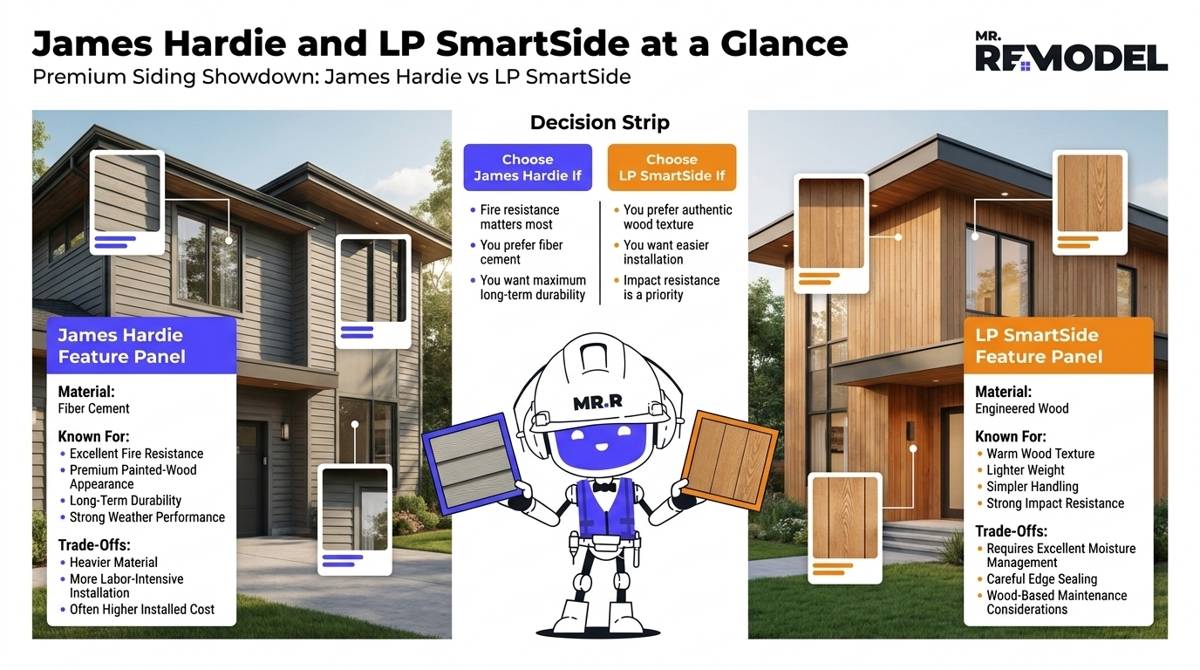
James Hardie and LP SmartSide at a Glance
Both products are strong siding options, but they are built for different homeowner priorities.
This comparison does not mean one product is always better. James Hardie may be the better fit for one home, while LP SmartSide may make more sense for another.
What Is James Hardie Siding?
James Hardie is a leading fiber cement siding manufacturer. Its siding is made from cement, sand, cellulose fibers, and other ingredients designed to create a durable exterior cladding product.
The company’s "Why Hardie" resource explains its fiber-cement composition, durability, weather resistance, and performance benefits from the manufacturer’s perspective.
James Hardie products include lap siding, vertical panels, shingles, trim, and prefinished options. Homeowners often choose it when they want a painted wood look with stronger durability than many lower-cost siding materials.
Where James Hardie Performs Well
James Hardie is often a strong fit for homeowners who want:
- A premium exterior look
- Better fire resistance
- Strong durability
- A painted wood-style appearance
- A product with broad brand recognition
It can work well on craftsman, farmhouse, colonial, traditional, and higher-end homes.
Where James Hardie Has Trade-Offs
James Hardie is heavier than LP SmartSide and vinyl. That usually makes installation more labor-intensive.
It may also cost more to install because contractors need to follow specific cutting, fastening, flashing, and clearance details. Depending on the finish and climate, repainting or finish maintenance may be needed over time.
See Related: Fiber Cement Siding
What Is LP SmartSide?
LP SmartSide is an engineered wood siding product from LP Building Solutions. It is made from wood strands or fibers combined with resins, waxes, binders, and protective treatments.
LP Building Solutions provides product details for LP SmartSide Trim & Siding, including siding styles, trim options, installation resources, and warranty information.
LP SmartSide is often chosen by homeowners who want a more natural, wood-like texture without using traditional solid-wood siding.
Where LP SmartSide Performs Well
LP SmartSide is often a strong fit for homeowners who want:
- A warm wood-like appearance
- Strong texture
- A lighter material than fiber cement
- Easier handling during installation
- A premium alternative to vinyl
Because it is lighter than fiber cement, it can be easier for trained contractors to cut, carry, and install.
Where LP SmartSide Has Trade-Offs
LP SmartSide is still a wood-based product, so moisture management is important. It needs proper clearances, sealing, flashing, and installation.
If cuts, edges, or joints are handled poorly, water can become a long-term problem. Homeowners should ask contractors how they protect edges, manage drainage, and follow manufacturer installation requirements.
See Related: Engineered Wood Siding
Cost Comparison: Which One Is More Affordable?
LP SmartSide is often less expensive to install than James Hardie because it is lighter and can be easier to handle. James Hardie is heavier, which can raise labor time and installation complexity.
However, final pricing depends on many factors, including home size, siding profile, trim package, removal, repairs, finish, labor market, and local contractor experience.
Homeowners should treat siding replacement costs as planning estimates and compare detailed local quotes.
James Hardie May Cost More Because:
It is heavier, more labor-intensive, and often requires more specialized handling. Cutting, fastening, and clearance details must be followed carefully.
LP SmartSide May Cost Less Because:
It is lighter, easier to handle, and may install faster in some projects. Still, it must be installed correctly to protect against moisture issues.
See Related: Siding Material Comparison Guide
Durability Comparison: Which One Holds Up Better?
Both products are durable, but they perform differently because they are made from different materials.
James Hardie generally has the advantage for fire resistance and resistance to some moisture and pest concerns. LP SmartSide often performs well for impact resistance and offers a strong engineered wood profile.
The Federal Emergency Management Agency (FEMA) Home Builder’s Guide to Coastal Construction discusses siding and exterior wall performance in coastal, high-wind, and severe-weather environments. This is useful when comparing siding for demanding climates.
Fire Resistance
James Hardie usually has the stronger fire-resistance profile because it is fiber cement. This may matter in wildfire-prone areas or regions with stricter fire-related building concerns.
LP SmartSide is engineered wood, so it does not have the same fire-resistance advantage as fiber cement.
Moisture Resistance
Both products can perform well when installed correctly. The key is moisture management.
James Hardie needs proper clearances, flashing, and caulking. LP SmartSide needs proper sealing, edge protection, flashing, and drainage.
The United States Department of Agriculture (USDA) Forest Products Laboratory’s Wood Handbook explains wood durability, moisture, and decay behavior, which is useful when evaluating engineered wood products.
Impact Resistance
LP SmartSide is often valued for impact resistance and a more flexible engineered wood structure. James Hardie is also durable, but fiber cement can be more brittle under certain impact conditions.
For hail-prone homes, homeowners should compare product specifications, local contractor experience, and warranty details.
Planning a siding replacement? Get a free quote from fully vetted local siding contractors.
Maintenance Comparison: Which One Is Easier to Own?
Neither James Hardie nor LP SmartSide is maintenance-free. Both need routine inspection, cleaning, and occasional finish care.
James Hardie may need repainting depending on the product finish, climate, and exposure. LP SmartSide may also need repainting or finish maintenance, especially where sun, moisture, or impact damage the coating.
Maintenance for James Hardie
Homeowners should watch for cracked caulk, finish wear, gaps, moisture staining, and clearance issues near roofs, decks, patios, and grade.
Maintenance for LP SmartSide
Homeowners should watch for exposed edges, damaged paint, gaps, water collection points, and areas where siding touches landscaping, roofing, or hard surfaces.
The National Association of Home Builders (NAHB) Life Expectancy of Home Components can help homeowners think about siding as a long-term home component, not just a one-time purchase.
Climate Comparison: Which One Performs Better?
Climate should guide the final decision. The best choice may change depending on moisture, heat, fire risk, storms, and local installation standards.
Cold Climates
Both products can work in cold climates when installed correctly. James Hardie may be appealing for durability, while LP SmartSide may appeal to homeowners who want a warmer wood-like appearance.
Humid and Rainy Regions
Moisture management is critical for both products. James Hardie generally has the edge for moisture durability as a fiber cement product, but LP SmartSide can also perform well when installation and sealing are handled properly.
Coastal Areas
Coastal homes face wind-driven rain, humidity, and salt air. James Hardie may have the edge for moisture and weather resistance, but both products need correct flashing and wall assembly details.
Wildfire-Prone Areas
James Hardie usually has the advantage because of fiber cement’s stronger fire-resistance profile. Homeowners should still follow local code, defensible space guidance, and full-home fire-risk planning.
Hail-Prone Areas
LP SmartSide may be attractive in hail-prone regions because of its impact resistance. James Hardie is durable, but homeowners should compare product-specific impact information and local contractor recommendations.
Hot and Sunny Climates
Both products can experience finish wear over time. Homeowners should ask about color performance, repainting, finish warranties, and sun exposure.
Which Siding Should You Choose?
The better choice depends on your priorities. James Hardie and LP SmartSide are both premium options, but they are not interchangeable.
Choose James Hardie If:
- Fire resistance is a top priority
- You want fiber cement durability
- You prefer a painted wood-like look
- You are comfortable with a heavier installation
- You want strong brand recognition
- You are planning a long-term exterior upgrade
Choose LP SmartSide If:
- You want a warmer wood-like texture
- You prefer a lighter material
- Installation efficiency matters
- Impact resistance is important
- You want a premium alternative to vinyl
- You are comfortable maintaining a wood-based product
Ask Contractors Before Deciding
Before choosing either product, ask about installation experience, local climate performance, warranty coverage, repainting expectations, old siding removal, house wrap, flashing, trim details, and hidden repair costs.
The right contractor matters as much as the product. A premium siding material can still perform poorly if it is installed incorrectly.
See Related: Siding Replacement Guide
Why Most Homeowners Compare Premium Siding During Replacement
Most homeowners compare premium siding products during larger installation projects. That matches Mr. Remodel siding data.
The dataset includes 5,462 installation inquiries and 445 repair inquiries. Installation accounts for about 92% of siding demand, while repair accounts for about 8%.
This shows that homeowners often evaluate materials when planning a larger exterior upgrade rather than just a small repair.
Frequently Asked Questions
Is James Hardie better than LP SmartSide?
James Hardie may be better if fire resistance, fiber cement durability, and a premium painted exterior are top priorities. LP SmartSide may be better if you want lighter installation, a warmer wood-like texture, and strong impact resistance.
Which siding lasts longer?
Both products can last for decades when installed and maintained correctly. Actual lifespan depends on climate, finish quality, installation details, moisture management, maintenance, and warranty terms.
Which siding costs more?
James Hardie often costs more to install because fiber cement is heavier and more labor-intensive. LP SmartSide may cost less in some projects because it is lighter and easier to handle, but final pricing depends on home size, labor, trim, repairs, and local market conditions.
Is LP SmartSide easier to install?
LP SmartSide is generally easier to handle than James Hardie because it is lighter. However, it still requires proper installation, including flashing, clearances, sealing, fastening, and moisture management.
Which siding requires less maintenance?
Neither product is maintenance-free. James Hardie and LP SmartSide both need cleaning, inspection, and finish care over time. LP SmartSide requires careful attention to exposed edges and moisture protection because it is wood-based, while James Hardie may need caulk inspection and repainting depending on the finish and exposure.
James Hardie vs LP SmartSide: Final Takeaway
James Hardie is usually the stronger choice for homeowners who prioritize fire resistance, fiber cement durability, and a premium painted exterior. LP SmartSide is often a strong choice for homeowners who want lighter installation, wood-like texture, and strong impact resistance.
Both can be excellent premium siding options when installed correctly. The best choice depends on climate, budget, maintenance expectations, appearance goals, and contractor experience. To compare local siding options, connect with fully vetted local siding contractors.