1-855-QUOTEMR

Table of Contents [hide]
Who This Is For
Homeowners comparing premium siding materials, planning a siding replacement, looking for greater durability than vinyl, or trying to choose a long-lasting exterior material with strong curb appeal.
Key Takeaways:
- Durable Material: Fiber cement siding is known for strength, weather resistance, and a wood-like look.
- Premium Cost: It usually costs more than vinyl siding.
- Professional Installation Matters: The material is heavy and requires careful handling.
- Maintenance Is Still Needed: Fiber cement may need repainting or finish maintenance over time.
- Best Fit Depends on Goals: Fiber cement can be worth it for homeowners who value durability, curb appeal, and long-term exterior performance.
Fiber cement siding is a popular premium option for homeowners who want a durable exterior with the look of painted wood. It can offer strong curb appeal, long service life, and better resistance to several common siding problems than natural wood.
Still, it is not the cheapest siding material. Before choosing fiber cement siding, homeowners should understand cost, maintenance, installation needs, and how it compares with vinyl, engineered wood, and other siding options.
See Related: Types of Siding
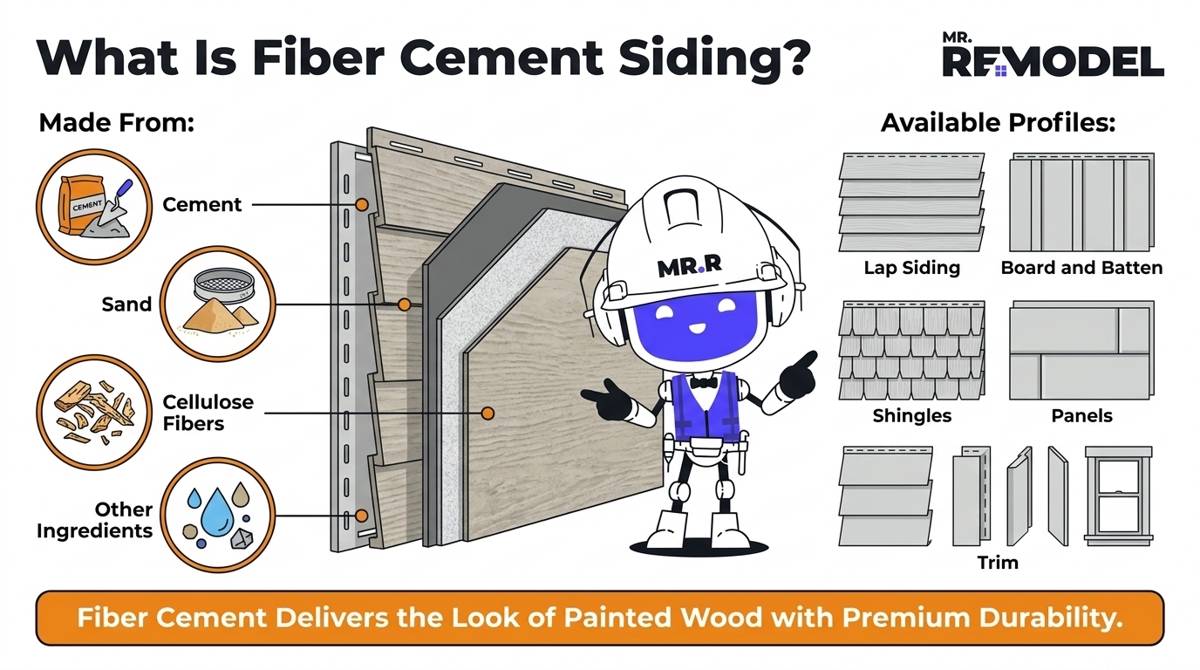
What Is Fiber Cement Siding?
Fiber cement siding is an exterior cladding material made from cement, sand, cellulose fibers, and other ingredients. It is designed to create a strong, stable siding product that can mimic the look of painted wood, shingles, or vertical panels.
One of the best-known fiber cement manufacturers is James Hardie. Its Hardie Plank lap siding is a widely recognized fiber cement product used on many residential homes.
Fiber cement siding is available in several styles, including lap siding, board and batten, shingles, panels, and trim. It can work on traditional homes, modern homes, craftsman-style homes, and many other exterior designs.
Homeowners often compare fiber cement with vinyl because both are common replacement choices. Fiber cement usually offers a more premium look, while vinyl is often more affordable and lower maintenance.
See Related: James Hardie Siding
Pros of Fiber Cement Siding
Fiber cement siding has several strengths that make it attractive for homeowners planning a long-term exterior upgrade.
Durability
Fiber cement is known for its durability. It is designed to stand up to weather, daily exposure, and normal exterior wear better than some lower-cost materials.
James Hardie’s fiber cement siding product information highlights benefits such as durability, curb appeal, and resistance to certain common exterior threats.
Fire Resistance
Fiber cement is noncombustible when tested to certain standards, which makes it appealing in areas where fire resistance matters. Homeowners in wildfire-prone regions may want to ask contractors about siding materials, local code requirements, and product ratings.
Moisture and Rot Resistance
Fiber cement does not rot the same way natural wood can. That can make it appealing in climates where moisture, rain, or humidity are concerns.
However, moisture management still matters. The APA’s guidance on moisture management for residential construction explains why wall assemblies, drainage, and moisture control are important for long-term building performance.
Pest Resistance
Because fiber cement is not a natural wood board, it is less attractive to many pests than traditional wood siding. This can be a benefit in areas where termites or wood-boring insects are common.
Curb Appeal
Fiber cement can provide a crisp, painted-wood appearance. It is available in many colors and profiles, which makes it flexible for different home styles.
Long Lifespan
Fiber cement siding can last for decades when installed and maintained correctly. Lifespan depends on product quality, finish, climate, installation, and maintenance.
Cons of Fiber Cement Siding
Fiber cement has strong advantages, but it is not the right material for every homeowner.
Higher Upfront Cost
Fiber cement usually costs more than vinyl siding. The material itself can be more expensive, and installation can also cost more because the product is heavier and more labor-intensive.
Homeowners should compare local contractor quotes carefully and make sure each estimate includes the same scope, material, trim, removal, flashing, and warranty details.
Heavier Material
Fiber cement is heavier than vinyl or some engineered materials. This makes proper handling, cutting, fastening, and installation especially important.
Poor installation can affect appearance, performance, and warranty coverage.
More Labor-Intensive Installation
Fiber cement installation often requires skilled crews, proper tools, dust control, correct clearances, flashing, and manufacturer-specific details. Homeowners should ask whether the contractor has experience with the exact product being installed.
The Federal Emergency Management Agency (FEMA) Home Builder’s Guide to Coastal Construction: Siding and Exterior Walls discusses exterior cladding, moisture, and severe-weather considerations, which are especially important in coastal and storm-prone areas.
Repainting Over Time
Some fiber cement products come prefinished, while others are painted after installation. Depending on the product, finish, climate, and sun exposure, repainting may be needed over time.
This makes fiber cement lower maintenance than natural wood in many cases, but not maintenance-free.
Fiber Cement vs Vinyl Siding
Fiber cement and vinyl are two of the most common materials homeowners compare during siding replacement.
Vinyl is usually more affordable and easier to maintain. It does not need painting, and it is widely available in many styles and colors.
Fiber cement usually costs more, but it can offer a more premium appearance, strong durability, and better resistance to some exterior risks.
Mr. Remodel siding data shows 5,907 total siding inquiries, including 5,462 installation inquiries and 445 repair inquiries. Installation accounts for about 92% of siding demand.
Vinyl generated 4,057 inquiries, making it the most requested siding material in the dataset. That makes vinyl the clearest budget-friendly comparison point for homeowners considering fiber cement.
See Related: Vinyl Siding
Thinking about upgrading your home's exterior? Get a free quote from fully-vetted local siding contractors.
How Long Does Fiber Cement Siding Last?
Fiber cement siding can often last 30 to 50 years when properly installed and maintained. Actual lifespan depends on climate, finish quality, moisture exposure, installation details, and upkeep.
Homeowners should inspect fiber cement siding regularly for cracked caulk, damaged paint, loose boards, gaps, moisture staining, or impact damage.
The United States Department of Energy’s Energy Saver design guidance explains that energy-efficient remodeling should consider the home as a system. Siding replacement can be a good time to review house wrap, air sealing, insulation, and exterior wall condition.
Maintenance may include cleaning, repainting, caulking, and keeping vegetation away from the siding. Gutters should also be kept clear so water does not repeatedly spill down the exterior walls.
Is Fiber Cement Siding Worth the Cost?
Fiber cement siding may be worth the cost for homeowners who want a premium look, strong durability, and a longer-lasting exterior than basic siding options. It may be especially appealing when curb appeal and long-term performance matter.
It can be a good fit for homeowners who:
- Plan to stay in the home long term
- Want a wood-like appearance without natural wood upkeep
- Prefer a more premium exterior finish
- Live in areas where fire resistance matters
- Want stronger durability than basic vinyl
- Are already planning a full siding replacement
Mr. Remodel siding data shows homeowners most often pursue larger installation projects rather than repairs. Installation generated 5,462 inquiries, while repair generated 445 inquiries.
That does not mean every homeowner needs a full replacement. It does show that siding projects often become larger investments once exterior materials age, fail, or no longer meet homeowner goals.
See Related: Siding Replacement Guide
Frequently Asked Questions
Is fiber cement siding better than vinyl?
Fiber cement siding is often stronger, more premium-looking, and more fire-resistant than vinyl, but it also costs more and may require repainting over time. Vinyl is usually more affordable and lower maintenance, so the better choice depends on your budget, climate, and appearance goals.
How long does fiber cement siding last?
Fiber cement siding can often last 30 to 50 years when properly installed and maintained. Its lifespan depends on product quality, paint or finish condition, moisture exposure, climate, flashing, and regular maintenance.
Does fiber cement siding need painting?
Some fiber cement siding comes prefinished, while other products are painted after installation. Even prefinished products may eventually need repainting depending on sun exposure, weather, finish quality, and manufacturer recommendations.
Is James Hardie the same as fiber cement siding?
James Hardie is a leading manufacturer of fiber cement siding, but it is not the only fiber cement option. Homeowners often use “James Hardie siding” to refer to the brand, while fiber cement describes the broader material category.
Is fiber cement siding worth the extra cost?
Fiber cement siding may be worth the extra cost if you want a durable, premium-looking exterior and plan to stay in the home long enough to benefit from its long service life. It may not be the best choice if your top priority is the lowest upfront cost.
Fiber Cement Siding: Final Takeaway
Fiber cement siding offers a strong mix of durability, curb appeal, fire resistance, and wood-like appearance. It usually costs more than vinyl, but it may provide better long-term value for homeowners who want a premium exterior.
The best choice depends on budget, climate, maintenance expectations, and installation quality. To compare fiber cement with other siding options, connect with fully vetted local siding contractors.