1-855-QUOTEMR

Table of Contents [hide]
Who This Is For
Homeowners replacing old siding, comparing siding materials, wanting the look of natural wood, or looking for a lower-maintenance alternative to traditional wood siding.
Key Takeaways:
- Wood-Like Appearance: Engineered wood siding offers the look of real wood with modern manufacturing.
- Balanced Cost: It generally costs more than vinyl but less than many premium siding products.
- Installation Matters: Proper clearances, sealing, and moisture control are important for long-term performance.
- Maintenance Still Applies: Engineered wood may need repainting or finish care over time.
- Best Fit Depends on Goals: Engineered wood can be a strong option for homeowners who want warmth, texture, and moderate upkeep.
Engineered wood siding is a popular choice for homeowners who want the warmth of wood without the same level of upkeep as traditional wood siding. It can offer realistic texture, strong curb appeal, and better consistency than natural wood boards.
Before choosing engineered wood siding, homeowners should compare cost, lifespan, maintenance, installation requirements, and how it performs against vinyl, fiber cement, and traditional wood.
What Is Engineered Wood Siding?
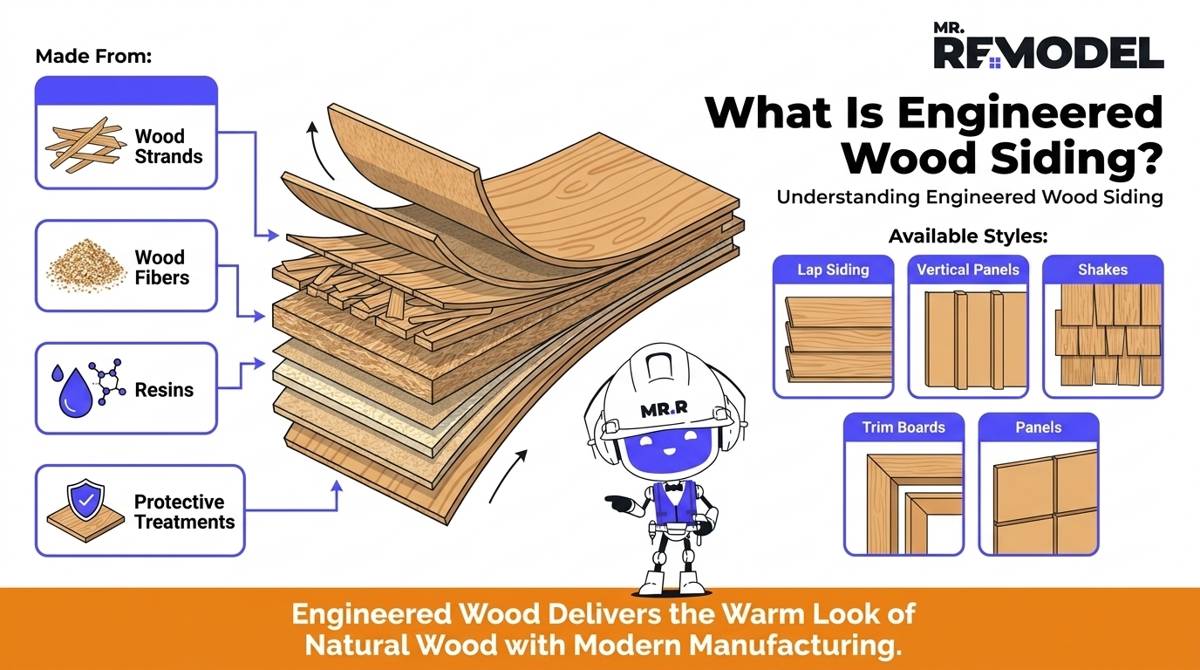
Engineered wood siding is made from wood strands, fibers, or other wood-based materials bonded with resins, waxes, and protective treatments. These materials are manufactured into siding boards, panels, trim, or shakes.
One well-known example is LP SmartSide. LP Building Solutions provides product details for LP SmartSide Trim & Siding, including siding styles, trim options, installation resources, and warranty information.
Engineered wood siding is designed to look like natural wood while improving consistency and durability. It is often available in lap siding, vertical siding, shakes, panels, and trim.
The APA Engineered Wood Association’s Engineered Wood Construction Guide explains broader engineered wood product design, manufacturing, durability, and performance concepts. For homeowners, the key idea is that engineered wood products are manufactured for predictable performance instead of being cut directly as solid wood boards.
See Related: Types of Siding
Pros of Engineered Wood Siding
Engineered wood siding offers several advantages for homeowners who want a natural look with modern product design.
Realistic Wood Appearance
Engineered wood can look closer to natural wood than basic vinyl. It often has deeper textures, longer boards, and profiles that suit traditional, craftsman, farmhouse, and modern homes.
For homeowners who want warmth and character, this can be one of its biggest benefits.
Lighter Weight Than Fiber Cement
Engineered wood is often lighter than fiber cement. That can make handling and installation easier for trained contractors.
Lighter materials may also reduce some labor challenges, although final installation cost still depends on home size, layout, repairs, and local labor rates.
Easier Installation
Because engineered wood is usually easier to cut and handle than some heavier siding materials, installation may be more efficient. However, this does not mean installation is simple.
The product still needs correct fastening, clearances, sealing, flashing, and trim details.
Impact Resistance
Engineered wood can offer strong impact resistance compared with some lighter siding products. This may appeal to homeowners in areas with storms, tree debris, or everyday exterior wear.
Lower Maintenance Than Traditional Wood
Traditional wood siding can require frequent painting, staining, sealing, and repair. Engineered wood may reduce some of those maintenance demands, depending on the product and finish.
Still, engineered wood is not maintenance-free.
Cons of Engineered Wood Siding
Engineered wood siding has strong benefits, but homeowners should understand the trade-offs before choosing it.
Higher Upfront Cost Than Vinyl
Engineered wood usually costs more than basic vinyl siding. Homeowners paying mainly for the lowest upfront cost may find vinyl more practical.
See Related: Siding Replacement Guide
Periodic Repainting
Some engineered wood products are prefinished, while others are painted after installation. Over time, paint or finish maintenance may still be needed.
Sun, rain, humidity, and local climate can affect how often repainting is required.
Moisture Issues If Installed Poorly
Engineered wood is designed to resist moisture better than traditional wood in many cases, but installation quality is still critical. Poor clearances, unsealed cuts, bad flashing, or trapped water can create problems.
The United States Department of Agriculture (USDA) Forest Products Laboratory’s Wood Handbook explains wood durability, moisture, decay resistance, and maintenance concepts that are useful when comparing wood-based siding products.
Maintenance Requirements
Homeowners should inspect engineered wood siding for damaged finish, gaps, exposed edges, cracked caulk, and areas where water may collect. Routine maintenance helps protect the siding over time.
Engineered Wood vs Vinyl vs Fiber Cement
Engineered wood, vinyl, and fiber cement each fit different homeowner priorities.
Vinyl is often the most budget-friendly and low-maintenance option. Fiber cement is usually heavier and more premium, with strong durability and fire resistance. Engineered wood sits between them for many homeowners because it offers a natural look with modern product design.
Mr. Remodel siding data shows 5,907 total siding inquiries. Installation generated 5,462 inquiries, or about 92%, while repair generated 445 inquiries, or about 8%.
Vinyl generated 4,057 inquiries, making it the most requested tracked siding material. That makes vinyl the clearest budget-friendly comparison point for homeowners considering engineered wood.
Planning to replace your siding? Get a free quote from fully-vetted local contractors.
See Related: Vinyl Siding
See Related: Fiber Cement Siding
How Long Does Engineered Wood Siding Last?
Engineered wood siding can last for decades when installed and maintained properly. Exact lifespan depends on product quality, finish, climate, exposure, installation details, and maintenance.
Homeowners should review manufacturer warranties before choosing a product. Some products may offer long warranty periods, but warranty coverage depends on correct installation and care.
The United States Department of Energy’s Energy Saver design guidance explains how exterior upgrades can support the home’s overall energy performance. Siding replacement can be a good time to review house wrap, flashing, insulation, air sealing, and exterior wall condition.
In coastal or severe-weather regions, homeowners should also consider wind, rain, and moisture exposure. The Federal Emergency Management Agency (FEMA) Home Builder’s Guide to Coastal Construction discusses siding and exterior wall performance in coastal environments and severe weather.
Is Engineered Wood Siding Worth It?
Engineered wood siding may be worth it for homeowners who like the appearance of real wood but want a more manufactured, consistent product. It can be a good fit for homeowners who want strong curb appeal without choosing natural wood siding.
It may make sense if you:
- Like the look of wood siding
- Want more texture than basic vinyl
- Prefer a lighter material than fiber cement
- Are planning a full siding replacement
- Want a balance of appearance, cost, and durability
- Are prepared for routine maintenance
Mr. Remodel siding data shows homeowners most commonly invest in full siding installation rather than repairs. Installation generated 5,462 inquiries compared with 445 repair inquiries.
This does not mean every homeowner needs replacement. It does show that many siding projects become larger investments once the exterior is aging, damaged, or no longer meeting homeowner goals.
Frequently Asked Questions
What is engineered wood siding?
Engineered wood siding is an exterior siding material made from wood strands, fibers, resins, waxes, and protective treatments. It is designed to look like natural wood while offering more consistent performance than traditional wood boards.
How long does engineered wood siding last?
Engineered wood siding can last for decades when properly installed and maintained. Lifespan depends on product quality, climate, finish condition, moisture exposure, installation details, and regular maintenance.
Is engineered wood siding better than vinyl?
Engineered wood siding may be better than vinyl if you want a more realistic wood appearance and stronger texture. Vinyl is usually better if your main priorities are lower cost, low maintenance, and wide availability.
Does engineered wood siding rot?
Engineered wood siding is designed to resist moisture better than traditional wood in many cases, but it can still develop problems if it is installed poorly or exposed to trapped water. Proper flashing, clearances, sealing, and maintenance are important.
How much does engineered wood siding cost?
Engineered wood siding usually costs more than basic vinyl but may cost less than some premium siding products. Final pricing depends on home size, product line, finish, labor, removal, repairs, trim, and local market conditions.
Engineered Wood Siding: Final Takeaway
Engineered wood siding gives homeowners a wood-like appearance with modern manufacturing and often less maintenance than traditional wood. It can be a strong middle-ground option between basic vinyl and heavier premium materials like fiber cement.
The best choice depends on your budget, climate, appearance goals, and willingness to maintain the finish. To compare engineered wood with other siding options, connect with fully vetted local siding contractors.